
Sunday, June 30, 2013
The weak underbelly of contemporary Christian arguments about sex
A guest column today by JM, which I commend to you:
Related:
I know, I know... I remain, I realize, impossible to please on the gay issue.[Hat tip to JM]
But in reading all the hand-wringing over the Supreme Court decision by Catholics and Evangelicals, all I see, over and over again, is concern for the future of marriage. Oddly, few are concerned nearly so much by the hook-up culture on college campuses or the fact the living together pre-marriage is now the given almost everywhere unless you are a Traddie or Amish. Gays amount to 3 - 9 percent of the population, whereas the sexually-active-outside-of-marriage amount to what percentage? Of course sex sin has always been an issue, but it used to be a sin of stumbling or weakness. Now it is a sin of deliberation, of lifestyle. College students now bring their girl or boyfriends home as bedmates for the summer, and the parents are ... just happy to have the kids home! It is all seen as not weakness but normalcy.
To my mind what is missing in the current unrest, to the point it neuters the entire controversy from a Christian perspective -- despite arguments of a Robert P George that are downright Thomistic in their awesome expansiveness -- is simply this:
Gay marriage is the societal approval of gay sex, plain and simple. It is "I'm OK -- You're Physical Partnering is OK." And this is the natural, almost inescapable endgame of "We must make sure in every circumstance we affirm the inherent dignity of our homosexual brothers and sisters." Someone with inherent dignity can hardly be affirmed and then also taken to task or asked to deny what is part of what is their inherent dignity, right? What does it mean when the Supreme Court gives a green light to gay marriage, and the only mention of sodomy or immorality in the reams and reams of commentary from countless ministry blogs is in Judge Scalia's actual dissent? When the Evangelicals are busy worrying about how we will now interact and witness to gay people and their loved ones? When Exodus Ministries shuts down and apologizes out of respect for the dignity of homosexual believers?
Rather vaguely I think of the Liturgical Wars, and how people are wildly concerned about the loss of Latin, whereas what is more deeply at stake is just what the translations say or don't say. The Latin is important too, but really the more significant matter has to be what words are used, whether in English or in Latin. True, both ARE significant, but when you realize what was done to the content of the Mass a while ago, the question of the vernacular takes on a secondary importance to what you are or are no longer saying.
I am not sure what any of it means, except that while we think sex is very important, we also don't seem to think that our sexual choices especially matter. A commenter on First Things blog said this. It has been so long since I have read anything remotely like it I was shocked. If a Catholic leader ever said any such thing, I might have to make a pilgrimage to the remotest shrine I could find to give thanks for a miracle. Tough times, battle times, require tough talk, not grave tsk tsks. As bracing as Dolan's commentary first appears, next to this it is tepid:The issue to which I keep coming back as the Church accommodates more and more to the secular gay voices in our society, is our responsibility to proclaim the whole gospel, even the parts we don’t like. Even a cursory reading of Romans 1 and I Corinthians 6 indicates that practicing homosexuals are in real danger of not being a part of God’s Kingdom, however you construe that. That a given “sexual-minority” person is an otherwise well-socialized member of society, perhaps even particularly caring and warm, doesn’t seem to make any difference in Kingdom membership. Whether we like it or not and whether it seems enlightened or not, Scripture, as it reveals God’s message to us, is unambiguous regarding unrepentant homosexual behavior. If we fail to warn those in danger of perdition, then we too will come under a greater judgement. The truth about the Truth sets us free and we owe those caught in sin the same opportunity we have had to find redemption and freedom.
Related:
- S. M. Hutchens, "Just Christians: On Homosexuality & Christian Identity" (Tourchstone)
- R. V. Young, "The Gay Invention: Homosexuality Is a Linguistic as Well as a Moral Error" (Touchstone)
Why the same-sex argument wins
... is precisely because it doesn't rely on argument, but (brilliantly) on deeply-rooted emotional images and affections that by-pass the gate-keeper of the soul (the intellect) and go straight to the heart. This is both the source of its power in contemporary culture (which no longer puts a premium on intellectual truth), and its insidious danger. People aren't being required to rationally think through what they're embracing.
YouTube reports almost 50 million views of this music video for "Same Love" by Macklemore and Ryan Lewis. How many of those individuals to you think gave any mental space over the course of the last DECADE to even the popular-level presentation of intellectual arguments for traditional marriage such as Archbishop Cordileone's?
As our undercover correspondent on retainer told us five days ago, there is an excellent intellectual rejoinder to all this, although it does point out the critical detail that the arguments for traditional marriage continue to be ignored despite the fact that science and objectivity are on their side. As I said, the opposition has moved its case (quite brilliantly) from the field of intellectual argument to the field of emotional free association. Our exhilarating undertaking, then, is to deal in intelligent arguments that nobody will hear any longer in our culture. Too bad. For what it's worth, then, here is the intelligent rejoinder by R. J. Snell, "How Songs Like Macklemore's 'Same Love' Change the Marriage Debate" (On the Square, June 25, 2013):
YouTube reports almost 50 million views of this music video for "Same Love" by Macklemore and Ryan Lewis. How many of those individuals to you think gave any mental space over the course of the last DECADE to even the popular-level presentation of intellectual arguments for traditional marriage such as Archbishop Cordileone's?
As our undercover correspondent on retainer told us five days ago, there is an excellent intellectual rejoinder to all this, although it does point out the critical detail that the arguments for traditional marriage continue to be ignored despite the fact that science and objectivity are on their side. As I said, the opposition has moved its case (quite brilliantly) from the field of intellectual argument to the field of emotional free association. Our exhilarating undertaking, then, is to deal in intelligent arguments that nobody will hear any longer in our culture. Too bad. For what it's worth, then, here is the intelligent rejoinder by R. J. Snell, "How Songs Like Macklemore's 'Same Love' Change the Marriage Debate" (On the Square, June 25, 2013):
As I write, YouTube reports almost 50 million views of the music video for “Same Love” by the hip hop duo Macklemore and Ryan Lewis, a single recorded to support same-sex marriage in Washington state. While not remotely approaching the 345 million views of their waggish “Thrift Shop” video, “Same Love” reached number 51 on the Billboard Hot 100 earlier this month and tops the charts Down Under.
“Same Love” critiques “right wing conservatives,” hip hop’s portrayal of homosexuals, “a preconceived idea of what it all meant,” “a world so hateful some would rather die than be who they are,” and traditional religion. Christianity, particularly Catholicism, receives the brunt of Macklemore’s disdain: “When I was at church they taught me something else / If you preach hate at the service those words aren’t anointed / That holy water that you soak in has been poisoned.” Yet rather than reject the heritage outright, he transposes it, claiming both that “we paraphrase a book written thirty-five-hundred years ago / I don’t know,” while repeating “Love is patient / Love is kind / Love is patient / Love is kind / (I’m not crying on Sundays).”
Like so much of contemporary discourse, image is used to good effect, more powerful in creating associations and prompting sentiment than any argument or syllogism. The line, “right wing conservatives think it’s a decision,” flashes a non-Catholic cross and communion table before cutting to a grainy 60s-era film of a priest with a gaggle of first communicants. Similarly, “playing God” pairs with the young gay protagonist of the video sitting in a pew with his mother, the same mother who harasses him until he shuts the door in her face at “paraphrase a book written thirty-five-hundred years ago,” and who aggressively makes the sign of the cross (to the lyric “preach hate”) before storming out (“holy water … poisoned”) when her son brings his soon-to-be spouse home for dinner. Further, the communion table cross is matched against a burning cross, to the lyric, “hate that’s caused wars from religion.” On the other hand, support for same-sex marriage is associated with civil rights—“Gender to skin color, the complexion of your pigment / The same fight that led people to walk outs and sit ins / It’s human rights for everybody, there is no difference!” and pictures of MLK.
Scriptural References for the Extraordinary Form Propers

"I will go in unto the Altar of God
To God, Who giveth joy to my youth"
Tridentine Community News (June 23, 2013):

One of the most enduring myths about the Traditional Latin Mass is that it contains less Sacred Scripture than the Ordinary Form of Holy Mass. Previous editions of this column have made the point that the Propers – the readings plus the mandatory inclusion of the Introit, Offertory, and Communion Antiphons, along with the Gradual and Alleluia or Tract – provide significant additional scriptural content that is frequently omitted in the Ordinary Form, which often only offers the faithful the readings plus a Responsory Psalm.
A new blog has debuted, Lectionary Study Aids, which documents use of biblical passages in the Tridentine Mass. Most notably, author Matthew Hazell has put together a 24 page spreadsheet [PDF] delineating the scriptural excerpts used in each Mass, Sunday and weekday, of the entire liturgical year.
It is important to differentiate between what the Ordinary Form is capable of when certain options are selected, and the average experience of it in the average parish. If the Gradual and all Antiphons are employed, a broader spectrum of Scripture can be included, however in practice, the average Tridentine Mass, in which there are far fewer options, employs more Scripture than the average Novus Ordo Mass. Even more Scripture is present if one takes into account the scriptural excerpts present in the unchanging Ordinary of the Mass, for example Psalm 42 in the Prayers at the Foot of the Altar.
Relationship of the Readings to the Other Propers
As part of their growing series of Position Papers concerning the Extraordinary Form, Una Voce has released an update to their document on the Lectionary. The main points made are as follows:
Because the Ordinary Form focuses more on working through the three-year cycle of readings for Sundays and the two-year cycle for weekdays, the readings have comparatively little relation to the Feasts. The readings also have less of a correlation with the [Entrance, Offertory, and Communion] Antiphons. Conversely, in the Extraordinary Form, there is a thematic continuity between the Antiphons and the readings.
Though there are more readings in the Ordinary Form cycles, some of the readings present in the EF are omitted in the OF. Thus there is “loss as well as gain” in the change. This point of view is succinctly summarized in Una Voce’s quote from a distinguished priest who celebrated the Windsor Tridentine Community’s 20th Anniversary Mass in 2011:“The Oratorian priest and schola Fr Jonathan Robinson, in criticising the multi-year cycle of the 1969 Missal, remarks: ‘I think the diversity, rather than enriching people, tends to confuse them… This may be because the selections, as has been noted by others, were drawn up more to satisfy the sensibilities of liturgical scholars than on traditional liturgical principles.’ The Mass and Modernity: walking to heaven backwards (San Francisco: Ignatius Press, 2005) p332”The paper concludes by pointing out that any suggestion to harmonize the readings or liturgical calendar between the Extraordinary and Ordinary Forms would damage the thematic integrity of the EF Propers. While standardizing on one calendar may seem to offer benefits, it’s not such a simple decision, as it affects the structure of the entire Liturgical Year and the relation of the Mass to the Breviary. Prudence dictates that each calendar be left alone.
Juventútem Events This Week
Canon Aaron Huberfeld, of the Institute of Christ the King, rector of St. Mary’s Oratory in Wausau, Wisconsin, has a busy week in our region: First, he is joining members of Juventútem Michigan at this weekend’s Sursum Corda gathering at Chicago’s Mundelein Seminary for young adults interested in the Extraordinary Form.
This Wednesday, June 26 at 6:00 PM, there will be Adoration at Lansing’s St. Mary Cathedral Crypt Chapel, followed by a talk by Canon Huberfeld at 8:00 PM at the Spartan Hall of Fame Café in East Lansing.
This Thursday, June 27 at 7:30 PM, Canon Huberfeld will speak on “The Theology of the [Traditional Latin] Mass” at the monthly Theology on Tap at Ann Arbor’s Conor O’Neill’s. Come early to assure yourself of a seat, as standing is not permitted in this facility. Finally, Canon Huberfeld will celebrate the June Last Friday Tridentine Mass for Juventútem at St. Joseph Church in Howell, Michigan, this Friday, June 28 at 6:30 PM. Those of all ages are invited to attend the Mass. A Swing Dance for Young Adults age 18-35 will follow the Mass at 8:00 PM.
Tridentine Masses This Coming Week
- Mon. 06/24 7:00 PM: Low Mass at St. Josaphat (Nativity of St. John the Baptist)
- Tue. 06/25 7:00 PM: High Mass at Assumption-Windsor (St. William, Abbot)
- Fri. 06/28 6:30 PM: High Mass at St. Joseph, Howell, Michigan (Vigil of Ss. Peter & Paul)
Saturday, June 29, 2013
Conscience and Its Enemies

 Robert P. George, Prof. of Philosophy at Princeton, has authored a new book, Conscience and Its Enemies: Confronting the Dogmas of Liberal Secularism ,to which an online Introduction is available in both written and audio formats. Here's the written version:
Americans are deeply divided on a range of issues — not only as to the best means for achieving agreed-upon goals but also as to the goals themselves. These issues centrally involve disputed fundamental values and moral principles. For example: Should human life be protected in all stages and conditions? Or should abortion and euthanasia be permitted and even promoted as "best" (or "least bad") solutions to personal difficulties and social problems? Should we preserve in our law and public policy the historic understanding of marriage as a conjugal union — the partnership of husband and wife in a bond that is ordered to procreation and, where the union is blessed by children, naturally fulfilled by their having and rearing offspring together? Or should we abandon the conjugal understanding of marriage in favor of some form of legally recognized sexual-romantic companionship or domestic partnership between two (or more) persons, irrespective of gender, to which the label marriage is then reassigned?
Disputes such as these reflect the profound chasm that separates opposing worldviews. People on the competing sides use many of the same words: justice, human rights, liberty, equality, fairness, tolerance, respect, community, conscience, and the like. But they have vastly different ideas of what those terms mean. Likewise, they have radically different views of human nature, of what makes for a valuable and morally worthy way of life, and of what undermines the common good of a justly ordered community.
There is a truth all too rarely adverted to in contemporary "culture war" debates — namely, that deep philosophical ideas have unavoidable and sometimes quite profound implications for public policy and public life. Anyone who takes a position on, say, the ethics of abortion and euthanasia, or the meaning and proper definition of marriage, is making philosophical (e.g., metaphysical and moral) assumptions — assumptions that are contested by people on the other side of the debate. The temptation, of course, is to suppose that "I'm not making any controversial assumptions; only the people on the other side are doing that." But this is absurd. All of us make philosophical assumptions — about the human good, human nature, human dignity, and many other crucial matters. One objective of this book is to show that these assumptions — our own assumptions, not just the other guy's — have important consequences, and that we should all be prepared to examine them critically.
Why the Catholic Church opposes same-sex marriages
A very well-written piece, by Bishop Cordileone of San Francisco, "Archbishop Cordileone states case against gay marriage" (USA today, March 21, 2013):
'To legalize marriage between two people of the same sex would enshrine in the law the principle that mothers and fathers are interchangeable or irrelevant.'
'To legalize marriage between two people of the same sex would enshrine in the law the principle that mothers and fathers are interchangeable or irrelevant.'
Q: What is the greatest threat posed by allowing gays and lesbians to marry?
A:The better question is: What is the great good in protecting the public understanding that to make a marriage you need a husband and a wife?
I can illustrate my point with a personal example. When I was Bishop of Oakland, I lived at a residence at the Cathedral, overlooking Lake Merritt. It's very beautiful. But across the lake, as the streets go from 1st Avenue to the city limits at 100th Avenue, those 100 blocks consist entirely of inner city neighborhoods plagued by fatherlessness and all the suffering it produces: youth violence, poverty, drugs, crime, gangs, school dropouts, and incredibly high murder rates. Walk those blocks and you can see with your own eyes: A society that is careless about getting fathers and mothers together to raise their children in one loving family is causing enormous heartache.
To legalize marriage between two people of the same sex would enshrine in the law the principle that mothers and fathers are interchangeable or irrelevant, and that marriage is essentially an institution about adults, not children; marriage would mean nothing more than giving adults recognition and benefits in their most significant relationship.
NY moves to protect baby-killers from dangers of pro-lifers
Rick Karlin, Pro-choice lobbyist cites danger to donors in winning exemption (TimesUnion.com, June 26, 2013):

One of the most outspoken lobbying groups in the state has been given an exemption to donor disclosure rules after saying the information could put its contributors in danger.Meanwhile, pro-life ND Governor Jack Dalrymple received death threats this year, and Princeton University pro-life professor Robert George and Fr. Frank Pavone received death threats from supporters of pro-baby-killers last year. Yet pro-life groups receive no such exemption for donor disclosures.
NARAL Pro Choice NY is so far the sole recipient of a disclosure exemption under new lobbyist donor rules now in effect.
- North Dakota Governor Signs Pro-Life Bills, Receives Death Threats (New American, March 29, 2013)
- Self-professed pro-choice ‘terrorist’ pleads guilty to issuing death threats: cyanide found in home (LifeSiteNews, May 11, 2012)
- Fr. Frank Pavone of Priests for Life Receives Post-Election Death Threat (LifeSiteNews, November 11, 2008)
Friday, June 28, 2013
The Republic has been lost ... you just haven't noticed
 In his notes from the Constitutional Convention of 1787, one of Maryland's delegates, Dr. James McHenry -- which were first published in The American Historical Review, vol. 11, 1906, he wrote in an anecdote on p. 618: “A lady asked Dr. Franklin Well Doctor what have we got a republic or a monarchy. A republic replied the Doctor if you can keep it.”
Well, we haven't kept it. Let's stop kidding ourselves. That battle has been lost. All the furniture is still arranged as it was, and there is still plenty of lip-service to our institutions; but the imperious occupants of our houses of government are running things now as though we had a socialist state.
Don't be deceived by references to "democracy." Without a Republic, a democracy can be as totalitarian as Stalinist Soviet empire. Read J. L. Talmon's The Origins of Totalitarian Democracy, a study of J.J. Rousseau's Social Contract, or Groen van Prinsterer's Unbelief and Revolution, a study of how Rousseau's democratic ideology played out in the French Revolution.
Fr. Z on the clandestine Vatican underground
As my source for Fr. Z's reflection states: "It's not the stuff of conspiracy theorists--even if the mainstream Catholic media likes to write it off as such."
Fr. Z. writes:
Fr. Z. writes:
There is an especially awful story about clergy in Rome circulating right now.[Hat tip to Christine Niles, FB]
Once upon a time, I was walking under the colonnade of St. Peter’s Square with an especially well-placed curial official, nay rather, institution.
I asked him if it were true that Masons (the European style Masons, not the US style) had infiltrated the Church and the Roman Curia.
He stopped and looked around. He leaned in, lowered his voice, and said, “Yes. But they are not the ones people talk about.”
Many years ago, also in Rome, I stayed for a while at the Czech College. They were almost paranoid when it came to outsiders. Eventually, someone told me that when they did some renovations of rooms, they found listening devices planted in the walls. They had been infiltrated by seminarians that were actually working for government agencies.
Also in Rome, I lived for a couple summers at a Ukrainian Catholic residence when my own place was under renovation. Some of these old guys had survived Stalin. There was a concern that KGB plants would manage to get in.
For a long time in certain circles there was a great concern that Masons, communists and homosexuals had systematically infiltrated the Church for the purpose of eventually attaining high positions and influence and so under mine or twist the Church and her mission from within.
“But Father! But Father!”, some of you may be sputtering, “You don’t believe any of this, do you? Even though you obviously hate Vatican II, do you buy this stuff?”
I do buy it, yes.
But when I hear about scandalous stories involving Church figures, I tend to shrug. They are only the very edge of a slimy underbelly. Sin isn’t rare.
On the other hand ...
There are those who hate the Church with as much hate as we love the Church. They are organized, they have a great resources, they have a Dark Prince. Dreadful liberal publications and websites, and even the blitherings of some priests and bishops, are only shadows of the deeper agenda flickered out on the back of the cave for popular consumption by barely witting dupes.
Deeper enemies, like our own beautiful missionaries and martyrs of ages past, are willing to set aside their appetites, put on a facade, and endure for patient years for the sake of a long term plan.
Yes, I buy it. I have seen manifestations of communist, Masonic, and especially homosexual networking in the Church both in the USA and in Rome. It would be stupidly naive to think that it isn’t present. In the USA, Masonic and communist? Maybe not so much. Elsewhere, yes. The other thing? Ohhhh, yes.
Those agents will probably go to Hell. Let us remember that the gates of Hell will not prevail against the Church.
However, Our Lord did not promise that Hell would not prevail in these USA or, in the Roman Curia, in any other particular place.
When you hear awful stories, do not become discouraged.
We are nearing some kind of turning point. I think it is time to press forward HARD and with courage to renew our Holy Church’s liturgical worship, the best, clean antidote.
Thursday, June 27, 2013
Breaking news: Holy crap! (with Update)
This is absolutely unbelievable! So scandalous that Malachi Martin couldn't have dreamed it up!
Involves the Vatican, a homosexual prostitution ring, young teen-age males, and 10-20 Roman clergy, possibly including four bishops; and a recruiter for the child prostitution ring stealing consecrated hosts and selling them to Satanists in and around Rome. Unbelievable. I've been praying that the corruption would be cleaned up. One never knows how deep the corruption may run, although nobody who believes in Original Sin should be totally surprised by scandals like this.
And the irony ... all this right on the heels of our national Gay love fest, cheered by Hollywood along with our first gay president.
Updates: The sordid details -- gay bar named Twink:
Update (June 20, 2013):
Involves the Vatican, a homosexual prostitution ring, young teen-age males, and 10-20 Roman clergy, possibly including four bishops; and a recruiter for the child prostitution ring stealing consecrated hosts and selling them to Satanists in and around Rome. Unbelievable. I've been praying that the corruption would be cleaned up. One never knows how deep the corruption may run, although nobody who believes in Original Sin should be totally surprised by scandals like this.
And the irony ... all this right on the heels of our national Gay love fest, cheered by Hollywood along with our first gay president.
Updates: The sordid details -- gay bar named Twink:
More details pour out in multiple posts HERE.
Update (June 20, 2013):
The Spirit of Solesmes
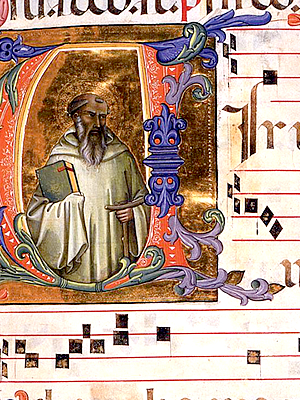 Dr. Peter Kwasniewski, "The Spirit of Solesmes" (Views from the Choir Loft, June 27, 2013):
[Hat tip to P.K.]HAVE BEEN READING a beautiful book called The Spirit of Solesmes, a compilation of spiritual writings by Dom Prosper Guéranger, Abbess Cécile Bruyère, and Dom Paul Delatte, with wonderful notes by Sister Mary David Totah. I simply cannot recommend this book highly enough to anyone who is seriously interested in monastic spirituality. The writings display that uniquely Benedictine synthesis of down-to-earth practical wisdom, a pervasive presence of the rhythms of liturgical prayer, and a vibrant serenity that is always hovering somewhere between the poetry of everyday life and the silence of eternity.
St. Thomas is fond of the axiom: “What is last in execution is first in intention.” Or as the ancients put it still more succinctly: Respice finem. One must begin any major action—such as taking care of one’s children or teaching classes each day!—with the end in view. God, our ultimate end, is known through prayer, in which, by His grace, we enter more deeply into the union of indwelling that He gives us in baptism and all the sacraments.
“Being a Christian does not only mean accepting Christ’s teaching and receiving the graces won by Him; it also means becoming a worshiper in spirit and in truth, reliving His mysteries, ascending to God in the liturgy in the way Christ descended to us and returned to the Father. Here is realized the unity of our human life, the participation of whole persons in their highest act, which is worship.” (Spirit of Solesmes, 24)
The unification of our lives, the orientation to the ultimate goal that gives meaning to every proximate and particular goal we seek, is the work of the sacred liturgy. This is what endows the fragments of each day, colorful and leaden alike, with the unity of a stained glass window.
Many of the Church’s liturgical prayers contain the petition that we should experience in ourselves the mystery we celebrate. Without prayer, we might (for a time at any rate) “have” this union objectively, but it would not be the place we dwell, the determinative content of our thoughts and desires. If we want then to sanctify our actions, whatever they may be, we must enter consciously and lovingly into this union, so as to draw from God, for whom nothing is impossible, the strength to do all the work He asks of us.
When speaking of the gifts of the Holy Spirit (Summa Ia-IIae, Question 68), Saint Thomas argues the absolute necessity of special assistance by the Holy Spirit, every day, throughout the day, if we are to attain the glorious end God has in store for us, so greatly does it exceed our natural abilities—even the superadded power of the theological virtues in us. “Let your good spirit lead me into the promised land.” And he makes clear that it is not only for reaching the ultimate end but also for attaining any of the particular ends we aim at as Christians, if we want to do them as God’s children, that is, with wisdom, knowledge, counsel, fortitude, and so on.
So we have to listen to the Spirit in order to be directed in our activity. In this sense, there cannot be a genuine apostolate at all without contemplative prayer behind it, as the Acts of the Apostles so clearly shows. Moreover, prayer of all sorts, but especially quiet prayer in solitude, disposes one to be a good listener and a keen perceiver of reality. You learn how to listen to others and, at times painfully, discover the secret workings of your own heart.
Finally, then, we are left with a question, an examination of conscience: What is at the center of my day? What is the center of my being—what is the still point?
Prayer is
The world in tune,
A spirit-voice,
And vocal joys
Whose echo is heaven’s bliss.
(Henry Vaughan)
Wednesday, June 26, 2013
Breaking news: Pope to sack all Cardinals holding curial posts?
This sounds a bit over-the-top. Let's wait and see ...
Tuesday, June 25, 2013
"The Devirilization of the Liturgy in the Novus Ordo Mass "

Midnight Mass, 1916
Fort Douaumont, Verdun (France)
Fr. Richard G. Cipolla, Ph.D., D. (Oxon.), "The Devirilization of the Liturgy in the Novus Ordo Mass [Exclusive article]" (Rorate Caeli, June 26, 2013) -- [This is a long and scholarly article, well-worth reading. Click on the "Read more" link at the bottom of the post to access the whole article.]:
The correspondence between Cardinal Heenan of Westminster and Evelyn Waugh before the promulgation of the Novus Ordo Mass is well known, in which Waugh issues a crie de coeur about the post-Conciliar liturgy and finds a sympathetic, if ineffectual, ear in the Cardinal.[1] What is not as well known is Cardinal Heenan’s comment to the Synod of Bishops in Rome after the experimental Mass, Missa Normativa, was presented for the first time in 1967 to a select number of bishops. This essay was inspired by the following words of Cardinal Heenan to the assembled bishops:At home, it is not only women and children but also fathers of families and young men who come regularly to Mass. If we were to offer them the kind of ceremony we saw yesterday we would soon be left with a congregation of women and children.[2]What the Cardinal was referring to lies at the very heart of the Novus Ordo form of the Roman Mass and the attendant and deep problems that have afflicted the Church since the imposition of the Novus Ordo form on the Church in 1970.[3] One might be tempted to crystallize what Cardinal Heenan experienced as the feminization of the Liturgy. But this term would be inadequate and ultimately misleading. For there is a real Marian aspect of the Liturgy that is therefore feminine. The Liturgy bears the Word of God, the Liturgy brings forth the Body of the Word to be worshipped and given as Food. A better terminology might be that in the Novus Ordo rite of Mass the Liturgy has been effeminized. There is a famous passage in Caesar’s De bello Gallico where he explains why the Belgae tribe were such good soldiers. He attributes this to their lack of contact with the centers of culture like the cities. Caesar believed that such contact contributes ad effeminandos animos, to the effeminizing of their spirits.[4] But when one talks about the effeminization of the Liturgy one risks being misunderstood as devaluing what it means to be a woman, womanhood itself. Without adopting Caesar’s rather macho view of the effects of culture on soldiers, one certainly can speak of a devirilization of the soldier that saps his strength and resolve to do what a soldier has to do. It is not a put-down of the feminine. It rather describes the weakening of what it means to be a man.
This is the term, devirilization, that I want to use to describe what Cardinal Heenan saw that day in 1967 at the first celebration of the experimental Mass.[5] In its Novus Ordo form, what Benedict XVI’s Motu Proprio: Summorum Pontificum somewhat cumbersomely, if understandably, calls the Ordinary Form of the Roman rite, the Liturgy has been devirilized. One must recall the meaning of the word, vir, in Latin. Both vir and homo mean “man”, but it is vir alone that has the connotation of the man-hero and is the word that is often used for “husband”. The Aeneid begins with the famous words: arma virumque cano. (“I sing of arms and the man-hero.”) What Cardinal Heenan presciently and correctly saw in 1967 was the virtual elimination of the virile nature of the Liturgy, the replacement of masculine objectivity, necessary for the public worship of the Church, with softness, sentimentality and personalization centered on the motherly person of the priest.
... On one of my many stays in Italy I noticed that many of the baby strollers were built such that the baby sat in his seat and faced his mother who was pushing the stroller. This seemed strange to me, since in the United States the baby faces the same way as the mother who is pushing the stroller. When I asked a friend about this she told me that too many Italian mothers want to keep constant eye contact with the baby and to be able to smile at the child, talk in baby talk, to make sure the bond is always there between mother and child. The classic mother-child relationship is heightened almost in a perverse way by this perceived need of the mother to constantly engage her child face to face lest contact with the outside word, with “the other” will damage the relationship.
Without pretending that the above analogy is exact or complete, I would assert that the radical innovation, never mandated by the Council or by any liturgical book, of celebrating Mass with the priest facing the people, has transformed the priest’s role at the Mass from the father who leads his people to offer Sacrifice to the Father, to the mother whose eye contact and liturgical patter- banter with the people and whose sometimes deliberately silly behavior, as if the people are infants, reduces his role as priest to that of the mother of an infant. This reduction of the congregation to infants who are forced to look at the mother-priest prevents them from seeing beyond him to God who is being worshipped in the presence of the cosmic sacrifice of Christ.
... Before turning to the important question of the continuity of the Novus Ordo rite with the traditional Roman rite from the viewpoint of the devirilization of the liturgy, I want to offer comments on two practical results of the devirilization of the liturgy and of the priest. The first is this: the music that the Novus Ordo has produced, both for Mass settings and songs to be sung at the liturgy, is at best functional, at worst sentimental junk that makes the old Protestant evangelical hymns sound like Bach chorales. When Mass is reduced to a self-referential assembly, then music becomes merely functional at best, at worst something to rouse the feelings of the people. This functionalism is a mark of the chilling, outdated and anti-liturgical stance of the liturgical establishment that still controls much of the liturgical life of the Church in the Roman dicasteries, in seminaries, in dioceses and therefore in parishes.[15]
Read more >>
Requiem Mass: "I saw clearly that this empty coffin was for me"
 Jeffrey Tucker, "What the Requiem Mass Meant to Me" (NLM, June 21, 2013):
Catholicism is the only religion to die in," wrote Oscar Wilde in a private letter to a friend. And, sure enough, he did. His final words on this earth were from the Act of Contrition. He received the Holy Eucharist and passed from this earth.[Hat tip to JM]
But what did he mean with his statement? It was surely a reference to the Requiem Mass that he attended several times in his life. It goes without saying, really, but the ritual he knew was (and is) very different from the typical Catholic funeral of today. Yes, it was in Latin. It included the astonishingly beautiful prayer Dies Irae. The vestments were black. The visual and textual drama of the ritual were epic in scope.
Now this ritual is called the extraordinary form, itself brought back from a near-death experience. It's absolutely shocking to think that this nearly vanished from the earth from 1969 forward. History records that there was a generation of liturgists who somehow, incomprehensibly, thought that it would be better for this form of the Mass to disappear and for something else of their own making to take its place. That generation even turned against the Dies Irae and wrote this sequence clean out of the ritual books.
One can only shake one's head at the extent of folly. It is one thing to offer a vernacular and simplified alternative, but to attempt to suppress this Mass? Unthinkable.
In any case, it is not suppressed. It lives. The experiences of this world, taken in total, provide no greater and more profound reflection on the meaning of life and death that the old form of the Requiem Mass. Of this I'm convinced.
I attended one yesterday at the Sacred Music Colloquium. I left feeling like I had discovered new truths, seen new things, observed in my mind and heart a new expanse of time and eternity. It was the sort of experience that makes everything else in life seem trivial by comparison. If the opportunity ever comes your way, do not miss it.
This was the first time I had attended this rite when accompanied by a polyphonic setting of what otherwise would be the main chanted prayers of the Mass. The first notes of the intonation Requiem was chanted and then the polyphony began. I had a sudden chill in my spine that quickly extended up, down, and around, and flood my arms and legs too. And this feeling grew more intense of the course of the 90-minute liturgy. The setting was by Francisco Guerrero (1528-1599). To sing it all required fully three choirs, simply because there was so much music.
The overall effect was not dreadful -- contrary to the reputation -- and not terrifying. It is truth telling, and there is a difference. This Mass covers up nothing. This ritual does not avert its eyes from the mysteries of life and death and the beautiful hope offered by the graces of the sacrament. To attend this Mass is painful in the way that discovering truth always is, but it was also comforting.
It embodies the most pressing imposition of a reality that we all want to avoid: we are going to die. What happens then? And if it can all end in a flash, what was the purpose of this life? How should I structure my limited days on this earth in light of this? These were the sorts of questions the Mass raises.
Usually this Mass would be said for the death of a particular person. But this Requiem on this occasion was said for many deceased friends of those in attendance. There was a catafalque present. This is an empty coffin, draped in black.
The celebrant said it was there to represent those who have gone before. But as I walked by it and stood in the communion line, and the cloth touched the side of my leg, I saw clearly that this empty coffin was for me.
God willing, not today. God willing, I have many years left on this earth. But the time will come.
Feeling a bit weak following this revelation, I proceeded in the line and knelt on the hard marble floor and waited for the priest to come my way. I was facing west and the sun was setting and pouring through the stained glass to land on my face. The colored light felt hot on my face. Time stopped. Or seemed to. Just as in death.
I closed my eyes. Then I heard the words "Corpus Domini nostri Jesu Christi...." and I opened my eyes to see the priest in front of my and the paten under my chin ..."custodiat animam tuam in vitam aeternam. Amen.”
The body of Christ - sacrificed for the salvation of the world both in history and on the altar in this space this very day - had now entered my own body. A taste of death, and victory over death. Food that is a foretaste of the life to come.
What is it that we want to leave behind in this world? When we think of the shape of this side of eternity after we are gone, what is it that we want to know will be here? Joy and prosperity for our children and their children, certainly, and for the flourishing of all humanity.
But at this moment, I'll I could think was: I want to know that this Mass will persist. It must be here. It must be available for those who wish it, for their own deaths. But most of all, it must be here for the living so that all people can have access to the truth that it tells.
Subscribe to:
Posts (Atom)