I think it relevant that you know that the Church in Spanish America has been systematically infiltrated at least since the 1960s. Krushev coined the expression “theology of liberation” (cfr. http://www.acidigital.com/noticias/ex-espiao-da-uniao-sovietica-nos-criamos-a-teologia-da-libertacao-28919/, seen Sept. 9th 2016) before Gutiérrez used it and China followed Krushev’s footsteps. In 1974 Carlos Sacheri, an important Argentinian philosopher, was killed for having denounced and documented the infiltration of the Argentinian Church (La iglesia clandestina, available online). I want to show you only a handful of texts by Gutiérrez in which this is admitted openly. The translation from the Spanish edition is mine:
In pp. 29-30[1] Gutiérrez says that a Theocentric Church would be a power structure and not a structure of service. He states this manipulating texts drawn from the Second Vatican Council, underlining not the proclamation of the Revealed Truth as the Council did, but the “Signs of the times.”
P. 100: “In the past the church used the world for its own ends; today, many Christians –and non Christians– are asking themselves if they should, for example, use the social weight of the church in order to accelerate the process of transformation of the social structures”.
Pp. 141-142: “A better perception of the tragic reality of the continent, the clear positionings which the political polarization creates […] have caused that the priestly (and religious) wing of the church is today one of the most dynamic and restless of the Latinamerican church. Priests and religious […] intend above all that this [the church] may break her solidarities with an unjust order and that, in a renewed fidelity to the Lord who gathers her [the church] and to the gospel which she [the church] preaches, she may join its destiny to that of those who suffer misery and dispossession.// In many countries one can see the creation of priestly groups (with traces not allowed by the Canon Law!)". [My note: in one of my books (El republicanismo español en América, una evaluación, available online) and in one of my papers (published in English by Logos, in Minnessota) I show that injustice in Latinamerica was mostly the work of the liberals by the dissolution of the communities of land which the Law of the Indies had created in the 16th century. Very much like poverty rose in England with the expoliation of the monasteries; or in Italy with the extinction of the old property system which Paolo Grossi has documented. So, to blame the Churh in Spanish America for the injustice which we had before the current onslaught of Marxism is very unjust. Moreover, there was not so much injustice (in Venezuela, for example, which is my Fatherland) in 1998 as there is now, when the Marxist are just committing an aseptic genocide by sterilization of women and also by indebting the country to the international Bank system.]
P. 144, note 18: Accorging to Gutiérrez, the meaning of Catholic priesthood has to be radically reformulated until it can be found “[…] in commitment to the oppressed parts of society in their fight for liberation”. [“Liberation” means here the abolition of private property through revolutionary action. This is to say, priesthood exists to serve Marxism.] Gutiérrez adds, approvingly quoting another priest: “Our essential goal is not [as for some Dutch priests who left the priesthood] ‘to put an end to our situation as clergymen’ but to committ ourselves in a priestly way to the Latinamerican revolutionary process. […] Hence, even if our deeds and words will bring us –as they already have– frictions and suspicions from the greatest part of the ‘official’ church, our ocupation is not to appear as marginalized by her, because this would subtract efficacy to our action. We think that the church has an enormous power to create conscience in the people… We think that many sociological and historical reasons make us Latinamerican feel the clerical state in a way different from your [of the above said Dutch priests] way of feeling it […]”.
[1] I am using Gustavo Gutiérrez’ Teología de la liberación. Perspectivas (Ediciones Sígueme. Salamanca, 1972) The 1988 and 1990 editions only added a new introduction and some notes besides changes in chapter 12 (I have no quotations here from that chapter). In 2006 Gutiérrez gave an interview in which he stated that he would not take back anything of what he wrote in the first edition of Theology of Liberation. (See a 2008 interview in the same line: http://blog.pucp.edu.pe/blog/manuelpiqueras/2008/08/05/gustavo-gutierrez-la-teologia-como-carta-de-amor/) Thus, with these brief lines the reader can think by himself whether Gutiérrez is a Catholic author or not.This is very relevant nowadays, among other reasons, because the current Prefect of the Congregation of Faith has gained fame as a champion of orthodoxy. But, actually, he has supported Gutiérrez. Moreover, he has taken sides against the Archbishop of Lima in the quarrel between the Archbishop and the elected Rector of the Pontifical Catholic University of Peru, a quarrell which might be seen as part of Gutiérrez’ legacy. Perhaps the former Secretary of the Congregation for Education, Brugues, was removed as a consequence of this conflict and the Congregation of Faith’s position on the matter.

Showing posts with label Marxism. Show all posts
Showing posts with label Marxism. Show all posts
Friday, September 09, 2016
The Marxist Infiltration of the Latinamerican Catholic Church: sources in Gustavo Gutiérrez
Carlos A. Casanova, "The Marxist Infiltration of the Latinamerican Catholic Church: sources in Gustavo Gutiérrez" (September 8, 2016):
Sunday, September 27, 2015
Does the Pope share Obama's antipathy toward the developed world?
Maureen Mullarkey, in "Che Guevara's Pope" (The Federalist, September 24, 2015), does not make the comparison with Obama; but it's a natural one when one considers her ruminations about the Pope's Mass in Cuba. Her's is an unusually harsh piece; and I do not like that. The question that it raises for me coincides, however, with questions I've had about the international conference on global warming hosted by the Vatican recently, as well as the Pope's recent climate encyclical, Laudato si: does he share Mr. Obama's antipathy towards the developed world, as described so well, for example, in Dinesh D'souza's recent film 2016: Obama's America (2012)?
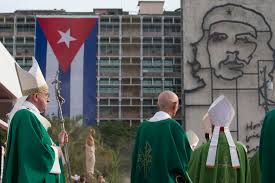
Che Guevara's Pope?
Here's what Mullarkey wrote:
Che Guevara's Pope?
Here's what Mullarkey wrote:
Something in me gave way at the sight of an exultant image of Che Guevara overseeing the altar in Plaza de la Revolución, the approved site of the recent papal Mass in Havana. A sadistic, murderous thug looked down on attendees in an obscene burlesque of Christ Pantocrator. Under the gaze of a butcher and amid symbols of the regime, Jorge Bergolio joined his fellow Argentine in service to the calamitous Cuban revolution. The entire spectacle played like a farcical inversion of John Paul II’s presence in Warsaw’s Victory Square, in 1979, and in stark contrast to the message he brought to Cuba in 1998.[Disclaimer: Rules 7-9]
What collapsed was any lingering sense of obligatory constraint. Gone is the time for courtesy extended to an occupant of the papacy despite his hubris and ruinous impulses. Out the window is dutiful tolerance for this man’s accusatory or incendiary language. Politesse has run its course. Historian Roberto de Mattei, writing on the wound to marriage delivered by Francis’ recent motu proprio (a personal mandate) ends his analysis with this: “Silence is no longer possible.”
... It takes little sophistication to realize that the intentions by which people understand themselves to be motivated are often not the ones that really drive them to speak and act as they do. However incoherent Francis’ logic on issues from economics to munitions, his stridency makes clear his antipathy toward the developed world. In this, he is a commonplace Leftist ideologue intent on finding ever-new sources of incrimination in the works of the West.
Wednesday, September 09, 2015
Two articles on Pope as usher for second coming of Peronism

These are two different articles by Maureen Mullarkey on the same topic; she calls the second an "addendum" to the first:
- "Pope Francis Ushers The Second Coming of Peronism" (The Federalist, September 8, 2015).
- "The Second Coming of Peronismo" (First Things, September 8, 2015)
“Peronism may be a good example of the high cost of social reform when it is indulged in a rhetorical and at times high-handed and arbitrary way.” — Guido Di Tella, “Perón-Perón 1973-1976.”
“Peronism is the highest level of consciousness reached by the Argentine working class.“ — Statement of the Movement of Priests for the Third World, 1971
“We mustn’t pay too much attention to people who talk to us of prudence. We must be fanatical.“ — Eva Perón
Monday, September 07, 2015
What could a Marxist possibly like about traditional Catholicism?!
The story of Dale Vree, founding editor of New Oxford Review, needs to be told again and shared abroad. The latest example is evidently found in John Beaumont's The Mississippi Flows Into the Tiber: A Guide to Notable American Converts to the Catholic Church (Fidelity Press, 2014), a tome weighing in at 1,013 pages. In the latest issue of New Oxford Review, now under the amply capable management of his son, Pieter, the elder Vree's story is briefly rehearsed as a thumbnail sketch in a review by Barbara E. Rose. She writes: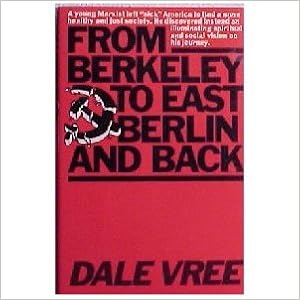
Another telling example touched upon is the Jamaican-American writer and poet Claude McKay. Rose writes:
Just a couple of details, maybe; but I know it was the little things, the tiny clues to the meaning of things, which helped me along my way, initially, toward the Church.
(Fidelity Press, 2014), a tome weighing in at 1,013 pages. In the latest issue of New Oxford Review, now under the amply capable management of his son, Pieter, the elder Vree's story is briefly rehearsed as a thumbnail sketch in a review by Barbara E. Rose. She writes:... Dale Vree, editor emeritus of this magazine, came through the civil-rights and peace movements, and Marxism-Leninism [and a period of living in the former East Germany], before landing in the Church. In Catholicism, Vree "could emphatically affirm both the rights of labor and the ancient creeds, reject both abortion and the use of nuclear weapons, affirm both lifelong marriage and the dignity of the poor, reject both laissez-faire capitalism and do-your-own-thing morals."
Another telling example touched upon is the Jamaican-American writer and poet Claude McKay. Rose writes:
Harlem Renaissance poet and writer Claude McKay for a time professed communism and atheism but came to believe in God and to love Catholicism. In the March 1946 issue of Ebony, the newly converted McKay warned black Americans to beware "the materialistic Protestant god of progress," and he called the Church "the greatest stabilizing force in the world today -- standing as a bulwark against all the wild and purely materialistic 'isms' that are sweeping the world."
Just a couple of details, maybe; but I know it was the little things, the tiny clues to the meaning of things, which helped me along my way, initially, toward the Church.
Subscribe to:
Posts (Atom)