Showing posts with label Japanese culture. Show all posts

Tuesday, May 23, 2017

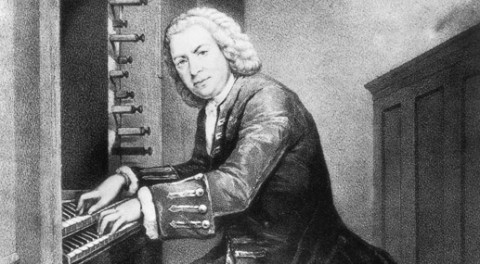
"What makes Bach so successful among the Japanese?"


Uwe Siemon-Netto, "J. S. Bach in Japan" (First Things, June 2000). What an amazing article! Here are a few teasers ...
Twenty-five years ago when there was still a Communist East Germany, I interviewed several boys from Leipzig’s Thomanerchor, the choir once led by Johann Sebastian Bach. Many of those children came from atheistic homes. “Is it possible to sing Bach without faith?” I asked them. “Probably not,” they replied, “but we do have faith. Bach has worked as a missionary among all of us.” During a recent journey to Japan I discovered that 250 years after his death Bach is now playing a key role in evangelizing that country, one of the most secularized nations in the developed world....

... “In their frenetic pursuit of production, speculation, and consumption,” Repp said, “the older Japanese have provided their offspring exclusively with materialistic values. But the youngsters are yearning for something more. The result is an enormous gap between the generations; they are no longer able to communicate with one another.”

... ”What people need in this situation is hope in the Christian sense of the word, but hope is an alien idea here,” says the renowned organist Masaaki Suzuki, founder and conductor of the Bach Collegium Japan. He is the driving force behind the “Bach boom” sweeping Japan during its current period of spiritual impoverishment. “Our language does not even have an appropriate word for hope,” Suzuki says. “We either use ibo, meaning desire, or nozomi, which describes something unattainable.” After every one of the Bach Collegium’s performances Suzuki is crowded on the podium by non-Christian members of the audience who wish to talk to him about topics that are normally taboo in Japanese society—death, for example. “And then they inevitably ask me to explain to them what ‘hope’ means to Christians.” ...

Japan’s Bach boom does, however, have one baffling aspect: how is it possible that melodies and rhythms from eighteenth-century Germany should please people of an entirely alien culture thousands of miles to the east? Tokyo musicologists have come up with an astonishing answer: Bach’s appeal to today’s Japanese is directly linked to a Spaniard’s first attempt to evangelize their ancestors 450 years ago.

... Believers were crucified, burned at the stake, tortured to death, or hanged upside-down over cesspools to intensify their suffering. Few Japanese were aware of this sinister aspect of their history until last year, when the Tobu art gallery in Tokyo commemorated the 450th anniversary of Francis Xaviér’s arrival with a massive exhibition spread over three floors.

The enormous crowds filing through this show were horrified by the cruelties its images portrayed. But there was one thing they did not learn at the Tobu Gallery: Western music managed to survive the persecution. The Jesuits had introduced Gregorian chant to Japan and built organs from bamboo pipes.... By the time Christianity was totally outlawed in Japan in the early seventeenth century, elements of Gregorian chant had infiltrated Japan’s traditional folk music. That influence remained strong enough to help Johann Sebastian Bach’s music sweep across the island nation more than four centuries later.

This explains the amazing success of Bach’s collected works, which were published by Sogakukan, a Tokyo company, to commemorate the 250th anniversary of the composer’s death. This collection of fifteen volumes, including 156 CDs accompanied by books with the original lyrics in German and Latin plus their Japanese translations, cost a staggering $3,000 each. Within weeks the first edition of five thousand copies was sold out.

The collection’s editor, Tesuo O’Hara, described himself as one of Christianity’s sympathizers, though not a believer. He could have fooled me. “What makes Bach so successful among the Japanese?” I asked him. O’Hara replied, “Bach gives us hope when we are afraid; he gives us courage when we despair; he comforts us when we are tired; he makes us pray when we are sad; and he makes us sing when we are full of joy.”
[Hat tip E. Echeverria]

Sunday, January 29, 2017

Some off-hand thoughts on the movie, Silence

I read the novel Silence by the Japanese Catholic author, Shusaku Endo, years ago when I lived in Japan. He's called the "Japanese Graham Greene." With good reason. Like Greene, he's a darn good novelist. Also like Greene, his Catholicism in his writings is ambiguous. I don't hold that against him as a novelist. Some of my favorite Catholic novelists are also ambiguous about the Catholic faith in their writings, even though they are clearly and intentionally Catholic, like Walker Percy or Evelyn Waugh.

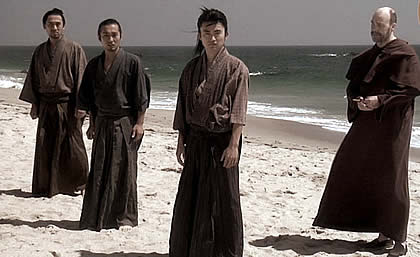
I read many, many reviews of Martin Scorsese's film based on Endo's novel, also called "Silence." One of the best on the critical side, I thought, was Monica Migliorino Miller's "Scorsese's Silence: Many Martyrs -- Little Redemption" (Crisis, January 9, 2017). But there were others that were also good on the appreciative side.

Personally, I liked the movie Silence. I think it was very well done. Whatever Endo's and Scorsese's motives, I think they both dealt powerfully with two things: (1) the exquisitely horrific tortures underwent by Catholics in Japan before the Meiji Restoration, and (2) the diabolically insidious temptations to apostasy that can make infidelity to Christ itself look like fidelity and virtue.

The latter theme of the movie, which I think most Christian audiences thought most significant, I think were (mis-?)understood in two ways: (a) by the 'liberals' as proclaiming a gospel of merciful accommodation indifferent to doctrine, and (b) by 'conservatives' as a message of doctrinal compromise intended by both Endo's novel and Scorsese's film.

I'm not at all certain that the latter is true. Whether it is or not, I think that not only the temptations but the consequences of apostasy were shown by both novel and film in a faithful light: the temptations were beyond ingenious, with the voice of Jesus seeming to come from His image on the fumie itself ("Step on me.") as if Christ Himself were counseling the mercy of apostasy as the path to redemption; and both apostate priests ended their lives by faded into oblivion, morphing into gollum-like shadows of themselves; and the Japanese Catholics (not all, but many) who witnessed their apostasy were significantly demoralized by it.

Remarkably, however, when Catholic priests returned to Japan after the Meiji Restoration of the mid-nineteenth century, they encountered Kakure Kurishitan (hidden Christians) who came out of hiding once again to present rosaries and crucifixes and statues of Maria Kanon that doubled as secret images of the Madonna, showing that the Faith had not been entirely wiped out. The price of persecution as well as apostasy was high. Only something like one tenth of 1% of Japanese people are Christians, and of these, half (about 509,000) are Catholic.

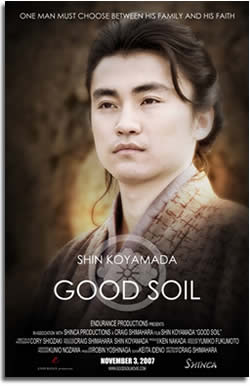
Some of you may remember the movie, The Last Samurai, starring Tom Cruise and Ken Watanabe. One of the young samurai actors in the film was Shin Koyamada, who only discovered during the making of that film that his ancestors were among the Kakure Kurishitan. So moved was he by the narrative of persecution and Catholic resistance during the Shimabara Rebellion, that he ventured to make film about those events in which he played the father of Shiro Amakusa, the leader of that rebellion (see my review here with a trailer of the film, "Good Soil").


Another recent discovery is the book, A Christian Samurai: The Trials of Baba Bunko, William J. Farge, SJ., which contradicts the generally held belief among Western historians that the Catholic mission in Japan ended in failure. Farge relates how Christian moral teachings not only survived the long period of persecution but influenced Japanese society throughout the Tokugawa period. Baba Bunko was a Japanese Catholic essayist and satirist whose biting criticism of the authorities of his time eventually led to his execution; but he was brazenly bold in asserting his views, declaring, for example, that a representation of the Eucharist would be a more fitting symbol for Japan than the coat of arms of the emperor and insignia of the shogun.

Gotta run.

Monday, January 09, 2017

Making a virtue of apostasy: the "Step on me" Jesus of Endo's Silence


Monica Migliorino Miller, "Scorsese's Silence: Many Martyrs -- Little Redemption" (Crisis, January 9, 2017). An insightful review by an astute Catholic professor and critic. Excerpt:
In the film’s climatic scene Japanese Christians are horrifically tortured and Rodrigues is forced to watch. If he would only step on the fumi-e placed on the ground before him the torture would end. Ferreira is there urging him, as Rodrigues himself had urged others, to step on the face of Jesus. And of course the apostasy, as in all other instances, is connected to bringing an end to human suffering. It is this scene that makes the Scorsese film a theological failure. Ferreira is the Judas character—but it is very unclear whether this Judas functions negatively or positively. Is this a Judas who works against Christ—or is this a Judas, ala the Gnostic text, The Gospel of Judas who actually aids Jesus to accomplish his mission? Ferreira tells Rodrigues: “If Christ were here he would apostatize for their sake” and “To give up your faith is the most painful act of love.” (Spoiler alert.) Then the voice of Jesus himself is heard coming from the fumi-e image lying on the ground. It is a bronze plaque of the crucified Christ who Himself urges Rodriquez: “Step on me. I carried this cross for your pain.” With the permission of Christ, Rodrigues denies his Lord. Apostasy, this time his own, stops the suffering of others, and the Christians are not martyred.

This is the most troubling aspect of Silence. Jesus gives permission to betray him, gives Christians permission to fail in their witness. It makes all the difference whether the film intends this to be the voice of Christ to Rodrigues or whether the voice is just something Rodrigues imagines in his own head. In this reviewer’s opinion, Scorsese intends this to be Christ’s voice that clears the path to failure. First of all, technically speaking, it is sound outside of Rodrigues, emanating from the image to him. The voice is not presented as something coming from the interior of Rodrigues’ consciousness.

Why would Scorsese, based on Endo, give us a Christ who provides his followers permission to fail? What end does the “Step on me” Jesus serve? Since Rodrigues recommends apostasy only to avoid suffering, one could conclude that suffering trumps faith—that for the good of avoiding horrible pain, denial of Christ is justified as it is Jesus alone who “carries this cross for your pain.” Of course this consequentialist ethic is contrary to Christian faith and morals—namely to do evil for the sake of good.

One could also just as well conclude that the “Step on me” Jesus is a theology that only Christ’s suffering has any value. Human beings, due to their inherent sinful nature will inevitably fail, despite all high-minded goals and personal expectations and in the end all that matters is the abiding silent presence of God to those that suffer. However, this is an insufficient Christian message—especially when one considers that in God’s eyes human suffering does have salvific value as Saint Paul himself stated: “Even now I find my joy in the suffering I endure for you. In my own flesh I fill up the sufferings of Christ for the sake of his body the Church.”

Or when Rodrigues steps on Jesus this is meant to be indeed the “most painful act of love” as he surrenders his own ideal for the sake of saving others. However, this interpretation is seriously weaken by the fact that he is miserable afterwards and for decades to come will continue to step on the face of Christ in repeated acts of apostasy when no one needs to be delivered from torture.

If however, the voice is just Rodrigues’ own justification to deny Christ—then indeed he is a true apostate and the movie works as a tale of God’s abiding presence to all those who suffer—the suffering of the martyrs as well as the suffering of those like Rodrigues and Kichijiro who are tormented by remorse and guilt for their failure. Jesus is there silently in the suffering of all—as the “voice” from the image says: “I carried this cross for your pain.” And this works well when one considers that Kichijiro commits apostasy over and over again, and is even a Judas who betrays Rodrigues to the authorities. Yet he always seeks out the priest to confess his sins and receive absolution. And indeed mercy is there for those who fail. Silence poignantly illustrates this point. Rodrigues indeed follows Ferreira—who ironically has wound up mentoring him into the life of an apostate priest. But long after Rodrigues quits the priesthood Kichijiro finds him and begs him to hear his confession and Rodrigues again provides him the absolution for which he craves.

Except for Christ telling Rodrigues to “Step on me” this forgiveness scene would be the climax of the film, and thus Silence would be about the silent abiding presence of God to all, even to those who fail. But this possible climax is overwhelmed by the very troubling permission of Christ to fail. The first climactic scene plunges the Scorsese film into a most problematic and erroneous soteriology. The end of the film attempts to show a certain level of redemption for Rodrigues who apparently remained a Christian privately, but is not powerful enough to overcome a depiction of Christ who leads his faithful servant to deny him.

This movie seriously examines Christian themes and ideas. But should a film that, to its credit, does such an examination necessarily be called a Christian film? I think not. A Christian film cannot simply explore—it must conclude and it must conclude in a way that is consistent with the gospel message—however unconventionally, provocatively, or innovatively presented. There must be the Christ of the Gospels who, rather than commanding his faithful followers to step on him, and twists this negativity, this denial of the Light, into “the most painful act of love,” calls them to follow him to the Cross—the Christ who rather ensures his faithful: “From the cup I drink from you shall drink; the bath I am immersed in you shall share.”

Believers hoping for a film that explores Christian ideas from an authentic Christian context—should skip this one. Silence should also not be seen by the young, or those whose faith is not strong as the theology in this movie is complex, clever and seductive. However, if you are a mature Christian looking for a finely crafted, well-acted, disturbing film that provokes thinking and debates—then Silence is for you. Let the debates begin.

Saturday, January 17, 2015

The "Our Father" as I learned it as a child

天にまします我らの父よ
願わくは
み名をあがめさせたまえ
み国を来たらせたまえ
み心の天に成る如く地にもなさせたまえ
我らの日用の糧を今日も与えたまえ
我らに罪を犯す者を我らが赦す如く我らの罪をも赦したまえ
我らを試みに遭わせず悪より救い出したまえ
国と力と栄えとは限りなく汝のものなればなり
アーメン
[Hat tip to Ken Shenk]

Saturday, August 17, 2013

How to eat Ramen

The noble art of the noodle, demonstrated by an old Master:


... from the old classic movie "Tampopo"

Friday, May 17, 2013

Catholic samurai rebels of 17th-century Japan


In the latest Latin Mass magazine, an article by the ever-informative Prof. Anne Barbeau Gardiner called to my attention that in 1962 Nagisa Ôshima directed a film called, in English, "Shiro Amakusa, the Christian Rebel," about the leader of the Shimabara uprising of 37,000 Christians in Japan (1637-38) against the Tokugawa Shogunate. The shogun eventually had to send a force of over 125,000 troops to suppress the rebellion, after learning that it wasn't a rag-tag army of peasants but a well-trained and armed rebellion led by Amakusa. At the heroic showdown at Hara Castle (in the southwestern Kyushu province of Hinzen), which was occupied by the rebels, the uprising was finally crushed, but only after a siege of several months in which the rebels were starved, yet inflicted huge losses (8,000-13,000) on the shogun's army. The result was a policy of "absolute seclusion" of Japan for over two centuries, and Christians were put to death by the thousands or were forced to apostatize.

I couldn't find a copy of the movie anywhere. But in my research online, I found that a short film on a similar topic was made in 2007 that I hadn't noticed, starring Shin Koyamada, who played alongside Tom Cruise in The Last Samurai, but even more remarkably disclosed his own Catholic roots among the "kakure kirishitan" (Christians in hiding) who had suffered persecution in the Shimabara rebellion. In this movie, Koyamada plays Masuda Jinbei (the FATHER of Shiro Amakusa, and a samurai who dared to challenge the ideology of the warrior class, follow his personal beliefs, and face what was considered back then to be social suicide). In the linked article interviewing Koyamada below, he talks about the personal meaning the role had for him in this movie, entitled "Good Soil" (2007). Here's a trailer:


Dr. Craig Reid, "GOOD SOIL: LAST SAMURAI to First Christian Samurai" (Kungfu Magazine):
GOOD SOIL is a groundbreaking film about the first samurai warrior who refused to give up his allegiance to Christianity and blindly accept the Shogun as his master. To the film's star, Shin Koyamada, who plays Masuda Jinbei (a samurai who dared to challenge the ideology of the warrior class, follow his personal beliefs, and face what was considered back then to be social suicide), the role had personal significance.

"I was interested in this film because it's a samurai film that portrays true historical events of Japan, stuff we don't have many opportunities to learn school," Koyamada told kungfumagazine.com, "and even though there is this history of Christianity, we don't talk about it in school, just like we don't talk about in Japan what we did to China (during World War II). They try not to reveal that past but want to focus on the future. But learning one's own roots and identity are important, so when I read the script, I was not familiar with the story, but Jinbei hit me close to home."

Koyamada became interested in learning about his samurai heritage one year after coming to America, and the impulse to search for his past became stronger after starring with Tom Cruise in THE LAST SAMURAI.

"After that film, I spoke to my grandfather to find out more about my ancestors," he says, "and he told me about Kakure Kirishitan, which means 'hidden religion,' something that existed hundreds of years ago back in Kagoshima, Japan, throughout Kyushu. Apparently, my ancestors believed in a sort of 'hidden religion,' and when I asked what it was, he (Koyamada's grandfather) didn't know and wasn't interested. My parents told me not to tell anybody about my family heritage because it is considered shameful.

"People were persecuted by the government in the 1600s if you were part of Kakure Kirishitan, this was a bad thing. My ancestors were part of that, and it didn't click in me until I started doing GOOD SOIL and was talking to Craig (the film's director Craig Shimahara) and he was telling me the history of Jinbei and his son Amakusa Shiro.

"I'm the first in my family interested in this, so after I researched Jinbei, Amakusa, and the history of Christianity in Japan, something bothered me and after I spoke with Craig about my past he said, 'Wow.' When I told my parents and they asked if I spoke to Craig before the film and I said I didn't, I knew something was up. These stories are similar and as it turns out Kakure Kirishitan, the hidden religion, was Christianity.

"What's interesting is my ancestors escaped or were sent to the countryside because they were Christian, like in this film where Jinbei stands up for his beliefs and was sent to the countryside where he passed on his legacy to his descendants. All my ancestors were possibly Christian samurai in Kagoshima. Two years ago I visited my ancestors' land, we own a mountain, the place they were sent and secretly passed down our history from generation to generation, and I'm the direct descendant who can now pass it on."

So how do Koyamada's parents feel now that that he openly speaks to the world of those things that are considered shameful family secrets?

"I convinced them that times change, people change, there's nothing to hide," he says. "One need not be ashamed or afraid to speak up. Four hundred years ago it was a problem to speak about being a Christian to the public, but now there is no need to hide. If we admit the past, we can move on. I broke the rule by finding this out, I also broke the rule by marrying a Columbian. I'm the family troublemaker but you can't make a mark without risks, can you. Working on this film became personal."

Saturday, December 08, 2012

Perfect sushi


We ran the above trailer from the award-winning film by David Gelb entitled, "Jiro Dreams of Sushi" some nine months ago (Musings, April 3, 2012).

The combination of Beethoven's music and the most exquisite culinary delicacy in the world is just perfect -- as I was again reminded when my son Christopher recently sent me the link to the same trailer, a guilty pleasure which I indulged yet again.

I have yet to see the movie. Hard to understand, I know. A little more exploration on the Internet has simply whetted the appetite for what I should call "I Dream of Jiro's Sushi":


Just imagine: a fifteen course dinner in twenty minutes, served one piece at a time, made to perfection, ingredient, technique, timing. Every item is served at the right time and temperature and stage in its preparation, and in the correct order, so that the flavors complement one another and don't detract.

Anthony Bourdain says at one point, "I'm ready to die now." I can remember thinking just that myself on occasion. It can be just that good. You can't touch this, Fr. Z.

Update: Just found the film on Amazon, where Prime members can stream it for free!

Saturday, June 02, 2012

Ramen Girl: a review

Ramen Girlmay be a Grade B flick, but if you've spent any time in Japan or know the language, there are compensations that make this film a lot of fun. The premise is totally contrived, as well as the scenes where the ramen miraculously induces giddy joy or hysterical weeping; and the idea of an American girl who can't speak a word of Japanese apprenticing herself to a Japanese ramen chef who can't speak a word of English is beyond unrealistic -- just as the dialogue in which the girl speaks English and the Japanese ramen chef speaks Japanese, each talking past the uncomprehending other.

What made the movie interesting for me was this: if you understand the language, the harsh, derogatory condescending language of the ramen chef is a dead-on ringer for a particular Japanese character type, and those who recognize it will be highly amused. There are multiple levels of discourse in Japanese depending on whom you're addressing and how respectful or disrespectful you're choosing to be, just as there probably are in any language -- only, in Japanese these are very highly nuanced. The language used in criticism of the American girl is about as bog-low as you can get. This is also reflected in the harsh comportment of the chef toward the girl.

The business about her not being able to capture the damashi or tamashi (魂), or interior spirit of authentic Japanese ramen broth is a bit of a comical stretch, especially when she only finally succeeds by adding her heartfelt tears to the ramen broth, but the manner in which the chef's brusque and harsh demeanor masks an interior and barely-expressed affection for the girl is also on target for the Japanese male, who is typically as incapable of expressing tender emotions as the Teutonic Northern European. There was an attempt at a touching moment toward the end, which almost succeeded.

Another interesting moment was when the ramen master was judging between the dishes of two competing ramen houses, and the suspense builds as he samples the noodles and the broth. A far better Japanese classic along these lines, and one a bit less fanciful but no less entertaining, is the brilliant film, Tampopostarring Ken Watanabe, which I recommend to any interested readers. The scene where the aged connoisseur demonstrates how to properly eat a bowl of ramen is worth the whole movie.

Tuesday, April 03, 2012

Jiro Dreams of Sushi: Trailer to the movie


A film by David Gelb. Like true believers in the elegant culinary art of sushi everywhere, I've got to see this film. The classical score offers a perfectly fitting setting for the artistic presentation.

Nori. Shoga. Wasabi. Shoyu. Maguro. Ikura. Ika. Toro. Kamaboko. Sake. Tamago. Inari. Inagi.

It's enough to bring tears to your eyes ...

Hmmmmm ... Sushi for Easter??? Not a bad idea!

[Hat tip to Andres Seba and Matthew Zetuna]

Friday, December 23, 2011

9 months later, we remember . . .


As always, I continue to be moved not only by the great resiliency of the Japanese people, but by their great courtesy in always remembering to thank those who have showed them kindness. Very moving. Please join me in remembering them in your prayers.

Monday, March 14, 2011

Why there is no looting in Japan

The question is raised by Ed West, "Why is there no looting in Japan?" (The Telegraph, March 14, 2011). This question is popping up a lot of places, and many, like Ed West, seem at a loss for an answer. He writes:
The landscape of parts of Japan looks like the aftermath of World War Two; no industrialised country since then has suffered such a death toll. The one tiny, tiny consolation is the extent to which it shows how humanity can rally round in times of adversity, with heroic British rescue teams joining colleagues from the US and elsewhere to fly out.

And solidarity seems especially strong in Japan itself. Perhaps even more impressive than Japan’s technological power is its social strength, with supermarkets cutting prices and vending machine owners giving out free drinks as people work together to survive. Most noticeably of all, there has been no looting ...

Tuesday, January 11, 2011

Kentucky Fried Chicken: a Japanese "Christmas Tradition"


Check out the crazy but interesting facts at "Today I Found Out" (December 23, 2010).

[Hat tip to C.B.]

Saturday, August 21, 2010

Why Christianity Is "Foreign" to Japan

After well more than 4 centuries of evangelization, less than 1% of Japan is Christian; and that figure may be inflated. Thirty years ago I regularly heard the figure "less than one-tenth of one percent," although that probably didn't include Catholics. Still, the statistics are dismal.

I've always attributed this to several factors, including the Buddhist doctrine of "no soul" or "non-self" (Pali, anatta; Skt., anātman), the trickle-down of this Buddhist outlook into the general culture, as witnessed in the language, which one can speak endlessly without the use of personal pronouns, implicitly submerging the person into an ultimately impersonal environment called the "void," "emptiness" (Jap. ku) or "nothingness" (Jap. mu).

Further, there is the inherent acceptance of contradictions in the logic of "is-and-is-not" (Jap. soku-hi), which, maddeningly to a western Christian, makes a hash of the principle of contradiction, and explains why Japanese families have no trouble accepting Shinto rites of passage for their children, both Shinto and "Christian" wedding rites, Christmas trees and Christmas hymns, and Buddhist funeral rites -- all without blinking an eye. I was at a Japanese wedding a few years ago where the bride and groom were married in a Christian chapel, with hired Christian hymn singers, a faux-priest vested in what could have been Catholic vestments, who preached what for all intents and purposes was a fairly orthodox-sounding Christian marriage homily. Yet neither the bride nor groom were believers, nor probably hardly anyone in the gathering, and I think the "priest" may have been an agnostic Jew. It's all about form, you see: there is no underlying substance to anything at all -- least of all this thing we call "reality." So let's just get used to it, the attitude seems to be.

Another factor is the latent Confucian ethos, in which strictly defined social roles and morals are decisively separated from any religious commitments (Confucianism is a social ethic, not a religion, if by "religion" you mean more than a social ethic). Hence, the Japanese historically embrace a moral code that has nothing to do with any sort of religious or metaphysical commitments.

In light of this, I was pleased to see a robust and articulate confirmation of these convictions, with many other notable insights, in a recent exposition on this matter posted on Sandro Magister's blog entitled, "Why Christianity Is 'Foreign' to Japan" (www.chiesa, August 19, 2010). His summary reads: "Annihilation of the "self," divinization of nature, rejection of a personal God. The cornerstones of the Japanese culture, explained by the ambassador of the Rising Sun to the Holy See." The post, which includes an essay by Mr. Kagefumi Ueno, the Ambassador of Japan to the Holy See, is well worth reading. Originally delivered as a lecture at the Circolo di Roma, Ambassador Ueno's essay was first published in "L'Osservatore Romano" on August 14, 2010.

Monday, June 21, 2010

And now, for something to make your heads explode

Jero (ジェロ, born Jerome Charles White, Jr. in Pittsburgh, Pennsylvania, on September 4, 1981) is a Japanese enka singer who is American-born of African-American and Japanese descent. His maternal grandmother was Japanese, and it was under her influence that Jero was first exposed to enka. Jero is the first black enka singer in Japanese music history.

Jero has been a major phenomenon in contemporary Japan. In this video clip, you can see Jero being interviewed by a Japanese emcee on a Japanese enka music show. If you know the language, you will note that Jero is absolutely fluent in Japanese. They speak briefly about the song he is about to sing. He mentions the influence of his Japanese maternal grandmother. A snapshot is shown of him together with her, as well as a video clip of him as a five-or-six-year-old boy singing an enka song (although he says that at the time, he did not understand the meaning of the Japanese words). If you pay close attention, you may note that the song, like all enka music, employs the pentatonic scale.

Returning to real time, Jero then says that he intends to dedicate his song on the show today to his grandmother, giving it everything he's got. He then stands, bows to those seated on stage, walks to center stage as the music begins, bows to the audience, and begins. It is not only these bows or his facility with the language, but every little gesture of his hands and limbs, the nods of his head while speaking, etc., that are altogether aboriginally Japanese in form, giving this performance an air of deliciously mind-numbing implausibility -- as if a dolphin had sprouted wings learned to fly. There he stands, looking for all the world like an African-American male hip-hop singer. He's from Pennsylvania, for crying out loud, and a graduate of the University of Pittsburgh! And yet, there he stands on stage in an enka music show in Japan, in his New York Yankee's outfit, hat on crooked, hat and shirt in fire engine red (a color considered garishly unfitting for males in Japan); and, forthwith, he breaks out in a PERFECTLY-executed enka song.

It may not be your taste in music. God knows it was not mine, growing up in Japan, though it was ubiquitous, and has only recently taken on a nostalgic quality for me personally. But it does a real number on me to be trundled down memory lane by THIS fellow, who, if I had my eyes shut, could pass for a native Japanese singer! Again, God must be laughing.

(This genre is superlatively sentimental, as it probably goes without saying. For anyone who cares, I have a brief Amazon review of an enka album by Ishikawa Sayuri, probably my favorite female vocalist in this genre, and someone who, wearing her kimono, would offer a more traditional Japanese image of what enka singers are typically like. Here are two of her signature songs on YouTube: "Amagigoe" and "Tsugaru Kaikyou Fuyu Geshiki, along with "Daikon no Hana" from her 2010 album.)

Thursday, April 22, 2010

Japan's lost generation

The publisher's comments on Michael Zielenziger's 2006 book, Shutting Out the Sun: How Japan Created Its Own Lost Generation(rpt., Vintage, 2007), read:
The world’ s second-wealthiest country, Japan once seemed poised to overtake America. But its failure to recover from the economic collapse of the early 1990s was unprecedented, and today it confronts an array of disturbing social trends. Japan has the highest suicide rate and lowest birthrate of all industrialized countries, and a rising incidence of untreated cases of depression. Equally as troubling are the more than one million young men who shut themselves in their rooms, withdrawing from society, and the growing numbers of “parasite singles,” the name given to single women who refuse to leave home, marry, or bear children.

In Shutting Out the Sun, Michael Zielenziger argues that Japan’s rigid, tradition-steeped society, its aversion to change, and its distrust of individuality and the expression of self are stifling economic revival, political reform, and social evolution. Giving a human face to the country’s malaise, Zielenziger explains how these constraints have driven intelligent, creative young men to become modern-day hermits [the term used by the Japanese is "Hikikomori"]. At the same time, young women, better educated than their mothers and earning high salaries, are rejecting the traditional path to marriage and motherhood, preferring to spend their money on luxury goods and travel.
Reading this is very sad indeed. While Japan -- where I grew up and visited last in 2005 -- still outwardly retains a clear continuity with her past, I have heard from many friends and acquaintances who continue to reside there that the younger generation has, in many respects, lost its way. If earlier generations failed to embrace the Light of Christ (less than 0.1% are practicing Christians of any kind), they at least had the sense of identity that comes from being a unique people with strong national and moral traditions informed by Confucian, Shinto and Buddhist sources. The stalwart moral character and generous spirit of the Japanese people was noted by St. Francis Xavier when he arrived there in 1549, and these traits were very much alive in the Japanese during my childhood. I would insist that they are very much in evidence still. Yet among the younger generation they have been sharply eroded, and nothing has effectively filled the void. Pray for Japan and her people. In the Lord's Providence, I am inclined to think that they are destined still to play a major role in the international community for decades to come.

Related: Phil Rees already reported on the phenomenon of Hikikomori back in 2002 in "Japan: The Missing Million" (BBC, October 20, 2002).

[Hat tip to A.S.]

Sunday, January 31, 2010

The nostalgia of real RAMEN!

Ramen (ラーメン), which is pronounced "Ramion" in Korean and "Lo Mein" in Chinese, comes from the compound characters 撈麵 (in Cantonese) that stand for "stirred" and "noodles." In Japan where I grew up, I had the genuine Japanese version of the dish years before I ran into the instant "Oodles-of-Noodles" stuff that has the nutritional equivalent of cardboard. (To be fair, it will do in a pinch as a comfort food, if prepared right -- which I say only because I knew a student at Chapel Hill who would pull the dry noodles out of the plastic wrap and spread peanut butter on it, which is definitely not right.) When I was in junior high school in Sapporo, we could put in an order for Ramen for lunch and have it delivered to us at our school for exactly 60 yen (when the exchange rate was $1.00 US Dollar = 360.00 Japanese Yen); and a bowl of "Soba" (buckwheat noodles) or "Udon" (fat, flat bleached wheat noodles) was only 40 yen. But that's all ancient history.
It was with a pang of nostalgia, then, that I read the "Ramen Adventures" (New York Times, January 29, 2010) diary of a blogger helping the Frugal Traveler, Matt Gross, with an article he was writing (Christopher Blosser had sent me an email with the link). The photos and descriptions were more than enough to get my mouth watering, as would be case too, I'm sure, for any Japanese expatriate in this country. Have a look. If you like Vietnamese Pho, this is a distant cousin, and one well worth getting to know.

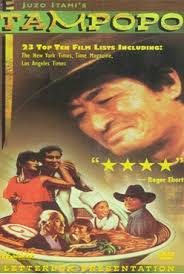
If you enjoy this Ramen genera, thereis a movie you are sure to enjoy if you haven't already seen it, called "Tampopo"(タンポポ, literally "dandelion"), a 1985 Japanese comedy film by director Juzo Itami, starring Tsutomu Yamazaki, Nobuko Miyamoto and Ken Watanabe (The Last Samurai, Memoirs of a Geisha), sportingly referred by publicity as the first Japanese noodle Western. The story centers on two truck drivers happening into a roadside Ramen shop, getting into a fight, then helping the proprietress turn her shop, which isn't doing too well, into the Grand Ramen-Daddy of noodle shops. Somewhat in the manner of Like Water for Chocolate or Mostly Martha, the narrative focuses on the subtleties of delectable culinary delights with a tease of romance in the subscript.

[Hat tip to C.B.]

Sunday, November 15, 2009

How low can you go ... what a brother don't know


John Steele Gordon, "The President Who Grovels" (Commentary, November 14, 2009), writes:
Could someone in the Chief of Protocol’s Office at the State Department please tell Barack Obama that heads of state do not bow to other heads of state? And for the head of state of the country founded on the idea that “all men are created equal,” that goes double.

When Obama bowed to King Abdullah of Saudi Arabia, the White House denied it: “It wasn’t a bow. He grasped his hand with two hands, and he’s taller than King Abdullah,” said one aide. As a commentator on CNN said, “Ray Charles could see that he bowed.” (h/t PowerLine)

Now he has bowed, extravagantly, to Emperor Akihito of Japan. The Los Angeles Times called it a “wow bow” in its headline and asked “How low will he go?”

President Obama goes abroad apologizing for the supposed sins of a country that defended and extended freedom around the world at a staggering cost in lives and treasure and then grovels before the man whose country has yet to apologize for the Rape of Nanking.

As my mother used to say, “Pardon me while I throw up.”
Some Western journalists are speculating that those who have trouble with Mr. Obama's gesture are limited to foam-at-the-mouth American right wingers, and that it may be warmly received in Japan where such gestures of humility, it is thought, have been long respected. I spent my first twenty years in Japan. I should know.

There is indeed a popular saying among the older generation in Japan, which suggests that a person is respected being humble -- because his "atama ga hikui" (literally: because he "has a low head"). Yet you can't simply extract this gesture from its Confucian cultural context and tradition and expect to properly apply it in the abstract.

If you watch people bow to one another in Japan, it is a delicate ritual. If people have exchanged name cards the process is assisted by the fact that each knows the relative rank of the other and how deeply it would be appropriate or inappropriate to bow. Rank is a deeply complicated affair involving gender, relative age, profession, and a host of other relationships cataloged by Confucius. If one doesn't know the rank of the other, the undertaking is a bit dicier, and each party carefully eyes the other while making his best intuitive judgment of how deep a bow is appropriate, each party typically repeating the bows until they come to some sort of unstated mutual consensus.

Thus the idea that an American president should baldly waltz up to the Emperor of Japan and greet him with a profoundly deep bow, bending almost double, exhibits nothing so much as silliness. However well-intentioned it may be, it shows utter lack of judgment. Why? Because there is no proper inter-cultural, international context for such a bow. Mr. Obama is neither Emperor Akihito's subject nor a Confucian, and I do not think he believes him divine -- a title that was abrogated after the Second World War. This is simply not the way a contemporary head of state greets another, even if he is royalty. A shake of the hand with a slight bow of the head would have been ample and appropriate. But within a Japanese context, Mr. Obama's gesture comes closer to the manner in which a vastly inferior Japanese subject would bow to his Emperor, or perhaps someone out of the Emperor's good graces seeking his mercy or pardon. Hence, it was an altogether inept and inordinate gesture for a head of state.

Mr. Obama was probably merely trying to show courtesy and respect for a venerated national Japanese figurehead. I am sure the Emperor was graciously indulgent -- just as the Queen of England was with Michelle Obama's pats on her back; yet I am no less certain that the gesture felt awkward to them. Here comes running another stupid gaijin (foreigner) who simply does not know his manners. Well, at least he's bowing and not high-fiving the Emperor, so I am quite certain they were happy to smile at the poor spoiled and abysmally untutored and inexperienced boy president. Let's hope he didn't try to give the Emperor some sort of electronic gadget. That would have been a fatal coffin nail.

I must say it strikes me odd how "into" these sorts of international gestures Mr. Obama is, when I consider how little he is "into" such gestures as laying a wreath at the tomb of the unknowns the other day at the Arlington National Cemetery, a fact amply clear from his awkwardly stiff and impatient body language.

[Hat tip to C.B.]

Tuesday, July 01, 2008

Japanese women seek white, groveling western men

I remember observing early on in my teens while growing up in Japan and the best Japanese-American marriages seemed to be those in which the men were American and the women Japanese. If the man was Japanese and the woman was American, the difficulties were nearly insurmountable. The woman would be accustomed to an American culture in which young husbands helped their wives with things like the dishes, laundary, and diapers; while the man would be accustomed to a Japanese culture in which husbands never traditionally did anything of the sort. In fact, in Japan, the husband traditionally walks ahead of his wife, and the wife stands and lets her husband sit if there is only one open seat on a bus or subway.

If the man was American, however, and the woman was Japanese, the shoe would be on the other foot. Japanese women would feel pampered having a husband who volunteered to do the dishes or take out the garbage; and American men would feel spoiled having a wife who expected to wait on her husband hand and foot.

This, however, goes entirely over the top: this CNN video clip shows a cafe for Japanese women sick and tired of being ignored by Japanese men, women who turn to American men to wait upon them for a chance to feel like a queen for a day: Have a look.

[Hat tip to C.B.]

Friday, March 16, 2007

Japanese Sushi Documentary

As much as I love sushi, it's a wonder I didn't hear about this Japanese Sushi Documentary before visiting Bill Cork's blog, where he posted a link (Built on a Rock, March 14, 2007). It's in Japanese with English subtitles, informative, and peppered with often outlandish tongue-in-cheek humor, especially for anyone who understands Japanese. Delightful!