Showing posts with label Language. Show all posts

Sunday, March 04, 2018

Tridentine Community News - Evangelizing with a Catholic vocabulary; Tridentine Masses this coming week


"I will go in unto the Altar of God
To God, Who giveth joy to my youth"

Tridentine Community News by Alex Begin (March 4, 2018):
March 4, 2018 – Third Sunday of Lent

Evangelizing with a Catholic Vocabulary

Catholic social media over the past few weeks has been awash with heretical and pushing-the-boundaries statements of progressive theologians, journalists, priests, and bishops. At face value, it can seem as though the Church were turning in an official new direction. Indeed, certain individuals have become famous for spouting what would have been roundly condemned by Church authorities just a few years ago. Many in the upper echelons of the Church are now silent in the face of this relatively small handful of outspoken, high-profile individuals. It’s enough to get one depressed, except ...

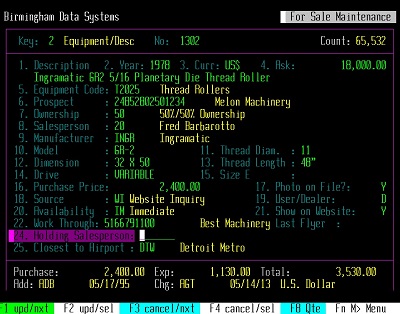
The scenario is all too reminiscent of something that happened to this writer in the secular world. Allow a personal note: For decades, I used to be in the business of selling small computer mainframe systems and software. These were reliable, proven systems, but with text-based, admittedly boring-looking screens. A significant portion of my competition was flashy, Windows-based systems with visually appealing screens. The salespeople for those systems had embraced a term designed to denigrate my offerings: they called them “legacy systems,” a backhanded way to maintain that they were outdated, old-looking, obsolete technology.


What my competitors failed to tell the potential customers was that their systems were pretty, all right, but their feature list was a small fraction of my offerings. Yes, my legacy systems in fact did a whole lot more than their relative quickly cobbled-together systems did, because mine had had many more years to have much more functionality and reliability built into them, thanks to the feedback of our customers [an analogy to Ordinary vs. Extraordinary Form is tempting]. So how to communicate this succinctly to the prospects? We needed our own vocabulary to counter the competition’s, and so we came up with our own term: The others were pushing “bimbo systems”: pretty, but they didn’t do a whole lot! And beware, what is considered attractive today may itself be considered “legacy” in a few years when standards change.

And so it is when traditionally-inclined Catholics are called rigid, clinging-to-the-past, out-of-touch, and whatever belittling term du jour is cast our way. We might benefit from developing our own term akin to the overused “hater”, which is often applied to anyone with sincerely held convictions. It would be useful to have a term which pejoratively refers to those too eager to embrace modern causes often juxtaposed to immemorial Church teachings. Something like, “she’s an amour”, meaning a person all too willing to swoon over the latest theological guru or fad.

Of course, we have a higher calling than battling with words. Evangelizing, or more specifically reaching out to those seeking a spiritual home, is more successfully done with love, with enthusiasm, with the carrot rather than the stick. We traditional Catholics really do have the advantage here: We can evangelize with beauty. Traditional sacred art, architecture, liturgy, and music can speak to the soul in ways that bland modern theology and liturgy cannot. Modernists appeal to the emotion and the desire to be free of restrictions. Little of what they are pushing will save the soul, and to their credit, rarely if ever do they maintain it will.

Their day-to-day vocabulary can make one shudder. Even if some of these terms did not originally have a modern connotation, when used in the context of progressive Catholic talk, there is no mistaking the orientation of the person or institution using them:
Narthex or vestibule vs. Gathering Space
Altar vs. Table of the Lord
Holy Communion vs. Eucharist
Congregation vs. Assembly
Pulpit vs. Ambo
Mass vs. Liturgy
Confession vs. Reconciliation
Extreme Unction vs. Sacrament of the Sick
“Legacy Catholics”, too, should make use of expressions that convey our mindset. Consider working traditional Catholic terminology into your own conversations. Use terms such as:
Holy Sacrifice of the Mass
Holy Ghost
Sacred Body
Precious Blood
Deo grátias

We’ll be better off taking the energy we put into reading and commenting about or to the high-profile heretics of the day into gently and steadily promoting all that we love, the full and undiluted Roman Catholic faith. For each dissenting Catholic that chooses to follow those celebrities of the moment, we should be able to attract at least as many sincere souls to the Truth.

Tridentine Masses This Coming Week
  • Tue. 03/05 7:00 PM: Low Mass at Holy Name of Mary, Windsor (Tuesday in the Third Week of Lent)
  • Sat. 03/10 8:30 AM: Low Mass at Miles Christi (Saturday in the Third Week of Lent)
[Comments? Please e-mail tridnews@detroitlatinmass.org. Previous columns are available at http://www.detroitlatinmass.org. This edition of Tridentine Community News, with minor editions, is from the St. Albertus (Detroit), Academy of the Sacred Heart (Bloomfield Hills), and St. Alphonsus and Holy Name of Mary Churches (Windsor) bulletin inserts for March 4, 2018. Hat tip to Alex Begin, author of the column.]

Saturday, August 26, 2017

"All words have lost their meanings now."


For a man whose favorite mode of communication seems to be carrier pigeons, our underground correspondent somewhere in an Atlantic seaboard state, Guy Noir - Private Eye, seems surprisingly savvy about contemporary electronic technology. He used some sort of messenger app on his smart phone (didn't know he even had one) to contact me today as I was sitting at my computer. All of a sudden, there he was, bushy beard and all. One might have mistaken him for one of them mountain men up in the hollers of the Appalachian mountains.

Anyway, he blurts out: "Peter Kreeft has a new book out on world religions. [This is the one I think he had in mind.] At Amazon, one reviewer calls him an 'exclusivist.'"

At which point Noir, without letting me get a word in edgewise, contorts his bearded face and simply yells into his phone: "TO WHICH I REPLY, ALL WORDS HAVE LOST THEIR MEANINGS NOW!"

"Well, what do you mean?" says I.

And he replies: "I esteem Kreeft and his writing, but he engates in wishful thinking and his solutions are compromises of the Wojtyla-Ratzinger-Bergoglio sort."

"Whaaaa???" says I.

"They do not solve problems but amplify them," says he. "Ratzinger has a book called Faith and the Future, which is like a political pamphlet in its effort to please."


"This is more on point ..." says he, "old but useful." And he sends me while still on messenger (don't ask how, I wouldn't know), sending me a link to this article by Stan Guthrie, "Whose Submission? A Muslim-Christian dialogue," a critical review of Kreeft's Between Allah and Jesus: What Christians Can Learn from Muslims from some years back.

Guthrie begins his review by quoting the first line of Kreeft's earlier classic, Between Heaven and Hell, about three luminaries -- John F. Kennedy, Aldous Huxley, and C. S. Lewis -- who each died on November 22, 1963. In the first line from that book, JFK asks, "Where the hell are we?"

Guthrie observes that he had a similar reaction after reading Kreeft's later work, Between Allah and Jesuss, noting that it seems to stand the earlier one on its head, making a Muslim protagonist "a stand-in for the Lord," even having him claim to be "a better Christian than his Christian foils." Of course, given the state of Christian catechesis these days, this may not be too far from the truth in some cases.

In any case, Kreeft, Guthrie, and Noir all raise an important question to think about: Have our words lost all their meanings now, or, at least, are we in danger of our words losing their meaning? If we accept von Balthasar or Fr. Barron's hypothesis that hell could be empty, or nearly empty, for example, has our use of the word 'salvation' or 'redemption' lost all meaning? It's a fair question. And the same could be asked of our 'pastoral' use of words like 'love,' 'mercy,' and 'forgiveness,' in venues where there is almost no reference to 'repentance' or 'contrition.' If all religions present genuine paths to God and all non-Christians, Protestants, and members of sectarian religious cults have a reasonable expectation of finding themselves in heaven in the world to come, then what's the point of converting to the Catholic Faith? For that matter, what's the point of the New Evangelization? Sweet, merciful Jesus could be so severe at times:
Enter by the narrow gate; for wide is the gate and broad is the way that leads to destruction, and there are many who go in by it. Because narrow is the gate and difficult is the way which leads to life, and there are few who find it. (Matthew 7:13-14)

Sunday, January 15, 2017

Conservatism? Liberalism? What do we mean?

Conservatism and liberalism are notoriously ambiguous terms. They are relative by their very nature. Conservative? Liberal? With respect to what? And what do we mean by them? Understood in its political sense, classical 'liberalism' promoted views that would be regarded at 'conservative' today: minimal government with a severely restricted job description: the protection of life, liberty, and property. Furthermore, both terms have also non-political meanings, such as theological or cultural 'liberalism' or 'conservatism.'

A friendly colleague recently described herself as a "liberal" on Facebook. She did this during the politically-contentious election season, and I think her description was meant to distance herself, in part, from the mud-slinging we witnessed on both sides of that event, but also, in part, to distance herself from the slurs of racism, sexism, xenophobia, coarseness, and ugliness that the media did their best to identify unilaterally with Trump and other 'deplorable' opponents of Democratic party enlightenment, just as they portrayed Hillary as polished, professional, refined, etc. (Who can forget Michelle Obama's remark: "When they go low, we go high"!)

I commented on my colleague's Facebook post that by her description of 'liberalism,' I, too, saw myself as a 'liberal'-- educated, high-minded, open-minded, concerned for the poor and dispossessed, desiring to be fair and generous toward others, etc. Yet I cannot imagine that this did not produce at least a little bat squeak of cognitive dissonance, in that part of her intended meaning was surely political and she very likely did not regard my severe criticisms of Hillary and her sycophant media promoters as 'liberal' in any sense of the word.

There is a very good discussion of conservatism and liberalism in R. R. Reno's editorial in the latest issue of First Things (February 2017), though couched in a deeper analysis of "Gratitude for the Given" that pervades traditional Christian understandings of one's fatherland or motherland, which involves accepting limitations but with a disposition that allows us to rest in thankfulness for all that is good in our national heritage.

Modern liberalism, says Reno, discourages rest:
We must work in the present for the sake of the future. Everything is subject to improvement, which means we are required to forsake the mode of enjoyment. The injustices tolerated by our system of government cry out for remedy. We need a living Constitution, one plastic and available for the great and the good to use in order to bring us into a better future. The same goes for our history and traditions. They must be critiqued and updated so that they are more diverse and inclusive. By this way of thinking, gratitude for the given brings complacency, and complacency is an enemy of the future.
Conservatism, on the other hand, comes from a sober recognition of limits -- or, perhaps, getting mugged by reality:
We are fallible, fallen creatures, and the conservative learns to doubt the efficacy of the grand schemes of progressivism, efforts of social transformation that often require the power of government. Ignorance, self-interest, greed, hubris, sloth -- these and other vices, so stubbornly resistant to the beneficent ministrations of progress, subvert even the best plans. The conservative, therefore, argues for political humility. We should seek to ameliorate injustices and make marginal improvements in our political system. But let's not imagine we can perfect society with a master-stroke of social engineering.
But Reno goes on to tie in this traditional conservative skepticism into what Yuval Levin calls a "conservatism of gratitude," as adumbrated earlier. He also goes on to discuss these alternatives in combination with other variables such as libertarianism, utilitarianism, and free-market purism, finally returning to themes of tradition (Chesterton's "democracy of the dead"), gratitude, repose and rest in politics that comes ultimately from Pax Christi. There is so much more that could and should be said here, but here are, at least, some chestnuts of wisdom worth tucking away in one's mental pocket to mull over in the days and months ahead.

Distantly related: George Orwell, "Politics and the English Language"

Sunday, September 11, 2016

Fierce

Reading Peter Wehner's "George Orwell's Fierce Modesty" (First Things, September 7, 2016), our underground correspondent we keep on retainer, Guy Noir - Private Eye, comments:
OK, and I have thought similar thoughts. A needed word.

And Orwell actually wrote a very appreciative review of Frank Sheed's Communism and Man.

But "fierce" modesty? Where on earth did that word come from, and how does it fit at all? "Sober," maybe, "measured," "admirable," "honest," "consistent." But "fierce" ? Sounds like a Bro Country album title.

You know what we really need? A fierce resistance to defaulting to intense words to try pump up our relevance and vitality. I saw a sign for "The Surge Church." We need "robust interior lives." We have to be "Gospel centered," there is the "New" evangelization, and Orwell was "fiercely" modest. It is exhausting enough to make you want to yawn. I know every age has its phrases, but have we peaked and overshot, in an era when new books routinely come out with a page of seven to nine book blurbs hyping a little known author, and even article titles have to have so.... much ... zing!

Friday, July 10, 2015

George Orwell, "Politics and the English Language"

Someone, maybe one of you, reminded me that this essay was available online. I've just read through it again. While it doesn't address such timely issues as the changes in the language wrought by feminism, which were a bit before his time, or even the politics of "Newspeak" as related in his dystopian novel 1984, it does address the deterioration of language found especially in political writing, and offers some advice in the way of remedies in writing style.

He offers five examples, one of which is from the book Essay in Freedom of Expresseion by the political philosopher, Harold Laski:
I am not, indeed, sure whether it is not true to say that the Milton who once seemed not unlike a seventeenth-century Shelley had not become, out of an experience ever more bitter in each year, more alien [sic] to the founder of that Jesuit sect which nothing could induce him to tolerate.
Multiple negatives, anyone?

What each of his five excerpts share, he says is "staleness of imagery" and "lack of precision"; instead of choosing words for their meaning, they cobble together phrases like "sections of a prefabricated hen-house" -- phrases like take up the cudgel for, toe the line, ride roughshod over, play into the hands of, on the order of the day, etc. Instead of simply choosing a clear word, such phrases are often used, sometimes mixing incompatible metaphors, and sometimes without any apparent knowledge of their meaning.

Orwell discusses four "tricks" by means of which writers habitually attempt to dodge the hard work of honest prose-construction:
  1. Dying metaphors -- still in use, but without meaningful context for understanding their meaning, like take up the cudgel for, toe the line, ride roughshod over, grist to the mill, no axe to grind,, on the order of the day, etc.
  2. Operators or verbal false limbs -- substituting phrases for simple verbs, typically in the passive voice, such as render inoperative, militate against, make contact with, be subjected to, give grounds for, have the effect of, exhibit a tendency to, etc. Often noun constructions are used instead of gerunds (by examination of instead of by examining), and various -ize, de- and not un- formations are employed in "banal statements" to give "an appearance of profundity." Simple conjunctions and prepositions are replaced by such phrases as with respect to, having regard to, the fact that, by dint of, in view of, in the interests of, etc., and sentences anticlimactically (and clumsily) ended by phrases such as greatly to be desired, cannot be left out of account, deserving serious consideration, etc.
  3. Pretentious diction -- words like phenomenal, categorical, virtual, constitutive, etc.; or adjectives like epoch-making, epic, historic, unforgettable, inexorable, veritable, etc.; or foreign words like cul de sac, ancien regime, deus ex machina, mutatis mutandis, status quo, weltanschauung, etc.; or unnecessary words like expedite, ameliorate, predict, deracinated, etc.; or Marxist jargon like petty bourgeois, these gentry, proletarian, lackey, White Guard, etc.
  4. Meaningless words -- particularly of the kind used in art criticism, such as vital, natural, human, dead, sentimental, values, romantic, etc. (One could think of numerous analogues in wine tasting, interior decorating, etc.) Political words are similarly abused, says Orwell, such as fascism, democracy, socialism, freedom, patriotic, realistic, justice, etc., each of which has several different meanings that cannot be reconciled with one another; and a similar case could be made for class, totalitarian, science, progressive, reactionary, bourgeois, equality, etc. But then, these are the sorts of equivocations on which politicians thrive.
A particularly delicious example of bog language is one created by Orwell himself. First, he offers the well-known verse from Ecclesiastes
I returned and saw under the sun, that the race is not to the swift, nor the battle to the strong, neither yet bread to the wise, nor yet riches to men of understanding, nor yet favour to men of skill; but time and chance happeneth to them all.
Then here it is in "modern English" in Orwell's own parody:
Objective considerations of contemporary phenomena compel the conclusion that success or failure in competitive activities exhibits no tendency to be commensurate with innate capacity, but that a considerable element of the unpredictable must invariably be taken into account.
There is, of course much, much more in this fascinating essay; but one of the most helpful bits is provided, I suppose, in the following rules that Orwell suggests "will cover most cases":
  1. Never use a metaphor, simile, or other figure of speech which you are used to seeing in print.
  2. Never use a long word where a short one will do.
  3. If it is possible to cut a word out, always cut it out.
  4. Never use the passive where you can use the active.
  5. Never use a foreign phrase, a scientific word, or a jargon word if you can think of an everyday English equivalent.
  6. Break any of these rules sooner than say anything outright barbarous.
Perhaps some Vatican writers of ecclesial documents could benefit from Orwell's little essay!

One of the first things I noticed was how counter-intuitive some of his recommendations are. In an age of postmodern purple prose, the idea seems to be to choose a much bigger, more ornate word wherever a simpler word would do. Some of the phrases and words Orwell criticizes are everywhere ('ubiquitous'?!) in academic writing. I admit to using quite a few of them myself.

I'm reminded, finally, of two wonderful quotations I've admired for decades, even if I have not always practiced their wisdom:
  • “Don’t use words too big for the subject. Don’t say ‘infinitely’ when you mean ‘very'; otherwise you’ll have no word left when you want to talk about something really infinite.”
    -- C.S. Lewis 

  • “Any fool can make things bigger, more complex, and more violent. It takes a touch of genius—and a lot of courage—to move in the opposite direction.” -- Albert Einstein

Wednesday, May 27, 2015

Stop saying "transgendered"

The mysterious blogger who now refers to himself in the third person as "Raider Fan" has the reputation for being a bit of a ham. He can be most amusing. But those of you who know his posts and comments are also aware that he's also always very serious.

In one of his most recent posts, "Do you say 'Transgender?' You do? STOP IT!" (The Nesciencent Nepenthene, May 27, 2015), he addresses a serious issue once addressed by George Orwell in an essay entitled "Politics and the English Language." Orwell writes (emphasis from R.F.):
Most people who bother with the matter at all would admit that the English language is in a bad way, but it is generally assumed that we cannot by conscious action do anything about it. Our civilization is decadent and our language — so the argument runs — must inevitably share in the general collapse. It follows that any struggle against the abuse of language is a sentimental archaism, like preferring candles to electric light or hansom cabs to aeroplanes. Underneath this lies the half-conscious belief that language is a natural growth and not an instrument which we shape for our own purposes.

Now, it is clear that the decline of a language must ultimately have political and economic causes: it is not due simply to the bad influence of this or that individual writer. But an effect can become a cause, reinforcing the original cause and producing the same effect in an intensified form, and so on indefinitely. A man may take to drink because he feels himself to be a failure, and then fail all the more completely because he drinks. It is rather the same thing that is happening to the English language. It becomes ugly and inaccurate because our thoughts are foolish, but the slovenliness of our language makes it easier for us to have foolish thoughts. The point is that the process is reversible. Modern English, especially written English, is full of bad habits which spread by imitation and which can be avoided if one is willing to take the necessary trouble. If one gets rid of these habits one can think more clearly, and to think clearly is a necessary first step toward political regeneration: so that the fight against bad English is not frivolous and is not the exclusive concern of professional writers.
Beneath this quote he posts a clip from a Bob Newhart sketch, which explains the "Stop It!!" in his title; and, beneath that, he posts a graph (see his post) showing the rise in the use of the word "transgender" in the general population, beginning with zero in 1980 and rising to 90% of the population by 2008.

The point may seem trivial, but it's not. It's not that the words we use change reality itself. That's impossible. No matter how many people call Bruce Jenner a "woman," they don't thereby turn a man into a woman, any more than the Flat Earth Society, by calling the earth "flat" can succeed in flattening it. The problem is, rather, that the words we use change our understanding of reality, so that just as members of the Flat Earth Society begin to actually believe the earth is flat, so the general population may begin to actually believe, with Bruce Jenner, that he is a "woman."

I've addressed this issue before by quoting Abraham Lincoln's question: "If we call a tail a leg, how many legs does a dog have?" The answer, of course, is: no more than it had to begin with, because a tail is not a leg. Some of my readers will also remember my gripe with the allergy we've all developed, due to the pervasive influence of the feminist movement and such, which has us avoiding the use masculine third-person singular pronouns ("he," "his," "him," "himself"), so that we get philistine barbarisms that induce a gag reflex, such as: "A human being is not an end in themselves." What we have to consider here is not only the butchery this makes of language, but the reason why we're contorting ourselves into pretzels in order to avoid the general population's allergies against the traditional inclusive use of male nouns (like "man" and "mankind") and pronouns. If there was a sign on a cage that said "Danger! Man Eating Tiger!" do you think any woman would be foolish enough to think it didn't apply to her because she isn't a "man"? Of course not! So here we play this little game and we're all part of this little collective ruse even though none of us really believes it.

Here's Peter Kreeft's thought:
"Man means "manking," not "males." It is traditional inclusive language. "Humanity" does not go with "God" ("God and humanity") because "God" and "man" are concrete nouns, like "dog" and "cat," while "divinity" and "humanity" are abstract nouns, like "canininity" and "felinity" or "dogginess" and "cattiness." Whatever the political or psychological uses or misuses of these words, that is what they mean. We do not undo old injustices against women by doing new injustices against language." (Philosophy 101 by Socrates [San Francisco: Ignatius Press, 2002], p. 9, n. 1)
Let the revisionist idiots take over the language, and you'll start talking and thinking like them.

Sunday, August 17, 2014

"Thee" and "vouchsafe"

Again, my pet peeve: how so many hymns and prayers have been revised to omit those "offensive" words like "Thee," "Thou" and "Thy" to substitute the egalitarian, familiar and nondescript "You" and "Your." [I know this is an absolute non-issue for many of my readers, and they needn't read on.]

Sometimes it's almost comical. Like many of you, doubtless, I make use of those lovely prayers by St. Thomas Aquinas before and after Holy Communion. I have a little card in my Missal with these prayers, which doubles as a bookmark.

The comical part is that all the offending "Thees" and "Thous" have been removed, substituting "You" and "Your," even though ALL OF US continue to use the older form of address in the Our Father and Hail Mary ...

... AND here's the kicker: they still retain the word "VOUCHSAFE"! [There are other even worse translations.]
Therefore, I implore the abundance of YOUR measureless bounty that YOU would VOUCHSAFE to heal my infirmity ..."
... and again
I give You thanks, holy Lord, Father almighty, everlasting God, that YOU have VOUCHSAFED to feed me, a sinner, YOUR unworthy servant, for no merits of my own ..."
Is this not hysterical?? They keep a word like "vouchsafe," which probably only one in a dozen people understands today, but dump "Thou," "Thee," "Thy" and "Thine"!

Don't get me wrong, "vouchsafe" is a perfectly noble word meaning to "graciously grant" something. My own sense of the language of the prayers in English translation is that it would be much better served by retaining the older forms in toto, rather than trying to modernize them and throwing a philistine indignity like "YOU" in amidst the dignified references to "almighty" and "everlasting" and "imploring" God's "measureless bounty."

Keep "YOU" for the ordinary language of today. Keep the language of prayer noble, elevated, respectful, and dignified. "Hallowed by THY name. THY kingdom come. THY will be done ... Blessed art THOU among women, and blessed is the fruit of THY womb, Jesus."

Related: David Mills, "Lewis & Orwell on Language" (Patheos, July 9, 2014).

Wednesday, June 11, 2014

Retrieving a lost Catholic vocabulary

Readers of this blog may remember my protests about what political correctness has done to English grammar. I've started keeping a list of examples, and here's a stellar example of what I have in mind from an essay by an otherwise intelligent individual:
"If a human being is not an end in themselves, they can more easily be seen as a 'burden to society' if they cannot make a 'contribution.'"
It's sheer butchery, of course. Imagine trying to teach English as a foreign language with grammar like that. I can just imagine the quizzical looks on the faces of the corporate executives in Japan whom I used to tutor in English conversation!

But there is another way in which the language of Catholic faith and life is being eroded and lost today by pressures from a culture in many ways at odds with it. There are many examples that come to mind: one now "takes" (rather than "receives") Holy Communion; "attends" (rather than "assists at") Mass; "has sex" (rather than "conjugal relations"), etc. These and a host of other examples might serve could each serve as the subject of a separate essay on its implications, whether theological, spiritual, social, or psychological.

"Tradition" and its cognates ("traditional," "traditionalist") are among the most surprising examples in recent memory, however, which have now come to be used increasingly as pejorative terms for a subset of Catholics who hold fast to older traditions of the Church supposedly displaced since the Second Vatican Council.

On my journey to the Catholic Faith, which began in 1987 before being received in the Church in 1993, those who sought to dissuade me constantly pitted the "living Word of God" (the Bible) over against the "vain traditions of man" (Col. 2:8) allegedly represented by Catholicism. So entrenched was this animus against Catholic tradition, that one of my Protestant theology professors, James Payton, Jr. to his credit pointed out that the evangelical New International Version (NIV) of the Bible explicitly attempts to "de-Catholicize" those passages where Paul commends the Church's traditions (1 Cor 11:2, 1 Thes 2:15; 3:6) by translating the Greek word for "traditions" as "teachings," while translating the remaining ten references which are all negative as "traditions" (as in vain and empty "traditions of man").

Cardinal Newman famously wrote that "to be deep in history is to cease to be Protestant." To be Catholic, as he showed me, was to be rooted in and hold fast to the apostolic traditions passed down to us, to be enriched by the immense wealth of resources offered by that apostolic legacy as it grew from the original acorn into a flourishing oak tree under the indefectible guidance of the Holy Ghost -- He Who was promised "to lead us into all truth" (Jn 16:13). As the New Testament emerged from the Old, as the Mass emerged from the Passover of our Lord, as Gregorian chant emerged from Hebrew Psalmody, so I viewed Catholicism as emerging from the particular covenant with Israel as the new universal covenant, the branch from the wild (Gentile) olive tree grafted into the natural (Jewish) tree and nourished by its singular root (Rm 11:13-25). To be Catholic meant, as being Jewish did for Tevye, to be rooted in tradition.

Imagine my surprise upon entering the cathedral of Catholicism, then, only to encounter throngs of Catholics running for the door to escape anything remotely traditional, Catholics intent on losing everything but the experience of the present moment, with "hymns" (I use the term loosely), worship, and spirituality that looked more like everything I thought I was leaving behind in the backwaters of provincial populist hayseed fundamentalism than anything I had read about in books. In fact it was closer to a synthesis of Lawrence Welk and Peter, Paul, and Mary, but aggiornamento gone to seed, all the same.

Apparently today it's not enough to be self-identified as a "Catholic." If one expresses a certain sort of discomfort with the drift of things over the last fifty years since the council, if he prefers the liturgy that was displaced by the post-Vatican II Mass of 1970, he must be referred to somewhat suspiciously as a "traditionalist." I have heard some of the otherwise nicest people refer to such Catholics in the most sneeringly dismissive tones as "traditionalists." "He goes to the Tridentine Mass," they say. "He's gone traditionalist," they say, in the tone of voice that suggests the moral equivalent of "apostate."

On the one hand, I suppose just as the pejorative epithet "Yankee" was embraced with pride by the colonial patriots, Catholics who eschew the NewChurch kool aid could also embrace the term "traditionalist" and simply "own it." On the other hand, I'm quite taken with the recent suggestion of Elliot Bougis, which suggests an alternative closer to what Confucius meant by the "rectification of names" -- in this instance, eschewing revisionist qualifiers and simply retrieving the integrity of simple Catholic language as it was used before the revolution:
Instead of saying, I “assist at the [Traditional] Latin Mass”, let us say, with the pride that can [come] only from a consistent embrace of our patrimony, I “assist at the Mass, but I sometimes assist at the New Mass when the need arises.”
Yet again:
If [the modern Church] wants to be known as a New Order, let the Novus Ordo be known as the New Mass. We Consistent Christian Catholics must drop all revisionist qualifiers about THE MASS and treat the Novus Ordo as it wants to be treated: as the New Mass. This in no way suggests that the New Mass is illicit or invalid, nor does it seek to insinuate any inferiority of the New Mass. It is simply an attempt, heeding Orwell’s advice cited above, to reverse the revisionist corruption of language in the modern Church, whereby a liturgy that’s younger than most of the priests offering it is spoken of as the default expression of Catholic worship, while the oldest form of Christian liturgy is looked down upon as some kind of deviant, decadent innovation.

Saturday, May 11, 2013

Alvin Plantinga: "Fundamentalist" = "sombitch"?

All of us are familiar with how the dreaded f-word is trotted out to stigmatize this or that group, whether Muslim or Christian. Well, now philosopher Alvin Plantinga offers a full philosophico-grammatico-semiological analysis of the term "fundamentalist":
On the most common contemporary academic use of the term, it is a term of abuse or disapprobation, rather like 'son of a bitch', more exactly 'sonovabitch', or perhaps still more exactly (at least according to those authorities who look to the Old West as normative on matters of pronunciation) 'sumbitch'. When the term is used in this way, no definition of it is ordinarily given. (If you called someone a sumbitch, would you feel obliged first to define the term?) Still, there is a bit more to the meaning of 'fundamentalist' (in the widely current use): it isn't simply a term of abuse. In addition to its emotive force, it does have some cognitive content, and ordinarily denotes relatively conservative theological views. That makes it more like 'stupid sumbitch' (or maybe 'fascist sumbitch'?) than 'sumbitch' simpliciter. It isn't exactly like that term either, however, because its cognitive content can expand and contract on demand; its content seems to depend on who is using it. In the mouths of certain liberal theologians, for example, it tends to denote any who accept traditional Christianity, including Augustine, Aquinas, Luther, Calvin, and Barth; in the mouths of devout secularists like Richard Dawkins or Daniel Dennett, it tends to denote anyone who believes there is such a person as God. The explanation is that the term has a certain indexical element: its cognitive content is given by the phrase 'considerably to the right, theologically speaking, of me and my enlightened friends.' The full meaning of the term, therefore (in this use), can be given by something like 'stupid sumbitch whose theological opinions are considerably to the right of mine'.
Source: Alvin Plantinga, Warranted Christian Belief,2nd ed. (Oxford University Press, 2000).
[Hat tip to E. Echeverria]

Thursday, April 18, 2013

Mortimer Adler on the disorderedness of romantic love

I'm sure there is someone out there who will call me, at the very least, a killjoy, and maybe worse; but I have had this unresolved question in the back of my mind for some years. The question is this: What exactly is "romantic love"? It's not that I haven't experienced the emotional high involved in the phenomenon. I still remember this little Japanese girl in kindergarten in Hokkaido where we lived another lifetime ago. I'm utterly certain it was what people call "true (romantic) love." Then on a school field trip, we were all shown how to make origami objects out of bamboo leaves, and I made an origami canoo, which I gave to the love of my life, and she flung it over her shoulder with a look of utter disdain; and I've never been the same since.

No, the question is not one of experience, but of conceptual classification; which may, in fact, help people to know how to regard and treat the experience. The puzzle deepened when I finished reading C.S. Lewis's The Four Loves, decades ago, which analyzed brilliantly the differences between four classical types of love distinguished by the Greek philosophers:
  1. Agape (charity), which is a self-giving love animated by concern for the beloved (this is the word used in the New Testament for Jesus Christ's love for us);
  2. Eros (sex), which Lewis describes as the "face-to-face" kind of love that two people have for one another when they desire one another (this is primarily a self-serving kind of love, in that I desire the other for my own sake, pleasure, fulfillment, etc.);
  3. Philia (friendship), which Lewis calls the "shoulder-to-shoulder" kind of love that two people have for one another who discover that they have a common interest; but the Greek word for "philosophy" (love [philos] of wisdom [sophia]) shows that this kind of love can be for other things than persons, as when a person says "I love chemistry," perhaps;
  4. Storge (affection), which Lewis calls a very biological love, in that it involves the kind of love between a parent and child, with the typical caresses and hugs that accompany it (and I suppose it extends to pets as well).
But my question, of course, was this: Where does "romantic love" fit in this typology? In some ways it seemed like it edged close to "Eros," but that didn't seem quite right either; because "romantic love" is something far more "spiritual" than mere erotic attraction.

Well, I just happened across this short, short interview with Mortimer J. Adler (whose works I greatly admire), and I think he has provided for me the beginning of a resolution. Here is the interview [Be sure to click on the "Read more" link to read the whole thing -- it's short):
On Romantic Love

A Conversation Between Max Weismann and Dr. Mortimer Adler

WEISMANN: Could you help us and begin by naming the three bad loves and explaining why they are bad as love--in Christian terms?

ADLER: You may be shocked at first to see what they are--love of money, pride, and romantic love. At first they don't seem to go together, they seem like such different things. But what they have in common (the principle they all violate) is that they are either loves of the wrong subject, or loves of the right objects but in the wrong way. All three violate the precepts of charity. All three consist in displacing God, in deifying something other than God--in loving Mammon rather than God; in loving oneself as if God, the sin of Lucifer; in loving a man or woman as if divine, worshipping or adoring another human being.

Friday, July 20, 2012

The fake unity of multi-lingual Masses (vs Latin)

An anonymous priest's rant is posted by Fr. John Zuhlsdorf, "GUEST RANT: Many languages for Mass and fake 'unity'" (WDTPRS, July 20, 2012).

Vatican II called for the preservation of Latin in the mandated reform of the Roman liturgy. Most Catholics today find it convenient to forget this, assuming that Latin was an alienating, divisive thing that kept the pew peasants in ignorance about what was going in the Mass. Besides, learning Latin today would be a chore and a drudgery. So to Latin they bid "Good riddance!" and to the Vernacular they bid "Welcome!"

But then one finds that people today are rather grandiloquent about celebrating cultural diversity. In large metropolitan parishes one frequently encounters occasions when parts of the Mass are parceled out to native speakers or those otherwise fluent in various languages -- Spanish, Vietnamese, Polish, Italian, Portuguese, German, French, etc. -- in an expansive and sometimes all-too-self-congratulatory display of linguistic diversity and prowess.

All of this, of course, is quite as bewildering as it is impressive. Does anyone imagine that the majority of any congregation is familiar (let alone fluent) in all of these languages? Or even two or three? Is the purpose of jettisoning the Latin being forgotten here? Or wasn't the purpose effective communication to begin with? Hmmmmm ........

One thing apparent to anyone familiar with the traditional form Latin rite is that the rudiments of the Mass are transparently clear to anyone acclimated to it. Evelyn Waugh, a convert to the Catholic Faith in 1930, attests to this. The ordinary parts of the Mass -- the Kyrie, Gloria, Credo, Sanctus, Agnus Dei -- were always familiar even to those untutored in Latin. Any Catholic of age before the 1960s knew what was signified by these parts of the Mass (he knew, for example, what "Kyrie eleison" or "Agnus Dei qui tollis peccata mundi" means), which seems more than one can sometime assume of English-speaking adults these days in the ordinary form of the Mass.

Furthermore, one could go to any country in the world and celebrate the same Mass with an identical form. This is not true since 1970. Any properly-catechized Catholic adult might figure out roughly where he is in the Mass, but the ordinary parts of the Mass would not be familiar, as they would be if he were acclimated to the Latin in the traditional Latin Mass. At one of the Spanish-language Masses I frequented in NC, the musical setting for one of the ordinary parts of the Mass was regularly Simon and Garfunkel's "Sound of Silence." If one did not know Spanish, he might well wonder what was going on.

But all this is a mere detail. Here's the post from the guest priest on Fr. Z's blog:
In my diocese we are often asked (read, expected, pressured) to participate in or to celebrate Masses in more than one language in the name of multi-culturalism. I am not talking Latin here. The result is that for bilingual people they are great, and for those who are not, at least half the Mass is incomprehensible. It is something of an irony, since I thought the very thing the liberals of the Church wanted was to run like lemmings towards the sea away from a language they could not understand. But now its all the rage, particularly in the Southwest where Spanish is so common. But now they cannot help themselves but make us sit through the new Mass to be culturally enriched by a modern romance language we do not understand. I am told that at a recent LA Religious Ed conference they did a Mass in five modern languages, meaning that four fifths of the devoted attendees did not know what they were listening to. My preference under such circumstances would indeed be Latin for real multiculturalism…but thats not going to happen where I live. Any thoughts?

Thursday, June 09, 2011

Linguistic allergy against "Thee," "Thou" & "Thy"

This is so silly. We seem to have no problem with these traditional terms in the Our Father. But the CENSORS seems to have major problems with them anywhere else -- even when it would seem most natural and ... dare I say it? ... fitting and even beautiful.

My English translation of the daily prayers of the Novena to the Holy Spirit has words like "possesseth" and "hast vouchsafed" in it. Okay, "old fashioned," maybe; but not a problem.
  • "Knowledge is a fountain of life to him that possesseth it."

  • "Almighty and eternal God, Who hast vouchsafed to regenerate us by water and the Holy spirit, and hast given us forgiveness of all sins, vouchsafe to send forth from heaven ...."
But then it insists on substituting "You" and "Your" for [nearly] every instance of the second person singular referring to God.
  • "I cling to You and give myself to You and ask You, by Your compassion to watch over me in my weakness."
I say "nearly" every instance, because the CENSORS missed one "Thee"!!!

Ha! Fie, foul Censor! Thou spleeny fool-born pigeon-egg! Thou clay-brained guts, thou knotty-pated fool, thou whoreson obscene greasy tallow-catch! Thou spleeny toad-spotted bum-bailey! Thou pribbling shard-borne mammet! (Who said Elizabethan English couldn't communicate today?)

Sunday, January 09, 2011

'Mother,' 'Father' Changing to 'Parent One,' 'Parent Two' on Passport Applications

Here we go again, from the same people who brought you plural third person pronouns as substitutes for third person singular (gasp!) masculine nouns.

I used to teach Japanese business executives English in Tokyo. I used to wonder what went through their minds when they read wrenchingly illogical American convolutions such as: "If ANYONE needs to use the men's room, THEY can find it at the end of the hall." And now we have the iniquitous folly of "Parent One" and "Parent Two." While they're at it, why not add "Three" and "Four"? And replace "Son" and "Daughter" with "Child One" and "Child Two"?

Would anyone like to hazard a guess what's really behind this desire to neuter language? And please don't anyone be so boorish as to say "the civil rights of gays"!

Thursday, August 26, 2010

Proper grammatology

Tridentine Community News (August 15, 2010):
Capitalization in the Propers

You may have noticed some quirky issues of grammar and typography (“orthography” is the more appropriate term) in our Latin/English Propers handouts. With the exception of the occasional typo, these are intentional. They reflect customs in liturgical Latin, the Douay-Rheims English Bible, and Douay-like translations of Orations and Antiphons that are quite different from modern English. In the course of preparing the handouts over the years, it has become increasingly apparent what those customs actually are. We have also been able to detect the occasional typo in the Latin or English in a given missal, due to the deviation from usual standards.

Capitalization is the first issue. In English it is customary to capitalize the titles “Saint”, “Martyr”, Confessor”, “Angel”, and so forth, even if the corresponding Latin is not capitalized.

Pronouns referring to God generally, or any member of the Blessed Trinity individually, are capitalized in English but not (always) in Latin. “Name” is always capitalized when it refers to the Holy Name of our Lord Jesus Christ; it is not (always) capitalized when it refers to the name of God generally, as in the Old Testament.

There can be confusion and inconsistency about whether to capitalize certain words. For example, many Postcommunion Collects contain clauses such as the following: “We who have been fed with Thy heavenly Gifts…”. If “gift” is meant generically, it can remain lower case. However, if the word refers to the Eucharist, as it arguably does in a Postcommunion, it is deserving of capitalization. Modern hand missals such as the Baronius Press typically do capitalize these sorts of words. Older missals often do not, but tend to undercapitalize in general, e.g.: “…Thy martyrs Ss. Vitus, Modestus…” “Martyrs” should be capitalized, as it is in the original Latin.

Sometimes the first letter of a word following a question mark is not capitalized, as though a question mark separates clauses like a semicolon, rather than always completing a sentence. This occurs in both Latin and English text.

Punctuation

In Latin, colons are often used to separate clauses. In the English, missals use a mixture of colons and semicolons for the same purpose.

It can be tempting to correct especially the English in accord with current usage. For example, on June 15, we commemorate Ss. Vitus, Modestus, and Crescentia. The second comma, after “Modestus”, is omitted in many English translations. We don’t believe that is a matter of dated orthography, but rather a simple oversight in typesetting the text. Correcting it also helps the celebrant to pace the reading of the English Epistle and Gospel.

As a rule, we do not correct punctuation in the Latin text unless it is glaringly obvious, such as a missing period between sentences.

J or I?

Classical Latin and some liturgical books use “I” in place of “J”, e.g.: “Iesus Christus”. There are conflicting stories as to who was responsible for the introduction of “J”. Usage seems to have started somewhere between 1500-1790. It seems to be a matter of custom, not unlike “U” having evolved to take the place of “V” when a vowel is needed. We use “J” for clarity’s sake. If we adhered to the older custom, things could get quite confusing. Quick: Which is easier to pronounce, “Julius” or “Ivlivs”?

Accent Marks

In most official Latin liturgical books, only words with three or more syllables employ accented vowels. A few books, most notably the Liber Usuális, which our cantors use to chant the Propers, do accent vowels in words that have only two syllables. In keeping with the more prevalent custom, we only employ accent marks when there are three or more syllables.

As we have noted in previous columns, the lack of accent marks can be frustrating. Some recently published Vatican books omit them entirely, which can create some challenges – and habits of pronouncing words improperly – in those who are not familiar with those words from other sources.

Ligatures and Accented Ligatures

A ligature is a single character that takes the place of two adjacent vowels that are pronounced without a syllabic pause. The most notable are “œ” to take the place of “oe”, and “æ” to take the place of “ae”. Capitalized ligatures in some fonts can look unattractive, so we occasionally revert to using separate vowels.

Few fonts contain accented ligatures. Therefore, for occasions where one is needed, such as in “quaésumus”, Michel Ozorak devised a way to kern two separate vowels close together so that they look like a ligature. Likewise, many liturgical books do not print accented capital vowels, but we do, for example: “Áccipe”.

One drawback to ligatures and accented vowels is that they can make it hard to search documents. Fortunately, Google compensates for that and will find, for example, an “ae” when you search for an “æ”. The search functions in Microsoft Word, Excel, and Internet Explorer, however, will not.

Some Latin books use “œ” in place of æ” in certain words. One that comes to mind is “cæli”, sometimes spelled “cœli”. Google won’t help with that.

Is There a Good Latin Dictionary for Word?

A call to our readers: Does anyone know of a trustworthy and comprehensive liturgical Latin dictionary for Microsoft Word? We have searched, but are not aware of one. It would help catch typos. Thanks are due to Peter Gulewich, by the way, for proofreading our handouts and ensuring their accuracy.
[Comments? Please e-mail tridnews@stjosaphatchurch.org. Previous columns are available at www.stjosaphatchurch.org. This edition of Tridentine Community News, with minor editions, is from the St. Josaphat bulletin insert for August 15, 2010. Hat tip to A.B.]

Tuesday, July 27, 2010

Pope John XXIII on fitting liturgical language

"The Catholic Church has a dignity far surpassing that of every merely human society, for it was founded by Christ the Lord. It is altogether fitting, therefore, that the language it uses should be noble, majestic, and non-vernacular."

Blessed John XXIII, Veterum Sapientia, 1962


[Hat tip to New Theological Movement]

Tuesday, December 30, 2008

Inagoddada Godself

"For God so loved the world, that God gave God's only Child that whosoever should believe in God should not perish but have Inagoddadavidababy Godspell Godself."
This perversion of John 3:16 sometimes comes to mind when I hear the gender-bender utterances that sometimes pass for politically correct theological language these days. The ugliness of it is enough to make one's head explode: "Enough already!" That is precisely what seems to have happened to Gilbert Meilaender in an article last year entitled "Enough of God" (Touchstone, May 2007). The article, which is not available online, carries the subtitle: "Gilbert Meilaender on Losing Him in Translation." Losing HIM indeed. Here are some excerpts:
Recently I had occasion to read again portions of Dietrich Bonhoeffer's Discipleship. It is known to many English readers as The Cost of Discipleship, the title of an earlier English translation published by Macmillan. But as volume four of the English Edition of Bonhoeffer's Works now being published by Fortress Press, it is simply Discipleship (translating Bonhoeffer's German title, Nachfolge).

That is all well and good, and the English edition of the Works contains useful introductions, footnotes, and bibliographies -- each of which helps readers more fully to understand the text. In this way the scholarly life makes progress.

The Progressive Limit

For human beings, though, progress seldom moves in a straight line and is seldom divorced from the unfortunate limits of a particular age. And, as I read along in Discipleship, I was struck by a certain kind of limit -- indeed, a limit that appears precisely where the editors and translators no doubt assume themselves to be most progressive. Moreover, this particular defect results in ugliness. Let me illustrate.

Here are just a few sentences from the new translation in the English edition of the Works:
God once created Adam in God's own image. In Adam, God sought to observe this image with joy, as the culmination of God's creation, "and indeed, it was very good." In Adam, God recognized the divine self.
Here are those sentences in the earlier translation, published by Macmillan in 1963:
When the world began, God created Adam in his own image, as the climax of his creation. He wanted to have the joy of beholding in Adam the reflection of himself. "And behold, it was very good." God saw himself in Adam.
Now, imagine reading page after page of Discipleship, translated in the style of the first of these translations. After a while one just wants to say, "Enough of God -- nbo more please." To be clear, the issue I raise here is not accuracy of translation. The issue is, first of all, ugliness.

Suppose we talked and wrote this way not just about God but also about others. "Ugly" would be too weak a word to describe the product. Consider the following sentences from a scholar who is a master of English prose. In his biography of St. Augustine, Peter Brown writes:
The emotional tone of the Confessions strikes any modern reader. The book owes its lasting appeal to the way in which Augustine, in his middle-=age, had dared to open himself up to the feelings of his youth. Yet, such a tone was not inevitable. Augustine's intense awareness of the vital role of 'feeling' in his past life had come to grown upon him.
Suppose we wrote of Augustine the way Bonhoeffer's translators write of God.
The emotional tone of the Confessions strikes any modern reader. The book owes its lasting appeal to the way in which Augustine, in Augustine's middle-age, had dared to open up Augstine's self to the feelings of Augustine's youth. Yet, such a tone was not inevitable. Augustine's intense awareness of the vital role of 'feeling' in Augustine's past life had come to grow upon Augustine.
And then imagine reading Peter Brown's entire biography written in such a style. Few would want to endure it. Yet, theologians and preachers now routinely subject us to such prose when speaking of God. If they are not read, who shall we blame?
Meilaender goes on to discuss the argument that such language not be extended horizontally to our fellow creatures, but be reserved for God. However, he describes the nearly lost capacity of contemporaries to distinguish between characterizing God as male and speaking of God as masculine -- making a hash of the Lord's relation to Israel as the lover who woos her and the husband who remains faithful to her, not to mention Christ's relationship to the Church as her Bridegroom.

The idiocy of this Gnostic attempt to get behind the revealed language and images for God and get at some deeper reality is that it ends up offering a repulsive, grotesquely etiolated, hideous deformity instead.

Meilander concludes that our best hope may lie where he began -- in aesthetics: "The sheer unnatural ugliness of gender-free language about God means that considerable effort is needed to socialize us into such patterns of speech. Perhaps Beauty may come to the aid of Truth."

Well, I see what he means; but I'm not counting on it. Whether one considers clothing fashions, church architecture, popular music, cinema, or what passes for art these days, the signs seem to point in the other direction: the love affair of post-modernity with ugliness. Still, that doesn't prevent traditional forms from retaining their objective qualities of beauty or prevent us, who can, from enjoying them.
"For God so loved the world, that He gave His only begotten Son that whosoever should believe in Him should not perish but have everlasting life." (John 3:16)
[Acknowledgement: Gilbert Meilaender, "Enough of God," is published in the print edition of Touchstone (May 2007), pp. 12-14. Hat tip to E.E.]