In fact, on the second run through this video, Msgr. Harrington's comment elevating a relationship with Jesus Christ as primary and the law as "what comes afterwards" sounds positively Lutheran. Gospel vs. Law; love vs. justice; Simul iustus et peccator. Luther couldn't have put it more clearly himself. Thing is, in the Catholic view, law and justice are themselves expressions of God's love and mercy. Very un-Lutheran. But how's anyone to fathom that these days? It might take more than a sound bite.

Sunday, April 10, 2016
Pope's encyclical in the age of sound bites
Steve Skojec, from the website 1Peter5, squared off with Monsignor Kieran Harrington, Vicar for Communications for the Diocese of Brooklyn with Sandra Smith of Fox & Friends. Now think: this is what the Church's Magisterium comes down to for most of the Catholic and secular public. Not even time for one to finish a thought.
In fact, on the second run through this video, Msgr. Harrington's comment elevating a relationship with Jesus Christ as primary and the law as "what comes afterwards" sounds positively Lutheran. Gospel vs. Law; love vs. justice; Simul iustus et peccator. Luther couldn't have put it more clearly himself. Thing is, in the Catholic view, law and justice are themselves expressions of God's love and mercy. Very un-Lutheran. But how's anyone to fathom that these days? It might take more than a sound bite.
In fact, on the second run through this video, Msgr. Harrington's comment elevating a relationship with Jesus Christ as primary and the law as "what comes afterwards" sounds positively Lutheran. Gospel vs. Law; love vs. justice; Simul iustus et peccator. Luther couldn't have put it more clearly himself. Thing is, in the Catholic view, law and justice are themselves expressions of God's love and mercy. Very un-Lutheran. But how's anyone to fathom that these days? It might take more than a sound bite.
Pope Invites Bernie Sanders to Speak at Vatican???

Guy Noir told me he thought this was satire at first, but then decided it was not. Living under the aegis of the 'God of surprises,' I suppose almost anything can happen these days: Larry Mcshane, "Bernie Sanders insists he didn't lobby for Vatican invite" (New York Daily News, April 8, 2016):
The Bernie Sanders camp swears on a stack of Bibles: The senator’s invite to the Vatican next week came from a higher power — not political pressure.And then, there's this: "Papal official denies report Sanders invited himself to Vatican" (Reuters, April8, 2016):
A beaming Sanders, declaring he was a “big, big fan” of kindred spirit Pope Francis, announced Friday morning that he was asked to attend the April 15 papal conference on social, economic and environmental issues.
U.S. Democratic presidential candidate Bernie Sanders was invited to speak at an April 15 Vatican event by the Vatican, a senior papal official said on Friday, denying a report that Sanders had invited himself.Go figure.
"I deny that. It was not that way," Monsignor Marcelo Sanchez Sorondo told Reuters in a telephone interview while he was traveling in New York. Sorondo, a close aide to Pope Francis, is chancellor of the Pontifical Academy of Social Sciences, which is hosting the event.
Fr. Perrone: recollections of Mother Angelica
 In the two most recent issues of "A Pastor's Descant" [temporary link] (Assumption Grotto News, April 3 & 10, 2016), Fr. Eduard Perrone discusses Mother Angelica and her visits to Detroit, her participation in the 1996 Call to Holiness Conference, her invitation for the Assumption Grotto parish choir to performe Mozart's Coronation Mass at the dedication of her monastery church in Alabama, and her last visit to Detroit and to Assumption Grotto.
From the April 3rd issue:
God often accomplishes His finest works with humblest means. This is a theme running throughout Sacred Scripture. The prodigious accomplishments of Mother Angelica in propagating, defending and preserving the Catholic faith have changed the course of the Church in our time, in the USA, and over the whole globe. That’s saying an awful lot, I know, but I can’t refrain from asserting it. One would have had to live through those dark, uncertain, and even frightening days after Vatican Council II to appreciate fully the recovery of theological sanity, doctrinal stability, reverence and piety that began to emerge from the rubble of those distressing times. While Mother Angelica and her works were not the only factors enabling the revival of real Catholicism -- a work, we might add, yet in progress -- yet she was indeed a mighty force that helped cut through the thick, multi-layered controls which had prohibited the reforms intended by Vatican II. Dissidents were in charge of nearly everything–seminaries and religious education, liturgical movements and publications, chancery bureaucracies and priests’ councils, social media, Catholic schools and universities, local parish staffs. The clergy had made a general turn towards a destructive modernism which manifested itself in every aspect of Catholic life. The sufferers of all this, constrained to keep a respectful silence, were Catholic laity who struggled to keep faith, confidently trusting–in a laudable, if misplaced, loyalty–that they were being led aright. They had been told that this strange, new kind of Catholicism had been officially mandated by Christ’s Church. Thus the tension arose: fidelity and obedience to a Church which was manifestly odd and erroneous. Strong voices were raised in protest. I remember Catholics United for the Faith which valiantly tried to hold back dissent and teach truth. Father John Hardon’s great Catholic Catechism cleared much of the theological air that had infected doctrinal studies. It was, however, the emergence of the great pontificate of (Saint) John Paul II over the whole Church along with the apostolate of Mother Angelica in the communications media that turned things around towards a recovery of authentic Catholic faith and practice.
My association with Mother came about this way. As the newly installed pastor of Assumption Grotto Church, I had been invited to appear on Mother Angelica Live because our outdoors Lourdes Grotto somehow came to her attention. This was back in 1994. Although I had heard much about this bold and influential nun, I had never seen her TV program. After a brief introduction and prayer in the studio, we were to go onto the set and speak about heaven-knows-what. Mother and I got along fabulously, as they say. Immediately I felt comfortable in her presence because of the one thing we held most dear: love for the Catholic faith. An unexpected upshot of this TV appearance was a big boost in the prominence of our parish nationally and locally.
Our next great meeting was in regard to the formation of the first Call To Holiness Conference in 1996. For those who do not know, the story runs that the major dissident national ‘Catholic’ organization at the time was Call To Action, a wealthy, pestiferous monster born in our own Archdiocese in the later 1960s. It had graciously moved out of Detroit and into Chicago but had now planned to make a comeback to its native Detroit for a homecoming. Wondering over what to do about this troubling prospect, and rather confident that nothing would be done to stop it from our diocesan bureaucrats, I decided to hold a day of reparation in our church before the exposed Blessed Sacrament. I mentioned my idea to Fr. Hardon who was delighted with the proposal. Contact was then made with Fr. Joseph Fessio of Ignatius Press who said that this local countermove was far too little but that I should “go big” with the whole thing. I asked Fr. Hardon if he would invite Mother Angelica to come to the event and speak (Father had been her spiritual advisor). After prayer, Mother agreed to come. She made the day. Our Conference was a major anti-dote to the toxic offerings of Call To Action. It was, I would say, a great hit. Mother was to return to Detroit twice more for CTH Conferences, making a great impact on the people of the Archdiocese and of the whole country as well.
My last involvement with Mother came upon the dedication of her ‘temple,’ the new monastery church she had built for her Order in Alabama. When the dedication date for opening the new chapel had to be delayed due to construction set-backs, Mother found that the musical program she wanted for the dedication Mass couldn’t go ahead. Alabama’s local choirs and orchestral musicians had made other commitments for the new opening date. Mother appealed to her TV audience for help. Was there a choir out there that could sing Mozart’s Coronation Mass for the dedication? Briefly put, we were able to fill the bill. Mother flew our parish choir down to Alabama, put us up in a motel, fed us and carted us about on a chartered bus. Our part was to have a single rehearsal with local orchestral musicians and to sing the opening Mass. It was a memorable event, of course, and Mother, with all that must have been on her mind those days, gave us a generous amount of personal attention. My favorite moment was during the singing of the Agnus Dei when I saw Mother’s head peeking out behind us to see what she was hearing. Evidently she was pleased. After Mass she met with us to thank us personally. Needless to say, we were overcome with gratitude ourselves.
Following the days of her increasing debilitation I had often thought of inviting her back to Detroit, if only to be seen once again (she could no longer speak) and receive a warm and generous public thanks for all she had done for the Church in her ever-so-fruitful religious life. I realized that this would not have been possible. She was perhaps doing more than ever by her silent prayer and personal suffering than she had done in active apostolate. News of her death brought me the happiness of thinking that she had finally finished the work God had asked of her and was moving towards reaping the harvest of her tireless labors.You must pardon me for mentioning only these select things about this remarkable woman of faith. I’m aware that she did a great deal more in her writings (her inspiring pamphlets were loaded with sound doctrine), in her radio and TV network (which today, as EWTN, did so much to brighten the face of a depressed Catholicism worldwide), and in the founding of her religious communities which continue to steady, purify and strengthen the Church through the sacrificial lives of her many spiritual children.
Mother Angelica, may your warm and lovely smile glow with the heavenly radiance of the One you served so well on earth. We thank Him for your inspiring and inspired religious life. Rest, Mother, but do not neglect to pray for us.From the April 10th issue:
Last week, in writing my recollections of Mother Angelica, I forgot to mention that she visited our parish and our Lourdes Grotto. It was at a time in her life when she still had difficulty walking with a walker, and so I had to drive Mother (with Deacon Bill) in my car up to the Grotto. Mother got out and prayed for a while. Photos were taken of which we can't find a good clear copy to print here for you. The significance of this visit? It was our cherished moment of the meeting of Our Lady with one of Her devoted clients. This is what prayer is always, if only we were conscious of it. I thought you would have wanted to know about this little, forgotten incident which had escaped my memory when I wrote to you last Sunday.
Tridentine Masses coming this week to metro Detroit and east Michigan
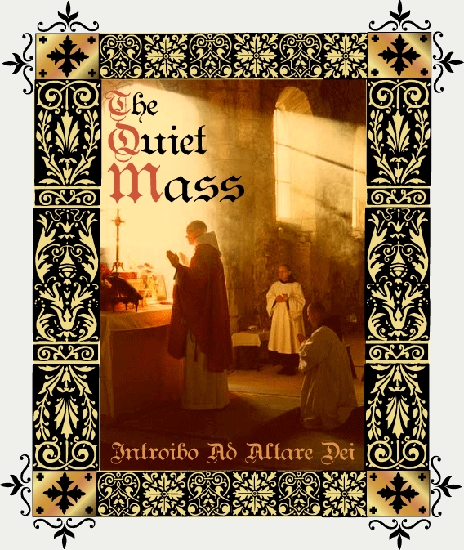
Tridentine Masses This Coming Week
Sunday
- Sun. 04/10 7:30 AM and 10:00 AM: Low Mass (Confessions 45 minutes before and after Masses) at St. Joseph's Church, Richmond [NB: See note at bottom of this post about SSPX sites.]* (2nd Sunday after Easter - 2nd class)
- Sun. 04/10 8:00 and 10:30AM Low Mass (Confessions 1/2 hour before Mass: call beforehand) at St. Ann's Church, Livonia [NB: See note at bottom of this post about SSPX sites.]* (2nd Sunday after Easter - 2nd class)
- Sun. 04/10 9:30 AM: High Mass at St. Josaphat, Detroit** (2nd Sunday after Easter - 2nd class)
- Sun. 04/10 9:30 AM: High Mass at Assumption Grotto, Detroit (2nd Sunday after Easter - 2nd class)
- Sun. 04/10 9:45 AM: High Mass at OCLMA/Academy of the Sacred Heart, Bloomfield Hills (2nd Sunday after Easter - 2nd class) - Celebrant: Fr. Paul de Soza, MC. REception and talk after Mass: "Ways to Deepen Your Spiritual Life"
- Sun. 04/10 2:00 PM: High Mass at St. Alphonsus Church, Windsor, Canada (2nd Sunday after Easter - 2nd class)
- Sun. 04/10 12:30 PM: Old St. Patrick's, Ann Arbor (2nd Sunday after Easter - 2nd class)
- Sun. 04/10 3:00 PM: Low Mass (call ahead for Confession times, 989-892-5936) at Infant of Prague, Bay City [NB: See note at bottom of this post about SSPX sites.]* (2nd Sunday after Easter - 2nd class)
- Sun. 04/10 3:00 PM High Mass St. Matthew Catholic Church, Flint (2nd Sunday after Easter - 2nd class)
- Mon. 04/11 7:30 AM: High or Low Mass (varies) at Assumption Grotto, Detroit (St. Leo the Great)
- Mon. 04/11 8:00 AM: Low Mass (Confessions 8:30 AM to 9:30 AM) at St. Joseph's Church, Richmond [NB: See note at bottom of this post about SSPX sites.]* (St. Leo the Great)
- Mon. 04/11 7:00 PM: Low Mass at St. Josaphat, Detroit** (St. Leo the Great)
- Mon. 04/11 7:00 PM: High Mass (usually) at Assumption Grotto, Detroit (St. Leo the Great)
- Tue. 04/12 7:00 AM High or Low Mass (varies) at Assumption Grotto, Detroit (Feria - 4th class)
- Tue. 04/12 8:00 AM: Low Mass (Confessions 8:30 AM to 9:30 AM) at St. Joseph's Church, Richmond [NB: See note at bottom of this post about SSPX sites.]* (Feria - 4th class)
- Tue. 04/12 7:00 PM: Low Mass at Holy Name of Mary, Canada (Feria - 4th class)
- Tue. 04/12 7:00 PM: Low Mass (usually) at Assumption Grotto, Detroit (Feria - 4th class)
- Wed. 04/13 7:30 AM: High or Low Mass (varies) at Assumption Grotto, Detroit (St. Hermenegild - 3rd class)
- Wed. 04/13 8:00 AM: Low Mass (Confessions 8:30 AM to 9:30 AM) at St. Joseph's Church, Richmond [NB: See note at bottom of this post about SSPX sites.]* (St. Hermenegild - 3rd class)
- Wed. 04/13 7:00 PM: High Mass (usually) at Assumption Grotto, Detroit (St. Hermenegild - 3rd class)
- Thu. 04/14 7:30 AM: High or Low Mass (varies) at Assumption Grotto, Detroit (St. Justin - 3rd class)
- Thu. 04/14 8:00 AM: Low Mass (Confessions 8:30 AM to 9:30 AM) at St. Joseph's Church, Richmond [NB: See note at bottom of this post about SSPX sites.]* (St. Justin - 3rd class)
- Thu. 04/14 7:00 PM: Low Mass (usually) at Assumption Grotto, Detroit (St. Justin - 3rd class)
- Fri. 04/15 7:30 AM: High or Low Mass (varies) at Assumption Grotto, Detroit (Feria - 4th class)
- Fri. 04/15 8:00 AM: Low Mass (Confessions 8:30 AM to 9:30 AM) at St. Joseph's Church, Richmond [NB: See note at bottom of this post about SSPX sites.]* (Feria - 4th class)
- Fri. 04/15 7:00 PM: Low Mass at St. Josaphat, Detroit** (Feria - 4th class)
- Fri. 04/15 7:00 PM: Low Mass (usually) at Assumption Grotto, Detroit (Feria - 4th class)
- Sat. 04/16 8:00 AM: Low Mass (Confessions 1/2 hour before Mass: call beforehand) at St. Ann's Church, Livonia [NB: See note at bottom of this post about SSPX sites.]* (Saturday of Our Lady - 4th class)
- Sat. 04/16 8:00 AM: Low Mass (Confessions 8:30 AM to 9:30 AM) at St. Joseph's Church, Richmond [NB: See note at bottom of this post about SSPX sites.]* (Saturday of Our Lady - 4th class)
- Sat. 04/16 7:30 AM: High or Low Mass (varies) at Assumption Grotto, Detroit (Saturday of Our Lady - 4th class)
- Sat. 04/09 6:00 PM Tridentine Mass at SS. Cyril & Methodius Slovak Catholic Church, Sterling Heights (Saturday of Our Lady - 4th class)
- Sun. 04/17 7:30 AM and 10:00 AM: Low Mass (Confessions 45 minutes before and after Masses) at St. Joseph's Church, Richmond [NB: See note at bottom of this post about SSPX sites.]* (3rd Sunday after Easter - 2nd class)
- Sun. 04/17 8:00 and 10:30AM Low Mass (Confessions 1/2 hour before Mass: call beforehand) at St. Ann's Church, Livonia [NB: See note at bottom of this post about SSPX sites.]* (3rd Sunday after Easter - 2nd class)
- Sun. 04/17 9:30 AM: High Mass at St. Josaphat, Detroit** (3rd Sunday after Easter - 2nd class)
- Sun. 04/17 9:30 AM: High Mass at Assumption Grotto, Detroit (3rd Sunday after Easter - 2nd class)
- Sun. 04/17 9:45 AM: High Mass at OCLMA/Academy of the Sacred Heart, Bloomfield Hills (3rd Sunday after Easter - 2nd class)
- Sun. 04/17 2:00 PM: High Mass at St. Alphonsus Church, Windsor, Canada (3rd Sunday after Easter - 2nd class)
- Sun. 04/17 3:00 PM High Mass St. Matthew Catholic Church, Flint (3rd Sunday after Easter - 2nd class)
* NB: The SSPX chapels among those Mass sites listed above are posted here because the Holy Father has announced that "those who during the Holy Year of Mercy approach these priests of the Fraternity of St Pius X to celebrate the Sacrament of Reconciliation shall validly and licitly receive the absolution of their sins." These chapels are not listed among the approved parishes and worship sites on archdiocesan websites.
**NB: [Update: All St. Joseph's Church Masses have been re-located to St. Josaphat, Detroit, until further notice, due to structural renovations.]

Saturday, April 09, 2016
Echeverria: Three significant problems in Amoris Laetitia
Eduardo Echeverria, "Chapter 8 of Amoris Laetitia and St. John Paul II" (CWR, April 9, 2016):
I think that Chapter 8, "Accompanying, Discerning and Integrating Weakness", is the most problematic section of Amoris Laetitia (AL) for three reasons:
1) Pope Francis seems almost (not quite, but almost) incapable of acknowledging that an individual is sinfully responsible for rejecting the truth of marriage and family. Yes, he upholds the objectivity of God’s “primordial loving plan” (9), of the deepest reality of marriage (AL 10), grounded in the order of creation. Indeed, Pope Francis’s reflections on marriage and family life in AL 8-30 are beautiful, insightful, and, yes, deeply biblical. Furthermore, his reflections on the tradition of magisterial teaching regarding marriage and family life in light of creation, fall into sin, and redemption in AL 61-88, provide a catechesis that is foundational to our thinking as Christians. Yet he almost never holds a person totally accountable for resisting the evidence of creation about marriage (see Rom 1:18ff.). It’s almost as if everyone is invincibly ignorant.
2) In light of 1), furthermore, he puts a heavy emphasis on the distinction between subjective and objective morality, that is, questions regarding moral culpability, on the one hand, and the objective standards of right and wrong on the other, and hence he seeks to find mitigating circumstances that absolve a person of full responsibility for his actions (AL 302).
3) He distinguishes (following John Paul II's Familiaris Consortio) between the different concepts of the “law of gradualness” (which he affirms, AL 295), which is a step-by-step moral advance, and the “gradualness of the law,” meaning thereby that there are “different degrees or forms of precept in God's law for different individuals and situations” (FC 34), which he says that he rejects. With respect to the law of gradualness, Francis urges us, in view of the undeniable challenges of our time, “to present marriage more as a dynamic path to personal development and fulfilment than as a lifelong burden” (AL 37). He adds, “This is not a ‘gradualness of law’ but rather a gradualness in the prudential exercise of free acts on the part of subjects who are not in a position to understand, appreciate, or fully carry out the objective demands of the law” (AL 295).
And yet in AL 303 and 305, he suggests that a person not only may be doing the best that he can, but also that such acts therefore are not sinful and hence are right for that person, because the person, in his mitigating circumstances, fulfills the ideal as applied by that individual in those limiting circumstances. This way of thinking was unavoidable because throughout AL Francis apparently emphasizes the “ideal” nature of the normative order of marriage and family life.Read more >>
But how can God be asking one to do X when X is contrary to his will? The pope must think that X is not contrary to the will of God in that specific circumstance, but only contrary to God's ideal will which the person is inculpable for not attaining.
So, with all due respect to Francis, I think that he does imply support for the “gradualness of the law” and hence by implication opens the door to a “situation ethics.” He says, “Yet conscience can do more than recognize that a given situation does not correspond objectively to the overall demands of the Gospel. It can also recognize with sincerity and honesty what for now is the most generous response which can be given to God, and come to see with a certain moral security that it is what God himself is asking amid the concrete complexity of one’s limits, while yet not fully the objective ideal” (AL 303). It is hard to see why a person needs the grace of the sacrament of confession, and hence the Lord’s mercy, if, as Francis suggests here, that person is doing the will of God.
Friday, April 08, 2016
St Thomas Aquinas House: A traditional Catholic religious community of men in the Archd. of Detroit

Fr. Z reports this on his blog, commenting:
From a priest friend who passed this along to me:One of our former seminarians is a member of this community and once invited me to Vespers and dinner at their center in metro Detroit. I must say that I was as impressed with their culinary expertise as much as I was with their Vespers in chanted Latin. Beautiful!Would you please ask Fr. Z if he might be willing to feature our new experimental, extraordinary form community on his web blog? We have Archbishop Vigneron’s endorsement for now, but need to grow. I think something like this happening in Detroit will be big news for a lot of people.Brick by brick, friends.
Our website is as follows:
www.traditionalcanons.org


Our only hope

Prepare yourselves. Satan's time is coming to an end. Christ's time lies ahead. In the meantime, a collapse is coming and things are going to get a little bit crazy. Guard your hearts.
Thursday, April 07, 2016
"Don't judge the Muslims that you know by Islam and don't judge Islam by the Muslims that you know"
 This terrific, well-organized and highly informative site on Islam just came to my attention at TheReligionofPeace.com. The banner across the masthead reads: "What makes Islam so different?" Good question.
In their "About Us" page, the site owners say the following:
TheReligionofPeace.com is a pluralistic, non-partisan site concerned with Islam's true political and religious teachings according to its own texts. The purpose is to underscore the threat that Islam poses to human dignity and freedom, part of which includes documenting the violence and dysfunction that ensues as a direct consequence of this religion's supremacist teachings.Yet the site doesn't pull any punches when it comes to reporting what Islam teaches in its own texts (Qur'an, Hadith, Sira, Sunnah, etc.). For example, on a page entitled What Does Islam Teach About Violence?, one reads learns that there are at least 109 verses in the Qur'an that call Muslims to war with nonbelievers for the sake of Islamic rule. Some are quite graphic. One also learns that "unlike nearly all the Old Testament verses of violence, the verses of violence in the Qur'an are mostly open-ended, meaning that they are not restrained by historical context contained in the surrounding text....
TROP is not associated with any organization. The site does not promote any religion, but it is not hostile to religion. We generally support the rights of atheists, Christians, Hindus, Jews, homosexuals, women, Muslims and anyone else on the planet to live as they wish without violating the rights of others.
TheReligionofPeace.com strongly condemns any attempt to harm or harass any Muslim anywhere in the world because of their religion. Every human being is entitled to be treated as an individual and judged only by his or her own words and deeds

Furthermore, the site maintains a frequently updated page listing Islamic acts of terror committed during the last 30 days, as well as terrorist acts committed back to the year 2001. The list is startling. For example, during the last 30 days, it reports 105 Islamic attacks in 21 countries, in which 787 people were killed and 2748 injured! Even then it cautions that the site does not catch all attacks and that not all are immediately reported.
There is a lot of material here -- on the life of Muhammad (including comparisons to Jesus), on the Qur'an (including 10 reasons Why the Qur'an is Not from Allah), Islam (and "Ten Obvious Reasons Why Islam is Not a Religion of Peace"), and a comparison, "Jesus and Muhammad, Islam and Christianity: A Side-by-Side Comparison" - and much, much more.
Spend some time here and you'll learn something.
Wednesday, April 06, 2016
Retired Corpus Christi Bishop Rene Gracida: A virus invaded the Catholic Church in the wake of Vatican II
An especially interesting interview because of his remarks comparing the old and new forms of the liturgy:

Tuesday, April 05, 2016
Tridentine Masses coming this week to metro Detroit and east Michigan
Tridentine Masses This Coming Week
-
Sunday
- Sun. 04/03 7:30 AM and 10:00 AM: Low Mass (Confessions 45 minutes before and after Masses) at St. Joseph's Church, Richmond [NB: See note at bottom of this post about SSPX sites.]* (Please note that the St. Joseph's SSPX parish that is listed in Richmond has moved to it's new building in Ray Township, at 57575 Romeo Plank Rd., Ray Twp., MI 48096) (Low Sunday/Divine Mercy Sunday - 1st class)
- Sun. 04/03 8:00 and 10:30AM Low Mass (Confessions 1/2 hour before Mass: call beforehand) at St. Ann's Church, Livonia [NB: See note at bottom of this post about SSPX sites.]* (Low Sunday/Divine Mercy Sunday - 1st class)
- Sun. 04/03 9:30 AM: High Mass at St. Josaphat, Detroit (Low Sunday/Divine Mercy Sunday - 1st class)
- Sun. 04/03 9:30 AM: High Mass at Assumption Grotto, Detroit (Low Sunday/Divine Mercy Sunday - 1st class)
- Sun. 04/03 9:45 AM: High Mass at OCLMA/Academy of the Sacred Heart, Bloomfield Hills (Low Sunday/Divine Mercy Sunday - 1st class)
- Sun. 04/03 3:00 PM: High Mass at Holy Name of Mary, Canada (Low Sunday/Divine Mercy Sunday - 1st class) -- Note special time. The Divine Mercy Chaplet will be prayed at 3:00 PM, followed by Holy Mass. Confessions will be heard before Mass.
- Sun. 04/03 3:00 PM High Mass St. Matthew Catholic Church, Flint (Low Sunday/Divine Mercy Sunday - 1st class)
Monday
- Mon. 04/04 7:30 AM: High or Low Mass (varies) at Assumption Grotto, Detroit (Annunciation of the Blessed Virgin Mary (transferred) - 1st class)
- Mon. 04/04 8:00 AM: Low Mass (Confessions 8:30 AM to 9:30 AM) at St. Joseph's Church, Richmond [NB: See note at bottom of this post about SSPX sites.]* (Annunciation of the Blessed Virgin Mary (transferred) - 1st class)
- Mon. 04/04 7:00 PM: Low Mass at St. Josaphat, Detroit (Annunciation of the Blessed Virgin Mary (transferred) - 1st class)
- Mon. 04/04 7:00 PM: High Mass (usually) at Assumption Grotto, Detroit (Annunciation of the Blessed Virgin Mary (transferred) - 1st class)
Tuesday
- Tue. 04/05 7:00 AM High or Low Mass (varies) at Assumption Grotto, Detroit (St. Vincent Ferrer - 3rd class)
- Tue. 04/05 8:00 AM: Low Mass (Confessions 8:30 AM to 9:30 AM) at St. Joseph's Church, Richmond [NB: See note at bottom of this post about SSPX sites.]* (St. Vincent Ferrer - 3rd class)
- Tue. 04/05 7:00 PM: Low Mass at Holy Name of Mary, Canada (St. Vincent Ferrer - 3rd class)
- Tue. 04/05 7:00 PM: Low Mass (usually) at Assumption Grotto, Detroit (St. Vincent Ferrer - 3rd class)
Wednesday
- Wed. 04/06 7:30 AM: High or Low Mass (varies) at Assumption Grotto, Detroit (Feria - 4th class)
- Wed. 04/06 8:00 AM: Low Mass (Confessions 8:30 AM to 9:30 AM) at St. Joseph's Church, Richmond [NB: See note at bottom of this post about SSPX sites.]* (Feria - 4th class)
- Wed. 04/06 7:00 PM: High Mass (usually) at Assumption Grotto, Detroit (Feria - 4th class)
Thursday
- Thu. 04/07 7:30 AM: High or Low Mass (varies) at Assumption Grotto, Detroit (Feria - 4th class, or Jesus Christ the High Priest - 3rd class)
- Thu. 04/07 8:00 AM: Low Mass (Confessions 8:30 AM to 9:30 AM) at St. Joseph's Church, Richmond [NB: See note at bottom of this post about SSPX sites.]* (Feria - 4th class, or Jesus Christ the High Priest - 3rd class)
- Thu. 04/07 7:00 PM: Low Mass (usually) at Assumption Grotto, Detroit (Feria - 4th class, or Jesus Christ the High Priest - 3rd class)
Friday
- Fri. 04/08 7:30 AM: High or Low Mass (varies) at Assumption Grotto, Detroit (Feria - 4th class)
- Fri. 04/08 8:00 AM: Low Mass (Confessions 8:30 AM to 9:30 AM) at St. Joseph's Church, Richmond [NB: See note at bottom of this post about SSPX sites.]* (Feria - 4th class)
- Fri. 04/08 7:00 PM: Low Mass at St. Josaphat, Detroit (Feria - 4th class)
- Fri. 04/08 7:00 PM: Low Mass (usually) at Assumption Grotto, Detroit (Feria - 4th class)
- Sat. 04/09 8:00 AM: Low Mass (Confessions 1/2 hour before Mass: call beforehand) at St. Ann's Church, Livonia [NB: See note at bottom of this post about SSPX sites.]* (Our Lady on Saturday - 4th class)
- Sat. 04/09 8:00 AM: Low Mass (Confessions 8:30 AM to 9:30 AM) at St. Joseph's Church, Richmond [NB: See note at bottom of this post about SSPX sites.]* (Our Lady on Saturday - 4th class)
- Sat. 04/09 7:30 AM: High or Low Mass (varies) at Assumption Grotto, Detroit (Our Lady on Saturday - 4th class)
- Sat. 04/09 6:00 PM Tridentine Mass at SS. Cyril & Methodius Slovak Catholic Church, Sterling Heights (Our Lady on Saturday - 4th class)
Sunday
- Sun. 04/10 7:30 AM and 10:00 AM: Low Mass (Confessions 45 minutes before and after Masses) at St. Joseph's Church, Richmond [NB: See note at bottom of this post about SSPX sites.]* (2nd Sunday after Easter - 2nd class)
- Sun. 04/10 8:00 and 10:30AM Low Mass (Confessions 1/2 hour before Mass: call beforehand) at St. Ann's Church, Livonia [NB: See note at bottom of this post about SSPX sites.]* (2nd Sunday after Easter - 2nd class)
- Sun. 04/10 9:30 AM: High Mass at St. Josaphat, Detroit (2nd Sunday after Easter - 2nd class)
- Sun. 04/10 9:30 AM: High Mass at Assumption Grotto, Detroit (2nd Sunday after Easter - 2nd class)
- Sun. 04/10 9:45 AM: High Mass at OCLMA/Academy of the Sacred Heart, Bloomfield Hills (2nd Sunday after Easter - 2nd class) - Celebrant: Fr. Paul de Soza, MC. REception and talk after Mass: "Ways to Deepen Your Spiritual Life"
- Sun. 04/10 2:00 PM: High Mass at St. Alphonsus Church, Windsor, Canada (2nd Sunday after Easter - 2nd class)
- Sun. 04/10 12:30 PM: Old St. Patrick's, Ann Arbor (2nd Sunday after Easter - 2nd class)
- Sun. 04/10 3:00 PM: Low Mass (call ahead for Confession times, 989-892-5936) at Infant of Prague, Bay City [NB: See note at bottom of this post about SSPX sites.]* (2nd Sunday after Easter - 2nd class)
- Sun. 04/10 3:00 PM High Mass St. Matthew Catholic Church, Flint (2nd Sunday after Easter - 2nd class)
* NB: The SSPX chapels among those Mass sites listed above are posted here because the Holy Father has announced that "those who during the Holy Year of Mercy approach these priests of the Fraternity of St Pius X to celebrate the Sacrament of Reconciliation shall validly and licitly receive the absolution of their sins." These chapels are not listed among the approved parishes and worship sites on archdiocesan websites.
Saturday
Tridentine Community News - Mother Angelica; EWTN Live rescheduled; Jackson TLM billboard; Sacra Liturgía Conference; Véterum Sapiéntia Conference; Miles Christi TLM next Sunday; Mass schedule

"I will go in unto the Altar of God
To God, Who giveth joy to my youth"
Tridentine Community News by Alex Begin (April 3, 2016):
April 3, 2016 – Low Sunday / Divine Mercy Sunday
Mother Angelica’s Legacy
Last Sunday’s passing of EWTN foundress Mother Angelica has prompted many recollections of her countless accomplishments. One that hasn’t received much mention deserves commendation here: her bold and unique-for-the-times use of Latin in EWTN’s televised Masses. Arguably this precedent made it easier for many parishes to reintroduce Latin for at least the Sanctus and Agnus Dei of their own Masses. In pre-EWTN days, it was almost unheard-of to encounter Latin in an Ordinary Form Mass unless the entire Mass was celebrated in that language.
Mother Angelica unapologetically supported traditional Catholic practices before the Internet provided the sense of community that encourages the faithful nowadays. May God reward her abundantly.
EWTN Live to be Rescheduled
Understandably in light of Mother Angelica’s passing, the episode of EWTN Live featuring Extraordinary Faith had to be postponed. Originally intended to air this past Wednesday, March 30, it will be rescheduled for a date several weeks in the future. Once the date has been set, it will be reported here.
Jackson Tridentine Mass Billboard
Leave it to the overachievers in Jackson, Michigan to try something bold to promote their Extraordinary Form Mass at St. Mary Star of the Sea Church. A billboard was recently put up along I-94 near Jackson, with a photo of the recent Pontifical Mass with Bishop Earl Boyea. Visiting altar servers James Murphy and this writer are in the photo. Savvy readers of this column will recall this advertising technique paying big dividends for the Pittsburgh Tridentine Mass in the 1990s, helping it to become the largest Latin Mass community in North America. [Photo above by Jeff Mausolf]
Sacra Liturgía 2016 Conference
In just a few years of existence, Sacra Liturgía has grown to become the largest and most frequently-held liturgical conference in the world. The 2016 event will be held Tuesday-Friday, July 5-8 in London, England. Talks will be held at Imperial College, and liturgies will be held at the London Oratory and the Anglican Ordinariate’s Church of Our Lady of the Assumption & St. Gregory. The focus is on the Extraordinary Form and the Ordinary Form celebrated in Latin.
Helmed once again by world-renowned liturgical expert Dom Alcuin Reid, Sacra Liturgía promises world-class liturgical and musical experiences, along with an impressive array of speakers including Robert Cardinal Sarah, Prefect of the Vatican’s Congregation for Divine Worship and the Sacraments; San Francisco Archbishop Salvatore Cordileone; and U.K. Anglican Ordinariate Ordinary Msgr. Keith Newton. Conferences such as this are inspiring and recommended to anyone with an interest in reverent liturgy.
Further information and registration details are at: www.sacraliturgiauk.org.
Véterum Sapiéntia Conference
Another interesting conference is coming up at the Catholic University of America in Washington, DC, Sunday-Saturday, July 31-August 6. Named Véterum Sapiéntia after the 1962 Apostolic Constitution promoting the study of Latin by seminarians, the symposium is an immersion in conversational and liturgical Latin. All talks are conducted entirely in Latin. The conference is intended solely for priests, seminarians, and men and women religious with an intermediate to advance level of familiarity with Latin.
More information is available at: www.veterumsapientia.com.
Reminder: Miles Christi Mass at OCLMA Next Sunday
A reminder that next Sunday, April 10, the 9:45 AM Oakland County Latin Mass Association Mass at the Academy of the Sacred Heart Chapel in Bloomfield Hills will be celebrated by Miles Christi priest Fr. Paul de Soza. To our knowledge this will be the first public Tridentine High Mass to be celebrated by a member of the Miles Christi religious order. After Mass, everyone is invited to a reception at which Fr. Paul will speak on “Ways to Deepen Your Spiritual Life”.
Tridentine Masses This Coming Week
- Mon. 04/04 7:00 PM: Low Mass at St. Josaphat (Annunciation of the Blessed Virgin Mary [transferred])
- Tue. 04/05 7:00 PM: Low Mass at Holy Name of Mary (St. Vincent Ferrer, Confessor)
- Sun. 04/10 9:45 AM: High Mass at OCLMA/Academy of the Sacred Heart (Second Sunday After Easter) - Celebrant: Fr. Paul de Soza, MC. Reception and talk after Mass: “Ways to Deepen Your Spiritual Life”

Friday, April 01, 2016
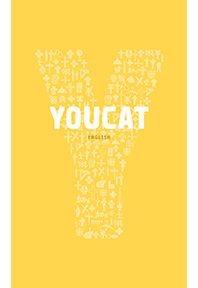
Benedict's Compendium, the CCC, and YouCat compared
 An erudite reader sent me this yesterday:
In my usual scavenging I came up with a copy of YouCat. It is truly awful. When I compared it with Benedict's 2006 Compendium of the Catechism, I immediately recognized how good Benedict's work is. It is theological throughout and hangs together as an integrated text. Its language is clearer than YouCat. When you compare "transubstantiation" or "passions" Benedict wins.[Hat tip to Sir A.S.]
Recently Robert Hickson released a damning indictment of the CCC which Fr. John Hardon did not want published while he was still alive. Hardon claimed that the final text was not Catholic. The Frenchfirebrand Abbe Georges de Nantes published a book damning the 1992 catechism listing 12 heresies he found therein. When Benedict's Compendium appeared in 2006, his newsletter the Catholic Counter Reform declared that Benedict's work corrected all of the errors in the 1992 catechism.
There is an excellent doctrinal critique of YouCat at Faithful Answers website. It is regrettabble that the Compendium was published by the USCCB as an official document and has never received the circulation it deserves. Ignatius Press should publish it in a more popular format and remove YouCat from circulation. YouCat panders to youth trying to be hip and dumbs down its theology. It is a true horror.
Two Easter Vigils, two popes, two visions of Europe, one rooted in Christianity, the other deracinated by multiculturalism and obsequity toward Isalm

Monsieur l'Abbé, "Guest Op-Ed: Fighting for the soul of Europe" (Rorate Caeli, March 29, 2016 [Advisory: Rules 7-9]). Excerpts:
[In 2008] I had the good fortune ... to attend all of the liturgies of the Sacred Triduum and I was in Saint Peter’s Basilica on the evening of the Easter Vigil when Pope Benedict XVI baptized Magdi Allam, an Egyptian-born Italian journalist. Allam was raised a Muslim but from an early age was educated in Catholic schools. At the age of twenty he moved to Italy and became increasingly critical of Islam.
The baptism of Allam was a reminder of the expectations that Europe should have for those who are privileged to call Europe their home. Living in Europe means an acceptance and respect for her Christian origins and history. Living in Europe means throwing off the backward cultural thinking of a religious sect forged in a seventh-century desert. To be European is to accept that which is ever ancient and ever new. All of these considerations were implicit that Easter when Allam publically rejected his former beliefs and recognized Christ and His Church as the true and only vehicle for salvation.
The New Mandatum
Contrast the Triduum in 2008 with the one that took place just last week. This year, the Holy Thursday foot washing ceremony (known also as the Mandatum) consisted of Pope Francis washing the feet of a group of Catholic and non-Catholic refugees. In fact, with impeccable timing, the pope washed the feet of three Muslim refugees only two days after more than thirty people were killed and three hundred were injured in suicide bombings in Brussels, a municipal region whose most popular name for newborn boys is Mohammed.[1]
Before Lent this year, the pope issued a decree changing the Holy Thursday practice which had previously only admitted men for the Mandatum. Now, the decree explained that pastors may “choose a small group of persons who are representative of the entire people of God.”[2] ...
While this new decree concerning the Mandatum allows the pope, in good conscience, to continue washing the feet of women, he still manages to disobey his own decree by washing the feet of those who do not even believe in Christ....
For Francis however, these considerations are no more than semantics. “All of us together: Muslims, Hindus, Catholics, Copts, Evangelical. But [we are] brothers, children of the same God” he said on Holy Thursday.[4] ...
A Radical Juxtaposition
At the heart of the juxtaposition of the Easter Vigil of 2008 and this year’s Holy Thursday is the radical difference between the two possible approaches to the problem of Islam in Europe. In 2008, Benedict XVI personified a Church that was confident in her identity. For him, the Church is the only force that can offer transcendence to a secular Europe: “[The Church] must first do decisively what is her very own, she must fulfill the task in which her identity is based: to make God known and to proclaim his Kingdom.”[7] She is also the only force strong and confident enough to enlighten the irrationality of Islam ....
In order for her to survive, Ratzinger has argued, Europe must acknowledge and appreciate her Christian origins. It is only in Christ and His Church that Europe can find her identity, and if this identity is lost, Europe remains vulnerable to the onslaught of any number of extremist ideologies. Europe can only be Europe when she embraces the history of her art, history, music, and culture: “The banishment of Christian roots does not reveal itself as the expression of a higher tolerance . . . but rather as the absolutizing of a pattern of thought and of life that are radically opposed, among other things, to the other historical cultures of humanity.”[9] ...
By contrast ... [s]ince his election in 2013, [Pope Francis'] preference for ministry to the “peripheries” and the marginalized has left Europe as an undefended afterthought....
Each time that Francis ventures out to the peripheries he leaves the door to the Western world open and vulnerable to attack....
Less than a week after the Inauguration of Pope Francis on March 19, 2013, Magdi Allam announced that he was leaving the Church in order “to protest its soft stance against Islam.”[11] It was not by chance that this act coincided with the election of Francis. “The ‘papolatry’ that has inflamed the euphoria for Francis I and has quickly archived [not 'achieved', but 'ARCHIVed'] Benedict XVI was the last straw in an overall framework of uncertainty and doubts about the Church,” he wrote.[12] .... Read more >>
[1] http://www.yenisafak.com/en/life/mohammad-most-popular-name-for-babies-in-london-for-fourth-time-2229871
[2]http://www.vatican.va/roman_curia/congregations/ccdds/documents/rc_con_ccdds_doc_20160106_commento-decreto-lavanda-piedi_en.html
[4] http://www.nytimes.com/aponline/2016/03/24/world/europe/ap-eu-rel-vatican-holy-thursday.html?_r=0
[7] Ratzinger, Joseph. A Turning Point for Europe?: The Church in the Modern World: Assessment and Forecast. (San Francisco: Ignatius, 2010), 178.
[9] http://www.catholiceducation.org/en/culture/catholic-contributions/cardinal-ratzinger-on-europe-s-crisis-of-culture.html
[11] http://www.huffingtonpost.com/2013/03/25/magdi-allam-muslim-convert-leaves-catholic-church_n_2950937.html
[12] Ibid.
St. John Bosco on the diabolical impostiture of Mohammedanism

St. John Bosco, [the section on Islam from] "Il Cattolico, Istruito nella sua Religione, Trattenimenti di un Padre di Famiglia co' suoi Figliuoli, secondo I bisogni del tempo," Epilogati dal Sac. Bosco Giovanni (Torrino 1853), translated by Francesca Romana as "The Catholic educated in his religion. Conversations with the Father of a Family and his beloved sons, in relation to the needs of the present day. Summarized by Giovanni Bosco, priest (Turin, 1953). Via Adfero, "St. John Bosco on Mohammedanism" (Rorate Caeli, March 31, 2016):
Conversation XIII [Pages 50 to 56]Father: Before talking to you about the religions separated at a certain point from the Roman Catholic Church, I want to draw your attention to the religions that do not have the characteristics of the divinity in them and which we call false religions. They range from Judaism to Idolatry, to Mohammedanism to the Christian sects professed by the Schismatic Greeks, Valdese, Anglicans and Protestants.Regarding Idolatry, I think there is no need to discuss this with you, since nowadays it does not exist, with the exception of very few countries where the light of the Gospel has still not penetrated.Regarding Judaism, I think I have already spoken sufficiently in the first part of these conversations.If you like, I’ll now tell you about the others, starting with Mohammedanism.Son: Yes, yes, first of all, tell us what Mohammedanism means?F. Mohammedanism is a collection of maxims extracted from various religions, which, if practiced, bring about the destruction of every moral principle.
S. In which countries is this Mohammedanism professed?F. It is professed in a large part of Asia as well as part of Africa.S. Who started Mohammedanism?F. Mohammedanism was started by Mohamed.S. Oh! We’d really like to hear about this Mohamed. Tell us everything you know about him.F. It would take too long to tell you all the stories about this famous impostor. But I’ll tell you who he was and how he came to establish his Religion.In the year 570, Mohamed was born into a poor family, of a Jewish mother and gentile father, in Mecca an Arabian city not far from the Red Sea. In search of glory and desirous of bettering his conditions, he wandered around several countries and managed in Damascus to become the agent of a merchant’s widow who afterwards married him. He was cunning enough to take advantage of his infirmities as well as her ignorance, to establish a religion. Suffering from epilepsy, male caduco, he claimed his frequent falls were ecstasies wherein he had conversations with the Angel Gabriel.S. What an imposter to deceive people like that! Did he also try to work miracles to support his predication?F. Mohamed couldn’t work any miracles to support his religion, as he was not sent by God. God is the sole author of miracles. However, as he claimed himself greater than Jesus Christ, he was asked to work miracles in the same way [as Jesus]. He arrogantly replied that the miracles had [already] been worked by Jesus Christ and that he [himself] had been called by God to reestablish the religion by force.
Subscribe to:
Posts (Atom)