Sunday, October 31, 2010

Roll over Bugnini: It's Halloween!

All-Hallows-E'en (or All-Hallows-Eve), the night before All Hallows Day (or All Saints Day), immediately precedes All Souls Day, when Requiem Masses (see post immediately below) are celebrated on November 2 under the traditional Roman calendar.


Why is this so cool? Because, like the now debased and secularized "Halloween," All Souls Day has all sorts of scary cool stuff associated with it as traditionally memorialized, which is all-but-forgotten in these Barney and Friends times. But unlike stories that are merely scary, the story here turns out to be totally true. The Church offers salvation from actual hell and damnation. Let's ponder this exhilarating subject!

I Googled Dies Irae ("Day of Wrath") just to see what would come up, and there was the predictable Wikipedia article. But, Lo! There was an interesting tid-bit!
Those familiar with musical settings of the Requiem Mass -- such as those by Mozart or Verdi -- will be aware of the important place Dies Irae held in the [traditional] liturgy. Nevertheless the "Consilium for the Implementation of the Constitution on the Liturgy" – the Vatican body charged with drafting and implementing reforms to the Catholic Liturgy ordered by the Second Vatican Council – felt the funeral rite was in need of reform and eliminated the sequence from the ordinary rite. The architect of these reforms, Archbishop Annibale Bugnini, explains the mind of the members of the Consilium:
They got rid of texts that smacked of a negative spirituality inherited from the Middle Ages. Thus they removed such familiar and even beloved texts as the Libera me, Domine, the Dies Irae, and others that overemphasized judgment, fear, and despair. These they replaced with texts urging Christian hope and arguably giving more effective expression to faith in the resurrection.
It remained as the sequence for the Requiem Mass in the Roman Missal of 1962 (the last edition before the Second Vatican Council) and so is still heard in churches where the Tridentine Latin liturgy is celebrated.
Indeed.

Now back to the cool stuff -- meaning all the stuff Abp. Bugnini and the Concilium thought we were mature enough to cut out now, since we had come of age and outgrown the need for tales about the terrors of hell and other ghost stories, and could comfortably feed now on a steady diet of tea and crumpets with gentle words from Barney and Friends about love and love and more love since, of course, God is love.

But are we really so "mature" as all that? And are these terrors of yesteryear's liturgy really mere ghost stories for the "immature" in faith? Are the sentiments of the terrible words of the Dies Irae really something that ought to be abhorred as pathologically disturbed, as representing a deformed and negative spirituality? Please. What does the writer of Proverbs call the "beginning of wisdom"? Yes, precisely: the FEAR of the Lord (Prov. 1:7).

Why does the love and mercy and compassion of God no longer mean much of anything these days? The answer is not far to find. I remember seeing spray painted on a railroad trellis above an underpass: "Christ is the answer!" Beneath it was spray painted in another hand: "What is the question?" Indeed. The "Gospel" is no longer "good news" because the context of hell and damnation are missing today. So more hell and damnation, if you please!

Now, is it only my perverted sentiment, or are these musical settings to various pieces from the Dies Irae sequence of the Requiem Mass, not totally cool?

The Requiem Mass

Tridentine Community News (October 31, 2010):
The Extraordinary Form of Holy Mass provides many opportunities throughout the year for special Masses to be celebrated for the faithful departed. All of these take the form of a Requiem Mass, a slightly shortened form of the regular Mass, optionally followed by the ceremony of Absolution, the blessing of the body. The black-framed altar cards and the thin black altar missals you see, and the Silver Missals for the congregation are specially designed for the unique aspects of the Requiem Mass. The missals include the ceremonies before and after Mass.

The first and primary form of Requiem is the Funeral Mass. The ceremony begins with prayers and chants accompanying the formal reception of the body at the door of the church. Holy Mass follows, at the end of which is the ceremony of Absolution, which is conducted at the casket if the body is present, or at a Catafalque if the body is not present. A Catafalque is a structure resembling a casket that stands in for the deceased person. A black pall (cloth) covers the casket or Catafalque, and six candles surround it. Finally, there is the optional concluding blessing given at the gravesite or other place of final disposition of the body. The ceremonies of the Funeral Mass were described in detail in our September 2, 2007 column, which is available on-line at the web site listed at the bottom of this page.

The Masses of All Souls Day are the second form of Requiem. The Church provides three separate sets of Mass Propers for All Souls Day and has long permitted her priests to celebrate three Masses that day instead of the usual two. This Tuesday, St. Josaphat will offer a Missa Cantata in the Extraordinary Form. Assumption-Windsor will offer the traditional three Masses of All Souls, the first two of which will be Low Masses celebrated at the side altars; the third will be a Solemn High Mass at the high altar, followed by Absolution at the Catafalque.

In the third place, there is the Daily Mass for the Dead, more commonly referred to as a Memorial Requiem Mass. At both St. Josaphat on Mondays at 7:00 PM, and Assumption-Windsor on Tuesdays at 7:00 PM, you may request a Requiem Mass to be celebrated for your departed friends and family. The intention can be for one or multiple people, as there are Propers to accommodate either option. Requiem Masses are permitted on weekday Ferias of the Fourth Class outside of Christmastide; please consult a (Tridentine) Liturgical Calendar to see the dates on which these occur. Use the regular Mass intention request form and indicate that you wish a Requiem Mass. You may request Absolution at the end of Mass for an additional stipend of $10. These will ordinarily be Low Masses, however at Assumption we offer the option of a High (chanted) Requiem Mass for an additional stipend of $40.

Format of the Daily Mass for the Dead

The priest wears a black chasuble, somberly ornamented. Black is the liturgical color for everything except the ciborium veils, which should be white; the chalice pall, which should be white or violet; and the tabernacle veil, which should be violet. Our Lord is ever-living; our most penitential color cannot be used in conjunction with the Blessed Sacrament.

As in Passiontide, Psalm 42 (Júdica me) is skipped; the Prayers At the Foot Of the Altar go from the Introíbo directly into the Confíteor. The altar servers’ liturgical kisses are omitted. There is no Glória, as that joyful hymn would be out of place. Between the readings, the choir chants the best-known part of the Classic Requiem Mass, the Sequence Dies Iræ, which begins:
“Day of wrath, O Day of mourning, Lo the world in ashes burning: Seer and Sibyl gave the warning.
O what fear man’s bosom rendeth, When from heaven the Judge descendeth, On Whose sentence all dependeth!”
A sermon may be preached. Mass proceeds with a few differences: The Credo and the Glória Patri at the Lavábo are omitted. At the Agnus Dei, “dona eis réquiem” (grant them rest) replaces “miserére nobis”, and “dona eis requiem sempitérnam” (grant them eternal rest) takes the place of “dona nobis pacem”. The prayer for peace that follows the Agnus Dei is omitted, as is the Kiss of Peace in Solemn High Masses. At the end of Mass, “Requiéscant in pace” (May they rest in peace) takes the place of “Ite, Missa est”. The Final Blessing is omitted.

If Absolution follows the Mass, the Last Gospel is omitted. The celebrant changes into a black cope and goes to the entrance to the sanctuary where the Catafalque is placed. If the individual(s) being memorialized are priest(s), were the body present, the head would be toward the sanctuary, facing the flock he lead. For others, the feet are closest to the sanctuary, as the deceased person is facing his Lord on the altar. The Crucifer stands where the deceased’s head would be. The priest stands where the deceased’s feet would be and recites the Absolution: “Enter not into judgment with Thy servant, Lord...” The choir sings the responsory Líbera me (“Deliver me, Lord, from everlasting death in that awful day: When the heavens and the earth shall be shaken: When Thou shalt come to judge the world by fire.”). The priest recites the Kyrie and Pater Noster while passing around the body twice, once with Holy Water, and once incensing it, then says a final prayer. The choir sings In Paradísum (“May the Angels lead you into paradise...”) as the priest and sacred ministers exit.

Tridentine Masses This Coming Week

Mon. 11/01 7:00 PM: High Mass at St. Josaphat (All Saints)

Tue. 11/02 6:00 PM: Two Low Masses at Assumption-Windsor, followed by a Solemn High Mass at 7:00 PM (All Souls)

Tue. 11/02 7:00 PM: High Mass at St. Josaphat (All Souls)
[Comments? Please e-mail tridnews@stjosaphatchurch.org. Previous columns are available at www.stjosaphatchurch.org. This edition of Tridentine Community News, with minor editions, is from the St. Josaphat bulletin insert for October 31, 2010. Hat tip to A.B.]

Saturday, October 30, 2010

John Lennon's hymn to original sin


Every once in a while Mark Shea gets something so right that you have to notice. As the person who called this piece to my attention said, "His take on John Lennon is finger-to-the-trigger accurate." Indeed. Mark P. Shea, "Thinking, Not Imagining" (InsideCatholic, October 27, 2010), writes:
Sometime back, I wrote a little piece about John Lennon's hymn to original sin (aka "Imagine"), expressing my bafflement at the fact that people (including Catholics who ought to know better) regard this as a hope-filled anthem of the Coming Great Rosy Dawn and not as what it is: Music to Accompany the Machine Gunning of the Counter-Revolutionaries.
The article is substantial and through-provoking, about those who love this stuff, the kids who came of age in the 60's and are now the majority at the levers of power in Congress. Well ... at least until Nov. 2. But when those who love this stuff are large enough in number to elect Bill and Barack, you know you're in deep dodo. Read it and think.

[Hat tip to J.M.]

Bishops' voting advice: the good, the bad and the murky

http://www.youtube.com/user/RealCatholicTV?feature=mhum#p/a/u/0/if-qGlo6p9A

Tuesday, October 26, 2010

Can a truly successful modernistic church be built?

Matthew Adlemann, "The Lonely God: Oakland Cathedral in the Light of Tradition" (The Institute for Sacred Architecture, Vol 15), offers a thoughtful and penetrating analysis of a recent attempt at designing and building a successful modernistic church building. For those interested in liturgical architecture and aesthetics, it's a thought-provoking study. There is much here that calls for careful reflection.

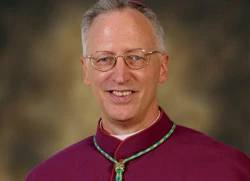
Adlemann writes: "Much of the initial planning occurred during Bishop Cummins’ tenure, but ground was not broken until 2005 under Bishop Vigneron, who had succeeded the late Bishop Cummins more than a year earlier."

He concludes: "Bishop Vigneron’s guidance has led to a far more liturgically orthodox interior, for all its flaws, than many other churches being built today, including Los Angeles’s Our Lady of the Angels. Coming in to a project in progress, he may have done all that was possible to recast the interior."

[Hat tip to J.M.]

A generation's loss of "moral vocabulary"

Denver Archbishop Charles Chaput tells the story of how classroom reactions to Shirley Jackson’s famed short story “The Lottery," have changed over the last several decades. The story – set in rural 1940s America – "features the tale of a small town that gathers every year to implore an unnamed force to grant a good corn harvest the people. Each year, town members draw a piece of paper from a wooden box to see who will be chosen for human sacrifice. A young mother ends up drawing the ominous black slip and is stoned to death by the community as part of the annual ritual."

Chaput cites Kay Haugaard's analysis of reactions to the story in academic settings over the last decades. She said that "in the early 1970s, students who read the story voiced shock and indignation," but that sometime in the mid-1990s,"reactions began to change.” One classroom discussion she described, he says, disturbed him more than the story itself. "The students had nothing to say except that the story bored them."

This reminds me of a subtle yet decisive shift I first became aware of in the late 1990s in a different context. Until then, conversations about abortion (which I had followed since Roe vs. Wade in 1973) turned on the question of whether the fetus was a "human being" or not. Then, one day, it dawned on me that the ground had decidedly shifted beneath me, as I listened to a female student at Lenoir-Rhyne College tell me that the question was no longer about whether the fetus was a "human being" ("... Everybody knows that," she said), but rather about when it's morally okay to kill a human being.

Around that time, I remember reading Walker Percy's sequel to Love in the Ruins (1971), The Thanatos Syndrome (1987), and thinking how reminiscent it was of Walter Miller's A Canticle for Leibowitz (1960), and how prophetic some books can be.

[Hat tip to J.M.]

So you Want to Get a PhD in the Humanities


[Hat tip to S.F.]

Sunday, October 24, 2010

Historic Church Bell Discovery

As you can see, this made the front page of the Windsor Star.

Tridentine Community News (October 24, 2010):
In the process of preparing for the restoration of Windsor’s Our Lady of the Assumption Church, architect Jason Grossi climbed up into the nether regions of the bell tower. Like St. Josaphat, Assumption has a tower bell which is rung at the Consecrations of the Extraordinary Form Mass.

While up there, Jason noticed that above and to the side of the main bell, there was a second, smaller bell. Long disused, the bell had no rope or other activating mechanism attached, however as you can see in the adjacent photo, it was mounted on a frame clearly designed to allow it to be rung.

Jason invited organist and University of Michigan Professor of Campanology Dr. Steven Ball to examine this bell. Steven was able to identify it as having been cast in the late 1700s, likely in France. This qualifies the bell as one of the oldest, if not the oldest, usable church bell in metro Detroit and Windsor. It may be from the original Assumption Church that was located on the parcel of land immediately south of the present church, closer to the Detroit River. Old though it is, the bell is in fine condition, so Steven attached a rope. Once its mounting is stabilized, it will be regularly rung along with the main bell. In a pleasant surprise, CBC Television (Channel 9), the Windsor Star newspaper, and two radio stations have already learned of this bell discovery and found it newsworthy enough to seek out Dr. Ball for interviews.

Main Bell Swings Again


One generally thinks of a church bell as a swinging object. Mounted on a wheel or rotating frame, the swinging of the bell causes the clapper to strike the bell and make the ringing sound. One bell in a tower often also has a “toller”, a hammer that strikes the bell while it remains in place. The more somber and slower ringing of a toller is traditionally used for funerals. The bells at St. Josaphat, St. Joseph, St. Albertus, and Sweetest Heart of Mary Churches are all swinging bells, one of which at each church has a toller. The accompanying photo by Richard Harmon (not of Assumption’s bell) is a clear depiction of a swinging mechanism and toller.

For some reason, Assumption’s main bell had been secured so that it would no longer swing. A special, faster-paced toller was installed to emulate the sound made by a swung bell. Whether one pulled the rope in the room behind the organ in the choir loft, or the automatic timer kicked off the 6:00 PM Angelus, it was the toller that was making the sound. To those of us familiar with the sound of St. Josaphat’s swinging bells, it was evident that something was unnatural about the sound of Assumption’s bell.

After determining that there were no structural issues preventing the main bell from being swung, Steven refurbished and reactivated the original swinging mechanism and connected a new rope to it. If you remember how the bell used to sound, you will notice that there are differences now: First, the bell does not instantaneously start (or stop) ringing, as the swinging mechanism has to build up momentum until the clapper begins to strike the inside of the bell. Second, you will notice a more distinctly “traditional” bell sound, caused by the Doppler Effect of the bell moving closer to and away from you as it swings.

Alongside the motor that drives the toller, there is a second motor in the tower that appears to have originally driven the swinging of the bell. In the next phase of the bell restoration project, the original motor will be reconnected. The plan is to acquire another motor to operate the second bell, and to upgrade the automatic timer to a model which can handle two bells. In the end, Assumption’s two bells will both be ringable by manually pulling the ropes, by automatic timer, and by remote control. The toller on the main bell also remains functional. If you would like to see how the bells are rung at any of our churches, please see one of the altar servers after Mass.

Someone Had To Do the Dirty Work

As is often the case in bell towers, bird guano covered most every surface. Jason and his staff removed over 1,500 pounds of guano in preparation for the bell restoration. The louvers in the tower will eventually be covered with screening to make it more difficult for birds to enter. Underneath the guano, the workers discovered a copper floor. The combination of the copper plus the absence of the sound-absorbing guano results in a brighter and more reverberant sound for the bell.

Bells in the Liturgy

As we have discussed in previous columns, bells have an historic role in the life of the Church. They call people to prayer at certain times of the day, and they alert the faithful of sacred actions taking place within the church. Rubrics specified that tower bells were to be rung at the Consecration in the era before hand “Sanctus” bell sets became popular. Bells serve a joyful purpose when rung for weddings and major feast days, and as a reminder to pray for the deceased when tolled for Requiem Masses.

Tridentine Masses This Coming Week

Mon. 10/25 7:00 PM: Low Mass at St. Josaphat (Ss. Chrysanthia & Daria, Martyrs)

Tue. 10/26 7:00 PM: Low Mass at Assumption-Windsor (St. Evaristus, Pope & Martyr)

Thu. 10/28 7:00 PM: High Mass at St. Josaphat (Ss. Simon & Jude, Apostles)
[Comments? Please e-mail tridnews@stjosaphatchurch.org. Previous columns are available at www.stjosaphatchurch.org. This edition of Tridentine Community News, with minor editions, is from the St. Josaphat bulletin insert for October 24, 2010. Hat tip to A.B.]

Saturday, October 23, 2010

Archbiishop Burke's bombshell speech in Rome

Why simple clarity should be perceived as a "bombshell" is a commentary on our time in itself, but here is a heads-up commentary by an observer who was there, Michael Voris (RealCatholicTV.com), on soon-to-be Cardinal Burke's recent exceptional speech in Rome:

Tuesday, October 19, 2010

Theology of the Body: Janet Smith replies to Alice von Hildebrand

Janet Smith, "The Need to Read Carefully: A Response to Alice von Hildebrand's Critique of Christopher West" (Catholic Exchange, October 18, 2010). The treatment is thorough and erudite, and the tone is as gracious as the topic can be nasty (reader advisory). Certainly a must-read for anyone following the controversy involving Christopher West's interpretation of Pope John Paul II's Theology of the Body and treatment of human sexuality.

[Hat tip to J.S.]

"Scrutonizing" modern philosophers ...

Christopher Blosser offers a bit of humor ("Scrutonizing the Moderns," Against the Grain, October 18, 2010) from a book he just finished re-reading by Roger Scruton, entitled A Short History of Modern Philosophy: From Descartes to Wittgenstein. Scruton, he says, has a dry, sardonic (characteristically English?) wit. Several examples:
  • On Fichte: "Fichte's philosophy rests not so much in argument as in impetuous explosions of jargon, in which that fabricated verb "to posit" (setzen) kaleidoscopes into a thousand self-reflecting images."
  • On Schopenhauer: "Schopenhauer enjoyed his pessimistic conclusions too much to convince the reader that he really believed in them; and his sardonic assaults on popular prejudice reveal a far greater attachment to life than to the renunciation he officially favored."
  • On Heidegger: "[T]he reader has the impression that never before have so many words been invented and tormented in the attempt to express the inexpressible."
Nevertheless, such quips are not to be taken as outright dismissals, he says, since Scruton does take painstaking effort to read and explicate the chief ideas of each.

[Hat tip to C.B.]

Sunday, October 17, 2010

Bishop Boyea’s Extraordinary Day

Tridentine Community News (October 17, 2010):
Intrepid Diocese of Lansing Bishop Earl Boyea devoted his entire day to the Extraordinary Form last Sunday, October 10. In the morning, he celebrated the opening Mass for Lansing’s Blessed John XXIII Community in the modest crypt chapel of St. Mary Cathedral. Approximately 150 people were in attendance. As we have reported before, this is the first Tridentine Mass Community in our region which has been given the possibility of evolving into a full parish if numbers warrant.


Later the same day, His Excellency celebrated a Pontifical Low Mass at Flint’s All Saints Church for the 21st Anniversary of the Flint Tridentine Community. [not the 20th Anniversary as previously reported.] Deacon Richard Bloomfield, altar servers from St. Josaphat, and the choir from Assumption-Windsor assisted with the Mass. In case you are wondering, those aren’t scoreboards judging Bishop Boyea’s attention to the rubrics; All Saints Parish is celebrating its 100th anniversary. (Photos by Paul Schultz)


In other news from the Diocese of Lansing, on Sunday, October 3, another Extraordinary Form Mass was held at Ann Arbor’s Old St. Patrick Church. Readers may recall that Bishop Boyea asked for this Mass to be initiated. Call the parish to inquire about the schedule for future Masses.

Bishop Boyea Speaks About Summórum Pontíficum

After Mass, Bishop Boyea attended the Flint Tridentine Community’s annual Anniversary Dinner and spoke briefly about Pope Benedict XVI’s Motu Proprio, Summórum Pontíficum.

His Excellency began by stating that he had recently re-read the Motu Proprio. He was struck by our Holy Father’s cover letter intending to quell fears of divisiveness that might arise over the classic Liturgy. He explained that learning to celebrate the Extraordinary Form at St. Josaphat a few years ago has affected his own celebration of the Ordinary Form of Holy Mass. He discovered a “sacrality” in the Traditional Mass which is too often missing in today’s vernacular Masses. The Tridentine Mass makes it clear that the Church’s Liturgy is not about “us”, but about offering worship to Almighty God. Having the EF as a valid liturgical option should remind clergy and laity to strive for reverence in all Masses, both Ordinary and Extraordinary Form.

He mentioned that Pope Benedict envisions the Ordinary and Extraordinary Forms enriching one another, and gave the example of the possibility of adding Prefaces and new Feasts to the Traditional Mass, and expanding the readings used.

His Excellency stated that any priest in his diocese is welcome to start offering the classic Liturgy. He told a questioner that if she would like it in her own parish, that she should talk to her pastor. He did, however, caution against having too many small Low Mass sites. He would rather there be fewer, but larger and better quality Mass sites, offering High Masses with music programs befitting the Extraordinary Form.

All Souls Day Masses at Assumption-Windsor

On Tuesday, November 2, the traditional Three Masses of All Souls Day will be celebrated in the Extraordinary Form at Our Lady of the Assumption Church in Windsor. At 6:00 PM, two Low Masses will be celebrated on the side altars of the church by Frs. Patrick Bénéteau and John Johnson. At 7:00 PM, a Solemn High Mass will be celebrated by Fr. Peter Hrytsyk at the high altar, followed by Absolution at the Catafalque. This will be the first time in approximately 40 years that the historic side altars will be used for the celebration of Holy Mass. This will be a special day of prayer for the Holy Souls in Purgatory. A Plenary Indulgence may be gained that day by reciting one Our Father and one Credo in church.

Assumption Church is located at 350 Huron Church Road, at University Avenue, adjacent to the Ambassador Bridge. For directions or information call (519) 734-1335 or e-mail info@windsorlatinmass.org.

Tridentine Masses This Coming Week

Mon. 10/18 7:00 PM: High Mass at St. Josaphat (St. Luke)

Tue. 10/19 7:00 PM: Low Mass at Assumption-Windsor (St. Peter of Alcantara)
[Comments? Please e-mail tridnews@stjosaphatchurch.org. Previous columns are available at www.stjosaphatchurch.org. This edition of Tridentine Community News, with minor editions, is from the St. Josaphat bulletin insert for October 17, 2010. Hat tip to A.B.]

Saturday, October 16, 2010

Earthquake in Anglicanism: Bishop of Fulham converting to Rome


Bishop Broadhurst: resigning to join the Ordinariate

Authentic ecumenism at work: Damian Thompson, "Earthquake in Anglo-Catholicism: Bishop of Fulham to convert to Rome; Forward in Faith 'not part of Church of England'" (Telegraph.co.uk, October 15, 2010):
Bishop John Broadhurst, Bishop of Fulham in the Anglican diocese of London, is to resign his post later this year to join the Pope’s Ordinariate. The Catholic Herald’s Anna Arco broke the story, also revealing that Bishop Broadhurst will stay as chairman of Forward in Faith, which he says is “not a Church of England organisation”. It sounds as if traditional Anglo-Catholicism is undergoing a major shift (or crisis) of allegiance, because FiF, though not representative of everyone in that constituency, was the main body for Anglo-Catholics in the Church of England opposed to women bishops and priests. Now it seems to be heading towards Roman Catholicism.

Bishop Broadhurst made his announcement at Forward in Faith’s national assembly in London today. I’m told that the mood was very sympathetic towards the Ordinariate scheme. Update: Since writing this post, I’ve listened to a clear and elegant speech on the FiF website by Fr James Patrick (in secular life, His Honour Judge James Patrick) explaining that the Ordinariate is “at the heart of the Pope’s mission” and encouraging those who are committed to joining the structure to form part of the “first wave”. Fr Patrick refers to a “Lenten journey”. Do I detect a hint that there could be mass receptions into the Catholic Church at Easter?
There is much more news in Thompson's post in his original article worth reading.

One of my daily morning petitions offered to the recently Blessed Cardinal Newman for his intercession is for the re-conversion of the British Isles back to her traditional Catholic Faith -- and what a glorious tradition, with saints like Augustine of Canterbury, Cuthbert of Lindisfarne, Aelred of Rievaulx, Venerable Bede, Thomas A'Becket, St. Ambrose ...

[Hat tip to C.B.]

Just for fun

"Waking up is hard to do" (Not Totally Rad, November 19, 2009):
"If these 5 Minnesota anesthetists can pass gas as well as they can sing, I want my next surgery in their hospital."


[Hat tip to J.S.]

Friday, October 15, 2010

St. Paul on the Lake Hosts Tridentine Funeral Mass

Tridentine Community News (October 10, 2010):

It is a paradox in life that sometimes a sad occasion can also be an occasion of joy. Such a situation took place last Saturday, October 2, when the first Extraordinary Form Mass in over 40 years was held at Grosse Pointe Farms’ St. Paul on the Lake Church. The Liturgy was a funeral Mass for Thomas Ambrose Carey, the father of Brian Carey. Brian and Anita Carey and their family are members of both St. Paul and St. Josaphat Parishes.

St. Paul is yet another one of our area’s beautiful historic churches. A restoration of the church undertaken in 2002 won an architectural design award. It still retains its High Altar, Side Altars, Communion Rail, plus a rather new pipe organ. One interesting change made to the building was the replacement of hanging light fixtures with high-intensity lights recessed in the ceiling. While not exactly traditional, the result is a bright church, with lighting reminiscent of the great Roman basilicas.

As its name implies, St. Paul is located on Lake St. Clair, nestled between the grand mansions of Lake Shore Road. Its expansive parish campus encompasses an elementary school, separate parish offices and priests’ residence, and the adjacent, independent Grosse Pointe Academy, a Montessori, elementary, and middle school originally known as the Academy of the Sacred Heart.

The funeral rite began with the reception of the casket at the entrance to the church, followed by a Requiem Mass at which the Dies Iræ was sung. Absolution at the casket followed, after which In Paradísum was sung as the casket was removed from the church. At the cemetery, concluding prayers were said from the Extraordinary Form Ritual. The celebrant for the Mass was Fr. Peter Hrytsyk, assisted by choir members and altar servers from St. Josaphat and Assumption-Windsor.

Special thanks must go to St. Paul pastor Msgr. Patrick Halfpenny, who graciously permitted the use of his church. Msgr. Halfpenny is a former rector of Sacred Heart Seminary and is currently the Archdiocese of Detroit’s Episcopal Vicar overseeing the Office for Clergy and Consecrated Life. As many of our readers know, Msgr. Halfpenny has celebrated the Tridentine Mass at St. Josaphat Church. Thanks are also due to Assistant Pastor Fr. Mark Hamilton, who efficiently helped to set up the church for the Mass.

Special event Masses, especially in our historic churches, serve the important purpose of demonstrating continuity with our liturgical heritage. High Altars are more than decorative stands which surround a tabernacle, though that may be the experience which many Catholics have of them. Communion Rails have a real function of separating the actions of the Sacred Liturgy from the profane and mundane. Special event Masses give clear visual evidence why the traditional church layout and architectural elements specified by St. Charles Borromeo in the sixteenth century should be preserved in this post-Summórum Pontíficum era.
[Comments? Please e-mail tridnews@stjosaphatchurch.org. Previous columns are available at www.stjosaphatchurch.org. This edition of Tridentine Community News, with minor editions, is from the St. Josaphat bulletin insert for October 10, 2010. Hat tip to A.B.]