Monday, May 23, 2005

Doctrinal "pluralism" in the early Church?

There is a common assumption among moderately-well educated people with at least a smattering of exposure to modern biblical scholarship that no "single Gospel" is to be found in the early Church, but rather a "pluralism" of rival Gospels. They point to the fact that early Christianity emerged from a predominantly Jewish environment where the first Christians continued to observe precepts of the Torah and only later evolved into a Gospel for the Gentiles that did not require them to submit also to the Jewish requirements such as circumcision. They extrapolate from this, sometimes under the distant influence of Hegel, to suggest that Christianity is ultimately a product of a synthesis between the early Hebraic outlook of Jesus and the Jesuralem party of Apostles and the later Hellenic outlook of Paul, the missionary to the Greek or Gentile world. Further, they take this as a justification for an ever evolving, changing conception of the Gospel that could allow for endless revisionism, even accommodating women priests, practicing homosexual bishops, and a univeralist gospel according to which everbody in the world is saved (even though the meaning of "salvation" has to be radically re-thought since, of course, there is really no Hell according to these folks).

Without going into the complexities of this misguided thesis that is the legacy of classic liberal Protestantism, a few simple observations may be in order. If the NT Church was so "pluralistic," why did St. John anathematize the Gnostics revisionists (who denied the Incarnation) as "antichrists"? Why did St. Paul submit his teaching for review by the Jerusalem authorities under the headship of St. Peter (Gal. 2:1-2; cf. 1:18-24) even though Paul was the extremely well-educated protege of the Rabbi Gamaliel while Peter was a mere fisherman? Why did Paul himself anathematize the Judaizers as partisans of "another Gospel" in such harsh language (cf. the opening chapter of Galatians)? ... Etc., etc., etc. The Church has never been "pluralistic" in the sense of formally allowing (let alone teaching) rival, conflicting doctrines. It is one thing to accept the Venerable Cardinal Newman's thesis that Christian doctrine has developed, as an Oak tree is the product of the organic development from a tiny Acorn. It is altogether another thing to suggest that the Church can evolve doctrines that contradict the Apostolic Deposit of Faith. There is nothing in Paul's religion that contradicts the teaching of Jesus and the Apostles, since Jesus never intended for His Gospel to be limited to Jews, even though it took time for His Jewish disciples to comprehend this fact. But the notion that Christianity could be "revised" to accommodate contemporary versions of Gnosticism, universalism, New Age ideas, "same sex marriages," and so forth, is so far fetched as to make one laugh, were it not such a egregiously serious matter that involved the de-naturing or evisceration of the Gospel. The Apostle John would surely call partisans of such nonsense "antichrists." St. Paul would surely denounce them as partisans of "another Gospel." Let us try to be charitable about this, without being naive and gullible.

A good antedote to the liberal protestant thesis about Paul's religion being something other than the religion of Jesus, Peter and the other apostles is the classic refutation of this nonsense by the venerable old Princeton Professor, J. Gresham Machen, The Origin of Paul's Religion (James Sprunt Lectures). Another related classic by the same author, probably one of the ten most important books I have ever read, is his memorable volume, Christianity and Liberalism.

Thursday, May 19, 2005

Al Kimel ("Pontificator") swims the Tiber


Al Kimel, a priest of the Episcopal Church who has been involved for some years as a thoughtful and substantial contributor to theological dialogue within the blogging community under the heading of Pontificator, has resolved to enter into full communion with the Catholic Church. In a recent post to his blog, Pontifications, he declares: "A Decision is Reached." An excerpt:
Last night I tendered my resignation to the Vestry of St. Mark's Church, effective July 1st. It is my intention to renounce my orders as an Episcopal priest and to enter, for the sake of my salvation, into full communion with the Catholic Church. I freely affirm the Catholic Church to be the one true fold of Jesus Christ. It is also my intention to avail myself of the Pastoral Provision and to apply for ordination to the Catholic priesthood.
Al, we rejoice in your decision, which we know comes after much soul searching, study, and prayer. Prepare to be tested, remembering the doubts with which the Evil One must have attempted to afflict the Blessed Mother after her decisive fiat, when, on the long and exhausting flight into Egypt, the memory of the angelic chorus singing "Glory to God in the highest!" must have seemed like a distant dream, if not a hallucination. Your presence aboard the Barque of Peter is a welcome one, and your gifts are needed and the Lord will see that they are eventually put to good use. But don't be surprised if you are confronted by obstacles, indifference, or even hostility. Remember the warnings of Thomas Merton to converts: don't let the all-too-human side of the Church get you down. The amazing thing is that the Church has a divine side at all. But the truth about that, of course, is the little ineluctable thing that prevented us converts from putting off the hour of decision indefinitely. (As you put it: "For the sake of my salvation ...") May God bless you, and may the Blessed Virgin sustain you, and your patron saint and guardian angel intercede for you always. You will be in our prayers.

Irish Catholics in Mexican army in war of 1846-1848

A fascinating chapter in American history is the story about the St. Patrick's Battalion of Irishmen fighting on the side of Catholic Mexico in the Mexican-American War (1846-1848). Irish families fleeing the Potato Famine in their native land and seeking refuge in the United States were guaranteed U.S. citizenship if they volunteered one son for service in the US Army. By the early 1840s a significant proportion of the enlisted men in the United States Army were Catholic immigrants from Ireland. These Irish Catholic recruits were severely maltreated in the Army because of the notorious prejudice against immigrants, especially Catholic immigrants, at that time in America. The Mexican government, aware of this prejudice, started a campaign during the Mexican-American War to win the foreigners and Catholics to its cause. The Mexicans urged the Irish to throw off the burden of fighting for their "Protestant tyrants" and join the Mexicans in driving the Yankees out of Mexico. Many Irish enlisted men, suffering discrimination and persecution in the US Army, drew the conclusion that they were fighting on the wrong side against their Catholic brothers in Mexico. Many deserted.

In November 1846 Gen. Santa Anna organized American deserters in Mexico to form the San Patricio Battalion, or St. Patrick's Company, a name it probably received from its Irish-American leader, John Riley, formerly a member of Company K of the Fifth United States Infantry. The company saw action at Monterrey, again near Saltillo, and at Buena Vista, each time receiving praise for its thorough job. The most important conflict came at the battle of Churubusco in August 1847, where the San Patricos took their last stand, in a battle reminiscent of the Alamo. The rest is history.

Were they heroes? Were they traitors? It all depends on your vantage point. But even from the viewpoint of the U.S. military, the less said about such subjects--the maltreatment of Irish Catholic enlisted men in the 1840s, the desertion of many, the defections of still others--the better. Mistreatment of servicement, as well as desertiongs, reflect poorly on political leadership and military command; defections even more so. The fate of the San Patricios was sad and cruel, as the U.S. meted out severe punishment to the Irish survivers when the Americans finally overran Mexican territory. I am told that to this day, the Mexico's Fighting Irish are commemorated as historical comrades in arms in Mexico.

The little-known story of the San Patricios was first rendered in film by Mark Day of California in 1996, under the title of "The San Patricios," and shown on RTE (Irish Public Service Television) in 1997. However, the story also attracted the attention of producer, Bill McDonald, who had a new version of the story shot (under the direction of Lance Hool) in Durango, Mexico, with Tom Berenger in the lead role as Sergeant Riley from Clifden. More extraordinary, Prince Albert of Monaco, son of Princess Grace, appears as a member of the San Patricios' famed artillery crew, "James Kelly." Actor Mark Thomas, close friend of Prince Albert's, had a role and involved the prince in the production since he was interested in the San Patricio story and in trying his hand at acting.

An excerpt from Robert J. McNamara's editorial review of the latter film:

"This historical drama set during the Mexican War is ambitious and tries to grapple with some serious themes, but it also tends to meander before finally finding a dramatic conclusion. Tom Berenger, who puts in a credible performance as an Irishman serving as an officer in the U.S. Army of the late 1840s, impulsively rides off with band of deserters, fellow Irish immigrants who have been persecuted for practicing their Catholic religion in the ranks. Berenger's character and the rebellious Irish lads flee into the hills of Mexico, where they are quickly taken captive by banditos who happen to be encamped with beautiful senoritas wearing dresses that can just never stay up on both shoulders at once. A romantic plot begins, but is put aside while Berenger and his men form their own Irish brigade to fight with the Mexicans against the U.S. troops invading from the north. After a series of hard-fought battles, their endeavors end disastrously."

McDonald's film, which appeared in 1998 under the title of "One Man's Hero" is a very decent production. The DVD version of "One Man's Hero" came out in 2001 and is available online (used or new) "HERE".


(Sources: "San Patricio Battalion," in The Handbook of Texas Online; and ""The San Patricios: An Historical Perspective," by Brian McGinn, in The San Patricos: Mexico's Fighting Irish; "The San Patricios on Screen," by Catherine Jennings, in The San Patricos: Mexico's Fighting Irish)

Wednesday, May 18, 2005

Why liberal "Catholic" media can't understand the Church

A representative sampling from the letters-to-the-editor department of the liberal, anti-Vatican National Catholic Reporter after the election of Pope Benedict XVI, collated by Karl Keating for his newsletter, includes the following:

1. Mike Coverdale of Nevada, Iowa:
I turned the TV on just before noon, at the very moment Cardinal Joseph Ratzinger was announced as Pope Benedict XVI. "No!" I screamed from the depths of my soul. I hit the speed dial to my wife's cell phone. "They not only shut the doors with this guy, they locked them!" I shouted. "I don't know what to do now," I cried, feeling physically ill.
2. Mark Summit of Portland, Oregon:
I am deeply saddened and distressed by the election of Cardinal Joseph Ratzinger to the papacy, so much so that I sat outside the Portland cathedral the afternoon of the "Mass of the Holy Spirit," holding a sign that said "The Spirit Was Asleep."
3. Michaeleen Swanson of Lakeville, Minnesota:
The morning headlines may as well have read instead: "Cardinals to Catholic Women: Go to Hell." We Catholic women have been told for so many years, just hang in there, we are only one death away from change. Well, some of us have hung in there, but every day the handhold is slipping.
4. Pierre LaPlante of Riyadh, Saudi Arabia:
Since Cardinal Ratzinger has been elected pope, I guess I won't be returning to the Catholic Church too soon. This man is the most undesirable of all the candidates and a reinforcement of all I would have hoped could have been modified.
And what's the moral of this sampling? Simple: You can't expect to learn the truth about the Catholic Church from liberal, anti-Vatican sources like NCR. They will ultimately let you down. Every time. And the reason why? They assume that the Church is nothing more than a human organization that can be understood adequately on the level of power politics and rival interest groups jockeying for position, and they assume that Church policy is ultimately vulnerable to revisionism in terms of whoever happens to be in charge in any pontificate.

You have to feel sorry for these people who are given a vision of the Church that does not match the reality. For example, why are liberal Catholic women led to expect that the Church will reverse its policy on an all-male priesthood and open the door to the ordination of women priests? Why were they told, as Michaeleen Swanson (above #3) was told, to "just hang in there, we are only one death away from change"? On whose authority? Why did Ms. Swanson believe she could trust whomever said this? Why should anyone have believed this self-appointed authority? Only because these women, as well as their self-appointed authorities, have been taken in by the myth that the Church is ultimately no more than a human organization, which, like any other human organization, will ultimately yield to the pressures of history and the lobbying of political interest groups, and will relent in her traditions and accommodate herself to the ideology of the current prevailing consensus of opinion. Pity the poor souls who believe that!

Reading recommendations:

Friday, May 13, 2005

Jane Fonda's Christianity ...

So Jane Fonda's found the light. Or so she says. After having been an agnostic most of her life, she says she's become a Christian. When asked recently about her faith, she replied that she's a "feminist Christian" and still hasn't found a church yet, but that she's looking for one. When asked whether she sees Christianity more broadly than fundamentalists, she replied:
"I don't want to offend anyone. But I believe people have different ways of approaching The Word. For me, it's metaphor, written by people a long time after Christ died. And interpreted by specific groups. I read the gospels that aren't included in the Bible. These make me feel good about calling myself a Christian."
While it's always heartening to see people "come out" as a Christian, it's always a bit dicey as to what extent their new-found faith can break free of the corrupting influences of the secular milieu that has found its way even into Christian circles. This has sorely compromised what the Anglican writer, Harry Blamires, years ago called "The Christian Mind," in a book by that title (The Christian Mind: How Should A Christian Think? [1988]; see also his more recent The Post-Christian Mind: Exposing Its Destructive Agenda [1999]).

Ms. Fonda says she believes there are "different ways of approaching The Word." This already falls into the relativism of historical protestantism, which denies there is no authoritative or correct interpretation of Scripture, and may well be reinforced by the popular relativism that prevails today, which falls victim to what G.K Chesterton called "humility in the wrong place":
[W]hat we suffer from today is humility in the wrong place. Modesty has moved from the organ of ambition. Modesty has settled upon the organ of conviction; where it was never meant to be. A man was meant to be doubtful about himself, but undoubting about the truth; this has been exactly reversed. Nowadays the part of a man that a man does assert is exactly the part he ought not to assert--himself. The part he doubts is exactly the part he ought not to doubt--the Divine Reason.... But the new sceptic is so humble that he doubts if he can even learn. (Orthodoxy, from ch. 3, "The Suicide of Thought")

How does Ms. Fonda approach The Word? "For me," she says, "it's metaphor." What does she mean? If something is metaphorical, it means that it isn't to be taken literally. When the movie Barbarella came out in 1968, starring Jane Fonda, guys used to say that she was "hot." They didn't mean that her body temperature was alarmingly elevated. "Hot" was simply a metaphor for the elevated temperatures of their own libidos, which is to say: she looked sexy. What does Ms. Fonda mean by calling The Word "metaphor"? Does she mean that the Incarnation, Resurrection, Ascension, Redemption, and promise of Eternal Life are not to be taken literally?

Ms. Fonda adds that she believes that the Bible was "written by people a long time after Christ died." This is a view commonly held by liberals Christians along with their secular counterparts who don't believe in the supernatural. It's a view that "demythologizes" the Biblical narratives, a view we owe to the influence of the Enlightenment skeptics, who rejected belief in the supernatural, and to their stepchildren, the classic Protestant liberals who re-interpreted Christianity in light of this anti-supernaturalist bias (for a great survey of this tradition, take a look at John O'Neill's excellent book, The Bible's Authority: A Portrait Gallery of Thinkers from Lessing to Bultmann).

Ms. Fonda also says: " I read the gospels that aren't included in the Bible. These make me feel good about calling myself a Christian." Which "gospels" does she mean? She means the Gnostic pseudo-Gospels, like the so-called (pseudo-) Gospel of Thomas, which the notoriously irresponsible Jesus Seminar, whose chief contribution to Biblical studies is its notoriously irresponsible conclusion that virtually none of the words of Jesus recorded in the Gospels were actually spoken by Jesus, has packaged together with the four canonical Gospels (those that are actually part of the New Testament) by the Seminar's notoriously irresponsible founder, Robert W. Funk, in a book presumptuously entitled The Five Gospels: What Did Jesus Really Say? The Search for the AUTHENTIC Words of Jesus.

Now as to why reading the Gnostic pseudo-Gospels makes Ms. Fonda "feel good" about calling herself a Christian, we'll leave for you to guess-- although my own guess would be that she needs prayer.

Thursday, May 12, 2005

Totalitarian liberalism

"The truth is, universities [today] are the most hostile, narrow-minded and intolerant environment in society." --Philip Mitchell, Historian

"Totalitarian liberalism"?! Is that an oxymoron? Seemingly so, at least linguistically, since "liberality" would seem to connote nothing totalitarian. The problem, however, is the track record of a certain kind of liberalism that has been in ascendency over the last several decades. Its antecedents may be found in the outlook of Jean-Jacques Rousseau (pictured right) who declared in his Social Contract, that those who opposed the "general will" of "the people" must be coerced to comply: "They must be compelled to be free," he said. But it's also evident today in attitudes of people as they sometimes slip out in conversation. These are often some of the nicest, most well-meaning people who oppose violence, support tolerance, and wouldn't want to hurt a flea. But in unguarded moments of emotion, one may hear utterances that betray a latent problematic. In a group of nice, moderately well-educated liberals talking about school massacres at Columbine and Red Lake, about the need for gun control, and such, one may hear the most unexpected surges of outrage surface in utterances like: "Those promoters of the NRA [National Rifle Association] ought to be shot!" During a Great Books discussion one time, I heard a young mother from an urbane and politically very liberal Quaker family say, "When my baby grows up, I want to support her no matter what she wants to do. She can do anything she wants, I don't mind--I don't care if she wants an interracial marriage, or if she's a lesbian, or anything ... as long as she's not a Republican."
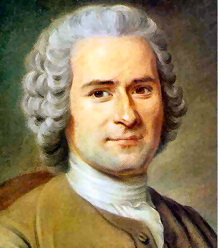

Liberals don't notice it, but they are about the most illiberal people in the world when it comes to certain values. They just can't seem to see it. This is evident in a lot of the talk thse days about "tolerance" and "inclusiveness," celebrating "multicultural diversity" and "difference." What these expressions usually appear to intend is an open, welcoming attitude toward those that have been "marginalized," "victimized" and "oppressed" in various ways--such as blacks, non-Christians, gays and lesbians, women excluded from the all-male Catholic priesthood, etc. Which means that the person with probably the best chance of self-promotion and advancement today would be an anti-Catholic African-American lesbian. Or some combination of one or more of these traits. That's a virtually sure ticket to the talk show circuit and a top-dollar publishing contract. I know white male professors who promote themselves by embracing feminism, queer studies, trans-genderism, liberal religious revisionism, and the like. On the other hand, if you suppose for a moment that this "inclusiveness" and "celebration of diversity" means anything like the acceptance of traditional family values, Republicanism, or traditional Judeo-Christian values, you'd better think again.

Better yet, ask Phil Mitchell, who was fired from his position as professor of history at the University of Colorado last spring when one of his students objected to having to read Charles Sheldon's In His Steps, a book about liberal Protestant Christianity at the turn of the 20th century--a book used for many years at the university and read with enjoyment by numerous secular and Jewish students.

Ironically, the University of Colorado is also the academic home of Ward Churchill, the controversial, America-hating, leftist professor who wrote that those who died in the 9/11 attacks were not innocent victims but "little Eichmanns," a reference to Adolph Eichmann, the Nazi bureaucrat who implemented Hitler's Final Solution. While this cause two northeastern schools to cancel his speaking engagements, Churchill received strong backing from members of his department, who appealed to principles of free speech and academic freedom, and he remains a tenure track professor at at the university with an annual salary of $90,000. (For more on the case, read this interview with Phil Mitchell.)

One of the most notorious contemporary critics of contemporary totalitarian liberalism, whom liberals love to hate, because she is cultured and pretty but brazenly "politically incorrect," is Ann Coulter--recently featured on the cover of TIME magazine (April 25, 2005). A regularly featured political news analyst on various network programs, she has authored numerous best-sellers, including The TIME cover featuring Coulter sported the caption by John Cloud: "Fair and balanced she isn't. This conservative flamethrower enrages the left and delights the right. Is she serious or just having fun?" Why can't liberals figure it out? The answer, of course, is both. Why do critics of totalitarian liberalism have all the fun? Follow the humor. The trail will rarely, if ever, lead you to the door of a totalitarian liberal.

One of the most astute scholars of totalitarian liberalism has been the Jewish Zionist and Professor of History at the Hebrew University of Jerusalem, J.L. Talmon. His most recent publication is Totalitarian Democracy and After (Cass Series--Totalitarian Movements and Political Religions) (2002). But forty-five years ago he already offered a provocative analysis of the convoluted logic of Jean-Jacques Rousseau's Social Contract in his profound study of The Origins of Totalitarian Democracy (Praeger university series) (1960). This is particularly significant in that Rousseau's work is seen by many as a charter for egalitarian democracy. It was certainly viewed as such by the primier Enlightenment philosopher, Immanuel Kant, who was greatly enamored of his work. In many ways Rousseau may be considered the theorist behind the French Revolution of 1789, which, as we may recall, was the revolution that "devoured her children."

The significance of the French Revolution (1789-1794) and the profound difference of its underlying ideology from the values of the English Revolution (1621-1688) are succinctly analyzed in Walter Lippman's visionary little book, The Public Philosophy (which is available only in used copies, though important enought that it ought to be brought back into print). The French Revolution was ideologically the antecedent of the Bolshevik Revolution (1917) that brought Marxist-Leninism into power in Russia--which eventually saw the slaughter of many more millions than were lost in the Nazi Holocaust. On the other hand, the English Revolution was in many ways the antecedent of the American Revolution (1776). John Locke, whose political writings championed minimal government (its function was restricted to the protection of life, liberty and property) and whose writings may in many ways be considered the theory behind the English Revolution, drafted the constitution of the original Carolina colonies.
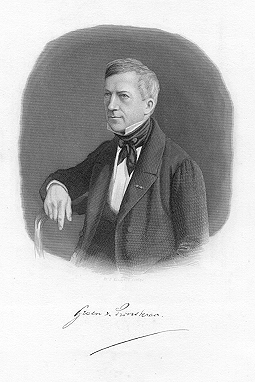
Another overlooked scholar whose work offers brilliant insight into the logic of the French Revolution from a Dutch Reformed perspective is Guillaume Groen van Prinsterer, who was also Prime Minster of The Netherlands from 1901-1905 and founder of the Anti-Revolutionary Party in Holland. His lectures on the subject, entitled Ongeloof en Revolutie (Unbelief and Revolution), have been partially translated into English, Lectures VIII & IX, entitled Unbelief in Religion and Politics (His Unbelief and Revolution; Lectures 8 and 9) (1975), and Lecture XI, entitled The History of the Revolution in Its First Phase: The Preparation (Till 1789) (His Unbelief and Revolution; a series of lectures in history, Lecture 11) (1973).

The point is that the totalitarian liberalism animating the thinking of Rousseau, the French Revolution, and the Bolshevik revolution has far more in common with the liberalism of the contemporary western world than the liberalism of John Locke, which represented the "liberality" of a government whose powers were restricted, on the assumption that power corrupts and absolute power corrupts absolutely, an assumption based on the Christian premise of a fallen human nature. Here's a test by which to measure the degree to which the meaning of political "liberalism" has shifted in history: "liberalism" today is associated is associated with big government politicians like Ted Kennedy, Bill & Hillary Clinton, and John Kerry; whereas the values of "liberalism" in its original sense are associated today with conservative ("that-goverment-is-best-which-governs-least") politicians like Ronald Raegan, Newt Gingerich, Pat Buchanan, and Jesse Helms. There's an irony in that. "Liberalism" used to mean what the tradition of John Locke stood for. Today it means, at least politically, the politics of big government, if not Orwellian "Big Brother" state totalitarianism.

The "politically correct" liberalism of contemporay liberal ideologues, however, is much more than mere political liberalism. It is an ideological allegiance, a worldview, an attitude and habit of mind that is ultimately tyrannical and even self-destructive. The scientist and philosopher, Michael Polanyi addressed the problem of such liberalism in an essay entitled "The Eclipse of Thought" in his book, Meaning (University of Chicago Press, 1977), in which he writes:
Here the inconsistency of liberalism based on philosophic doubt becomes apparent: freedom of thought is destroyed by the extension of doubt the the field of traditional ideals, which includes the basis for freedom of thought. (p. 10)
I don't know how it could be put more succinctly than that. Yet another worthy work in the tradition of conservative (original) liberalism is James Burnham's Suicide of the West: An Essay on the Meaning and Destiny of Liberalism (1975), which points out the many self-referential inconsistencies and self-undermining policy decisions and self-parodying illogicalities of modern liberalism. How could anything so well-intentioned become so idiotic and tyrannical?

"The best way to convert liberals is to have them move out of their parents' home, get a job, and start paying taxes." --Ann Coulter

"Zorro" based on Irish-Catholic freedom fighter in Mexico

According to the pages of The Honourable Society of the Irish Brigade, which was formed in 1994, on the 300th anniversary of the death of its founder, Justin MacCarthy, to commemorate the lives and achievements of the Irish Soldier in Foreign Service, the historical figure behind the tales of the masked swordfighter, Zorro, was "an Irish gentleman of noble birth named William Lamport, born in 1615 in County Wexford [Ireland]." The masked hero and freedom fighter "Zorro" was the creation of Johnson McCulley, and first appeared in August 1919 as a serial in a pulp fiction journal entitled All-Story Weekly. But the historical antecedent, as the claim goes, was the 17th century William Lamport, who "hailed from a Catholic family," left Ireland during the confederate conflict as a result of oppressive English rule," in 1643 "enlisted in one of the three Irish regiments in Spanish service (O'Neill, O'Donnell and Fitzgerald) to fight against the French forces in Spanish Flanders," was "commended for bravery and entered Spanish Royal service," "went to the then-Spanish colony of Mexico," assumed the name "Guillen Lombardo," and became a notorious freedom fighter in the Mexican independence movement. Read more.

"Here's to the Irish
The Men that God made mad
For all their wars are merry
And all their songs are sad."
- G.K.Chesterton.

Wednesday, May 11, 2005

When will Boston College become Catholic again?

We all know that Boston College has a prestigous history as one of the primier Jesuit institutions of the northeast. But when will Boston College have the integrity to institutionally align itself with the Catholic Church again? This, from cyberCatholics.com, is hardly encouraging:
Despite the fact that Massachusetts allows religious institutions to discriminate against active homosexuals based on a moral objection, Boston College has decided to re-write its policy of non-discrimination.

The new policy states that Boston College "commits itself to maintaining a welcoming environment for all people and extends its welcome in particular to those who may be vulnerable to discrimination on the basis of their race . . . religion, color, age . . . or sexual orientation."
No wonder Massachussetts Catholics had trouble with homosexual pedophile & pederast priests!

What, you have trouble with that??? It's one thing to call sinners to repentance and welcome them home to the Father. It's another to welcome the unrepentant sin into the bosom of an institution that officially identifies itself with a church that has historically and traditionally regarded such sexual behavior as a crime against nature and an abomination before God. Give it up, BC, and become what you are: an erstwhile Jesuit and Catholic institution that shows every sign of institutional apostasy.

On why liberal arts programs are being eroded

At our academic institution, like many across the country, liberal arts programs are under the gun. They are seen as unproductive, often under-enrolled by students, in contrast to the "professional" programs like business, occupational therapy, nursing, and such, which are popular money-makers.

One of my colleagues recently suggested that the problem is over-specialization among the various liberal arts disciplines. Among other things, he also suggested that many liberal arts disciplines are seen as having little value. He said, "nothing so irritates Science and the Market as history, philosophy and religion. (I would add literature)." E.F. Schumacher in his Guide for the Perplexed, when talking about the "maps of life" furnished to students by most universities these days, writes:
The maps produced by modern materialistic Scientism (I would add Business Programs) leave all the questions that really matter unanswered; more than that, they deny the validity of the questions .... Questions like "What should I do?" or "What must I do to be saved?" are strange questions because they relate to ends, not simply to means. No technical answer will do, such as "Tell me precisely what you want and I shall tell you how to get it." The whole point is that I do not know what I want. Maybe all I want is to be happy. But the answer "Tell me what you need for happiness, and I shall then be able to advise you what to do"--this answer, again, will not do, because I do not know what I need for happiness.
Specialization may be part of the problem, but I'm not sure that's really the worst culprit. It seems to me that we're witnessing a significant shift towards the technical (the "how" questions) that represents an abdication of the reflective (the "why" questions). To put it in more Chestertonian terms, there is a thought that stops thought, and that is the only thought that ought to be stopped. As Chesterton puts it in his essay, "The Suicide of Thought" (Chapter 3 of Orthodoxy):
... what we suffer from today is humility in the wrong place. Modesty has moved from the organ of ambigion. Modesty has settled upon the organ of conviction; where it was never meant to be. A man was meant to be doubtful about himself, but undoubting about the truth; this has been exactly reversed. Nowadays the part of a man that a man does assert is exactly the part he ought not to assert--himself.... For the old humility made a man doubtful about his efforts, which might make him work harder. But the new humility makes a man doubtful about his aims, which will make him stop working altogether.
In other words, the assumption has settled into the philistine mind that questions of the sort raised in liberal arts classes can't be answered and are therefore not worth asking. As the philistine student, Peter Pragma (in Peter Kreeft's book The Best Things in Life), responded when faced with Aristotle's distinction between three kinds of knowledge (productive, practical, and theoretical) and asked what each of them improves: "Productive knowledge improves things in the world, practical knowledge improves our practice, and theoretical knowledge (knowledge for the sake of knowledge, such as we find in the liberal arts) improves nothing."

Whether it's a matter of specialization, excessive focus on technical know-how, or loss of confidence that anything really meaningful can be actually known, I do agree that it's a problem reflected in academe. I see it not only in the drift towards "professional" programs and majors, but even in the growing gap between administration and faculty. It used to be that college and university presidents were members of the faculty and taught one or two courses as part of their annual contract. That's all been lost as they've increasingly adopted CEO models of administration (reinforced by their corporate board members), along with "perfect professional distance" from members of their faculty, whom they seem inclined to treat increasingly as "employees." None of this helps, of course.

A good place to discover the heart and mind of Benedict XVI

In 1996, Cardinal Ratzinger, now Pope Benedict XVI, granted an extended interview to Peter Seewald, a journalist who had left the Church and was wrestling with questions about the Faith. Significantly, Seewald himself returned to the Church sometime after the interview. In a recent newsletter Steve Wood, President of Family Life Center International, comments on this interview:
Sweewald's interview became the book, Salt of the Earth: The Church at the End of the Millenium: An Interview with Peter Seewald [Ignatius Press]. This book is one of the best places to start discovering what is inside the heart and mind of our new Holy Father. I highly recommend it. There are so many good things Cardinal Ratzinger says in this book it would be impossible in a newsletter to begin mentioning them all. My copy of the book is highlighted, underlined, and filled with asterisks. Here are just a few of the many things I found encouraging in Salt of the Earth:

Seewald: (P.114)
"In one of the documents bearing your signature you recalled the admonitions of the Apostle Paul: 'Preach the word, be urgent in season and out of season, convince, rebuke, and exhort, be unfailing in patience and in teaching. For the time is coming when people will not endure sound teaching, but having itching ears they will accumulate for themselves teachers to suit their own likings, and will turn away from listening to the truth and wander into myths. As for you, always be steady, endure suffering, do the work of an evangelist, fulfil your ministry'" [2 Tim 4:2-5].
Cardinal Ratzinger:
"I don't want to overreach myself, but I would say that this expresses the essence of what I consider to be my standard at this time."
Seewald (p. 82) -- Inquiring about his concerns as a bishop about the dissolution of tradition and authenticity and how he denounced the forces spinning everything into confusion.

Cardinal Ratzinger:
"The words of the Bible and of the Church Fathers rang in my ears, those sharp condemnations of shepherds who are like mute dogs; in order to avoid conflicts, they let the poison spread. Peace is not the first civic duty, and a bishop whose only concern is not to have any problems and to gloss over as many conflicts as possible is an image I find repulsive. Even today I am glad that in Munich I didn't dodge conflicts, because letting things drift is - as I have already said - the worst kind of administration.
Seewald (p.113)
"One often has the impression that you have been trying to preserve something, like a father who wants to preserve the inheritance created with so much hard work, if not for his own children, who apparently can't do credit to it or use it, then at least so that his grandchildren can still have access to it."
Cardinal Ratzinger:
"I like that idea of preserving something even for one's grandchildren. For what I really have at heart is keeping this precious treasure, the faith, with its power to enlighten, from being lost."
Seewald (p.166 & 168) -- Asking if the Church should be relaxing its standards to become more attractive to those with "modern" lifestyles:

Cardinal Ratzinger:
"More and more frequently we observe that young people are underchallenged. In fact, the increasing membership in sects with radical internal demands can be partly explained by the fact that, first, young people are looking for certainty, they want a secure shelter, but then also they want to be challenged. Somewhere deep down man knows: I have to be challenged, and I have to learn to form myself according to a higher standard and to give myself and to loose myself."
(Ignatius Press is in the midst of reprinting Salt of the Earth).
Apparently Ignatius Press has been inundated with orders for books by Ratzinger since he became Pope. [Gratia tibi, Steve Wood]