Saturday, August 26, 2017

Sammons and Lawler: why we pretend nothing went wrong after Vatican II

Three articles were published recently revisiting the confusion following Vatican II and suggesting how to make sense of it: The last article by Lawler draws the three together by summarizing points made by Mosebach and Sammons. Mosebach's and Sammons' articles, however, should not be neglected, because they make excellent points in their own right that do not make it into Lawler's summary -- particularly some of the details about "soft censorship" of bad news by the Church and Catholic media, and their promotion, almost exclusively, of good news (the "Everything is Awesome" view). A good example of the latter is George Weigel's recent article, "Motown and the Turbocharged Church," First Things (August 16, 2017), which speaks to the positive aspirations of key Church leaders in Detroit, but ignores the long-entrenched aberrations of others.

Sammons identifies three reasons why inconvenient truths are often suppressed by Catholic media. Bad theology ("Many believe that since Ecumenical Councils are guided by the Holy Spirit, nothing erroneous or even harmful can come from them"); institutional bias ("The Church and its supporting institutions have heavily invested themselves on the idea that Vatican II was beneficial to the Church"); and financial support ("If an orthodox organization questioned Vatican II, its speaking engagements and invitations from parishes and dioceses would disappear"). It is safe to assume that George Weigel's speaking engagements and invitations will not disappear any time soon.

But Lawler offers the most convenient summary. He writes:
Something went wrong—seriously wrong—in the Catholic Church in the years after Vatican II. Can we all agree on that much? Leave aside, for now, the familiar debate about the causes of the problem; let’s begin with the agreement that there is, or at least certainly was, a problem.

Eric Sammons makes the point in a provocative essay that appeared in Crisis last week:
If an entirely objective social scientist were to study the Catholic Church in the second half of the twentieth century, he would see one fact staring him straight in the face: the Church experienced a precipitous decline in the Western world during that time.
The problem (whatever it is) is compounded, Sammons remarks, by a general refusal to acknowledge the reality of our post-conciliar difficulties: what he terms a “soft censorship” of unpleasant news. Bishops and pastors, diocesan newspapers and parish bulletins have bombarded us for years with reports that the Church is “vibrant,” that programs are booming, that the liturgy is beautiful, that religious education is robust. Never is heard a discouraging word. Yet we know better. We know about the shortage of priests; we see the news of parish closing; we notice the empty pews on Sundays. Something is wrong; we know that.

Sammons argues persuasively that this “soft censorship,” this see-no-evil approach, is now an impediment to evangelization [my emphasis], because it thwarts serious discussions about the current state of the Church. Evangelization means bringing people to the truth, he reasons, and that process “cannot thrive in a censored environment.” ...

... Did the problems that arose after Vatican II come solely because the Council’s teachings were ignored, or improperly applied? Or were there difficulties with the documents themselves? Were there enough ambiguities in the Council’s teaching to create confusion? If so, were the ambiguities intentional—the result of compromises by the Council fathers?

Suggesting that there could be difficulties with some Vatican II documents does not mean denying the authority of the Council’s teaching. No document drafted by human hands will ever be perfect. There may be a need for clarification, elucidation, explanation, even correction.

More to the point, while it is certainly true that the “spirit of Vatican II” that is often cited in support of radical changes cannot be reconciled with the actual teachings of the Council, it is also true that the proponents of change can cite specific passages from Council documents in support of their plans. So are those passages being misinterpreted. Are they taken out of context? Or are there troublesome elements of the Council’s teaching, with which we should now grapple honestly? One thing is certain: we will not solve the problem by pretending that it does not exist.
Related: John T. Elson, "The Catholic Church Battles Its Old Guard," LIFE Magazine (October 18, 1963), pp. 114ff.

[Hat tip to E.P. and J.M.]

Southern Poverty Law Center hate crimes

[Advisory: see Rules ##7-9]

Here Chris Ferrara interviews Michael Matt following his full-length address at a conference at which Ron Paul was the keynote speaker a few years ago. In his full-length address, Michael Matt defended Catholics against the ludicrous charge of anti-Semitism, exposing the ignorance of history, scripture and theology on the part of the Southern Poverty Law Center and other far-Left Christophobes. Watch and learn.


Related:

Catholic Doomsday clock set to "Magisterial"


[Disclaimer: see Rules ##7-9]

Eccles (!!), "Catholic Doomsday clock set to 'Magisterial'" (Eccles is saved, August 25, 2017):
The Catholic Doomsday clock was initiated in 2013, as a way of warning against the inevitable meltdown that would follow should Pope Francis attempt to say anything "infallibly".

Whereas previous popes have refused to "go nuclear" since infallibility was defined in the 19th century [well, that's not quite true: Pius XII's Munificentissimus Deus was declared infallibly in 1950], there has been an increasing risk that Pope Francis would say something mindlessly stupid ex cathedra.
Provocative article. But there's also a cryptic banner at the top that reads: "This is the spiritual journey of me, Eccles, my big brother Bosco, and my Grate-Anti Moly. Eccles is saved, not sure about Bosco, and we've got real problems with Anti." What does it mean? I'm not sure. "Eccles" could refer to the Church (from the Greek: 'Ecclesia'). Not sure though. Any thoughts?

'Eccles' continues:
Is the Vatican about to go nuclear?

The Pope has so far used a variety of weapons in an attempt to impose a new version of Catholicism: probably the least aggressive are tweets (produced by a teenage intern), which are indistinguishable from the platitudes of the Dalai Lama; more striking are his "air attacks" consisting of new off-the-cuff doctrines expressed on aeroplane journeys, and usually "explained" and "interpreted" afterwards; he is also a dab hand at deploying sockpuppets (Spadaro, Ivereigh, Faggioli, Marx, Daneels, oh there's too many to name...) to say the unthinkable, usually with a healthy dose of abuse thrown in.

Then we come to Amoris Laetitia, ghost-written, not based on anything agreed at the synods it followed, not even properly read by the Pope. A ticking bombshell, which brave bomb-disposers have attempted to defuse with DUBIATM technology. Still it continues to tick, tick, tick...

We may ignore Laudato Si', an attempt at building a "green" bomb which would destroy minds but not doctrine. Well, everyone else does.

Now, however, the threat level has reached "Magisterial". All the changes due to Vatican II, even the ones which are nothing at all to do with Vatican II, have been declared "irreversible".

Like his Popemobile, Pope Francis has no brakes, and no reverse gear.

Yes, the Spirit of Vatican II has won, and the threat level is now Magisterial. Pope Francis can repeal decisions made by his predecessors, such as Benedict XVI, John-Paul II, Pius X, Pius V, Peter, ... and even Jesus. BUT NOBODY ELSE HAS THE NUCLEAR CODES.
"Excuse me," writes Eccles, "while I head for my bunker."

[Hat tip to J.M.]

"All words have lost their meanings now."


For a man whose favorite mode of communication seems to be carrier pigeons, our underground correspondent somewhere in an Atlantic seaboard state, Guy Noir - Private Eye, seems surprisingly savvy about contemporary electronic technology. He used some sort of messenger app on his smart phone (didn't know he even had one) to contact me today as I was sitting at my computer. All of a sudden, there he was, bushy beard and all. One might have mistaken him for one of them mountain men up in the hollers of the Appalachian mountains.

Anyway, he blurts out: "Peter Kreeft has a new book out on world religions. [This is the one I think he had in mind.] At Amazon, one reviewer calls him an 'exclusivist.'"

At which point Noir, without letting me get a word in edgewise, contorts his bearded face and simply yells into his phone: "TO WHICH I REPLY, ALL WORDS HAVE LOST THEIR MEANINGS NOW!"

"Well, what do you mean?" says I.

And he replies: "I esteem Kreeft and his writing, but he engates in wishful thinking and his solutions are compromises of the Wojtyla-Ratzinger-Bergoglio sort."

"Whaaaa???" says I.

"They do not solve problems but amplify them," says he. "Ratzinger has a book called Faith and the Future, which is like a political pamphlet in its effort to please."


"This is more on point ..." says he, "old but useful." And he sends me while still on messenger (don't ask how, I wouldn't know), sending me a link to this article by Stan Guthrie, "Whose Submission? A Muslim-Christian dialogue," a critical review of Kreeft's Between Allah and Jesus: What Christians Can Learn from Muslims from some years back.

Guthrie begins his review by quoting the first line of Kreeft's earlier classic, Between Heaven and Hell, about three luminaries -- John F. Kennedy, Aldous Huxley, and C. S. Lewis -- who each died on November 22, 1963. In the first line from that book, JFK asks, "Where the hell are we?"

Guthrie observes that he had a similar reaction after reading Kreeft's later work, Between Allah and Jesuss, noting that it seems to stand the earlier one on its head, making a Muslim protagonist "a stand-in for the Lord," even having him claim to be "a better Christian than his Christian foils." Of course, given the state of Christian catechesis these days, this may not be too far from the truth in some cases.

In any case, Kreeft, Guthrie, and Noir all raise an important question to think about: Have our words lost all their meanings now, or, at least, are we in danger of our words losing their meaning? If we accept von Balthasar or Fr. Barron's hypothesis that hell could be empty, or nearly empty, for example, has our use of the word 'salvation' or 'redemption' lost all meaning? It's a fair question. And the same could be asked of our 'pastoral' use of words like 'love,' 'mercy,' and 'forgiveness,' in venues where there is almost no reference to 'repentance' or 'contrition.' If all religions present genuine paths to God and all non-Christians, Protestants, and members of sectarian religious cults have a reasonable expectation of finding themselves in heaven in the world to come, then what's the point of converting to the Catholic Faith? For that matter, what's the point of the New Evangelization? Sweet, merciful Jesus could be so severe at times:
Enter by the narrow gate; for wide is the gate and broad is the way that leads to destruction, and there are many who go in by it. Because narrow is the gate and difficult is the way which leads to life, and there are few who find it. (Matthew 7:13-14)

Friday, August 25, 2017

"Did Amoris Laetitia's ghostwriter just respond to the dubia?"

Steve Skojec, "Did Amoris Laetitia's ghostwriter just respond to the dubia?" (1P5, August 22, 2017). Excerpt:
There’s no turning back.” Fernández told Mickens. “If and when Francis is no longer pope, his legacy will remain strong. For example, the pope is convinced that the things he’s already written or said cannot be condemned as an error. Therefore, in the future anyone can repeat those things without fear of being sanctioned. And then the majority of the People of God with their special sense will not easily accept turning back on certain things.
Guy Noir - Private Eye responded in a crumpled note carried over the mountains by an exhausted carrier pigeon: "I tend to think he's right. If a 'magisterium' can turn like a weathervane, it loses all authority. This is the tragedy of the last several papacies. Rome's voice has been muffled on too many points."

Remember this? (See below)


Tridentine Community News - History and development of chant; Duane Meloche, RIP; Assumption Church still tugs at our hearts; local TLM schedule


"I will go in unto the Altar of God
To God, Who giveth joy to my youth"

Tridentine Community News by Alex Begin (August 20, 2017):
August 20, 2017 – Eleventh Sunday After Pentecost

History and Development of Chant

Have you ever wondered about the evolution of the various styles of liturgical chant and how they interrelate? Web site www.liturgica.com created [an elaborate] diagram that depicts their lineage and history. [Diagram copyright Liturgica Holdings LLC, all rights reserved. Check it out. It's well worth visiting!!!]

Duane Meloche, RIP

Your prayers are kindly requested for the repose of the soul of Duane Meloche, the father of former Windsor & metro Detroit Latin Mass organist Matthew Meloche. A High Funeral Mass in the Extraordinary Form was celebrated for Duane on Thursday, August 10 at Holy Name of Mary Church in Windsor. Matthew served as Music Director of the St. Benedict Tridentine Community from 2004-2006 and is currently Director of Music at Ss. Simon & Jude Cathedral in Phoenix, Arizona.

Assumption Church Still Tugs at Our Hearts


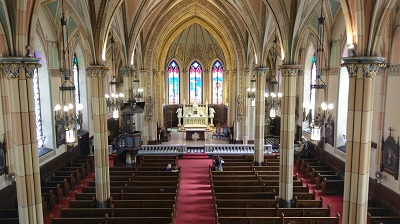
It is bittersweet every year to have the opportunity to visit Windsor’s Assumption Church, as was possible this past Sunday and Tuesday. Closed since November, 2014, the building is slowly deteriorating, yet it retains a grandeur which testifies to our ancestors’ ability to express their Catholic faith in sacred art and architecture.

A commenter on Twitter from the U.K. put it well: “It’s blindingly obvious that this Church should be in use for the Traditional Liturgy.” Indeed. Let us pray that it will be once again.

Tridentine Masses This Coming Week
  • Mon. 08/21 7:00 PM: Low Mass at St. Josaphat (St. Jane Frances de Chantal, Widow)
  • Tue. 08/22 7:00 PM: High Mass at Holy Name of Mary, Windsor (Immaculate Heart of Mary)
  • Sat. 08/26 8:30 AM: Low Mass at Miles Christi (St. Zephyrinus, Pope & Martyr)
[Comments? Please e-mail tridnews@detroitlatinmass.org. Previous columns are available at http://www.detroitlatinmass.org. This edition of Tridentine Community News, with minor editions, is from the St. Albertus (Detroit), Academy of the Sacred Heart (Bloomfield Hills), and St. Alphonsus and Holy Name of Mary Churches (Windsor) bulletin inserts for August 20, 2017. Hat tip to Alex Begin, author of the column.]

Thursday, August 24, 2017

Wham! The confusion of morality with manners!!!


Matthew Schmitz, "Fr. Manners" (First Things, August 22, 2017):
Bless me, Father, for I have sinned. I fell asleep at your book talk . . .

Were Fr. James Martin, SJ to appear opposite me in the confessional, I would be tempted to make this frivolous admission—and if his agenda prevails in the Church, I will have reason to make it. Catholics distinguish between violations of manners and of the moral law. Fr. Martin, in ways trivial and grave, does not. In his account of the faith, the sin that Christians once called sodomy is no more serious than my nodding off as he spoke gentle words at the Church of St. Francis Xavier on a warm June afternoon.
There's much more to this article, which Guy Noir - Private Eye, had the courtesy of calling my attention to via a message sent again by carrier pigeon. I suppose that was somehow à propos.

"A priest's face ..." Reflection on Fr. McGivney


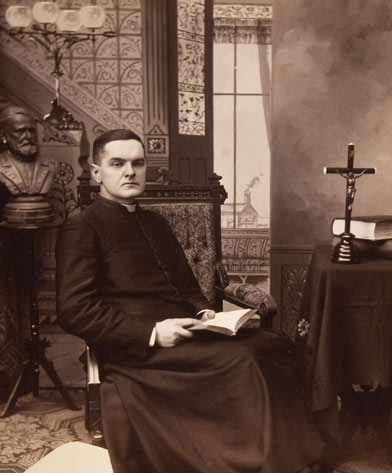
Fr. Michael J. McGivney (1852-1890) was the founder of the Kights of Columbus. Here is a snippet about his personality from a contemporary who knew him, which I found in my copy of Columbia magazine, which arrived today. Fortunately, it's also online and thus linked below:

Fr. Joseph G. Daley, "The Personality of Father McGivney," Columbia (August 2017), pp. 21-22 (extract):
I remember meeting with Father McGivney in New Haven in 1883, the year after the first incorporation of the Knights. He was then in the prime of his vigor, entrusted by a good but delicate pastor, Father Lawlor, with the management of St. Mary’s, a parish lying close under the towers of Yale College and at that time the most aristocratic parish in Connecticut. Father McGivney himself was anything but aristocratic; he was a man of extreme grace of manner in any society, but without any airs, without any “lugs,” if you will pardon the expression. I saw him but once and yet I remember his pale, beautiful face as if I saw it only yesterday; it was “a priest’s face,” and that explains everything. It was a face of wonderful repose; there was nothing harsh in that countenance, although there was everything that was strong; there was nothing sordid, nothing mercenary, nothing of the politician, nothing of the axe-grinder. Guile and ambition were as far from him as from heaven. To meet him was at once to trust him; children actually loved him; and the very old people of the neighborhood, whom he hunted up and who got part of his time even on busiest days, called him a positive saint and meant it....

Wow!! Whole verses missing from a popular Protestant translation of the New Testament!!


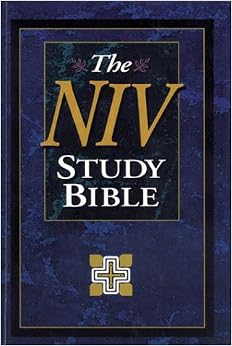
I just heard this today from a Catholic program and didn't believe it; so I had to look up these allegedly missing verses and see for myself. The following verses are missing from the New International Version, a popular Protestant translation; and if you don't have a copy at hand, you can check online by going to Bible Gateway and selecting "New International Version" ("NIV" for short) and looking up the following verses. It may help to have another version that includes these verses open in another screen to check them side by side. Often you can see that the omission is explicitly tendentious. There things they don't want the reader to see. Here you go:
  • Matthew 17:20
  • Matthew 18:11
  • John 5:4
  • Acts 8:27
  • Acts 15:34
  • Acts 24:7
  • Romans 16:24
Check them out. They're not there!!!

Several years ago I pointed out something else about this same translation of the Bible that I actually learned from a very honest Protestant theology professor of mine at Westminster Theological Seminary. He had written an article in The Reformed Journal (no longer extant) about the disingenuous work of the translators. I wrote about it in "Retrieving a lost Catholic vocabulary" (Musings, June 11, 2014):
On my journey to the Catholic Faith, which began in 1987 before being received in the Church in 1993, those who sought to dissuade me constantly pitted the "living Word of God" (the Bible) over against the "vain traditions of man" (Col. 2:8) allegedly represented by Catholicism. So entrenched was this animus against Catholic tradition, that one of my Protestant theology professors, James Payton, Jr. to his credit pointed out that the evangelical New International Version (NIV) of the Bible explicitly attempts to "de-Catholicize" those passages where Paul commends the Church's traditions (1 Cor 11:2, 1 Thes 2:15; 3:6) by translating the Greek word for "traditions" as "teachings," while translating the remaining ten references which are all negative as "traditions" (as in vain and empty "traditions of man").
You hear about these sorts of things, but half the time you don't really believe them until you go and check for yourself. This is awful, and I commend James Payton, Jr., for his integrity and honesty on this point.

[Hat tip to "The One True Faith Revisited: Where Did The Bible Come From?" The Download, August 11, 2017 for the reference to missing Bible verses in the NIV.]

Friday, August 18, 2017

Tridentine Community News - "Extraordinary Detroit" video project update; Traditional Roman hymnal 2nd ed. published; Interesting book: The Hidden Treasure; Food for thought from Archbishop Sample; local TLM schedule


"I will go in unto the Altar of God
To God, Who giveth joy to my youth"

Tridentine Community News by Alex Begin (August 13, 2017):
August 13, 2017 – Tenth Sunday After Pentecost

“Extraordinary Detroit” Video Project Update


There is progress to report on producer Peter Cherlet’s video documentary about the history of the Latin Mass movement in metro Detroit and Windsor. Last reported upon by this column in our November 1, 2015 edition, Peter’s project now has a name: Extraordinary Detroit. Peter’s employer ChurchMilitant.com will now be helping him edit his footage and create the final output. You can view excerpts of the production on the new Extraordinary Detroit Facebook page, including interviews with Wassim Sarweh at Old St. Mary’s Church and Christopher Din at St. Josaphat Church: https://www.facebook.com/Extraordinary-Detroit-1513800792020874/

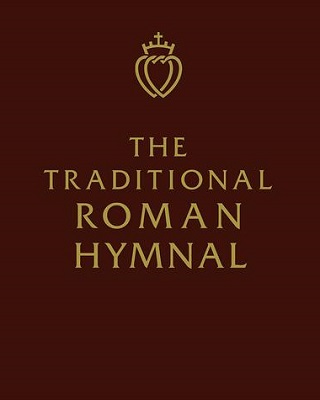
Traditional Roman Hymnal – Second Edition Published


After much study in the mid-2000s, both St. Josaphat Church and Windsor’s St. Benedict Tridentine Community chose to purchase copies of the Angelus Press Traditional Roman Hymnal for use in the pews. At the time it had little competition as an in-print hymnal primarily intended to support Latin Masses. Nowadays there are newer, alternative publications, such as the second edition of the Adorémus Hymnal, Boston’s updated St. Paul’s Hymnal, and the heavily-promoted St. Edmund Campion Missal & Hymnal.

We had been contacted several years ago to provide input for a second edition of the hymnal, but news about the project ceased to be forthcoming about the same time that the first edition of the TRH went out of print. Rare copies sold for astronomical prices, indicating there was, indeed, demand for this sort of publication.

This week Angelus Press announced that the long-awaited second edition of the Traditional Roman Hymnal has at last made it to print. Information about its expanded contents is here: https://angeluspress.org/products/traditional-roman-hymnal-2nd-ed

So will we be using this hymnal? Probably not. Years ago we conducted an experiment: Would more parishioners sing if we provided them with hymnals, or with music inserts in our Propers Handouts? The answer became clear: There was far more vigorous singing with the hymn inserts. They are clearly easier to use; no carrying of books or looking up the hymns of the day is necessary. Since the Gregorian Mass settings and hymns we employ are old and out of copyright, there is no particular reason to have our congregation use a resource which they have demonstrated they find somewhat inconvenient. Thus we ceased passing out our copies of the first edition of the TRH in favor of the printed music inserts.

Interesting Book: The Hidden Treasure


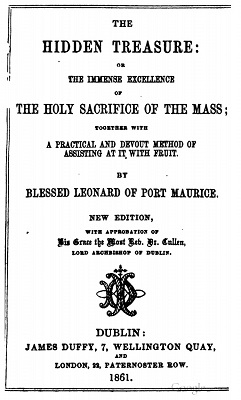
Google has done an immense service by scanning in and making available for free countless out-of-print books. One intriguing example is the rather brief, 134 page treatise by St. Leonard of Port Maurice: The Hidden Treasure: or the Immense Excellence of the Holy Sacrifice of the Mass; Together with a Practical and Devout Method of Assisting at It with Fruit. This work from 1861 contains beautiful spiritual reflections, with chapters such as, “Three Special Excellences of the august Sacrifice of the Mass,” “An Easy Method of assisting at Holy Mass with great Fruit”, and “How you should act after receiving the Holy Communion.” Written in old-fashioned, reverent English, this plain-speaking book of sound spiritual advice is a fast read, perfectly suited to be read on one’s tablet or smartphone, in one sitting or piecemeal during idle moments. The book is available on the Google Play Books e-reader app, or in PDF form from HERE:

Food for Thought from Archbishop Sample

The quote of the week comes from Portland Archbishop Alexander Sample, who at the recent Oregon Sacred Liturgy Conference asked, “We need to pause and ask ourselves: what is it about a more traditional expression of the sacred liturgy that draws so many young people? I think that is a really important question for the Church to reflect on.”

Tridentine Masses This Coming Week
  • Mon. 08/14 7:00 PM: Low Mass at St. Josaphat (Vigil of the Assumption)
  • Tue. 08/15 7:00 PM: High Mass at Holy Name of Mary, Windsor (Assumption of the Blessed Virgin Mary)
  • Tue. 08/15: 8:00 AM Low Mass & 7:00 PM Solemn High Mass at St. Joseph (Assumption of the Blessed Virgin Mary)
  • Tue. 08/15 7:00 PM: High Mass at Assumption Grotto (Assumption of the Blessed Virgin Mary) [Outdoor Mass]
  • Sat. 08/19 8:30 AM: Low Mass at Miles Christi (St. John Eudes, Confessor)
[Comments? Please e-mail tridnews@detroitlatinmass.org. Previous columns are available at http://www.detroitlatinmass.org. This edition of Tridentine Community News, with minor editions, is from the St. Albertus (Detroit), Academy of the Sacred Heart (Bloomfield Hills), and St. Alphonsus and Holy Name of Mary Churches (Windsor) bulletin inserts for August 13, 2017. Hat tip to Alex Begin, author of the column.]

Thursday, August 17, 2017

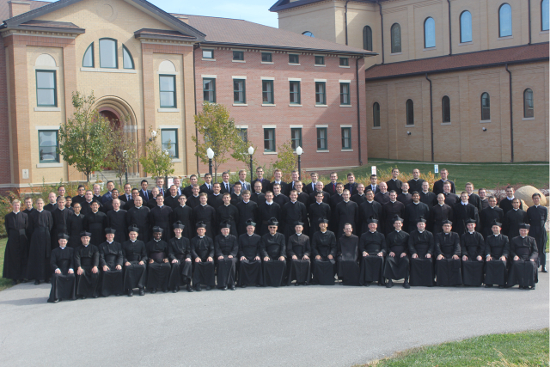
A nice sort of 'vocations crisis' at Our Lady of Guadalupe Seminary in Denton, Nebraska


Maybe some of you remember the tell-tale signs of burgeoning success from several years ago ... like Brian Kelly's article, "Signs for Hope: FSSP Has 75 Seminarians in US and Looking to Open Seminary in Mexico" (Catholicism.org, March 5, 2015).

Then there was the report on EWTN last year: "Our Lady of Guadalupe Seminary in Denton, Nebraska, has a new claim to fame. It produced one of the best-selling classical albums on Amazon and i-tunes centered on Gregorian chant."

And now we have the report on the latest priestly Ordinations: May 26, 2017 at Our Lady of Guadalupe Seminary.

But remember, the Fraternity has an international presence throughout many countries of the world beyond its seminary in Denton, Nebraska! Here are the statistics.

If you wish to donate to a growing and successful apostolate, look no further than this. In many ways, what you see here may well be the future face of the Catholic Church throughout the world. May God continue to bless their work with generous supporters!

Tuesday, August 15, 2017

Fr. Perrone: Cultural impoverishment, nobility of soul, and the Assumption of the Blessed Virgin Mary

Fr. Eduard Perrone, “A Pastor’s Descant” (Assumption Grotto News, August 13, 2017):
I once asked my friend Dan, “When you’re at a stop light and the car next to you has the radio on, how often have you heard classical music playing?” Without skipping a beat he said, “Never.” I also noticed when doing a little food shopping what things were piled up in the shopping carts of those around me. Mostly junk food. Next, I looked over the offerings on non-cable TV (just to take a quick look). Guess what? Trash, silly or filthy, with lots of commercials.

Culturally a great majority of our American people are deficient if not impoverished. That’s not to say they’re necessarily bad, immoral people, but that for the greater part they have a rather low level of culture which can be assessed by standards other than those mentioned above. Reading material, for instance. Language skills. Knowledge of history. Good manners. We may have a pretty good standard of living in terms of technological advances, amenities of life and rather high economic standing, but we’re sorely deficient in what are called “the higher things.”

These observations are hardly news breaking. Our people are by and large the descendants of generally poor, hard-working immigrants who formed a united people that became great in the remarkable achievement that we call the USA. For this we may be forgiven our lowbrow tastes and ignorance about many of those higher things. Yet there’s one measure of a people, and of individuals too, that should not excuse underachievers. This is the attainment of nobility of spirit. It has little to do with schooling or wealth or pedigree, but has all to do with the condition of one’s soul.

This is all by way of an odd introduction to our upcoming feast day. The Holy Virgin Mary is the most noble human person ever to have lived (or yet to live) and this in spite of the mean circumstances of her most humble life. Mary is the exemplar of all that is most excellent in our nature. Our Lord sait that the greatest among us would be as the least. No better instance of this than Our Lady. What we will celebrate on August 15 is god’s acknowledgement of Her incomparable nobility of soul, Her unsurpassed excellence in grace and virtue. She did not need to be schooled in philosophy or science or art, although God may indeed have infused knowledge of these and many other things into Her mind that we do not know of – in this life at least – for She is the Seat of Wisdom. No one can hope to come close to imitating Her exalted degree of excellence in anything, but we can attain to some degree of nobility of soul which is the fruit of the Catholic life well lived.

The Popes, in reference to Her Assumption, have drawn our attention to the ways in which we can become like the Holy Virgin Mary. She set a pattern of life for us that we can imitate no matter what our degree of culture, position, wealth, or any other natural criterion. God rewarded Her in the glorification of Her body immediately after Her death, assuming it united with Her soul into heaven. The other saints – among whom we hope to be numbered – will have to await their rising from the dead and entry into heaven until the end of time. Only those will be glorified, in whatever degree, who have nobility of soul, that is, one healed of sin and elevated by grace.

As always, I make an appeal to our parishioners to be present on August 15th not only for the Mass that they attend, but to spend added time in prayer to and with Our Blessed Mother. This is our parish’[s finest hour and the opportunity to express our devotion and love for Our Lady in a demonstrative way. In this we carry on a tradition that reaches back more than a century when pilgrims came here in search of grace and divine favor. We are privileged to be members of this parish today for all the fidelity it has shown in generations past in honoring Holy Mary. This is the day above all others when we witness Her continuing solicitude for our people.

Let us celebrate together this longstanding tradition of honor to that most noble Lady of the Assumption.

Fr. Perrone

P.S. A reminder to use the shuttle bus from Saint Veronica Church if you can to avoid parking on the neighborhood streets. This is for your convenience and your safety.

Monday, August 14, 2017

Contra Ivereigh: not just 'converts' are worried about the Church

Dan Hitchens, "It’s not just converts who are worried about the Church" (Catholic Herald, August 10, 2017):
In the last few years, many Catholics have become uneasy about statements coming out of Rome, and about the general direction of the Church. But which Catholics? According to a recent article in the Vatican newspaper, the “main obstacle” is “a good part of the clergy”. Then again, an article in Crux last year identified those “going against the Pope” as “almost always lay”.

Some believe that the issue is geographical: Massimo Faggioli describes an unease about the Church changing its style “from a Western one to a global religion”. Conversely, Cardinal Walter Kasper has said that the recalcitrant tend to be African or from “Asian or Muslim countries”....

This brings me to Austen Ivereigh’s latest piece suggesting that the epicentre of current anxiety is neither priests nor the laity, neither Westerners nor Africans, but converts. Ivereigh diagnoses “convert neurosis” in a range of writers, from “elegant commentators such as Ross Douthat” all the way down to “ex-Anglicans in my own patch such as Daniel Hitchens of the Catholic Herald.” Our neurosis reveals itself in disproportionate anxiety at the state of the Church; a horror of doctrinal development beyond our favourite period of Catholic history; and a failure to trust that “the Holy Spirit guides” Pope Francis. In sum, “their baggage has distorted their hermeneutic”.

I’m wary of this kind of psychologising: it is hard, even with those we know best, to say how their psychological issues affect their opinions. And in this instance the psychoanalysis seems needless, since there are at least as many cradle Catholics who have the same worries as us converts....

... I’m sorry to go over this again, but it seems worthwhile, since there is a determined effort in some quarters to change the subject. The concerns are about the sacraments and about doctrine. Nothing on this earth is more beautiful and precious than the sacraments, and it is natural for Catholics to be alarmed about the abuse of them. Scarcely anything is as necessary for our happiness as sound doctrine, and it is normal for Catholics to worry that doctrine is being contradicted or confused. There have been as many saints who were relaxed about heresy as there have been saints who despised the poor.

So of course converts and cradle Catholics will be dismayed by sacramental abuses and doctrinal confusion. And it is hard not to use such terms when we read Malta’s bishops claiming that avoiding adultery may be impossible; when we hear of priests, bishops and even cardinals abandoning the Church’s practice on Communion; when papal teachings are used – without contradiction from Rome – to justify novel approaches to divorce, euthanasia and extramarital relationships....
[Hat tip to JM]

Sunday, August 13, 2017

Tridentine Masses coming this week to metro Detroit and east Michigan


Tridentine Masses This Coming Week

Sunday


Monday


Tuesday


Wednesday


Thursday


Friday


Saturday


* NB: The SSPX chapels among those Mass sites listed above are posted here because the Holy Father has announced that "those who during the Holy Year of Mercy approach these priests of the Fraternity of St Pius X to celebrate the Sacrament of Reconciliation shall validly and licitly receive the absolution of their sins," and subsequently extended this privilege beyond the Year of Mercy. These chapels are not listed among the approved parishes and worship sites on archdiocesan websites.

Wednesday, August 09, 2017

Against the new optimism ...


Michel Houellebecq, prophet without religion

Rod Dreher, "Against The New Optimism" (American Conservative, July 31, 2017):
Oliver Burkeman has a long-read piece in The Guardian about whether or not life is getting better or worse. It is mostly a defense of the claims by the “New Optimists” that pessimism is grounded on willful blindness to the spectacular material improvements modernity has brought us. But it’s not entirely a defense. Excerpt:
The argument that we should be feeling happier than we are because life on the planet as a whole is getting better, on average, also misunderstands a fundamental truth about how happiness works: our judgments of the world result from making specific comparisons that feel relevant to us, not on adopting what David Runciman refers to as “the view from outer space”. If people in your small American town are far less economically secure than they were in living memory, or if you’re a young British person facing the prospect that you might never own a home, it’s not particularly consoling to be told that more and more Chinese people are entering the middle classes. At book readings in the US midwest, Ridley recalls, audience members frequently questioned his optimism on the grounds that their own lives didn’t seem to be on an upward trajectory. “They’d say, ‘You keep saying the world’s getting better, but it doesn’t feel like that round here.’ And I would say, ‘Yes, but this isn’t the whole world! Are you not even a little bit cheered by the fact that really poor Africans are getting a bit less poor?’” There is a sense in which this is a fair point. But there’s another sense in which it’s a completely irrelevant one.

At its heart, the New Optimism is an ideological argument: broadly speaking, its proponents are advocates for the power of free markets, and they intend their sunny picture of humanity’s recent past and imminent future to vindicate their politics. This is a perfectly legitimate political argument to make – but it’s still a political argument, not a straightforward, neutral reliance on objective facts. The claim that we are living in a golden age, and that our dominant mood of pessimism is unwarranted, is not an antidote to the Age of the Take, but a Take like any other – and it makes just as much sense to adopt the opposite view. “What I dislike,” Runciman says, “is this assumption that if you push back against their argument, what you’re saying is that all these things are not worth valuing … For people to feel deeply uneasy about the world we inhabit now, despite all these indicators pointing up, seems to me reasonable, given the relative instability of the evidence of this progress, and the [unpredictability] that overhangs it. Everything really is pretty fragile.”
This seems right to me. Read more >>
[Hat tip to JM]