Wednesday, September 12, 2007

Inwagen on the advantage of skepticism

Peter von Ingwagen, in God, Knowledge & Mystery: Essays in
Philosophical Theology
(Ithaca and London: Cornell
University Press, 1995), on p. 2, writes:
One advantage philosophers bring to theology is that they know too much about philosophy to be overly impressed by the fact that a particular philosopher has said this or that. Philosophers of the present day know what Thomas Aquinas and Professor Bultmann did not know: that no philosopher is an authority. Philosophers know that if you want to pronounce on, say, the project of natural theology, you cannot simply appeal to what Kant has established about natural theology. You cannot do this for the very good reason that Kant has established nothing about natural theology. Kant has only offered arguments, and the cogency of these arguments can be (and is daily) disputed.
This is, of course, amusing in one way; and I think I agree with in in the sense in which I believe he intends it. Yet I would disagree with the notion that no philosopher can properly be an authority, as, for instance, Aristotle is for St. Thomas Aquinas. This, of course, is what Ingwagen's quote would entail, if it were taken in the literal sense. Authority, I would argue, is something a bit like honor. You can be honored by others and not deserve it; and you can be dishonored by others and not deserve it. But when you get it right, you're honored by others because you've earned it by becoming worthy of their honor; and that worthiness is the important thing -- far more important than the actual honor given you by others. Accordingly, I would argue that it's possible for a philosopher (like Aristotle) to earn the right to be considered an authority -- whatever lack of consensus may exist within the contemporary fraternity of postmodern professional lemmings who call themselves philosophers. And a philosopher earnes this right by being worthy of being so regarded -- by becoming, in fact, an authority on a subject.

[Hat tip to Prof. Edgar Foster for the Ingwagen quotation.]

Catholic Beer Review

As a follow-up to our earlier post, "On drinking: a public service report" (Musings, September 2, 2007), I wanted to let you know about David Palm's new blog, Catholic Beer Review. It's a place where, as he told me, he will be posting information on beer tasting, history and trivia, and information on how to craft your own tasty brews at home. In Palm's words: "Beer has a venerable place in our Catholic history, with some of the most famous breweries having been founded and run by monks. So there's your Catholic connection, if you needed one to enjoy good beer."

Take a look at his recent review of his top ten favorite beers. He has a picture of each beer bottle with an accompanying review. If you think beer reviews can't be mouth-wateringly seductive, take a look at his review of Fuller's London Porter. You'll see what I mean. Palm knows how to turn a phrase, just as he obviously knows something about beers.

If you're interested, you can "subscribe" to the blog, or you can just check in on occasion. And while you're at it, take a look at his articles on Catholic faith and life over at his other blog, The Reluctant Traditionalist

Saturday, September 08, 2007

Quotable

"The position was offered at the last minute, when the scheduled professor found a better-paying job delivering pizza."

David Sedaris, Me Talk Pretty One Day, p. 84.

Decadent postmoderns

For a scathing indictment of the existentialist philosophers, Jean-Paul Sartre and Martin Heidegger, and postmodern 'philosopher' (I use the term loosely), Michel Foucault, see Christopher's post, "Revolutionary Intellectuals" (Against the Grain, September 1, 2007). The discussion is occasioned by Gerald Augustinus' dismissal of Jean Paul Sartre at Closed Cafeteria (to which http://vox-nova.com/2007/08/31/whos-afraid-of-existentialism/) -- the former referencing Fr. Neuhaus' post Sartre, Legal Scholarship, and Those Troublesome Male Pronouns "On the Square") and the following excerpt from Clive James' Cultural Amnesia: Necessary Memories from History and the Arts. Complete with personal confessions of capitulation to the existentialist seduction and delicious quotes from Paul Johnson's wonderful book, Intellectuals, it's sure to provoke a plethora of responses.

After the Motu Proprio: What to do now

Few Catholics are likely to understand the momentous significance of Pope Benedict's recent motu proprio, Summorum Pontificum (July 7, 2007). Why would a post-Vatican II Pope, it is asked, wish to grant wider freedom to the celebration of the hoary old, pre-Vatican II Mass, with its positively ancient rubrics, alien vestments, rigid formality, tedious silences, and unintelligible Latin? Few Catholics are sufficiently versed in liturgical history, or the events surrounding Vatican II and the formation of the current Novus Ordo and its disastrous "implimentation" to understand what is at stake. Most are so habituated in the post-Vatican II Mass that they would find nearly incomprehensible the claim that it is so far removed from the reform mandated by the Vatican II document, Sacrosanctum Concilium, that it would be unrecognized by most of the Fathers of the Council. Hence, the proclamation of the motu proprio, as important asst it is, cannot be properly understood as an achieved resting point, but only as an important milestone near the beginning of a long journey towards liturgical rehabilitation.

What should be done now? First, if you are among that marginal group of Catholics who understand the significance of the motu proprio and are grateful for it, write to thank our Holy Father for it. As the newsletter of the Coalition in Support of Ecclesia Dei suggests, send him a spiritual bouquet. Have a Mass offered for him. Pray for him and for all priests. The address is: "His Holiness Pope Benedict XVI, Apostolic Palace 00120, Vatican City State, Europe" (postage 90 cents 1st ounce). You can also email benedictxvi[at]vatican.va (even if he doesn't read this email personally, somebody does; and periodic summaries are doubtless reported to him).

Second, if you live in a diocese or area with no Traditional Latin Mass, request one. Your first letter should be to your pastor, not your bishop. The usual advice applies: be polite; brief (no more than a short paragraph); request the "extraordinary form of the Mass" or the "Mass of Blessed John XXIII"; request the Mass for both Sundays and weekdays; state that you are requesting the Mass in accordance with the Pope's recent motu proprio, Summorum Pontificum, articles 1, 5, and 7; and if you know of a priest willing and able to offer the Mass, mention that in your letter. If no reply is forthcoming after a month, repeat process. If you still hear nothing after another month, write your bishop. Keep copies of your letter(s). The Coalition Ecclesia Dei suggests that it is helpful to have one person in the parish with copies of everyone's letters.

Third, support apostolates promoting understanding of the Mass of Blessed Pope John XXIII, which to many priests as well as laity is a virtual novelty. A new website, Sancta Missa, launched on August 5, 2007, by the Canons Regular of Saint John Cantius in Chicago, offers a tutorial on the Latin Mass according to the 1962 Missale Romanum, with commentary, video and still photos. Features include: 1) an online tutorial for priests; 2) the rubrics of the 1962 Missale Romanum (the Altar Missal), in English and Latin; 3) the motu proprio Summorum Pontificum in Latin and English; and 4) the complete 1962 Missale Romanum for download in PDF format. Over the next few weeks and months there will be added to the site: 1) Fortescue's Ceremonies of the Roman Rite; 2) Learning to Serve at the Altar; 3) Liturgical Books and Resources, and 4) Sacred Music of the Liturgy.

Fourth -- and, in my opinion, most important -- support apostolates involved in promoting understanding of the significance of the Traditional Latin Mass. This involves more than an understanding of the Traditional Latin Mass itself. The broad cultural and historical context of the current crisis in the Church must be understood, and apostolates promoting resources facilitating such understanding must be supported. The magazine, Latin Mass: A Journal of Catholic Culture, Keep the Faith (with its extensive audio library of resources), Una Voce, and Coalition Ecclesia Dei for example, are worthy apostolates of this kind. Each of these has mounted initiatives for the re-education of the Catholic public worthy of your support. Coalition for the support of Ecclesia Dei, for instance, is reprinting one of the more notable commentaries on the motu proprio -- a two-part interview with Fr. Kenneth Baker, S.J., editor of the Catholic monthly for priests, Homiletic & Pastoral Review (with a wide lay audience as well) -- an interview also picked up by The Wanderer. The Coalition is reprinting Fr. Baker's interview together with English translation of Summorum Pontificum and the Pope's letter introducing the motu proprio to the bishops of the world. It goes without saying that the numerous studies of the liturgical crisis engendered over the last several decades, such as those mentioned in my Academy Store under "Liturgy & Liturgical Tradition," should continue to be actively studied and promoted.

The task is before us. Let us arise and be on our way. Ora et labore.

Thursday, September 06, 2007

Luciano Pavarotti dead at 71

I remember hearing Pavarotti for the first time and thinking my heart would stop. Pace! Whatever the shortcomings of his life (and they were many), whatever his penchant for spectacle (and it was ample), he was ultimately appreciated for what Time calls the "sheer splendor of his voice" (Jeff Israely, "Luciano Pavarotti Dies at 71," Time-CNN, September 6, 2007).

Placido Domingo, stated after his singing partner's death: "I always admired the God-given glory of his voice — that unmistakable special timbre from the bottom up to the very top of the tenor range." Pavarotti died early Thursday morning after a yearlong battle with pancreatic cancer. He certainly helped me fall in love with opera. I will miss him. Let us pray for him.

Sunday, September 02, 2007

Pho 777

Pho, pronounced "fuh" in Vietamese, is a traditional Vientamese noodle soup dish, typically served as a bowl of white rice noodles in clear beef broth, with thin cuts of beef (steak, fatty flank, lean flank, brisket). Variations include meatballs, fish, chicken or chicken organ meats.

If you like Asian noodle dishes, or if you just like a hot bowl of noodle soup and would like to try something a bit more interesting than Campbell's Chicken Noodle Soup, you owe it to yourself to try Pho.

If you live in or near Catawba County, NC, count your lucky stars: you will be pleased to know that right in your back yard you have what is probably the best Pho restaurant in North Carolina -- and possibly in the United States. It's called Pho 777 and is located in a strip of modest-looking stores on the North side of HWY 70 (Conover Blvd W.) between the intersections of Hwy 321 S. and Hwy 16 (not to be confused with Saigon Garden, just West of the 321 intersection).

Pho 777 has a clean, lovely interior, and is run by a wonderful, friendly Vietnamese family from New Jersey whose cullinary artistry deserves your support and will probably reduce you to delerious ecstasy. The staff speak English and will gladly help walk you through your menu options. Soups come in three sizes. Don't order the largest unless you plan to spend the next three hours trying to down a horse's portion. As far as varieties, my favorite is the chicken pho soup (without organ meats). Be sure to sample one or more of their appetizers (I recommend the spring rolls) and to try some of their Asian beers.

Contact information:
Pho 777 Vietnamese Cuisine
434 Conover Blvd W Conover NC 28613
Tel. (828) 466-2577
Tell them that Isserman and Blosser sent you.

Geographic trivia

Some interesting trivia in a list entitled "Interesting Geography" a friend forwarded to me this week. Here are a few items from the list:
  • Detroit: Woodward Avenue in Detroit, Michigan, carries the designation M-1, named so because it was the first paved road anywhere.
  • Alaska: More than half of the coastline of the entire United States is in Alaska.
  • Amazon: The Amazon River pushes so much water into the Atlantic Ocean that, more than one hundred miles at sea off the mouth of the river, one can dip fresh water out of the ocean. The volume of water in the Amazon river is greater than the next eight largest rivers in the world combined and three times the flow of all rivers in the United States.
  • Brazil: Brazil got its name from the nut, not the other way around.
  • Canada: Canada has more lakes than the rest of the world combined.
  • Ohio: There are no natural lakes in the state of Ohio, every one is manmade.
  • Sahara Desert: In the Sahara Desert, there is a town named Tidikelt, which did not receive a drop of rain for ten years. Technically though, the driest place on Earth is in the valleys of the Antarctic near Ross Island. There has been no rainfall there for two million years.
  • Antarctica: Antarctica is the only land on our planet that is not owned by any country. Ninety percent of the world's ice covers Antarctica. This ice also represents seventy percent of all the fresh water in the world. However, Antarctica is essentially a desert. The average yearly total precipitation is about two inches. Although covered with ice, Antarctica is the driest place on the planet, with an absolute humidity lower than the Gobi desert.
  • Damascus, Syria: Damascus was flourishing a couple of thousand years before Rome was founded in 753 BC, making it the oldest continuously inhabited city in existence.
  • Rome, Italy: The first city to reach a population of 1 million people was Rome, in 133 B.C. There is a city called Rome on every continent.
  • Los Angeles: Los Angeles's full name is El Pueblo de Nuestra Senora la Reina de los Angelesde Porciuncula -- and can be abbreviated to 3.63% of its size: L.A.
  • Siberia: Siberia contains more than 25% of the world's forests.
  • Spain: Spain literally means 'the land of rabbits.'
  • United States: The Eisenhower interstate system requires that one-mile in every five must be straight. These straight sections are usable as airstrips in times of war or other emergencies.
[Hat tip to J.S.]

On drinking: a public service report

Drinking is no sin, as Catholics clearly understand and Evangelical Protestants and Fundamentalists sometimes seem to forget. It is also true, of course, that drunkenness is a sin, as Evangelical Protestants and Fundamentalists clearly understand and Catholics sometimes seem to forget.

There are more than enough verses in Scripture against drunkenness to miss the point. Some might even strike the casual reader as rather severe, as when St. Paul says not to associate or even to eat with anyone who is a drunkard, placing the drunkard in the same category as those guilty of immorality, idolatry or theft (1 Cor. 5:11). So, okay, we get it.

On the other hand, St. Paul advises Timothy, "No longer drink only water, but use a little wine for the sake of your stomach ..." (1 Tim. 5:23), and the Psalmist gives thanks for the gift of wine "to gladden the heart of man" (Ps. 104:15). Would anyone be so tiresome as to request the Hebrew meaning of "gladden" in order to see that we're talking about mild inebriation here?

But the text I would dearly love to see a teetotaling Fundamentalist preach a sermon on is Prov. 31:6-7, which reads: "Give [note the imperative mood of the verb] strong drink to him who is perishing and wine to those in bitter distress; let them drink and forget their poverty, and remember their misery no more." My hunch is that Fundamentalists preach on this passage about as frequently as Catholic AmChurch pastors preach on contraception.

To see what a hold this Prohibitionist-era tee-totaling Fundamentalist view has had on American Evangelicalism, all you need to do is note that back in the nineteen-fifties, Kenneth N. Taylor, author of the celebrated Living Bible paraphrase, authored an otherwise excellent book of children's Bible stories entitled The Bible in Pictures for Little Eyes (Chicago: Moody Press, 1956), in which the guests at the wedding feast at Cana are described as running out of "grape juice" -- calling forth Jesus' miracle of turning water into Welch's. Or you may eximine the prodigious theological justifications produced by those American Evangelicals who have cautiously ventured into the pleasures of wine and beer (see, e.g., Bob Hayton, "'Wine to Gladden the Heart of Man': Thoughts on God’s Good Gift of Wine," Fundamentally Reformed, March 20, 2006). This is not at all atypical.

By contrast, how refreshingly uninhibited and like the Psalmist in outlook is Hilaire Belloc's little rhyme:
Wherever the Catholic sun doth shine,
There's always laughter and good red wine.
At least I've always found it so.
Benedicamus Domino!
St. Thomas Aquinas is on record as even declaring: "Anyone who refrained from wine to such an extent that he severely tried nature would in some measure incur guilt" (ST II-II, 150, ad 1).

Although Ben Franklin was not a Catholic, there probably was never a soul so Catholic in outlook and temper as he when he declared: "Beer is proof that God loves us and wants us to be happy." Okay, so his hyperbole occasionally got the best of him:
When we drink, we get drunk.
When we get drunk, we fall asleep.
When we fall asleep, we commit no sin.
When we commit no sin, we go to heaven.
Sooooo, let's all get drunk and go to heaven!
Then, again, I just received word that Ben Franklin also reputedly said: "In wine there is wisdom, in beer there is freedom, in water there is bacteria." Relevant to this, I have also read that in a number of carefully controlled trials, scientists have demonstrated that if we drink 1 liter of water each day, at the end of the year we would have absorbed more than 1 kilo of Escherichia coli, (E. coli) -- bacteria found in feces. In other words, we are consuming 1 kilo of poop. However, we do NOT run that risk when drinking wine & beer (or tequila, rum, whiskey or other liquor) because alcohol has to go through a purification process of boiling, filtering and/or fermenting. Remember: Water = Poop, Wine = Health. Therefore, it's better to drink wine and talk stupid, than to drink water and be full of ... well, you know what. No need to thank me for this valuable information: consider it a public service. Have a happy Labor Day -- and remember: don't drink and drive.

Friday, August 31, 2007

Growing Christian population in Arabia

Sandro Magister, “The Christians Are Coming Back to Arabia – Fourteen Centuries after Mohammed” (www.chiesa, August 31, 2007):
They could soon become the majority of the population in the United Arab Emirates. And in Saudi Arabia, too, their numbers are increasing. Who they are, where they come from, and how they live. A report from Dubai and Abu Dhabi.
Highlights:
  • The Holy See established diplomatic relations and exchanged ambassadors with the United Arab Emirates on May 31, three months ago to the day.
  • The United Arab Emirates has the greatest Christian presence of any Islamic country -- a new and growing presence -- virtually the reverse of what is happening in other regions in the Middle East like Iraq, Lebanon, and the Holy Land, where Christian communities of very ancient origin and nearly face extinction.
  • Foreigners now make up more than 70 percent of the Emirates' more than 4 million inhabitants, and more than half of these foreign workers are Christians.
  • Adding up the figures, Christians account for more than 35 percent of the population of the United Arab Emirates. Around a million of them are Catholic.
  • Estimates suggest that there are also about a million Catholics from the Philippines in Saudi Arabia.
Sandro Magister asks: "But how do these Christians live in Arab lands? What does this young, growing Church look like? What scope for freedom does it have?" Read the report and see.

Jazz -- a fringe benefit of urban living

Not everything about urban living is nice. But there are some amenities. This evening after dinner, while my wife went off to work, I took my daughter three or four blocks from our apartment down Woodward Avenue towards the river to the Campus Martius Plaza where we walked into a throng of people listening to Detroit's internationally renowned jazz violinist, Regina Carter, and Chicago's Grammy-award winning jazz pianist and composer, Herbie Hancock. They were kicking off the 2007 Detroit Jazz Festival, which lasts through Monday evening. Vetran jazz artists include Dave Brubeck and Bettye LaVette, and a host of other performers (the Stanley Jordan Trio, Scott Henderson Trio, Marcus Belgrave Experience, Poncho Sanchez, Kenny Garrett Quartet, Charles Tolliver Big Band, Dominik Farinacci Quartet, Julliard Jazz Ensemble, Gerald Wilson Orchestra, Spanish Harlem Orchestra, Maria Muldaur and James Dapogny's Chicatgo Jazz Band, and many, many more), a good number from Chicago, with whom Detroit is apparently doing some sort of visiting artist exchange this year.

Wednesday, August 29, 2007

Fear mongering?

Earl Shorris has written a volume, The Politics of Heaven: America in Fearful Times (Norton, 2007), which serves up all-too-easy answers. Shorris claims that fear is at the root of both conservative politics and conservative religion. This might have made for an interesting exploration. However, his thesis is, essentially, that a fear-based alliance between neoconservative politics (motivated by fear of political tyranny) and right-wing religious believers (motivated by fear of death and doom) have threatened to undermine the natural optimism that undergirds American democracy.
The discussion is all-too simple and superficial. One Amazon commentator's review as entitled "No cause too obscure, no solution too esoteric." Indeed, Tim Rutten, in his Los Angeles Times review of the book, says: "It's not a very satisfying or particularly useful analysis." He notes, among other things, that it fails to speak to the actual lives of Sunbelt Evangelicals who furnish the majority of the religious right's political leverage. These Sunbelt Christians are, if anything, poster children for ebulliently optimistic capitalism and Americanism. The author apparently tries to conceal his ignorance of the history and actual practice of American religion beneath an avalanche of facts about political philosophers.

Refreshingly macabre

My friend, Dr. Kenneth J. Howell, has two doctorates and is Director of the Institute of Catholic Thought and Adjunct Associate Professor of Religious Studies at the University of Illinois at Urbana-Champaign. Previously, he was professor at Reformed Theological Seminary in Jackson, MS, before converting to Catholicism prior to the turn of the millennium.

In a recent newsletter as Director of the Institute of Catholic Thought, he offers what in this era of consumerist self-indulgence and distraction can only be described as a refreshingly macabre suggestion. He suggests that although many people seem genuinely to be seeking God, that their spiritual progress might be assisted and deepened by the practice of meditating on death. He writes:
I have discovered through my 9 years of working here at St. John’s that most people on the koinonia list are genuinely seeking God. However, we who live at the advent of the 21st century have lost some venerated Catholic practices which animated the lives of Christians for centuries. One such form of prayer is meditation on death. It was recently pointed out to me by a priest who has been in Africa for over fifty years that North Americans try to expunge death from our consciousness but the reality remains. We will all die. Facing one’s death can be a spiritually health-giving exercise.

It is at death that we shall see life at its truest dimensions for there we shall see how ugly and threatening are death and the sin which caused it. But there too the sweet scent of heaven will waft through the air and draw us inexorably to life eternal. That moment will reveal the inner tension — fear of the eternal God, fear of judgment and yet love for that which we fear. At the moment when we are at our lowest, when we are the helpless victims of life’s harshest oppression, God’s loving attachment and grace sweetens our bitterness by beckoning us heavenward through a corridor in the shape of a cross. If we can trust Him at our most vulnerable moment, why can’t we trust Him more today?
Thank you for this reminder, Dr. Howell, of that neglected wisdom of the ages: momento mori!

Monday, August 27, 2007

Coddling underachievement, neglecting genius

In my grandfather's day (actually, even in my 90-year-old father's day) it was not expected that every youngster from the midland farms or urban centers was destined for a liberal arts degree. When you look at the time frame during which liberal arts colleges began popping up like poppies across the country, you can see how relatively recent the expectation of such a college education is. Only for the last two or three generations has nearly every parent expected his children to complete a college education. My prognosis is that this expectation will be relatively short lived, and the possibility of fulfilling the expectation briefer still.

Have any of you who are educators noticed how many memoranda from the administration these days carry attachments with protocols and programs for students with disabilities? I'm not referring here primarily to those with unambiguous disabilities such as hearing impairment or confinement to a wheelchair, about whose conditions I have little question. I'm referring to those, often self-diagnosed, who claim disability status in terms of ambiguous quasi-medical expressions like "attention deficit disorder," "dislexia," "text anxiety syndrome," and the like, which, I'm sorry to say, seem to cover a multitude of sins from sloth, lack of preparedness, and simple intellectual incompetence, in addition to, in some cases, genuine psycho-medical problems. Have you noticed how many otherwise ordinary and able-looking students approach you with forms notifying you of various disabilities and disorders they reportedly have? Even among your otherwise "normal" underachievers, have you noticed how many of their parents pummel you with irate phone calls when their children fail, when, after all, they say, they have paid full tuition for them? (Never mind the fact that they've slept through most of their courses hung over from their nocturnal frat parties constituting their actual raison d'etre at college.)

A recent issue of Time magazine carries an article by John Cloud entitled "Failing Our Geniuses" (Time, August 16, 2007 online; August 27, 2007, print). The subtitular description reads: "In U.S. schools, the highest achievers are too often challenged the least. Why that's hurting America -- and how to fix it."

The good news is that of the 62 milion school-age kids in the U.S., 62,000 have IQs of 145 or higher. But the good news stops there. According to the article, one study shows that 40% of the top 5% of high school grads fail to finish college. Most damning, however, is the fact that U.S. schools spend $8 billion -- that's eight BILLION dollars -- a year educating the mentally retarded, By the most generous calculation, says cloud, we spend no more than 10% of that on the gifted. What kind of sense does it make to spend 10 times as much trying to bring low-achievers to bare proficiency as we do to nurture those with the greatest potential? In fact, it's worse than that: those with the greatest potential are practically marginalized, on the assumption that they will succeed willy-nilly, but all too often merely left to fall through the cracks. It's not merely that the intellectually gifted have emotional needs as real as those of anyone else, including the mentally challenged. It's far worse: motivated by a false sense of compassion, we are pouring the greatest part of our national educational resources massively into programs for our mentally handicapped and disabled, while neglecting our gifted with whom our national future lies. I'm no Darwinian and I don't cotton to the Zarathustrianism of Nietzsche, but this faux compassion has no future.

I once had a student who earned a failing grade in one of my classes. Whe was incapable of putting together a coherent sentence in an essay, let alone a paragraph. I mean this literally: my two-and-a-half-year old can put together words to form a proper sentence with grammatically correct syntax. This student could not. Yet this student challenged my decision in the school's appeal system on the grounds that she had received "A" grades in other college courses -- courses in which, as I learned later, she had only objective tests and quizzes (true/false, multiple choice, matching) and was permitted, because of her claimed disability, to have these tests and quizzes orally administered to her, and was never required to submit any assignment in writing. Umm-hmmm ... You see what I mean. In the college appeal process, a prominent citizen took her part as a legal advocate. She had at her disposal every legal and financial advantage. But then, at the last hour, she was required to undergo a clinical psychiatric test and was found to suffer from significant mental retardation. What was she doing in college in the first place? What, in fact, have nearly half of my students at Lenoir-Rhyne College been doing in college over the last decade? At best, most of these should have been in community colleges undergoing training in a marketable trade. Liberal arts courses are demanding. At least they require reasonable intelligence. Students with extraordinary endowments of intelligence deserve more support than they often get -- especially at the preparatory, pre-college levels of education.

Of related interest:

Average U.S. SAT scores at lowest since 1999 according to Yahoo! News. AP Education Writer, Justin Pope reports, in "Report: Average SAT Scores Dip Again" (Yahoo! News, August 28, 2007):
Combined math and reading SAT scores for the high school class of 2007 were the lowest in eight years — a trend the College Board attributed largely to the good news that a more diverse pool of students is taking the exam....

Scores also fell three points on the writing section, which is still in an experimental stage ….

But the College Board, the nonprofit membership group that owns the exam, insisted Tuesday that the declines were within normal historical fluctuations and not significant.
[Hat tip to E.F. for Yahoo link.]

Sunday, August 26, 2007

J.S. Bach and the regenerative properties of music

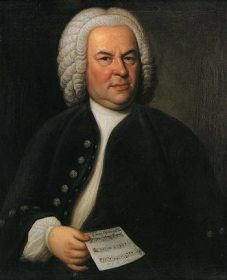
There is an interesting article by Avis O. Gachet, "A Walk with the Master" (Charlotte Observer, August 8, 2007), which carries the subtitle "In times of trouble, teens turn to music. Let's hope it's Bach." Gachet, a personal friend from far back in Hickory, relates how the music of Bach -- especially his Concerto for Two Violins and Orchestra (BWV 1043) -- sustained her during her dark night of the soul many years ago. She says that Bachs music had a healing and regenerative effect on her, not only elevating her spirits, but sorting out her priorities and consoling her soul. "I am talking about something alsmost mystical," she says. She then contrasts the music of Bach with the genres popular with the younger generation today, worrying that they lack the guiding capacities of the old Master, of whom she says: "He did not lead me astray." In light of Plato's reflections on the power of music in the Republic, I cannot help wondering whether Gachet has hit upon something profound. One thing is certain to me, and that is the truth that good music is more than what one happens to like. What makes music good or bad lies significantly in the objective properties of the music itself.