Showing posts with label Bible Scholars. Show all posts

Tuesday, December 24, 2019

A Christmas Reflection - 2019

It's time to reconsider the reason for the season and the challenges offered by the drive-by "experts" of the day who intend to cast the entire Biblical narrative concerning the Blessed Nativity into doubt. Consider again the Biblical narrative:

And suddenly there was with the angel a multitude of the heavenly host, praising God, and saying,
Glory to God in the highest and on earth peace, good will toward men.
And it came to pass, as the angels were gone away from them into heaven, the shepherds said one to another,
Let us now go even unto Bethlehem, and see this thing which is come to pas, which the Lord hath made known unto us.
And they came with haste, and found Mary, and Joseph and the babe lying in a manger. And when they had seen it, they made known abroad the saying which was told them concerning this child. And all they that heard it wondered at those things which were told them by the shepherds. But Mary kept all these things, and pondered them in her heart. And the shepherds returned, glorifying and praising God for all the things that they had heard and seen, as it was told unto them. (The Gospel According to Luke, Chapter Two, Verses 13-20)

Here we are again, on the first day of the Christmas season. It has become something of a Christmas tradition for me to engage the following text by C.S. Lewis in connection with the above quoted Scriptures. The reason will be obvious.

Nearly every Christmas, it seems, NEWSWEEK or TIME or some television special will feature the "latest scholarship" questioning the "authenticity" of the Christmas story. I am not concerned with the question about whether the Nativity of our Lord occurred on December 25th. That's a matter of Church tradition and incidental to my concerns here. What concerns me is how the Biblical narrative itself is invariably called into question or even dismissed as mere "myth" -- the account of the shepherds, the Angelic host, the Christ Child in a manger, the Star and the Magi from the East, Herod's slaughter of the innocents, the flight of Mary and Joseph and the Christ Child into Egypt, etc.

The scholarly authorities typically interviewed, whether Catholic or Protestant, are consistently and incorrigibly one-sided, quite thoroughly corrupted by the Humean and Kantian philosophical presuppositions undergirding the historical-critical reading of the Biblical narrative. Typical is the About.com website, where Internet browsers frequent to learn "the facts" about this or that -- a site where one finds this sort of thinking gone to seed in an article by Austin Cline, "Nativity vs Gospels: Are the Gospels Reliable About Jesus' Birth?" (About.com), where the partisan skepticism of such historical critical assumptions is abundantly evident in his suggestions that all the key ingredients of the Nativity story in the Gospels were concocted fictions of various kinds.

The lack of critical circumspection, if not patent fantasy, in all of this would be amusing if it were not so destructive. The upshot is always the same: that the Gospel writers are unreliable and not to be trusted, and certainly not to be taken at face value. Just how ludicrous this all is, however, can be seen easily by anyone with a modicum of familiarity with literature, mythology, and history. One of the best examples of a powerful antedote to this kind of foolishness -- and one I keep using because it is simple -- is a little essay by C.S. Lewis entitled "Modern Theology and Biblical Criticism," which is available in a collection of essays by Lewis entitled Christian Reflections (1967; reprinted by Eerdmans, 1994). The following are some excerpts from Lewis' essay, which begins on p. 152 and contains four objections (or what he calls "bleats") about modern New Testament scholarship:
1. [If a scholar] tells me that something in a Gospel is legend or romance, I want to know how many legends and romances he has read, how well his palate is trained in detecting them by the flavour...

I have been reading poems, romances, vision-literature, legends, myths all my life. I know what they are like. I know that not one [of the stories in the Gospel of John, for example] is like this... Either this is reportage - though it may no doubt contain errors - pretty close up to the facts; nearly as close as Boswell. Or else, some unknown writer in the second century, without known predecessors or successors, suddenly anticipated the whole technique of modern, novelistic, realistic narrative...

2. All theology of the liberal type involves at some point - and often involves throughout - the claim that the real behaviour and purpose and teaching of Christ came very rapidly to be misunderstood and misrepresented by his followers, and has been recovered or exhumed only by modern scholars... The idea that any... writer should be opaque to those who lived in the same culture, spoke the same language, shared the same habitual imagery and unconscious assumptions, and yet be transparent to those who have none of these advantages, is in my opinion preposterous. There is an a priori improbability in it which almost no argument and no evidence could counterbalance.

3. Thirdly, I find in these theologians a constant use of the principle that the miraculous does not occur... This is a purely philosophical question. Scholars, as scholars, speak on it with no more authority than anyone else. The canon 'if miraculous, unhistorical' is one they bring to their study of the texts, not one they have learned from it. If one is speaking of authority, the united authority of all the Biblical critics in the world counts here for nothing.

4. My fourth bleat is my loudest and longest. Reviewers [of my own books, and of books by friends whose real history I knew] both friendly and hostile... will tell you what public events had directed the author's mind to this or that, what other authors influenced him, what his over-all intention was, what sort of audience he principally addressed, why - and when - he did everything... My impression is that in the whole of my experience not one of these guesses has on any one point been right; the method shows a record of 100 per cent failure.

The 'assured results of modern scholarship', as to the way in which an old book was written, are 'assured', we may conclude, only because those who knew the facts are dead and can't blow the gaff... The Biblical critics, whatever reconstructions they devise, can never be crudely proved wrong. St. Mark is dead. When they meet St. Peter there will be more pressing matters to discuss.

However... we are not fundamentalists... Of course we agree that passages almost verbally identical cannot be independent. It is as we glide away from this into reconstructions of a subtler and more ambitious kind that our faith in the method wavers... The sort of statement that arouses our deepest scepticism is the statement that something in a Gospel cannot be historical because it shows a theology or an ecclesiology too developed for so early a date...

Such are the reactions of one bleating layman... Once the layman was anxious to hide the fact that he believed so much less than the Vicar; he now tends to hide the fact that he believes so much more...
Lewis, of course, was hardly a naive ignoramus. He knew all the critical objections to Christianity because for the first part of his life he was himself a confirmed agnostic. He was anything but "soft-minded," to use the Jamesian idiom. He taught philosophy at Oxford briefly before going on to teach Medieval and Renaissance literature at Magdalen College, Oxford, and conclude his prolific academic career teaching at Cambridge. An account of his conversion can be found in his Surprised by Joy: The Shape of My Early Life,in which we find the following quotation:
You must picture me alone in that room in Magdalen, night after night, feeling, whenever my mind lifted even for a second from my work, the steady, unrelenting approach of Him whom I so earnestly desired not to meet. That which I greatly feared had at last come upon me. In the Trinity Term of 1929 I gave in, and admitted that God was God, and knelt and prayed: perhaps, that night, the most dejected and reluctant convert in all England. I did not then see what is now the most shining and obvious thing; the Divine humility which will accept a convert even on such terms. The Prodigal Son at least walked home on his own feet. But who can duly adore that Love which will open the high gates to a prodigal who is brought in kicking, struggling, resentful, and darting his eyes in every direction for a chance of escape? The words “compelle intrare,” compel them to come in, have been so abused be wicked men that we shudder at them; but, properly understood, they plumb the depth of the Divine mercy. The hardness of God is kinder than the softness of men, and His compulsion is our liberation. (emphasis added)
Lewis, an Anglican, was a man of deep Catholic habit of mind, probably because of his immersion in medieval literature; and many have wondered why he never himself crossed the Tiber. Walker Percy even compared him to Moses, who led many others to the Promised Land, though never himself crossing over. A number of books have been written about this, like Joseph Pearce's C.S. Lewis and the Catholic Church,and Christopher Derrick's C.S.Lewis and the Church of Rome.The most probable reason is cultural: his father was an Ulsterman. Whatever the reason, his common sense criticisms of those Biblical "experts" who attempt to dismantle the entire Biblical narrative under the influence of Enlightenment prejudices, can be accepted with gratitude.

For further reading: Merry Christmas everyone!

Friday, October 20, 2017

Bibles

From one of my readers, worth reading:
VERY interesting ...

A Jew in the court of King James...
"...more than any other English translation of Scripture, the KJV is driven by an 'idea of majesty' whose 'qualities are those of grace, stateliness, scale, [and] power.'"
Also, Leland Ryken's "What Makes the King James Version Great?" (Reformation 21, January 2011) ...

"Schuyler Canterbury KJV" (Lectio, January 10, 2017).

Meanwhile there is also this ... Alex Blechle, "A Millennial's thoughts on Bible Translation" (Catholic Bibles, September 12, 2017).

The comments are interesting.
[Hat tip to JM]

Thursday, August 24, 2017

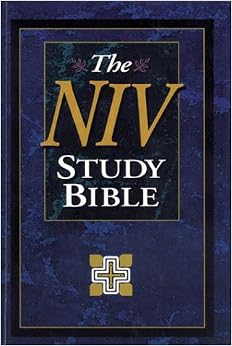
Wow!! Whole verses missing from a popular Protestant translation of the New Testament!!


I just heard this today from a Catholic program and didn't believe it; so I had to look up these allegedly missing verses and see for myself. The following verses are missing from the New International Version, a popular Protestant translation; and if you don't have a copy at hand, you can check online by going to Bible Gateway and selecting "New International Version" ("NIV" for short) and looking up the following verses. It may help to have another version that includes these verses open in another screen to check them side by side. Often you can see that the omission is explicitly tendentious. There things they don't want the reader to see. Here you go:
  • Matthew 17:20
  • Matthew 18:11
  • John 5:4
  • Acts 8:27
  • Acts 15:34
  • Acts 24:7
  • Romans 16:24
Check them out. They're not there!!!

Several years ago I pointed out something else about this same translation of the Bible that I actually learned from a very honest Protestant theology professor of mine at Westminster Theological Seminary. He had written an article in The Reformed Journal (no longer extant) about the disingenuous work of the translators. I wrote about it in "Retrieving a lost Catholic vocabulary" (Musings, June 11, 2014):
On my journey to the Catholic Faith, which began in 1987 before being received in the Church in 1993, those who sought to dissuade me constantly pitted the "living Word of God" (the Bible) over against the "vain traditions of man" (Col. 2:8) allegedly represented by Catholicism. So entrenched was this animus against Catholic tradition, that one of my Protestant theology professors, James Payton, Jr. to his credit pointed out that the evangelical New International Version (NIV) of the Bible explicitly attempts to "de-Catholicize" those passages where Paul commends the Church's traditions (1 Cor 11:2, 1 Thes 2:15; 3:6) by translating the Greek word for "traditions" as "teachings," while translating the remaining ten references which are all negative as "traditions" (as in vain and empty "traditions of man").
You hear about these sorts of things, but half the time you don't really believe them until you go and check for yourself. This is awful, and I commend James Payton, Jr., for his integrity and honesty on this point.

[Hat tip to "The One True Faith Revisited: Where Did The Bible Come From?" The Download, August 11, 2017 for the reference to missing Bible verses in the NIV.]

Monday, April 17, 2017

A faithless retired Episcopal priest's demythologized Easter 'homily'


Harry T. Cook, "On Easter, an alternative approach to resurrection" (Detroit Free Press, April 15, 2017):
The Easter story is not the work of journalists. No good can come from torturing it into news, good or otherwise. It is a story with meaning. What is its meaning? It cannot be that a convicted revolutionary who was executed on a Friday walked out of his grave on Sunday to the profound amazement of his followers. Is it possible that the meaning of the story is that while you can kill a human being, you cannot kill what he or she has been or done?
Pitiful. Pitiful that good people ever come to believe such complete nonsense. Pitiful in the way St. Paul says that we would be of all people most to be pitied if Jesus hadn't been raised from the dead as claimed (providing an intricate logical syllogism to that effect in 1 Corinthians 15).

Even on empirical grounds, how pitiful is it to believe that miracles "can't happen" because, well, just because "miracles don't happen." Even if all the stars in the heavens arranged themselves so as to spell "Jesus saves," such individuals would probably respond: "Why, goodness me! What a remarkable coincidence! It almost looks as if someone has played some sort of optical trick on us."

There are accounts of other resurrected deities? Like Dionysus? Yeah, so what? Where have they left a paper trail of witnesses and martyrs like Jesus has? The Apostles must have been deceived about Jesus' resurrection? You think? One can be deceived about lots of things, but some things are just too big to be deceived about. A resurrected man is one of these. I doubt one could be anymore deceived about a man being resurrected from the dead than be deceived into thinking that exactly 37 pink pigs with wings are hovering in the air like hummingbirds just outside one's window.

But it could have been in the Apostles' self-interest to believe the Jesus rose from the dead. True. But it could also be in your own self-interest to believe that exactly 37 pink pigs with wings are hovering in the air like hummingbirds just outside your window if I offered you $1 million to believe that. Trouble is, our honest beliefs aren't quite under our control the way our ordinary choices are. I can't really bring myself to believe something just because someone offers to pay me money to believe it.

If course, I could say I believed it, even if I didn't. So maybe the Apostles conspired to lie about Jesus' resurrection? You think? When each of them (except for John) went to his martyrdom knowing that all he'd have to do is refuse to go along with the lie anymore, to just break and tell the truth and admit that Jesus didn't rise from the dead? Furthermore, each of these conspirators would have known that each of his fellow conspirators was lying through his teeth in the face of terrible persecution, torture, and the threat of death, and all that would have to happen if for one of them to break and tell the truth, and the whole resurrection story would go down in flames as a failure not worth being martyred for.

So we have a story people just can't be mistaken about of someone rising from the dead, and a story that the Apostles' couldn't possibly have conspired to lie about, given the fact that each of them (except John), knowing that it is human nature to break under torture, nevertheless willingly gave his life as a martyr for the authenticity of the story with not one of them throwing in the towel and denying its authenticity. Not to mention centuries of martyrs and witnesses to lives changed, relationships redeemed, bodies and souls healed in expectation of life eternal.

Pray for Harry T. Cook. Poor man. Pitiful.

Saturday, April 01, 2017

Guéranger: the Church reminds us of the apostasy of the Jewish nation - Part II

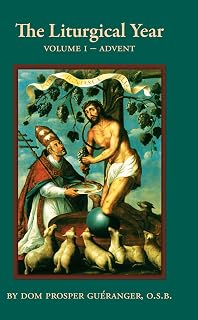
Continuing from last week our examination of supercessionism in Volume 5 of Dom Prosper Guéranger's The Liturgical Year,the Gospel reading for Friday of the second week of Lent is from Mt 21, where we find the Parable of the Vineyard whose husbandmen eventually kill the owner's heir, that is, his very own son who was sent to them.

Here we have more than the mere figures of the old Law, which show us our Redeemer in the far distant future; we have the great reality. Yet a little while, and the thrice holy Victim will have fallen beneath the blows of His persecutors. How awful and solemn are the words of Jesus, as His last hour approaches! His enemies feel the full weight of what He says; but, in their pride, they are determined to keep up their opposition to Him, who is the Wisdom of the Father. They have made up their minds not to acknowledge Him to be what they well know He is -- the stone, on which he that falls shall be broken, and which shall grind to powder him on whom it shall fall. But what is the vineyard, of which our Lord here speaks? It is revealed truth; it is the rule of faith and morals; it is the universal expectation of the promised Redeemer; and, lastly, it is the family of the children of God, His inheritance, His Church. God had chosen the Synagogue as the depository of such a treasure; He willed that His vineyard should be carefully kept, that it should yield fruit under their keeping, and that they should always look upon it as His possession, and one that was most dear to Him. But, in its hard-heartedness and avarice, the Synagogue appropriated the Lord's vineyard to itself. In vain did He, at various times, send His prophets to reclaim His rights; the faithless husbandmen put them to death. The Son of God, the Heir, comes in Person. Surely, they will receive Him with due respect, and pay Him the homage due to His divine character! But no; they have formed a plot against Him; they intend to cast Him forth out of the vineyard, and kill Him. Come, then, ye Gentiles, and avenge this God! Leave not a stone on a stone of the guilty city that has uttered this terrible curse: 'May His Blood be upon us and upon our children!' [Mt 17:25] But you shall be more than the ministers of the divine justice; you yourselves are now the favored people of God. The apostasy of these ungrateful Jews is the beginning of your salvation. You are to be the keepers of the vineyard to the end of time; you are to feed on its fruits, for they now belong to you. From east and west, from north and south, come the great Pasch, that is being prepared! Come to the font of salvation, O ye new people, who are gathered unto God from all nations under the sun! Your mother the Church will fill up from you, if you be faithful, the number of the elect; and when her work is dome, her Spouse will return, as the dread Judge, to condemn those who would not know the time of their visitation. [Lk 19:44]

Sunday, March 26, 2017

Discovering Guéranger's rare and insightful Biblical commentary

A very generous friend recently sent me the 15-volume set of Dom Prosper Guéranger's The Liturgical Year. I had run across that name and title numerous times in reading liturgical history, but never picked up a copy and read it. Till now. At first the books just looked sort of like a very traditional hardback version of the 'Magnificat' periodical with lectionary readings from (and commentary) on the traditional Latin rite liturgy.

But then I started to read the commentary on the readings for each day of Lent, and the commentary -- in my humble opinion -- is some of the most profound and most accessible Catholic Biblical commentary I have ever encountered. The magnitude of the project (15 volumes) is nothing short of breath-taking. You can use each volume as a substitute for a 1962 Missal because it has all the ordinary parts of the Mass as well as the Propers for each day of the season.

Any student of Aquinas and his Summa Theologiae knows there are more senses to the meaning of a Biblical text than the fundamental literal or historical sense. There's the allegorial, anagogical, as well as other spiritual senses of Scripture. This is where Gueranger's commentary is particularly rich. He draws parallels that wouldn't have occurred to me in my wildest dreams; and the thing is, they're usually utterly compelling. To read them is to have new horizons opened up before oneself that wouldn't have occurred to you previously.

It's always been a temptation of mine to assume that Protestant writers had a better handle on Scripture than Catholics -- and in the last 80 years, chances are, that could be be right. But even twenty years ago, my assumption began to erode as I read books about where we got our English translation of the Catholic Bible, for example; and as I read some of the commentaries by Jerome and Augustine and Thomas and others. But Gueranger is simply amazing. Just amazing. There is a gold mine here for any priest interested in material for homilies.

Saturday, December 24, 2016

A Christmas Reflection: What if the Biblical Narrative were True?

It's time to reconsider the reason for the season and the challenges offered by the drive-by "experts" of the day who intend to cast the entire Biblical narrative concerning the Blessed Nativity into doubt. Consider again the Biblical narrative:

And suddenly there was with the angel a multitude of the heavenly host, praising God, and saying,
Glory to God in the highest and on earth peace, good will toward men.
And it came to pass, as the angels were gone away from them into heaven, the shepherds said one to another,
Let us now go even unto Bethlehem, and see this thing which is come to pas, which the Lord hath made known unto us.
And they came with haste, and found Mary, and Joseph and the babe lying in a manger. And when they had seen it, they made known abroad the saying which was told them concerning this child. And all they that heard it wondered at those things which were told them by the shepherds. But Mary kept all these things, and pondered them in her heart. And the shepherds returned, glorifying and praising God for all the things that they had heard and seen, as it was told unto them. (The Gospel According to Luke, Chapter Two, Verses 13-20)

Here we are again, on the first day of the Christmas season. It has become something of a Christmas tradition for me to engage the following text by C.S. Lewis in connection with the above quoted Scriptures. The reason will be obvious.

Nearly every Christmas, it seems, NEWSWEEK or TIME or some television special will feature the "latest scholarship" questioning the "authenticity" of the Christmas story. I am not concerned with the question about whether the Nativity of our Lord occurred on December 25th. That's a matter of Church tradition and incidental to my concerns here. What concerns me is how the Biblical narrative itself is invariably called into question or even dismissed as mere "myth" -- the account of the shepherds, the Angelic host, the Christ Child in a manger, the Star and the Magi from the East, Herod's slaughter of the innocents, the flight of Mary and Joseph and the Christ Child into Egypt, etc.

The scholarly authorities typically interviewed, whether Catholic or Protestant, are consistently and incorrigibly one-sided, quite thoroughly corrupted by the Humean and Kantian philosophical presuppositions undergirding the historical-critical reading of the Biblical narrative. Typical is the About.com website, where Internet browsers frequent to learn "the facts" about this or that -- a site where one finds this sort of thinking gone to seed in an article by Austin Cline, "Nativity vs Gospels: Are the Gospels Reliable About Jesus' Birth?" (About.com), where the partisan skepticism of such historical critical assumptions is abundantly evident in his suggestions that all the key ingredients of the Nativity story in the Gospels were concocted fictions of various kinds.

The lack of critical circumspection, if not patent fantasy, in all of this would be amusing if it were not so destructive. The upshot is always the same: that the Gospel writers are unreliable and not to be trusted, and certainly not to be taken at face value. Just how ludicrous this all is, however, can be seen easily by anyone with a modicum of familiarity with literature, mythology, and history. One of the best examples of a powerful antedote to this kind of foolishness -- and one I keep using because it is simple -- is a little essay by C.S. Lewis entitled "Modern Theology and Biblical Criticism," which is available in a collection of essays by Lewis entitled Christian Reflections (1967; reprinted by Eerdmans, 1994). The following are some excerpts from Lewis' essay, which begins on p. 152 and contains four objections (or what he calls "bleats") about modern New Testament scholarship:
1. [If a scholar] tells me that something in a Gospel is legend or romance, I want to know how many legends and romances he has read, how well his palate is trained in detecting them by the flavour...

I have been reading poems, romances, vision-literature, legends, myths all my life. I know what they are like. I know that not one [of the stories in the Gospel of John, for example] is like this... Either this is reportage - though it may no doubt contain errors - pretty close up to the facts; nearly as close as Boswell. Or else, some unknown writer in the second century, without known predecessors or successors, suddenly anticipated the whole technique of modern, novelistic, realistic narrative...

2. All theology of the liberal type involves at some point - and often involves throughout - the claim that the real behaviour and purpose and teaching of Christ came very rapidly to be misunderstood and misrepresented by his followers, and has been recovered or exhumed only by modern scholars... The idea that any... writer should be opaque to those who lived in the same culture, spoke the same language, shared the same habitual imagery and unconscious assumptions, and yet be transparent to those who have none of these advantages, is in my opinion preposterous. There is an a priori improbability in it which almost no argument and no evidence could counterbalance.

3. Thirdly, I find in these theologians a constant use of the principle that the miraculous does not occur... This is a purely philosophical question. Scholars, as scholars, speak on it with no more authority than anyone else. The canon 'if miraculous, unhistorical' is one they bring to their study of the texts, not one they have learned from it. If one is speaking of authority, the united authority of all the Biblical critics in the world counts here for nothing.

4. My fourth bleat is my loudest and longest. Reviewers [of my own books, and of books by friends whose real history I knew] both friendly and hostile... will tell you what public events had directed the author's mind to this or that, what other authors influenced him, what his over-all intention was, what sort of audience he principally addressed, why - and when - he did everything... My impression is that in the whole of my experience not one of these guesses has on any one point been right; the method shows a record of 100 per cent failure.

The 'assured results of modern scholarship', as to the way in which an old book was written, are 'assured', we may conclude, only because those who knew the facts are dead and can't blow the gaff... The Biblical critics, whatever reconstructions they devise, can never be crudely proved wrong. St. Mark is dead. When they meet St. Peter there will be more pressing matters to discuss.

However... we are not fundamentalists... Of course we agree that passages almost verbally identical cannot be independent. It is as we glide away from this into reconstructions of a subtler and more ambitious kind that our faith in the method wavers... The sort of statement that arouses our deepest scepticism is the statement that something in a Gospel cannot be historical because it shows a theology or an ecclesiology too developed for so early a date...

Such are the reactions of one bleating layman... Once the layman was anxious to hide the fact that he believed so much less than the Vicar; he now tends to hide the fact that he believes so much more...
Lewis, of course, was hardly a naive ignoramus. He knew all the critical objections to Christianity because for the first part of his life he was himself a confirmed agnostic. He was anything but "soft-minded," to use the Jamesian idiom. He taught philosophy at Oxford briefly before going on to teach Medieval and Renaissance literature at Magdalen College, Oxford, and conclude his prolific academic career teaching at Cambridge. An account of his conversion can be found in his Surprised by Joy: The Shape of My Early Life,in which we find the following quotation:
You must picture me alone in that room in Magdalen, night after night, feeling, whenever my mind lifted even for a second from my work, the steady, unrelenting approach of Him whom I so earnestly desired not to meet. That which I greatly feared had at last come upon me. In the Trinity Term of 1929 I gave in, and admitted that God was God, and knelt and prayed: perhaps, that night, the most dejected and reluctant convert in all England. I did not then see what is now the most shining and obvious thing; the Divine humility which will accept a convert even on such terms. The Prodigal Son at least walked home on his own feet. But who can duly adore that Love which will open the high gates to a prodigal who is brought in kicking, struggling, resentful, and darting his eyes in every direction for a chance of escape? The words “compelle intrare,” compel them to come in, have been so abused be wicked men that we shudder at them; but, properly understood, they plumb the depth of the Divine mercy. The hardness of God is kinder than the softness of men, and His compulsion is our liberation. (emphasis added)
Lewis, an Anglican, was a man of deep Catholic habit of mind, probably because of his immersion in medieval literature; and many have wondered why he never himself crossed the Tiber. Walker Percy even compared him to Moses, who led many others to the Promised Land, though never himself crossing over. A number of books have been written about this, like Joseph Pearce's C.S. Lewis and the Catholic Church,and Christopher Derrick's C.S.Lewis and the Church of Rome.The most probable reason is cultural: his father was an Ulsterman. Whatever the reason, his common sense criticisms of those Biblical "experts" who attempt to dismantle the entire Biblical narrative under the influence of Enlightenment prejudices, can be accepted with gratitude.

For further reading: Merry Christmas everyone!

Tuesday, February 09, 2016

Come to Norcia, Italy, for two weeks this July!


While you're there, study St. Paul's Letter to the Hebrews, and enjoy visiting Italy! See the Summer Program for 2016, "The Transcendent Christ: St. Paul's Letter to the Hebrews" Albertus Magnus Center for Scholastic Studies. Participate in a seminar, and hear lectures by the 'masters' of theology, who are this year members of the monastery of St. Benedict in Norcia, with a keynote by Fr. Cassian Folsom. Cost is only 900 Euros, with texts included. Norcia is a small town in the beautiful mountain region of southeastern Umbria near Perugia. Registration deadline is May 16, 2016.

Also, see the photographs posted HERE, including images of the local wine of choice.


[Hat tip to P.K.]

Friday, December 25, 2015

A Christmas Reflection: What if the Biblical narrative were true?

It's time to reconsider the reason for the season and the challenges offered by the drive-by "experts" of the day who intend to cast the entire Biblical narrative concerning the Blessed Nativity into doubt. Consider again the Biblical narrative:

And suddenly there was with the angel a multitude of the heavenly host, praising God, and saying,
Glory to God in the highest and on earth peace, good will toward men.
And it came to pass, as the angels were gone away from them into heaven, the shepherds said one to another,
Let us now go even unto Bethlehem, and see this thing which is come to pas, which the Lord hath made known unto us.
And they came with haste, and found Mary, and Joseph and the babe lying in a manger. And when they had seen it, they made known abroad the saying which was told them concerning this child. And all they that heard it wondered at those things which were told them by the shepherds. But Mary kept all these things, and pondered them in her heart. And the shepherds returned, glorifying and praising God for all the things that they had heard and seen, as it was told unto them. (The Gospel According to Luke, Chapter Two, Verses 13-20)

Here we are again, on the first day of the Christmas season. It has become something of a Christmas tradition for me to engage the following text by C.S. Lewis in connection with the above quoted Scriptures. The reason will be obvious.

Nearly every Christmas, it seems, NEWSWEEK or TIME or some television special will feature the "latest scholarship" questioning the "authenticity" of the Christmas story. I am not concerned with the question about whether the Nativity of our Lord occurred on December 25th. That's a matter of Church tradition and incidental to my concerns here. What concerns me is how the Biblical narrative itself is invariably called into question or even dismissed as mere "myth" -- the account of the shepherds, the Angelic host, the Christ Child in a manger, the Star and the Magi from the East, Herod's slaughter of the innocents, the flight of Mary and Joseph and the Christ Child into Egypt, etc.

The scholarly authorities typically interviewed, whether Catholic or Protestant, are consistently and incorrigibly one-sided, quite thoroughly corrupted by the Humean and Kantian philosophical presuppositions undergirding the historical-critical reading of the Biblical narrative. Typical is the About.com website, where Internet browsers frequent to learn "the facts" about this or that -- a site where one finds this sort of thinking gone to seed in an article by Austin Cline, "Nativity vs Gospels: Are the Gospels Reliable About Jesus' Birth?" (About.com), where the partisan skepticism of such historical critical assumptions is abundantly evident in his suggestions that all the key ingredients of the Nativity story in the Gospels were concocted fictions of various kinds.

The lack of critical circumspection, if not patent fantasy, in all of this would be amusing if it were not so destructive. The upshot is always the same: that the Gospel writers are unreliable and not to be trusted, and certainly not to be taken at face value. Just how ludicrous this all is, however, can be seen easily by anyone with a modicum of familiarity with literature, mythology, and history. One of the best examples of a powerful antedote to this kind of foolishness -- and one I keep using because it is simple -- is a little essay by C.S. Lewis entitled "Modern Theology and Biblical Criticism," which is available in a collection of essays by Lewis entitled Christian Reflections (1967; reprinted by Eerdmans, 1994). The following are some excerpts from Lewis' essay, which begins on p. 152 and contains four objections (or what he calls "bleats") about modern New Testament scholarship:
1. [If a scholar] tells me that something in a Gospel is legend or romance, I want to know how many legends and romances he has read, how well his palate is trained in detecting them by the flavour...

I have been reading poems, romances, vision-literature, legends, myths all my life. I know what they are like. I know that not one [of the stories in the Gospel of John, for example] is like this... Either this is reportage - though it may no doubt contain errors - pretty close up to the facts; nearly as close as Boswell. Or else, some unknown writer in the second century, without known predecessors or successors, suddenly anticipated the whole technique of modern, novelistic, realistic narrative...

2. All theology of the liberal type involves at some point - and often involves throughout - the claim that the real behaviour and purpose and teaching of Christ came very rapidly to be misunderstood and misrepresented by his followers, and has been recovered or exhumed only by modern scholars... The idea that any... writer should be opaque to those who lived in the same culture, spoke the same language, shared the same habitual imagery and unconscious assumptions, and yet be transparent to those who have none of these advantages, is in my opinion preposterous. There is an a priori improbability in it which almost no argument and no evidence could counterbalance.

3. Thirdly, I find in these theologians a constant use of the principle that the miraculous does not occur... This is a purely philosophical question. Scholars, as scholars, speak on it with no more authority than anyone else. The canon 'if miraculous, unhistorical' is one they bring to their study of the texts, not one they have learned from it. If one is speaking of authority, the united authority of all the Biblical critics in the world counts here for nothing.

4. My fourth bleat is my loudest and longest. Reviewers [of my own books, and of books by friends whose real history I knew] both friendly and hostile... will tell you what public events had directed the author's mind to this or that, what other authors influenced him, what his over-all intention was, what sort of audience he principally addressed, why - and when - he did everything... My impression is that in the whole of my experience not one of these guesses has on any one point been right; the method shows a record of 100 per cent failure.

The 'assured results of modern scholarship', as to the way in which an old book was written, are 'assured', we may conclude, only because those who knew the facts are dead and can't blow the gaff... The Biblical critics, whatever reconstructions they devise, can never be crudely proved wrong. St. Mark is dead. When they meet St. Peter there will be more pressing matters to discuss.

However... we are not fundamentalists... Of course we agree that passages almost verbally identical cannot be independent. It is as we glide away from this into reconstructions of a subtler and more ambitious kind that our faith in the method wavers... The sort of statement that arouses our deepest scepticism is the statement that something in a Gospel cannot be historical because it shows a theology or an ecclesiology too developed for so early a date...

Such are the reactions of one bleating layman... Once the layman was anxious to hide the fact that he believed so much less than the Vicar; he now tends to hide the fact that he believes so much more...
Lewis, of course, was hardly a naive ignoramus. He knew all the critical objections to Christianity because for the first part of his life he was himself a confirmed agnostic. He was anything but "soft-minded," to use the Jamesian idiom. He taught philosophy at Oxford briefly before going on to teach Medieval and Renaissance literature at Magdalen College, Oxford, and conclude his prolific academic career teaching at Cambridge. An account of his conversion can be found in his Surprised by Joy: The Shape of My Early Life,in which we find the following quotation:
You must picture me alone in that room in Magdalen, night after night, feeling, whenever my mind lifted even for a second from my work, the steady, unrelenting approach of Him whom I so earnestly desired not to meet. That which I greatly feared had at last come upon me. In the Trinity Term of 1929 I gave in, and admitted that God was God, and knelt and prayed: perhaps, that night, the most dejected and reluctant convert in all England. I did not then see what is now the most shining and obvious thing; the Divine humility which will accept a convert even on such terms. The Prodigal Son at least walked home on his own feet. But who can duly adore that Love which will open the high gates to a prodigal who is brought in kicking, struggling, resentful, and darting his eyes in every direction for a chance of escape? The words “compelle intrare,” compel them to come in, have been so abused be wicked men that we shudder at them; but, properly understood, they plumb the depth of the Divine mercy. The hardness of God is kinder than the softness of men, and His compulsion is our liberation. (emphasis added)
Lewis, an Anglican, was a man of deep Catholic habit of mind, probably because of his immersion in medieval literature; and many have wondered why he never himself crossed the Tiber. Walker Percy even compared him to Moses, who led many others to the Promised Land, though never himself crossing over. A number of books have been written about this, like Joseph Pearce's C.S. Lewis and the Catholic Church,and Christopher Derrick's C.S.Lewis and the Church of Rome.The most probable reason is cultural: his father was an Ulsterman. Whatever the reason, his common sense criticisms of those Biblical "experts" who attempt to dismantle the entire Biblical narrative under the influence of Enlightenment prejudices, can be accepted with gratitude.

For further reading: Merry Christmas everyone!

Saturday, March 21, 2015

Adam, Even, and Genesis - the implications of revisionism

It's always an interesting exercise to review the implications of revising the traditional account. We all know of Catholics we've met or heard about who dismiss the historicity of Adam and Eve, and who consign the first eleven chapters of Genesis to the murky primordial world of "myth."

The importance of thinking more deeply about the implications of such moves on the Biblical-theological chessboard, however, is not always readily seen. For example, an alternative to the traditional Catholic view that Adam and Eve were historically real, first parents of humanity (as Jesus Christ is the "New Adam" and new root of regenerated and redeemed humanity), is the view that they are only "symbols," whatever that is taken to mean. On that view, the Fall (Original Sin) is not to be taken as anything so naively parochial as a "historical event," but rather to be understood as a "fatal flaw" in our nature, empirically confirmed by the pervasive selfishness of human beings we see all about us and in ourselves. Problem with that: it makes God the author of sin, of our sinful nature, because it means there was never a human being with a pre-lapsarian (non-fallen) nature and so God made us selfish and sinfully-disposed. In this case, as Baudilaire famously quipped: if God exists, he's the Devil! (Something like that)

Well here we have an example of someone toying with revisionist interpretation of Genesis, only he's not nearly so radical as the aforementioned views, because he still believes that Adam was a "historical" person. Yet the implications of even his views are far more revolutionary that he suggests. Have a look: "The Lost World of Adam and Eve" (Christianity Today, March 19, 2015): "Old Testament scholar John Walton affirms a historical Adam -- but says there are far more important dimension to Genesis." Yeah. Right. Interviewed by Kevein P. Emmert, John Walton is Professor of Old Testament at Wheaton College, the flagship academic institution of Billy Grahm Evangelicalism in the United States.

Here is what one of our readers writes about this piece:
Let's be frank and let's be honest. If you are going to say "I believe Adam was a real person, but literarily he represents more than just who he was," shouldn't we ask, "How can someone literally be more than who he was?" Are we so determined to try to reconcile the Bible and 'science' that we will swallow such sophistry? And that [sophistry] is without question just what this is, well-intentioned or not. If Walton's take is accepted, it will not only be the world of Adam and Eve or Genesis that will be lost -- all the eager and impassioned endorsements to the contrary. I am increasingly convinced that Original Sin as classically understood is the acid test of orthodox Christianity. [Amen to that!]

From Christianity Today, of all places. Reported as if it is nothing unusual at all [emphasis added]. With no com box option! The ghost of Carl Henry would be spinning in its grave if it hadn't been here diced and quartered under a cone of silence. [Not to mention what Billy Graham would think of this, if he could attend to its import at age 97.]
For further reading:[Hat tip to JM]

Monday, February 16, 2015

Cardinal Kasper's earlier denials of the miracles and prophecies of Jesus gain new airing

Joe Sparks, "The Gospel According to Cardinal Kasper: Did the Miracles and Prophesies of Jesus Really Happen?" (The Catholic Household, February 4, 2015), reveals some disturbing realities about the Cardinal's perspective. Quoting from Walter Cardinal Kasper's Jesus the Christ (Paulist Press, 1976), Sparks offers a number of passages strikingly at odds with Church teaching. For example, about our Lord's miracles, he writes:
"The probability is that we need not take the so-called ‘nature miracles’ as historical.” (Jesus the Christ, p. 90-91)
Again,
"We must assume therefore that we are faced not with historical details but with stylistic devices intended to attract the attention and raise excitement in the minds of those listening….” (Jesus the Christ, p. 127)
All of which, of course, is brazenly at odds with Catholic teaching. For example, in the documents of Vatican II we find this:
“Holy Mother Church has firmly and with absolute constancy held, and continues to hold, that the four Gospels just named, whose historical character the Church unhesitatingly asserts, faithfully hand on what Jesus Christ, while living among men, really did and taught for their eternal salvation until the day He was taken up into heaven.” (Dei Verbum, 19)
Which means that Kasper is more beholden to the currently ascendant and fashionable Biblical hermeneutics of the self-congratulatory post-Enlightenment establishment emanating from the erstwhile fevered swamplands of liberal Protestant "higher criticism" than he is with the teaching authority of his own Church. Should anyone be surprised?

Read Sparks' article. It's a good, solid exposé that deserves reading; and it goes far beyond the two bits I've quoted above.

Sunday, January 04, 2015

NEWSWEEK on the Bible - Mohler on NEWSWEEK - and the elephant in the Catholic room

I broke open the wax seal on the envelope handed to me by the tuxedo-clad courrier who had, moments before, pulled up to my door in a chauffeur-driven limo. (No accompanying bottle of Scotch or Bourbon this time. He must have blown his Christmas budget on book shipments to yours truly.) It was my second message since Christmas from the undercover correspondent we keep on retainer in an Atlantic seaboard city that knows how to keep its secrets, Guy Noir - Private Eye. It read as follows:
I had missed the NEWSWEEK cover story on the Bible ["The Bible: So Misunderstood It's a Sin"]. I don't know if you saw it or not. That's partially due to the magazine's quiet decline, and I suppose, partially due to the fact I was not in the grocery store much this month. Earlier NEWSWEEK pieces have disturbed me. Now I simply expect bad things.

But Al Mohler responded to it like a woman scorned or a scrambling debate opponent. He called it "an irresponsible screed of post-Christian invective."

And you know I am very predisposed to champion Mohler's position here. And yet when I googled the web looking for other responses to the piece I was dismayed. Is this the best that we can do? And is NEWSWEEK deserving of surprised umbrage?

Mohler misses an obvious point. Even repsonsible liberals in an increasingly liberal culture will fumble the ball on this topic. Go back and read ANY NEWSWEEK piece on the Bible, especially from the past five years. A disaster. So Mohler sounds like a naive bested Republican negotiator in the Whtie House when he writes,
"When written by journalists like Newsweek‘s former editor Jon Meacham or TIME reporters such as David Van Biema, the articles were often balanced and genuinely insightful. Meacham and Van Biema knew the difference between theological liberals and theological conservatives and they were determined to let both sides speak. I was interviewed several times by both writers, along with others from both magazines. I may not have liked the final version of the article in some cases, but I was treated fairly and with journalistic integrity."
Meachem is our friend?! In any way, shape, or form? Please. The man who single-handedly transformed NEWSWEEKs religion coverage into an arm of the Episcopal gay marriage machine? And if Mohler feels compelled to make so much of the peripheral garbage in the piece, you know he is in fact scrambling more than a little.

But for me this is all like Republicans trying to fit in on SNL... or like insisting that Catholic Scripture scholar Raymond Brown is the Church's friend. Anyone who has read Brown's THE BIRTH OF THE MESSIAH will realize that Kurt Eichenwald sounds a lot like him if you'd strip away the caustic tenor. The bottom line is that liberal Biblical scholarship and Higher Criticism can be ballyhooed all one wants for their "undeniable insights." In the end, they dissolve faith. And without patent, clear answering, they also diminish credibility. But view the websites for any Catholic publisher, and you'll find no good responses to modern skeptical scholarship. The tactic seems to be to avoid, and then decry, versus thoughtful answering. The previous Pope surprises at points by attempting engagement, but beyond that I do not see it. But the center will not hold if the Biblical foundation is gutted. I think that what Mark Steyn from 2008 about politics holds for the Church in 2015.
...pulling the lever for a guy with an R after his name every other November isn’t going to fix it. If the default mode of a society’s institutions is liberal, electing GOP legislators eventually accomplishes little more than letting a Republican driver take a turn steering the liberal bus. If Hollywood’s liberal, if the newspapers are liberal, if the pop stars are liberal, if the grade schools are liberal, if the very language is liberal to the point where all the nice words have been co-opted as a painless liberal sedative, a Republican legislature isn’t going to be a shining city on a hill so much as one of those atolls in the Maldives being incrementally swallowed by Al Gore’s rising sea levels.
And crying hate is not going to fix the problem of attacks on the Bible's accuracy, any more than saying there are some good conservative books, too!, if the default mode of Scripture scholarship and clerical disposition is liberal. If the very language used about the Bible's accuracy is hedged by nods to Higher Criticism, if the entire Old Testament was essentially a committee project, we will be swallowed by tides that think truth is the result of committees and Living Tradition. And good, plainspun folk like Pope Francis who insist we send everyone off to universities for education are kidding themselves if they think those same students will graduate and be satisfied by homespun homilies, any more than will the Jesuits whose sophistication has led them past Biblical stories. Eichenwald went to Swarthmore and has his own band. He is a perfect example of an Obama voter, and yet Mohler expects him to be anything but incredulous to Christian doctrine? Decades and decades of policy and culture have consequences. On the Bible, Mohler wants to be outraged by the conversation. Catholics want to ignore it, even in their parochial schools. I think it is obvious that neither approach has worked. Meanwhile we are busy encouraging everyone to "Dare to Hope" that all will be saved. Dreams of our fathers....The audacity of hope...indeed.
Related:

[Hat tip to G.N. and L.S.]

Related: At last, a decent Catholic rejoinder: "Ben Eitherington, "News Weak -- The Problems with Mr. Eichenwald's Article" (Patheos, January 6, 2015).

Thursday, December 25, 2014

A Christmas Reflection: What if the Biblical narrative were true?

It's time to reconsider the reason for the season and the challenges offered by the drive-by "experts" of the day who intend to cast the entire Biblical narrative concerning the Blessed Nativity into doubt. Consider again the Biblical narrative:

And suddenly there was with the angel a multitude of the heavenly host, praising God, and saying,
Glory to God in the highest and on earth peace, good will toward men.
And it came to pass, as the angels were gone away from them into heaven, the shepherds said one to another,
Let us now go even unto Bethlehem, and see this thing which is come to pas, which the Lord hath made known unto us.
And they came with haste, and found Mary, and Joseph and the babe lying in a manger. And when they had seen it, they made known abroad the saying which was told them concerning this child. And all they that heard it wondered at those things which were told them by the shepherds. But Mary kept all these things, and pondered them in her heart. And the shepherds returned, glorifying and praising God for all the things that they had heard and seen, as it was told unto them. (The Gospel According to Luke, Chapter Two, Verses 13-20)

Here we are again, on the first day of the Christmas season. It has become something of a Christmas tradition for me to engage the following text by C.S. Lewis in connection with the above quoted Scriptures. The reason will be obvious.

Nearly every Christmas, it seems, NEWSWEEK or TIME or some television special will feature the "latest scholarship" questioning the "authenticity" of the Christmas story. I am not concerned with the question about whether the Nativity of our Lord occurred on December 25th. That's a matter of Church tradition and incidental to my concerns here. What concerns me is how the Biblical narrative itself is invariably called into question or even dismissed as mere "myth" -- the account of the shepherds, the Angelic host, the Christ Child in a manger, the Star and the Magi from the East, Herod's slaughter of the innocents, the flight of Mary and Joseph and the Christ Child into Egypt, etc.

The scholarly authorities typically interviewed, whether Catholic or Protestant, are consistently and incorrigibly one-sided, quite thoroughly corrupted by the Humean and Kantian philosophical presuppositions undergirding the historical-critical reading of the Biblical narrative. Typical is the About.com website, where Internet browsers frequent to learn "the facts" about this or that -- a site where one finds this sort of thinking gone to seed in an article by Austin Cline, "Nativity vs Gospels: Are the Gospels Reliable About Jesus' Birth?" (About.com), where the partisan skepticism of such historical critical assumptions is abundantly evident in his suggestions that all the key ingredients of the Nativity story in the Gospels were concocted fictions of various kinds.

The lack of critical circumspection, if not patent fantasy, in all of this would be amusing if it were not so destructive. The upshot is always the same: that the Gospel writers are unreliable and not to be trusted, and certainly not to be taken at face value. Just how ludicrous this all is, however, can be seen easily by anyone with a modicum of familiarity with literature, mythology, and history. One of the best examples of a powerful antedote to this kind of foolishness -- and one I keep using because it is simple -- is a little essay by C.S. Lewis entitled "Modern Theology and Biblical Criticism," which is available in a collection of essays by Lewis entitled Christian Reflections (1967; reprinted by Eerdmans, 1994). The following are some excerpts from Lewis' essay, which begins on p. 152 and contains four objections (or what he calls "bleats") about modern New Testament scholarship:
1. [If a scholar] tells me that something in a Gospel is legend or romance, I want to know how many legends and romances he has read, how well his palate is trained in detecting them by the flavour...

I have been reading poems, romances, vision-literature, legends, myths all my life. I know what they are like. I know that not one [of the stories in the Gospel of John, for example] is like this... Either this is reportage - though it may no doubt contain errors - pretty close up to the facts; nearly as close as Boswell. Or else, some unknown writer in the second century, without known predecessors or successors, suddenly anticipated the whole technique of modern, novelistic, realistic narrative...

2. All theology of the liberal type involves at some point - and often involves throughout - the claim that the real behaviour and purpose and teaching of Christ came very rapidly to be misunderstood and misrepresented by his followers, and has been recovered or exhumed only by modern scholars... The idea that any... writer should be opaque to those who lived in the same culture, spoke the same language, shared the same habitual imagery and unconscious assumptions, and yet be transparent to those who have none of these advantages, is in my opinion preposterous. There is an a priori improbability in it which almost no argument and no evidence could counterbalance.

3. Thirdly, I find in these theologians a constant use of the principle that the miraculous does not occur... This is a purely philosophical question. Scholars, as scholars, speak on it with no more authority than anyone else. The canon 'if miraculous, unhistorical' is one they bring to their study of the texts, not one they have learned from it. If one is speaking of authority, the united authority of all the Biblical critics in the world counts here for nothing.

4. My fourth bleat is my loudest and longest. Reviewers [of my own books, and of books by friends whose real history I knew] both friendly and hostile... will tell you what public events had directed the author's mind to this or that, what other authors influenced him, what his over-all intention was, what sort of audience he principally addressed, why - and when - he did everything... My impression is that in the whole of my experience not one of these guesses has on any one point been right; the method shows a record of 100 per cent failure.

The 'assured results of modern scholarship', as to the way in which an old book was written, are 'assured', we may conclude, only because those who knew the facts are dead and can't blow the gaff... The Biblical critics, whatever reconstructions they devise, can never be crudely proved wrong. St. Mark is dead. When they meet St. Peter there will be more pressing matters to discuss.

However... we are not fundamentalists... Of course we agree that passages almost verbally identical cannot be independent. It is as we glide away from this into reconstructions of a subtler and more ambitious kind that our faith in the method wavers... The sort of statement that arouses our deepest scepticism is the statement that something in a Gospel cannot be historical because it shows a theology or an ecclesiology too developed for so early a date...

Such are the reactions of one bleating layman... Once the layman was anxious to hide the fact that he believed so much less than the Vicar; he now tends to hide the fact that he believes so much more...
Lewis, of course, was hardly a naive ignoramus. He knew all the critical objections to Christianity because for the first part of his life he was himself a confirmed agnostic. He was anything but "soft-minded," to use the Jamesian idiom. He taught philosophy at Oxford briefly before going on to teach Medieval and Renaissance literature at Magdalen College, Oxford, and conclude his prolific academic career teaching at Cambridge. An account of his conversion can be found in his Surprised by Joy: The Shape of My Early Life,in which we find the following quotation:
You must picture me alone in that room in Magdalen, night after night, feeling, whenever my mind lifted even for a second from my work, the steady, unrelenting approach of Him whom I so earnestly desired not to meet. That which I greatly feared had at last come upon me. In the Trinity Term of 1929 I gave in, and admitted that God was God, and knelt and prayed: perhaps, that night, the most dejected and reluctant convert in all England. I did not then see what is now the most shining and obvious thing; the Divine humility which will accept a convert even on such terms. The Prodigal Son at least walked home on his own feet. But who can duly adore that Love which will open the high gates to a prodigal who is brought in kicking, struggling, resentful, and darting his eyes in every direction for a chance of escape? The words “compelle intrare,” compel them to come in, have been so abused be wicked men that we shudder at them; but, properly understood, they plumb the depth of the Divine mercy. The hardness of God is kinder than the softness of men, and His compulsion is our liberation. (emphasis added)
Lewis, an Anglican, was a man of deep Catholic habit of mind, probably because of his immersion in medieval literature; and many have wondered why he never himself crossed the Tiber. Walker Percy even compared him to Moses, who led many others to the Promised Land, though never himself crossing over. A number of books have been written about this, like Joseph Pearce's C.S. Lewis and the Catholic Church,and Christopher Derrick's C.S.Lewis and the Church of Rome.The most probable reason is cultural: his father was an Ulsterman. Whatever the reason, his common sense criticisms of those Biblical "experts" who attempt to dismantle the entire Biblical narrative under the influence of Enlightenment prejudices, can be accepted with gratitude.

For further reading: Merry Christmas everyone!