Showing posts with label Tradition. Show all posts

Sunday, July 28, 2019

Tridentine Community News - Extraordinary Faith Episode 21 – Pittsburgh Part 1 of 2 to Debut on EWTN on Saturday, August 3


"I will go in unto the Altar of God
To God, Who giveth joy to my youth"

Tridentine Community News by Alex Begin (July 28, 2019):
July 28, 2019 – Seventh Sunday After Pentecost

Extraordinary Faith Episode 21 – Pittsburgh Part 1 of 2 to Debut on EWTN on Saturday, August 3

The rush of new episodes of Extraordinary Faith continues: Next Saturday, August 3, at 4:30 AM U.S. Eastern time, EWTN will debut Episode 21 – Pittsburgh Part 1 of 2. This episode was filmed at the Church Music Association’s Sacred Music Colloquium, held at Duquesne University.

General Manager of the Church Music Association of America Janet Gorbitz opens the episode with a history of the CMAA and an explanation of their annual Colloquia. She explains why these gatherings attract people of all levels of musical experience, from absolute beginner to seasoned pro.


When most people think of parishes devoted to the Traditional Mass, they think of communities led by the Fraternity of St. Peter and the Institute of Christ the King. Less well-known are parishes led by diocesan clergy. Fr. Robert Pasley, a priest of the Diocese of Camden, New Jersey, tells us the history of the church he pastors, Mater Ecclésiæ, the first and oldest parish in the United States led by diocesan priests which celebrates exclusively the Extraordinary Form. He also tells us about their annual Masses in the cathedrals of neighboring dioceses, including Philadelphia.


Just as the internet was gaining steam in the early 2000s, one particular choir director became known for hitting the road and training singers in Gregorian Chant. To this day, Scott Turkington remains an evangelist for choir members learning the Church’s timeless form of music. He tells us why it is so important for students at the Colloquium to strive to improve their home music programs as best as they are able.


Years ago, the only Traditional Mass in San Diego was held every Sunday in the chapel of a mausoleum. Today that community is led by priests of the Fraternity of St. Peter, has its own church, St. Anne, and offers a particularly ambitious music program. Former Choir Director Mary Ann Carr Wilson tells us how she inspired children to learn Gregorian Chant, particularly through their annual summer Chant Camps.


A rising star among parishes that embrace traditional liturgy and music is the Basilica of Ss. Peter & Paul in Chattanooga, Tennessee. Music Director Maria Rist tells us about the various choirs she leads there and how their music offerings have developed over the years.


Tridentine Masses This Coming Week
  • Tue. 07/30 7:00 PM: High Requiem Mass at Holy Name of Mary, Windsor (Daily Mass for the Dead)
  • Fri. 08/02 7:00 PM: High Mass at Old St. Mary’s (St. Alphonsus Liguori, Bishop, Confessor, & Doctor) – Choir will sing Missa O Quam Gloriósum by Tomás Luis de Victoria. Benediction of the Most Blessed Sacrament after Mass. Reception follows/
  • Sat. 08/03 8:30 AM: Low Mass at Miles Christi (Saturday of Our Lady)
[Comments? Please e-mail tridnews@detroitlatinmass.org. Previous columns are available at http://www.detroitlatinmass.org. This edition of Tridentine Community News, with minor editions, is from the St. Albertus (Detroit), Academy of the Sacred Heart (Bloomfield Hills), and St. Alphonsus and Holy Name of Mary Churches (Windsor) bulletin inserts for July 28, 2019. Hat tip to Alex Begin, author of the column.]

Sunday, September 16, 2018

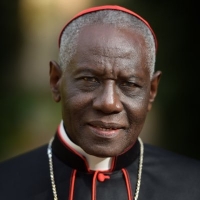
Why do you think Commonweal columnist Rita Ferrone wants Cardinal Sarah sacked?

"Off with His Head!" (New Oxford Notes, July-August 2018)


Rita Ferrone wants Robert Cardinal Sarah fired. Immediately. Pope Francis can’t afford to leave this man in his post as prefect of the Congregation for Divine Worship and the Discipline of the Sacraments any longer. Why? Because, Ferrone says, Sarah “does not speak for the mainstream of the church.”

Ferrone calls for the cardinal’s head in a column for Commonweal (Mar. 23). And she doesn’t hold back. She accuses the Church’s top-most authority on matters liturgical of “either appalling ignorance of or an indifference to liturgical history.” She says he is guilty of “promoting distrust and resistance to the mainstream liturgical reform” of Vatican II. Sarah’s crime? He hasn’t shown sufficient enthusiasm for the modern practice of receiving Communion in the hand.

Ferrone’s dander was raised by a preface Sarah wrote to a new book by Fr. Federico Bortoli, an Italian priest, titled La Distribuzione della Comunione sulla Mano: Profili Storici, Giuridici e Pastorali (The Distribution of Communion in the Hand: A Historical, Juridical, and Pastoral Overview). Specifically, she takes exception to this passage:
[W]e can understand how the most insidious diabolical attack consists in trying to extinguish faith in the Eucharist, sowing errors and favoring an unsuitable manner of receiving it. Truly the war between Michael and his Angels on one side, and Lucifer on the other, continues in the heart of the faithful: Satan’s target is the Sacrifice of the Mass and the Real Presence of Jesus in the consecrated host…. Why do we insist on communicating, standing, in the hand? Why this attitude of lack of submission to the signs of God?
Ferrone interprets Cardinal Sarah as claiming that those who take Communion in the hand while standing “are on the side of Lucifer in the great cosmic struggle of good against evil.” What chutzpah! And she rightly identifies this type of “extreme rhetoric” as one of the standard contentions of radical traditionalists of the SSPX variety.

Ferrone points out that most Catholics don’t “insist” on receiving Communion in this manner; doing so isn’t some sort of conscious act of rebellion against tradition. They’re doing what they’ve grown accustomed to doing, and what nearly everybody else in the Church is doing too and have done for the better part of their lives. You know, “when in Rome….”

Besides, the Church officially permits Communion in the hand. It “arose in apostolic times and endured for centuries,” Ferrone says. Sarah might prefer the “more recent historical practice” of receiving Communion on the tongue while kneeling, but the “venerable antiquity” of receiving in the hand while standing should “commend the practice to him as holy.” But no. Instead, Sarah “manages to slander Christians of the first millennium,” as well as those of the third.

Shame, shame, shame on Cardinal Sarah!

Whoa, hold on a minute. Before we join Commonweal’s kick-him-out chorus, let’s dig a little deeper.

Sunday, January 28, 2018

Tridentine Community News - Oregon Sacred Liturgy Conference; Archbishop Gullickson's Reflections on Celebrating the Traditional Mass; Blessing of Throats Next Week; Tridentine Masses This Coming Week


"I will go in unto the Altar of God
To God, Who giveth joy to my youth"

Tridentine Community News by Alex Begin (January 28, 2018):
January 28, 2018 – Septuagésima Sunday

Oregon Sacred Liturgy Conference 2018

In 2017 the Oregon Sacred Liturgy Conference was a surprise sell-out. Despite being located in the relatively small city of Medford, luminaries including Cardinal Burke attended, drawing crowds. Hoping to repeat its success in 2018, organizers will be welcoming several prominent figures from the world of traditional Catholicism to speak at this year’s event, to be held Wednesday-Saturday June 27-30 at St. Joseph Church and the Salem Conference Center in Salem, Oregon. If you have never before attended a Latin Mass-centric conference, this is one you may wish to consider, as it is rare to experience such an assemblage of speakers in North America.


This writer has been invited to lead workshops at the conference for priests and seminarians wishing to learn to celebrate the Extraordinary Form, however the event is primarily intended for the laity. For more information, visit: www.sacredliturgyconference.org

Archbishop Gullickson’s Reflections on Celebrating the Traditional Mass


Originally from Sioux Falls, South Dakota, Archbishop Thomas Gullickson has served as Apostolic Nuncio to Switzerland and Liechtenstein since 2015. On December 10, 2017, His Excellency wrote a post on his blog entitled “Older and Better”, in which he reflects upon his three recent experiences celebrating Pontifical Tridentine Masses. A few excerpts:
“…the Tradition, or should I say the Blessed Mother has won my heart in most delicate fashion… the Vetus Ordo is how a bishop is meant to celebrate the Holy Sacrifice of the Mass… in the Vetus Ordo, the liturgy, with Christ the High Priest, Mary with all the angels and saints, carries me in most attentive fashion and challenges me to allow myself to be changed, transformed, really made over to Christ Jesus…. Bishops, do yourself and the Church a favor by accepting the invitation should it come your way and doing your little, old part to let this great icon shine forth from the heart of Christ's Church!”
Hopefully more bishops will be inspired to offer the Traditional Mass as time goes by. His Excellency’s full post may be read at: https://admontemmyrrhae.blogspot.com/2017/12/older-and-better.html?spref=tw

Blessing of Throats Next Week

Blessing of Throats for the Feast of St. Blase [Feast Day: February 3] will be held next Friday, February 2 after the 7:00 PM Mass at Old St. Mary’s, and on Sunday, February 4 after the 9:45 AM Mass at the OCLMA/Academy of the Sacred Heart and after the 2:00 PM Mass at Holy Name of Mary.

Tridentine Masses This Coming Week
  • Mon. 01/29 7:00 PM: Solemn High Mass at St. Joseph (St. Francis de Sales, Bishop, Confessor, & Doctor) Orchestral Mass: César Franck’s Solemn Mass in A [No Mass at St. Josaphat this week]
  • Tue. 01/30 7:00 PM: Low Mass at Holy Name of Mary, Windsor (St. Martina, Virgin & Martyr)
  • Fri. 02/02 7:00 PM: High Mass at Old St. Mary (Purification of the Blessed Virgin Mary) – Blessing of Candles and procession at the beginning of Mass. The St. Benedict Choir will sing Palestrina’s Missa Ætérna Christi Múnera. Devotions to the Sacred Heart precede Mass, and Blessing of Throats after Mass. A reception follows in the parish hall.
  • Fri. 02/02 7:00 PM: Solemn High Mass at St. Joseph (Purification of the Blessed Virgin Mary) – Blessing of Candles and procession. Music by the Archdiocese of Detroit Chorus.
  • Sat. 02/03 8:30 AM: Low Mass at Miles Christi (St. Blase, Bishop & Martyr)
[Comments? Please e-mail tridnews@detroitlatinmass.org. Previous columns are available at http://www.detroitlatinmass.org. This edition of Tridentine Community News, with minor editions, is from the St. Albertus (Detroit), Academy of the Sacred Heart (Bloomfield Hills), and St. Alphonsus and Holy Name of Mary Churches (Windsor) bulletin inserts for January 28, 2018. Hat tip to Alex Begin, author of the column.]

Saturday, January 20, 2018

Exclusively EF Trappist Abbey shuttered by Vatican

"Mariawald Trappist Abbey Closed Down -- Summorum Undone by Current Vatican Regime" (Rorate Caeli, January 19, 2018):
The Trappist Monastery of Mariawald, in North Rhine-Westphalia, Germany, was probably the only monastic house in the world to make use of the provision present in Article 3 of the motu proprio Summorum Pontificum that allowed for the whole conversion of such a house to the exclusive use of the Traditional Rite.

...

Now, the inevitable outcome arrived: as GloriaTV reports, the old abbey is being closed and completely dismantled. What two world wars could not destroy, Bergoglianism could:
German Old-Rite Trappist Abbey Will Be Closed Down

The old-rite Trappist abbey of Mariawald, Germany, will be closed down. The Vatican, the Trappist order, and the Diocese of Aachen on whose territory the abbey is located, have announced this in Mariawald.

The monastery was inhabited by the Trappists since 1909. All employees lose their jobs. The monks will be transferred to other monasteries.

During this year, the monastery and all its possessions will be handed over to Aachen diocese. The monastery and church of Mariawald will probably remain closed forever.

In a letter dated November 21, 2008, Benedict XVI granted the abbey the privilege to return to the old usages of the Trappist Order in liturgy and monastic life. This concerned especially a return to the venerable Old Rite. The pope saw this project as a "renewal of the church in the spirit of tradition". Now this renewal is over before it could get off the ground.

Wednesday, December 20, 2017

Cardinal Sarah scheduled to celebrate the traditional Latin Mass for anticipated 15,000 at the Chartre Pilgrimage in 2018

Notre-Dame de Chretiente (NDC)—the organization responsible for the Chartres Pilgrimage from Paris to Chartres, France—has announced that Robert Cardinal Sarah will offer the Pontifical High Mass in the Cathedral of Notre Dame de Chartres at the next pilgrimage to Chartres, May 21, 2018.


Below is a resume of the same pilgrimage last summer (2017) at which Cardinal Burke was celebrant:

Tuesday, December 19, 2017

Effective evangelism through ancient liturgy

Does this seem counter-intuitive? Many today think that the ancient Faith should be 'translated' into a more contemporary, post-modern medium to make it more 'palitable' today. But there are those who think otherwise.

Did you read about the Turkish Catholic convert from Ismir, Turkey, who was so inspired by the ancient Catholic liturgy that he prayed for three years until he got one in the church of Notre-Dame de Lourdes in the Archdiocese of Izmir?

Recently, the Una Voce Federation also published a Position Paper on "Islam and the Extraordinary Form," which argues that Catholics must preserve their ancient traditions if they are to effectively evangelize Muslims. For example, it argues that a Christianity too closely identified with secular liberal attitudes is singularly unhelpful. Samir Khalil Samir, S.J. writes:
Muslims know that modernity is coming from the West; this is a fact. Now they see the West as having lost its ethics, especially on sexual questions. They’re very shocked by what they see or hear.

...Then the Muslims say, “Okay, the West is Christian, Christianity allows this, and so Christianity is not the true religion; it’s a false religion. And we want to be true, to stick to the Qur’an and to the tradition.”
Another issue is the turn-off Muslim men experience when confronted with the effeminate forms of Catholic worship so prevalent since Vatican II. Here an antidote is provided ancient Catholic liturgy with its stress on the transcendent, reverence, dignity and ritual in worship, as opposed to a stress on spontaneity and emotionalism.

Conversion stories of Muslims often include great sacrifice and suffering. After being tortured, imprisoned, and exiled, the Iraqi Muslim convert Joseph Fadelle wrote of his first experience of Latin Chant:
I was gripped by the sonorities, which were much subtler and more musical than Arabic. Although I did not understand it, I immediately felt an attraction for that language.

As I listened to that slow, profound music, I also found again the prayerful atmosphere that I had experienced in churches in the Near East. This chant touched me deeply; it immersed me in a peace that I could not have imagined a few days before.
There is an immense appeal of traditional liturgy and eastern and western traditional chant to those fed up with the superficial. I have found this to be the case personally with Muslim friends as well. For example, I remember playing for some modern Catholic music for a Muslim couple from India with their college-age daughter, whom we had invited as guests for dinner in our home. None of them liked the samples I played for them. On the other hand, when I played a CD of some ancient Armenian Catholic chant music (like this), they immediately found it enchanting. Live and learn.

Sunday, November 26, 2017

Is it time to move beyond Vatican II?

An excerpt from a recent church bulletin in Windsor, Canada:
So much justification for departures from orthodox Catholic teaching has been proffered in the name of Vatican II over the past 50 years, that one can become numb. In recent years questions have started to arise as to how long Vatican II can serve as a motivating force. The circumstances that brought about the convocation of the Second Vatican Council are no longer the driving factors in contemporary Catholic life. Nowadays we are facing new challenges: Dramatically falling Mass attendance, an aging Catholic populace without adequate replacement from the young, a lack of priestly and religious vocations, declining standards for liturgy and sacred music, and so forth. Ecumenism and relations with our Protestant brethren must no longer be primary concerns when Catholics themselves do not sufficiently understand their own faith. The old justifications have become tired, while the growth of traditional liturgy, the devotional life, Latin Mass communities, and the authentic fellowship found therein have become concrete examples of how Catholicism can flourish when it is presented and lived in all its fullness.

These notions have been articulated thoroughly and thoughtfully by Fr. Hugh Somerville-Knapman, OSB, a Benedictine monk and priest in England, in a blog post, Vale Vatican II. One excerpt:
“It happened over half a century ago, was conditioned by and directed to the world of the 1960s, a world that has changed beyond recognition as of 2017. It described itself as a pastoral council, and it sought to repackage the teaching, life and worship of the Church to suit a world in flux. For this very reason the Council was necessarily going to have a best-before date. That date has been passed. The sad thing is that its milk turned sour very soon after packaging.”
The full post is here: https://hughosb.com/2017/09/25/vale-vatican-ii-moving-on/
[Hat tip to A.B.]

Sunday, November 19, 2017

Why traditional Catholic devotions are disappearing even from traditional parishes

One problem is that most traditional parishes tend to be "commuter parishes," whose members live at considerable distance from the churches. But listen in as a trusted pastor discusses the challenge today:

Fr. Eduard Perrone, "A Pastor's Descant" (Assumption Grotto News, November 12, 2017)
I've been toying with the idea of dropping the annual parish Forty Hours Devotion, beginning next year. The reason would only be lack of patronage. Grotto has offered this period of Eucharistic adoration for as long as anyone can remember. The Forty Hours Devotion reflects a time in the Archdiocese when this was practiced in every parish in its turn. The effect diocese-wide was that somewhere and at all times there was Eucharistic exposition. A lot has happened since those more reverent times. For one thing, Vatican Ii happened and this worldwide devotion was more or less dropped in favor of an indeterminate annual "Eucharistic day" which every parish was encouraged to host. With the decrease of Eucharistic devotion this became a dead letter in most places, though Grotto carried on with the Forty Hours. Suddenly there arose a wave of adoration in special parish chapels where the Blessed Sacrament would be exposed for some hours daily or even around the clock. A boon to adoration this was indeed, but it generally rendered those Eucharistic Days and the Forty Hours superfluous. While several parishes in the archdiocese have adoration chapels, there are almost none that have solemn public days of adoration, let alone the Forty Hours.


Forty Hours procession at St. John Cantius in Chicago

Another factor in the demise of the Forty Hours Devotion was the diminishing number of Catholic schools and the ruination of once highly Catholic neighborhoods around their parishes. The once tighly knit communities that gave rise to the parishes were a boon to adoration of the Holy Sacrament. Distances to the churches then were short and the presence of children in the parish schools supplied a steady stream of adorers.

We've had our parish adoration chapel going for nearly as long as I have been pastor. At one time we had less of a difficulty filling time slots for adoration. We barely succeed in having sufficient worshippers, but their number is small. Our people live far away from the parish and often have access to adoration places closer to home than Assumption Grotto Church. (Most people, however, do not practice a weekly holy hour of adoration.)

In the heyday, Forty Hours was a special celebration for a parish. There were processions and litanies. Altar boys in groups of two were assigned half-hour periods of adoration. A banner was placed over the front church doors of the church which announced to the neighborhood that this was the time of Forty Hours. Sermons on the Holy Eucharist were given. People came in great numbers to the solemn closing ceremony, and dozens of priests participated in it, followed or preceded by a grand dinner for the priests which was a confirmation of priestly fraternity. We have limped on with the Forty hours for a long time through interest wand attendance for it have been dwindling.

There is a Church law which forbids the Holy Eucharist to remain exposed without adorers being present. I'm not wholly sure that this has been honored all the time. Sometimes I or Fr. John or some single person have been the only ones present at a given time.

Having given all that preliminary information, I will assess the success of this year's Forty Hours. I do believe that it gives honor and glory to God, but only if there are people present doing the praying and adoring the Lord.


Forty Hours closing Mass at the London Oratory

Today [Nov. 12th] at the noon Mass we will have the solemn ceremonial as prescribed by the Forty Hours ritual. I hope the three days will be a success and warrant our continued practice of this venerable custom. If not, we will have to bid the Forty Hours Devotion a sad but fond farewell. It had nourished Eucharistic piety in the people of this parish for many generations. Let us see in what direction we must head in the years to come.

Saturday, November 18, 2017

Very interesting: "The EF and the New Age"

This article conjoins the unexpected topic of the New Age with a seemingly-unlikely mate, the Extraordinary Form of the Catholic liturgy, not any sense to conflate the two, but to show why those attracted to the New Age (and here there are many historical examples) have found or can find what they thought they were looking for in the transcendent liturgy of antiquity: "FIUV Position Paper: Joseph Shaw, "The EF and the New Age" (Rorate Caeli, November 18, 2017).

Sunday, October 22, 2017

Tridentine Community New - Restoration Campaign at St. Joseph Oratory; Sanctuary Restoration at Our Lady of the Scapular; EWTN Televises Pittsburgh Cathedral Tridentine Mass; 2018 Liturgical Calendars & Ordo; TLMs this coming week


"I will go in unto the Altar of God
To God, Who giveth joy to my youth"

Tridentine Community News by Alex Begin (October 22, 2017):
October 22, 2017 – Twentieth Sunday After Pentecost

Restoration Campaign at St. Joseph Oratory

Local newspaper and television reports have drawn attention to this week’s announcement of a $2.5 million restoration campaign for Detroit’s St. Joseph Oratory. The steeple is in need of repair and reshingling, plus there are additional overdue building maintenance matters to be addressed. This writer has been observing St. Joseph since 1983, and this is the highest-profile fundraising effort the church has ever undertaken – a good thing, as historic churches need to reach out beyond their own parishioner base to raise this level of funding.

Sanctuary Restoration at Our Lady of the Scapular

Speaking of church restorations, a milestone has been achieved at Wyandotte’s Our Lady of the Scapular Church. Previously this column had reported that the old 1970s-style freestanding altar had been replaced with a refurbished former Side Altar from a closed church, and the ugly and awkward carpeted platform on which the altar stood in the sanctuary had been removed.

In recent weeks the new freestanding altar has had wheels installed so that it is easily moveable, and the stone floor has been refurbished and holes filled in. The before and after photos tell the story:


The next two items on the to-do list are the acquisition of a High Pulpit to resemble the one that was originally in the church, and the reinstallation of the center part of the Communion Rail.

EWTN Televises Pittsburgh Cathedral Tridentine Mass

We had previously reported that EWTN had broadcast a Pontifical Solemn Mass in the Extraordinary Form from Philadelphia’s Ss. Peter & Paul Cathedral Basilica on September 14. Much to our surprise and delight, this past Sunday, October 15, EWTN without much fanfare televised another Tridentine Mass, this time from Pittsburgh’s St. Paul Cathedral. The occasion was the Pittsburgh St. John XXIII Latin Mass Parish holding a special Mass at that Cathedral. Both broadcasts were part of EWTN’s Cathedrals Across America series.


Further evidence of the mainstreaming of the Traditional Latin Mass: While this event just a few years ago would have been the talk of the blogosphere, this time it only received wide mention one or two days before the broadcast. A recording of the Mass may be viewed on-line at: https://www.facebook.com/ewtnonline/videos/10155186477572582/

2018 Liturgical Calendars & Ordos

Once again this year we will be ordering 2018 Extraordinary Form Calendars from the Priestly Fraternity of St. Peter.

For the more liturgically curious among you, we will also be ordering 2018 Ordos. An Ordo is a book-form calendar which celebrants use as a guide for which liturgical options to use on each day of the year.

Both the Calendars and Ordos may be ordered using forms available at the Oakland County Latin Mass Association at the Academy of the Sacred Heart Chapel in Bloomfield Hills; St. Alphonsus and Holy Name of Mary Churches in Windsor; and Old St. Mary’s Church in Detroit. The price is $13.00 U.S. or $17.00 Canadian for either publication, and prepayment is requested.

Tridentine Masses This Coming Week
  • Mon. 10/23 7:00 PM: Low Mass at St. Josaphat (St. Anthony Mary Claret, Bishop & Confessor)
  • Tue. 10/24 7:00 PM: Low Mass at Holy Name of Mary, Windsor (St. Raphael the Archangel)
  • Sat. 10/28 8:30 AM: Low Mass at Miles Christi (Ss. Simon & Jude, Apostles)
[Comments? Please e-mail tridnews@detroitlatinmass.org. Previous columns are available at http://www.detroitlatinmass.org. This edition of Tridentine Community News, with minor editions, is from the St. Albertus (Detroit), Academy of the Sacred Heart (Bloomfield Hills), and St. Alphonsus and Holy Name of Mary Churches (Windsor) bulletin inserts for October 22, 2017. Hat tip to Alex Begin, author of the column.]

Sunday, October 15, 2017

Fr. Perrone: without an intense, devout life, Catholics will not survive the age

Eduard Perrone, "A Pastor's Descant" (Assumption Grotto News, October 15, 2017):
The saintly priest, learned theologian, and catechist extraordinaire, Fr. John A. Hardon, was fond of saying that without an intense, devout life Catholics will not survive the age. I admit that at the time I thought this a ruse to shock his audience into taking their faith seriously. The longer I live in this age, however, the more I become convinced that this priest got it right. In recent decades we've seen great numbers of Catholics cease to practice their faith while others have exited the Church for small community non-denominational churches or trendy mega-churches that offer swingin' and swayin' worship services with an appealing "prosperity" message. I've heard many a sorrow-laden complaint from Catholics who have lost family members or relatives to such groups. It seems that no family has been wholly exempt from the defection. I did a little checking among my own family and close relatives to see how things stacked up in this regard. In a fast count from a pool of 52 family members and close relatives on my mother's side only (my siblings and their children, uncles, aunts, and first cousins), there were only 20 out of 52 still practicing the Catholic faith in which they were reared and living in a Christian manner.

These facts may make us wonder about many things. First, of the necessity of faith in Christ and of keeping His commandments. Without whole-hearted acceptance of all that Christ has revealed by His Church and without a state of grace, one cannot hope to be saved. Then, about the Church. It is by definition one, founded by our Lord: "Upon this rock I will build My Church" with Peter as its rock foundation (Mt 16:18). It is this Church which holds the true doctrine of Christ since it alone is "the pillar and bulwark of the truth" (1 Tim 3:15). Christ's apostles and their line of successors were handlers-on (transmitters) of 'tradition,' that is, of their authority, powers, the truth and the practices they received from Christ. Efforts to deviate from that apostolic inheritance were made from the earliest days of the Church. Thus were the faithful flock warned of those who would deceive and mislead the flock, false teachers and false prophets (Mt 24:24; 2 Tim 4:3-4), those "even of your own number" who would "draw away the disciples after them" (Acts 20:30). On account of the ever present danger of being misled and of departing from truth, Saint Paul admonished succeeding generations of the Church to "guard the truth that has been entrusted to you" (2 Tim 1:14) and to "hold to the traditions which you were taught by us, either by word of mouth of by [written] letter" (2 Thes 2:15).

The Catholic Church is the only Church which has existed uninterruptedly from apostolic times, unbroken in historical continuity. This is an indisputable fact. You will find the Catholic Church in every year since the first day of the Christian era. While the church as Christ's body has matured and organically grown in acquiring a greater clarity in its beliefs (the creed), in a more developed way of celebrating the Christian "mysteries" (the liturgy and the sacraments), and in a worldwide institutional expansion, yet she has remained true to her divine charter, being essentially as she has always been from the beginning and as she is destined to remain until the Lord returns.

The claim is made, of course, that the Catholic Church at some point erred and went astray from what Christ had intended from the beginning. [But] with the publication and now easy availability of the Fathers of the Church (and especially of the Apostolic Fathers -- those who immediately succeeded the apostles) and other early Church writings, it is clear for anyone who would care to investigate the matter that the early Church is the same Catholic Church we know today in all essential aspects. From these documents we learn many things: how Mass was said and the sacraments celebrated; the deeper theological understanding of the faith revealed in time by the Holy Spirit (who "will teach you all things, and bring to remembrance all that I have said to you" (Jn 14:26) and which was formulated in the ancient creedal statements; how holy orders were transmitted from bishop to bishop, and from bishop to priest; etc. Only the Catholic Church did all these things from the beginning of the Christian era and only she continues to do them faithfully.

The problem of defection from the true Church and from its faith plagued the Church from its earliest days. Already in the Book of Revelation we find mention of a sect known as the Nicolaitans (e.g. 2:6). St. Paul wrote against the beliefs of the Gnostics. Aberrant sects claiming to be some manner or other of 'church' apart from the unique historical body of the Catholic Church are fraudulent. There can't be a 'spontaneous generation' of a new Christian body claiming to be in any sense authentic. There must be, and is, but 'one body, one Spirit, one hope, one faith, one baptism, one God' (cf. Eph 4:4-5).

Of course, in our families there are those who are simply non-practitioners, those who still regard themselves as Catholics but who can't be bothered going to Sunday Mass or to Confession. Our Lord warned that the way to salvation was a narrow one, that few would find it (Mt 7:14), and that when He would return to earth there might be but a few who would have kept the faith (cf. Lk 18:8).

there are many diverse reasons why people cease to practice the Catholic faith or who leave holy Church for something other. The lure of sensuality and worldliness -- always a powerful force -- is not to be discounted. There's also the scandalous lives of bad Catholics which are discouraging; the incredible permissive things we now hear coming from Rome, from certain bishops, "theologians," and priests; the fallout from the clergy scandals of recent times; the enormous ignorance of Catholics about their faith and their history; the irreverent way priests and laity deport themselves at Mass such as to belie the doctrines of the Real Presence and the sacrificial nature of the Mass; the great number of divorces with remarriages of Catholics outside the Church; the Church's condemnation of all forms of artificial birth control; the circulation of the pernicious teaching that "one religion is as good as another" (indifferentism). Take all these things together and ... voilà! ... you have all that's needed for a great exodus from the true Church.

Christ is not indifferent about truth, about fidelity to the practice of the faith, or about His Church. The only Church which has perdured through the centuries since the time of its founding is the one, true Church of Christ: the Catholic Church, a truth "which nobody can deny, which nobody can deny."

Fr. Perrone

P.S. Today, Sunday, marks the fourth anniversary of my Mother's death. Mom and Dad were devout believers both. How profoundly grateful I am for the faith my parents passed on to me! I pray for them and I pray to them for the return of our family members who have strayed from the one truth Catholic Church.

Sunday, October 01, 2017

Tridentine Community News - hant Workshop at Old St. Mary’s on October 28; Summórum Pontíficum Conference Report; London Oratory Tridentine Vespers on BBC; Special Mass for the Maternity of the Blessed Virgin Mary; Local TLM schedule for this coming week


"I will go in unto the Altar of God
To God, Who giveth joy to my youth"

Tridentine Community News by Alex Begin (October 1, 2017):
October 1, 2017 – External Solemnity of Our Lady of the Rosary

Chant Workshop at Old St. Mary’s on October 28

Wassim Sarweh will be offering another Chant Workshop on Saturday, October 28 from 9:00 AM – 4:00 PM at Detroit’s Old St. Mary’s Church. Intended for those interested in learning more about Gregorian Chant, no particular musical background is required. Subjects to be covered:

- A brief history and origin of chant
- Understanding free melody & rhythms
- Vocal techniques developing the chant sound
- Notation and Neumes
- Western Church Modes, scales and feel
- Old Roman Chant
- Chant in the Liturgy
- Instrumental accompanying of chant

The workshop will include a Tridentine High Mass at 2:00 PM at which participants will be able to put their newly acquired skills to practice. [The public is invited to attend this Mass; you do not need to be a participant in the workshop.] Lunch will be provided. For more information and registration details, contact Wassim at: wassimsarweh@gmail.com

Summórum Pontíficum Conference Report

The tenth anniversary of Pope Emeritus Benedict XVI’s Motu Proprio Summórum Pontíficum was marked with a conference in Rome on September 14-17, at which this writer was present. Over 400 faithful crowded into the amphitheater classroom at the Angélicum in Rome, where talks were given by Pontifical Commission Ecclésia Dei Secretary Archbishop Guido Pozzo, Cardinal Robert Sarah, Cardinal Gerhard Müller, and others. Cardinal Raymond Burke was in attendance, along with FSSP co-founder Fr. Josef Bisig, FSSP Superior General Fr. John Berg, and ICRSP founder Msgr. Gilles Wach.


Many of the talks noted the global surge in the number of Traditional Latin Mass sites post-Summórum, along with the appeal of the liturgy to the young. Vespers were celebrated by Prefect of the Papal Household and Personal Secretary to Pope Emeritus Benedict XVI Archbishop Georg Gänswein. A procession through the streets of Rome and Mass at the Altar of the Chair in St. Peter’s Basilica capped the event. With such strong international attendance – North Americans were in the minority – and support from such high-ranking clergy, the conference was yet another example of the ascendance of the Traditional Mass into the mainstream life of the Church.

London Oratory Tridentine Vespers on BBC


On Wednesday, September 20, BBC Radio 3 conducted a live broadcast of Tridentine Vespers for Ember Wednesday from the London Oratory. This was a rare opportunity to see the professional adult choir of the Oratory perform in a visible location, necessitated to accommodate the microphones; normally the choir is hidden from view in the loft.

As this column has many times mentioned, Vespers at the Oratory is one of the most impressive and ethereal liturgical and musical experiences in the world. Visitors to London can attend Solemn Vespers at the Oratory every Sunday at 3:30 PM, but you don’t have to travel to hear it: The BBC has posted a recording of the September 20 broadcast, available on-line until October 19, at: http://www.bbc.co.uk/programmes/b094t14k

While the whole hour-long recording is amazing – the choir basically sings non-stop for the whole hour, flawlessly – if you have limited time, listen to one of the Psalms, beginning at 11:51.

Special Mass for the Maternity of the Blessed Virgin Mary

Our Lady of the Scapular Parish in Wyandotte, Michigan will hold a special High Mass for the Feast of the Maternity of the Blessed Virgin Mary on Wednesday, October 11 at 7:00 PM. Archdiocese of Detroit Director of Music Joe Balistreri will lead the music.

Tridentine Masses This Coming Week
  • Mon. 10/02 7:00 PM: Low Mass at St. Josaphat (Holy Guardian Angels)
  • Tue. 10/03 7:00 PM: Low Mass at Holy Name of Mary, Windsor (St. Therese of the Child Jesus, Virgin)
  • Fri. 10/06 7:00 PM: High Mass at Old St. Mary’s (St. Bruno, Confessor) – Devotions to the Sacred Heart prayed before Mass. Reception in the parish hall after Mass.
  • Sat. 10/07 8:30 AM: Low Mass at Miles Christi (Our Lady of the Rosary)
[Comments? Please e-mail tridnews@detroitlatinmass.org. Previous columns are available at http://www.detroitlatinmass.org. This edition of Tridentine Community News, with minor editions, is from the St. Albertus (Detroit), Academy of the Sacred Heart (Bloomfield Hills), and St. Alphonsus and Holy Name of Mary Churches (Windsor) bulletin inserts for October 1, 2017. Hat tip to Alex Begin, author of the column.]

Friday, September 01, 2017

"The kids are old rite" - Heh, back to the future!


Matthew Schmitz, "The kids are old rite" (Catholic Herald, August 31, 2017). Excerpts:
Francis’ remarks are yet another sign of his anxiety over the traditional direction in which young Catholics are carrying the Church. We have seen this before, in the stories he tells about young priests who shout at strangers and play dress-up, unlike the wise, old, compassionate (and liberal) monsignori. Francis has played variations of John Lennon’s Imagine: “We are grandparents called to dream and give our dream to today’s youth: they need it.” Maybe so, but the youth do not seem to want it.

... Anyone who doubts the reality of the conflict should visit a monastery or convent, where young monastics will almost invariably be more traditional than their elders. In France, in 20 years’ time a majority of priests will celebrate exclusively the traditional Latin mass. Wherever one looks, the kids are old rite....

In a 2010 address, Archbishop Augustine DiNoia described the experiences of these young traditionalists. “My sense is that these twenty- and thirty-somethings have been radicalised by their experience … in a way that we were not.” After “God-knows-what kinds of personal and social experiences”, they have come to know “moral chaos, personally and socially, and they want no part of it”. A sense of narrow escape guides their vocations. “It is as if they had gone to the edge of an abyss and pulled back.”

DiNoia’s generation sought to unite the Church and the world, but the young priests believe the two are finally opposed. “It may be hard for us to comprehend, but these young people do not share the cultural optimism that many of us learned to take for granted in the post-conciliar period.”

... Many young Catholics feel that they have been denied an inheritance that was rightly theirs. They have had to reassemble piecemeal something that should have been handed to them intact. An English academic recently told me of his attempt to obtain a copy of the Dictionnaire de théologie catholique, a reference book that went from impeccable authority to liber prohibitus at the time of the Council. He contacted a Belgian who helped declining religious houses dispose of their libraries. This Belgian found a Franciscan community that was willing to sell its set – but at the last moment took a different course. The monks decided to burn the books, “to prevent them getting into the hands of traditionalists”.

Who are these terrifying young traditionalists? Step into a quiet chapel in New York and you will find an answer. There, early each Saturday morning, young worshippers gather in secret. They are divided by sex: women on the left, men on the right. Dressed in denim and Birkenstocks, with the occasional nose piercing, they could be a group of loiterers on any downtown sidewalk. But they have come here with a purpose. As a bell rings, they rise in unison. A hooded priest approaches the altar and begins to say Mass in Latin. During Communion, they kneel on the bare floor where an altar rail should be.

In a city where discretion is mocked and vice goes on parade, the atmosphere of reverence is startling. These Masses began a year ago, when a young priest finally gave in to the young worshippers’ demands. They wanted the traditional Mass; he feared offending older colleagues who loathe it. This secret conventicle was the compromise. Advertised by word of mouth among students and young professionals, it has slowly grown.

After the Last Gospel, the worshippers break their fast nearby with coffee. I ask one how she started coming here. “I’ve been going to Mass for 24 years,” she says. “I still go to both forms, but when I encountered the Latin Mass it felt more reverent. I was taken out of this world.” Her manner is disarming, her dress contemporary and unassuming. As the conversation drifts into a discussion of why Pius IX was right in the Mortara case, I reflect that she is the kind of person image-conscious Catholics would like to hold up as the Church’s future – were she not so drawn to its past.
[Hat tip to JM]

Monday, April 24, 2017

Important: Review of Rod Dreher's The Benedict Option


The Benedict Option: A Strategy for Christians in a Post-Christian Nation, by Rod Dreher, Sentinel Press, 2017, 262 pp. Reviewed by Sacerdos Romanus at Rorate Caeli, April 24, 2017:
We would not usually be inclined to read a formal schismatic’s thoughts on how Christians should comport themselves in the secular world. But two things persuaded us make an exception for Rod Dreher’s The Benedict Option. The first was a favorable mention of the book by the Rt. Rev. Abbot Philip Anderson of the traditionalist Benedictine monastery at Clear Creek. The second was the bitter dismissal of the book by many mainstream Catholic pundits. And we were not disappointed. While we would agree with the criticisms of some tradition-minded writers, we find that overall Dreher’s analysis of the current situation in Western Europe and North America is accurate, and his suggestions for a practical response to the situation sensible. In fact, Dreher’s insights can very easily be developed into an argument for Catholic Traditionalism and against the anti-traditionalism of the Catholic mainstream since Vatican II. Read more >>

Tuesday, April 04, 2017

John Vennari (1958-2017) - RIP

JOSEPH JOHN VENNARI, R.I.P.M
(February 24, 1958 - April 4, 2017)

Dear Friends,

Joseph John Vennari died on Tuesday, April 4, 2017 at 10:46 a.m. E.S.T. It is not only Passion Tuesday, but the 98th anniversary of the death of Blessed Francisco of Fatima - the first Tuesday (the day dedicated weekly to the Holy Face) in April (the month dedicated to the Holy Face).

John received the traditional Sacraments and blessings of the Church several times during the past weeks and months. On Sunday, April 2, Holy Mass was offered in his hospital room. John was able to receive Holy Viaticum one last time, as well as Extreme Unction and the Apostolic Blessing.

John died wearing the Brown Scapular of Our Lady of Mount Carmel, and the cord of St. Philomena, with the St. Benedict Crucifix (with the special 'Happy Death' indulgence attached) next to him. He died shortly after the recitation of 15 decades of the Holy Rosary and during the recitation of the 'Commendatory' prayers for the dying, and being blessed with Holy Water. He died with his wife Susan and a close family friend at his side. Immediately after his death, another Rosary was prayed for the repose of his soul.

Please keep the repose of John's soul in your Masses, Holy Communions, prayers and sacrifices. Funeral arrangements will be posted shortly. May John's soul, and all the souls of the faithful departed, through the mercy of God rest in peace. Amen.

Thank you and God bless you,
The Vennari Family

[CFN and multiple sources]

Sunday, March 12, 2017

Tridentine Community News - Peter & Paul West Side Removes Freestanding Altar; Parishes in Archdiocese of Detroit which celebrate the Ordinary Form Ad Oriéntem; Our Lady of the Scapular Sanctuary Restoration; Virginia Tuskiewicz, RIP; TLM Mass schedule


"I will go in unto the Altar of God
To God, Who giveth joy to my youth"

Tridentine Community News by Alex Begin (March 12, 2017):
March 12, 2017 - The Second Sunday of Lent

Ss. Peter & Paul West Side Removes Freestanding Altar


In the sacristy before the Juventútem Michigan Mass on Friday, February 24, Ss. Peter & Paul west side pastor Fr. Jerry Pilus explained that he had removed the freestanding altar from the sanctuary, and all Ordinary Form Masses at the parish, at least for a while, will be celebrated ad oriéntem. His February 19 and 26 parish bulletins provided the rationale behind the adoption of this traditional worship orientation. This 1950s edifice has a beautiful, spacious sanctuary, with clean sight lines to its High Altar.

Fr. Borkowski has celebrated several Tridentine Masses at the parish prior to Fr. Jerry’s decision, but this is an unexpected upgrade to the mainstream parish life. Ss. Peter & Paul is also adding a sung Latin Ordinary during Lent and chanted Propers. Interestingly, this is the sixth parish in the Archdiocese of Detroit to make such a move...dare we say it’s a trend?

Parishes in the Archdiocese of Detroit Which Celebrate the Ordinary Form Ad Oriéntem


The below churches celebrate most or all of their Ordinary Form Masses ad oriéntem. All have removed their freestanding altars from their sanctuaries, at least for most of their Masses.
  • St. Stephen, New Boston
  • Assumption Grotto, Detroit
  • St. Josaphat, Detroit
  • St. Mary, South Rockwood [pictured]
  • St. Anthony, Temperance
  • Ss. Peter & Paul west side, Detroit
Our Lady of the Scapular Sanctuary Restoration


As part of a variety of measures being taken to beautify Our Lady of the Scapular Church in Wyandotte, Michigan, Fr. Mark Borkowski has:
  • Removed the carpeted platform that used to cover most of the sanctuary floor. The original terrazzo floor is now exposed.
  • Replaced the dated-looking 1970s freestanding altar with a salvaged and refurbished traditional altar, soon to be outfitted with wheels to make it more easily moveable to make room for the parish’s monthly Tridentine Masses.
  • Restored the three-step High Altar platform.
  • Installed Victorian-looking light fixtures which approximate the appearance of the original gas lamp fixtures.
  • Cleaned and reinstalled statuary around the church.
  • Replaced the dated, 1970s-era Baptismal Font with the original, old font.
What’s left to do? Re-install the center part of the Communion Rail that had been removed, and replace the 1970s pulpit with a more historically authentic High Pulpit. [Photo by Zach Trailer]

Virginia Tuskiewicz, RIP

In the charity of your prayers, please pray for the repose of the soul of Virginia Tuskiewicz, mother of Fr. Joe Tuskiewicz, who passed away on Saturday, March 4. The funeral was held this past Friday, March 10. [Details] Tridentine Requiem Masses are being planned.

Tridentine Masses This Coming Week
  • Mon. 03/13 7:00 PM: Low Mass at St. Josaphat (Monday in the Second Week of Lent)
  • Tue. 03/14 7:00 PM: Low Mass at Holy Name of Mary, Windsor (Tuesday in the Second Week of Lent)
  • Sat. 03/18 8:30 AM: Low Mass at Miles Christi (Saturday in the Second Week of Lent)
[Comments? Please e-mail tridnews@detroitlatinmass.org. Previous columns are available at http://www.detroitlatinmass.org. This edition of Tridentine Community News, with minor editions, is from the St. Albertus (Detroit), Academy of the Sacred Heart (Bloomfield Hills), and St. Alphonsus and Holy Name of Mary Churches (Windsor) bulletin inserts for March 12, 2017. Hat tip to Alex Begin, author of the column.]

Sunday, January 15, 2017

Conservatism? Liberalism? What do we mean?

Conservatism and liberalism are notoriously ambiguous terms. They are relative by their very nature. Conservative? Liberal? With respect to what? And what do we mean by them? Understood in its political sense, classical 'liberalism' promoted views that would be regarded at 'conservative' today: minimal government with a severely restricted job description: the protection of life, liberty, and property. Furthermore, both terms have also non-political meanings, such as theological or cultural 'liberalism' or 'conservatism.'

A friendly colleague recently described herself as a "liberal" on Facebook. She did this during the politically-contentious election season, and I think her description was meant to distance herself, in part, from the mud-slinging we witnessed on both sides of that event, but also, in part, to distance herself from the slurs of racism, sexism, xenophobia, coarseness, and ugliness that the media did their best to identify unilaterally with Trump and other 'deplorable' opponents of Democratic party enlightenment, just as they portrayed Hillary as polished, professional, refined, etc. (Who can forget Michelle Obama's remark: "When they go low, we go high"!)

I commented on my colleague's Facebook post that by her description of 'liberalism,' I, too, saw myself as a 'liberal'-- educated, high-minded, open-minded, concerned for the poor and dispossessed, desiring to be fair and generous toward others, etc. Yet I cannot imagine that this did not produce at least a little bat squeak of cognitive dissonance, in that part of her intended meaning was surely political and she very likely did not regard my severe criticisms of Hillary and her sycophant media promoters as 'liberal' in any sense of the word.

There is a very good discussion of conservatism and liberalism in R. R. Reno's editorial in the latest issue of First Things (February 2017), though couched in a deeper analysis of "Gratitude for the Given" that pervades traditional Christian understandings of one's fatherland or motherland, which involves accepting limitations but with a disposition that allows us to rest in thankfulness for all that is good in our national heritage.

Modern liberalism, says Reno, discourages rest:
We must work in the present for the sake of the future. Everything is subject to improvement, which means we are required to forsake the mode of enjoyment. The injustices tolerated by our system of government cry out for remedy. We need a living Constitution, one plastic and available for the great and the good to use in order to bring us into a better future. The same goes for our history and traditions. They must be critiqued and updated so that they are more diverse and inclusive. By this way of thinking, gratitude for the given brings complacency, and complacency is an enemy of the future.
Conservatism, on the other hand, comes from a sober recognition of limits -- or, perhaps, getting mugged by reality:
We are fallible, fallen creatures, and the conservative learns to doubt the efficacy of the grand schemes of progressivism, efforts of social transformation that often require the power of government. Ignorance, self-interest, greed, hubris, sloth -- these and other vices, so stubbornly resistant to the beneficent ministrations of progress, subvert even the best plans. The conservative, therefore, argues for political humility. We should seek to ameliorate injustices and make marginal improvements in our political system. But let's not imagine we can perfect society with a master-stroke of social engineering.
But Reno goes on to tie in this traditional conservative skepticism into what Yuval Levin calls a "conservatism of gratitude," as adumbrated earlier. He also goes on to discuss these alternatives in combination with other variables such as libertarianism, utilitarianism, and free-market purism, finally returning to themes of tradition (Chesterton's "democracy of the dead"), gratitude, repose and rest in politics that comes ultimately from Pax Christi. There is so much more that could and should be said here, but here are, at least, some chestnuts of wisdom worth tucking away in one's mental pocket to mull over in the days and months ahead.

Distantly related: George Orwell, "Politics and the English Language"