R. R. Reno, "Failed Leaders," First Things (December 2019):
Et Cum Spiritu Tuo
I don’t know more than a few Latin words and phrases. A former Episcopalian, I take for granted the liturgy in the vernacular. I’ve never been punctilious about ritual. I can’t tell you the difference between the “Introit” and the “Gradual.” The names for clerical regalia escape me. And there is little in my theological outlook that would attract me to the old form of the Mass, often called the “Tridentine rite” because it arose out of reforms mandated by the Council of Trent. I went to the Latin Mass two or three times in years past. I was disoriented and put off. In spite of all that, I’ve been attending a Latin Mass in Manhattan for more than a year.
My initial reasons for switching to the Tridentine rite had to do with the revelations about Theodore McCarrick in the summer of 2018. I was angry, exasperated by the feckless leadership of bishops and their tolerance of moral corruption in their own ranks. But anger, however righteous and fitting in the moment, can turn into bitterness, even despair, corroding faith and undermining the spiritual life. So I knew I had to find an affirmative way to express my disgust with the status quo in the Catholic Church.
Under these circumstances, I turned to the Latin Mass. In church parlance, it is called the Extraordinary Form, as opposed to the order of the Mass established after Vatican II by Paul VI, which is called the Ordinary Form. These terms are exactly right. The Ordinary Form is the almost universal mode of worship for American Catholics, while the Extraordinary Form marks the exception. Thus, my decision to make the Tridentine rite my regular Sunday Mass was a vote of no confidence in the status quo, but not one that pushed the Church away. Going to the Extraordinary Form was a way of drawing nearer, entering into the great storehouse of the Catholic tradition.
There are Mass booklets for the Extraordinary Form that allow you to follow along with a facing-page translation. Even with this aid, it takes time to get oriented. It is not easy to know where you are in the Mass amid the cascading Latin, long silences, and sudden shifts from kneeling to standing. It took me a couple of months before I was comfortable enough to begin to appreciate what the Latin Mass has to offer.
From the outset I was romanced by the long silences. The Tridentine rite emphasizes the priest as mediator. He faces the altar, not the congregation, and he speaks many parts of the Mass in a whisper. His words are directed, on our behalf, toward God, not toward us. This dynamic of prayer—a dialogue between priest-as-representative and God—affects the worshiper in subtle ways. It encourages each individual member of the congregation to enter into his own silent conversation with the divine. This is especially true during the consecration of the elements.
The Extraordinary Form uses the old lectionary, which means that the Sunday readings differ from what the rest of the Church hears when worshiping in the Ordinary Form. The old rite also has two readings rather than three, one from the Epistles and the other from the Gospels. The Old Testament is present only in brief verses, usually from the Psalms, chanted at various points in the liturgy. The reform of the liturgy after Vatican II restored the Old Testament to its place in the Liturgy of the Word—an important and salutary change. Nevertheless, I’ve been enriched by the pairings of Scripture in the old lectionary, which tend toward resonances that are more mystical and evoke the Church Militant more often than does the new lectionary.
For example, during Lent last spring, one of the Gospel readings was Luke 11:21–22: “When a strong man, fully armed, guards his own palace, his goods are in peace, but when one stronger than he assails him and overcomes him, he takes away his armor in which he trusted and divides his spoils.” The reading sharpened the focus of my Lenten preparations for the triumph of Christ over sin and death. Jesus is that stronger man. He is a triumphant warrior, defeating the fell powers that would hold us in thrall.
Many priests are suspicious of the Latin Mass. Some are hostile. These responses are understandable. Going to the Latin Mass requires me to decide against attending the Ordinary Form, which is of course widely available throughout New York. And because the priestly vocation comes into its most intense focus in the sacrifice of the Mass, this decision can easily be seen casting doubt on the education and formation of priests over the last fifty years.
But my experiences with the Extraordinary Form have been otherwise. The more familiar I have become with the old rite, the more I see and feel the profound continuities with the new one. The elements of the Mass are the same in both. Furthermore, my experience with the Tridentine Mass allows me to appreciate the intentions of the liturgical reformers of the twentieth century. The old rite is colder and less immediately communal. It presumes a well-catechized congregation. By contrast, the use of the vernacular, the more fulsome lectionary, and the clear articulation by the priest of all the elements of the liturgy make the Ordinary Form more effective as a means for inculcating into the faithful the basic teachings of the Church about the nature of God and the role of Christ as the sacrament of our salvation. And not just the faithful. The Extraordinary Form has an other-worldly allure that might attract unbelievers, but both the Latin language and the ritual remoteness of the rite make it difficult to hear the gospel message. By contrast, the Ordinary Form makes the gospel audible.
At the same time, by attending the Extraordinary Form on a regular basis I have learned more about what has been lost. In the Latin Mass, the priest risks tending toward the caricature of remote hierophant engaged in mysterious rites at a distant altar. In the Ordinary Form, he risks tending toward the caricature of mediocre TV host chatting with his daytime audience of distracted housewives. If forced to choose between the two perversions, I vastly prefer the former.
The Extraordinary Form may lack Old Testament readings, but it is closer to Old Testament realities than the Ordinary Form, at least as it is currently celebrated. Aside from Yom Kippur, synagogue services retain few echoes of the temple sacrifices in Jerusalem. By contrast, a priest celebrating the Tridentine Mass operates according to ritual patterns that reach back to the Old Testament priesthood. The altar, however close to the congregation in physical terms, is spiritually remote. The priest engages in careful, precise ritual preparation before entering the Holy of Holies to offer the sacrifice of the Mass. All of this is present in the new Mass but attenuated by the imperative of congregational engagement.
In simple terms, the Extraordinary Form invites a more transcendent orientation in worship. There is something about the liturgy in Latin that discourages the use of childish Andrew-Lloyd-Weber-goes-to-church melodies, bad folk-inspired praise songs, and felt banners. In the Tridentine rite, the priest faces God, not the congregation, and this lends itself to an unturned countenance—not just his, but that of all engaged in worship. The solemnities of silent prayer invite contemplation. The faint whispering of the priest reminds us of the mysterious, intimate commerce between God and man made possible in Christ Jesus, a commerce into which we, too, can enter in our own stumbling, barely audible words.
Benedict XVI observed that the Extraordinary and Ordinary Forms are two usages of the self-same Roman rite. This does not mean that they do not have distinct charisms, as it were. The Ordinary Form is well suited for evangelization and catechism. My own entry into the Catholic Church was greatly eased by the accessibility of the Mass in the vernacular. Its more horizontal orientation encourages a sense of Christian community, as the liturgical reformers intended. The reduced emphasis on ritual precision shifts attention to the central gospel truths announced in the readings and reiterated in a liturgy readily heard in the language of the people. All these elements enrich the Catholic Church.
The charism of the Extraordinary Form is needed as well. At a time when all the institutions of the West, including the Church, are wobbling, the antiquity of the Tridentine Mass anchors corporate worship deep in the Church’s past. The remoteness of Latin, a “dead” language, builds a spiritual wall around the Church that helps protect her from capture by the whims and fashions of the contemporary world. The vestments, incense, and ritual create another world, in which it becomes easy to see oneself entering into the precincts of the divine, a prospect at once daunting and joyful. Centuries of use have tuned the Latin Mass to a near perfect pitch. In its more elaborate forms, the orchestrated layers of music, movement, and prayer interweave into a liturgical Gesamtkunstwerk, which is why, although the Mass I now attend is thirty minutes longer than the Ordinary Form liturgy, it seems shorter.
I have not become an ardent proponent of the Extraordinary Form. It has limitations, which is why it was reformed in the last century. But I have come to think the Latin Mass can make a contribution to the Church’s renewal. In the twentieth century, influential theologians called for ressourcement, a return to the sources of our Christian faith. We need always to soak ourselves in the living water of the tradition. The Tridentine rite offers an opportunity for ressourcement. This is not an opportunity to be shunned, because Ordinary Form, too, has it limitations, as most of us know only too well. Those limitations are to be expected. We are only at the first stage of what will be an ongoing refinement and perfection of the Mass in the vernacular. And this process, so needed in order to realize the full promise of what was begun at Vatican II, can be enhanced by the example and inspiration of the Extraordinary Form.

Showing posts with label Catholic opinion. Show all posts
Showing posts with label Catholic opinion. Show all posts
Tuesday, November 19, 2019
Monday, March 12, 2018
Faggioli & Longenecker on the radical disconnect between liberal academic theology and nearly everyone else in the Church
 Fr. Dwight Longenecker, "Are Liberal Catholic Theologians Past Their Sell By Date?" (Fr. Dwight Longenecker, March 7th, 2018), comments on Massimo Faggioli's latest article at Commonweal. First, Faggioli honestly acknowledges that young Catholics don't care for the older, established liberal theological establishment [with the bold commentary of Guy Noir - Private Eye* in brackets]:
"[T]he estrangement between academic theology and the institutional Church is one reason many younger Catholics are now turning to neo-traditionalist circles for instruction. A new generation is re-examining what’s happened in the church since the 1960s and reacting against the theology that came out of the Second Vatican Council. Some younger Catholics are also questioning the legitimacy of the secular, pluralistic state. This is why the concerns of academic theology are no longer merely academic. [Notice that! Theology is no longer academic because it now touches on… the political! Speaks volumes about his priorities].Faggioli then goes on to make the claim that theology can only really exist and flourish in a traditional academic setting. [Because only their can it be toyed with without regard for devotional or moral relevance].
Those who have contact with young Catholics… have noticed that this theological anti-liberalism is not just coming from a few marginal intellectuals. Catholic anti-liberalism is part of a broader phenomenon, a new quest for Catholic identity that takes various forms. It may be expressed as an enthusiasm for the Tridentine Mass and a distaste for the Novus ordo. Or it may take the form of an interest in countercultural communities—in some version of the “Benedict Option.” But it can also take the form of a theo-political imagination that rejects liberal democracy in favor of a new Christendom. [Would he think it fair to say Catholic liberals reject ‘Church’?] Mixed in with this ideal is often a suspicion of those who come from parts of the world where Christianity is not the predominant religion. [Guffaw. Cardinal Sarah? And in Latin America Catholicism IS still predominant.]
This rise of Catholic anti-liberalism marks a regression in the ability of Catholics to understand the problem of the state and of politics in our age. [Only if you disagree with their analysis, right?] But it also says something about the state of Catholic theology, especially in America."
"I believe that the fate of Catholic theology in the Western world is inseparable from the fate of academic theology. [In one way, liberal Catholicism cannot maintain any standing unless propped up by the academy and its priest culture.] In order to survive and flourish, theology needs universities, publishers, and journals. [Like America and Communio?] You can just about imagine the church surviving intellectually without academic theology, but I think it …Longenecker remarks: "I don’t buy it. In my experience it is just as arguable that the very academic establishment the Faggioli wants to prop up is the very kiss of death of any real, creative and dynamic theology."
Guy Noir seems to concur. He comments: "All quite telling. I read once that Evangelicals are really the only ones who any longer talk theology, and that’s simply because they actually believe it. We could extend the comment to trad Catholics. Really, do you ever get the impression any of these liberals passionately believe anything at all outside of a vague moral therapeutic deism? No, because the most feel, and whittle down their doctrine to match those feelings. Liberalism and real theology are antithetical.
If anything new is to come along in theology, concludes Longenecker, it will not come from within the halls of academe, but will most likely "spring up from some home schooler, some start up online academy, a blogger who reads instead of watching TV or some hard working home grown scholar who is teaching at a classical school or slaving away teaching the great books to undergraduates."
You're right: way past sell by date. Let the younger generation discover the neglected treasures of Catholic tradition and discover that Catholic theology, like the Catholic Faith itself, can be the most beautiful adventure in the world.
[Acknowledgement: Guy Noir - Private Eye is our underground correspondent we keep on retainer in an Atlantic seaboard state.]
Saturday, March 10, 2018
Fr. Z's amusing rant about the "choo-choo kiddie Mass"
It's about much more than the title suggests: "Communion in the hand. Wherein Fr. Z rants and provokes" (Fr. Z's Blog, March 10, 2018). Amusing, as almost always.
Friday, March 09, 2018
"A Letter to a Seminarian thinking of leaving the Seminary -- from his Parish Priest"
[Disclaimer: See Rules ##7-9]
Fr. Richard G. Cipolla, "A Letter to a Seminarian thinking of leaving the Seminary -- from his Parish Priest" (Rorate Caeli, March 5, 2018)
Fr. Richard G. Cipolla, "A Letter to a Seminarian thinking of leaving the Seminary -- from his Parish Priest" (Rorate Caeli, March 5, 2018)
Sunday, February 25, 2018
Why young people consider liturgical 'spontaneity' soOOOoooo YESTERDAY
Remember how the 1960s and 70s considered spontaneity the definition of "authenticity"? Well, times have changed and so has the meaning of "authenticity." For many, at least. The lines dividing the two sides of the generation gap today may surprise many of us. Those pushing "spontaneity" in worship seem to be increasingly greying members of the baby boomers who grew up in the 60s and 70s and still believe that that young people will find "cool" what they liked back in the 60s and 70s. But in an ironic turn of the tables, many today seem to regard partisans of liturgical spontaneity as tiresome bores, and are even looking to the Extraordinary Form as "something new." Check out the article. See what you think.
Kathleen Pluth, "The Liturgical Generation Gap and 'Authenticity'" (Chant Café, February 19, 2018):
Kathleen Pluth, "The Liturgical Generation Gap and 'Authenticity'" (Chant Café, February 19, 2018):
The following article is reprinted from 2014.
Lately I've been giving a lot of thought to the fact that more formal worship styles appeal to a surprising demographic: the young.
While many youth liturgical outreaches continue to focus on the casual and the near-secular in order to attract young people, this type of pastoral programming seems to be doing less well in many cases than those using more traditional forms.
Not long ago I visited a parish that within a couple of years had built up a large group of young servers and a sizable youth schola for the traditional Mass--celebrated on a weekday evening. And this is hardly a unique case, just in the parishes I've personally visited.
There was a time, a naive time, when it seemed there was a desire among the young for an authenticity that had as its heart a certain casualness and spontaneity. In the 60s and 70s, it was the fashion to speak one's mind, follow one's heart, and go with the flow.
I believe that it is likely that today's young people are likewise interested in authenticity--but in authenticity that has a much different character. Spontaneity is wonderful, in its place. Casualness, chattiness, hanging out--these are activities as popular among young people as they have ever been. But there seems to be a growing sensibility that not every place is the same. Mass is not the place for relaxed, casual activities. The true liturgical joys can be found by going deeper, by being more quiet, and by experiencing more and richer beauty.
When I was young there was no leadership in the Church of my experience for this kind of liturgical experience, which leads to a second and more practical reason that young people are enjoying good liturgy: it is available. If a teenager would like to attend a polyphonic Mass on a given Sunday, and if s/he is willing to travel a bit, it is available. If a family has been singing chant at home and would like to join a schola to improve their skills, it is possible--not always at the local parish, but somewhere.
I sometimes wonder why there was this enormous temporal gap in leadership of the sacred liturgy. I suppose some of the reason was political, some was a misunderstanding about the aims of the Second Vatican Council, and some was a skill vacuum of a kind that we are thankfully not likely to see again soon, if all the young people now involved in liturgy continue to persevere and serve.
Monday, December 25, 2017
A Christmas Reflection
It's time to reconsider the reason for the season and the challenges offered by the drive-by "experts" of the day who intend to cast the entire Biblical narrative concerning the Blessed Nativity into doubt. Consider again the Biblical narrative:
 And suddenly there was with the angel a multitude of the heavenly host, praising God, and saying,
 And they came with haste, and found Mary, and Joseph and the babe lying in a manger. And when they had seen it, they made known abroad the saying which was told them concerning this child. And all they that heard it wondered at those things which were told them by the shepherds. But Mary kept all these things, and pondered them in her heart. And the shepherds returned, glorifying and praising God for all the things that they had heard and seen, as it was told unto them. (The Gospel According to Luke, Chapter Two, Verses 13-20)
Here we are again, on the first day of the Christmas season. It has become something of a Christmas tradition for me to engage the following text by C.S. Lewis in connection with the above quoted Scriptures. The reason will be obvious.
Nearly every Christmas, it seems, NEWSWEEK or TIME or some television special will feature the "latest scholarship" questioning the "authenticity" of the Christmas story. I am not concerned with the question about whether the Nativity of our Lord occurred on December 25th. That's a matter of Church tradition and incidental to my concerns here. What concerns me is how the Biblical narrative itself is invariably called into question or even dismissed as mere "myth" -- the account of the shepherds, the Angelic host, the Christ Child in a manger, the Star and the Magi from the East, Herod's slaughter of the innocents, the flight of Mary and Joseph and the Christ Child into Egypt, etc.
The scholarly authorities typically interviewed, whether Catholic or Protestant, are consistently and incorrigibly one-sided, quite thoroughly corrupted by the Humean and Kantian philosophical presuppositions undergirding the historical-critical reading of the Biblical narrative. Typical is the About.com website, where Internet browsers frequent to learn "the facts" about this or that -- a site where one finds this sort of thinking gone to seed in an article by Austin Cline, "Nativity vs Gospels: Are the Gospels Reliable About Jesus' Birth?" (About.com), where the partisan skepticism of such historical critical assumptions is abundantly evident in his suggestions that all the key ingredients of the Nativity story in the Gospels were concocted fictions of various kinds.
The lack of critical circumspection, if not patent fantasy, in all of this would be amusing if it were not so destructive. The upshot is always the same: that the Gospel writers are unreliable and not to be trusted, and certainly not to be taken at face value. Just how ludicrous this all is, however, can be seen easily by anyone with a modicum of familiarity with literature, mythology, and history. One of the best examples of a powerful antedote to this kind of foolishness -- and one I keep using because it is simple -- is a little essay by C.S. Lewis entitled "Modern Theology and Biblical Criticism," which is available in a collection of essays by Lewis entitled Christian Reflections
 (1967; reprinted by Eerdmans, 1994). The following are some excerpts from Lewis' essay, which begins on p. 152 and contains four objections (or what he calls "bleats") about modern New Testament scholarship:
 in which we find the following quotation:and Christopher Derrick's C.S.Lewis and the Church of Rome.The most probable reason is cultural: his father was an Ulsterman. Whatever the reason, his common sense criticisms of those Biblical "experts" who attempt to dismantle the entire Biblical narrative under the influence of Enlightenment prejudices, can be accepted with gratitude.
For further reading:
And suddenly there was with the angel a multitude of the heavenly host, praising God, and saying,Glory to God in the highest and on earth peace, good will toward men.And it came to pass, as the angels were gone away from them into heaven, the shepherds said one to another,
Let us now go even unto Bethlehem, and see this thing which is come to pas, which the Lord hath made known unto us.
And they came with haste, and found Mary, and Joseph and the babe lying in a manger. And when they had seen it, they made known abroad the saying which was told them concerning this child. And all they that heard it wondered at those things which were told them by the shepherds. But Mary kept all these things, and pondered them in her heart. And the shepherds returned, glorifying and praising God for all the things that they had heard and seen, as it was told unto them. (The Gospel According to Luke, Chapter Two, Verses 13-20)Here we are again, on the first day of the Christmas season. It has become something of a Christmas tradition for me to engage the following text by C.S. Lewis in connection with the above quoted Scriptures. The reason will be obvious.
Nearly every Christmas, it seems, NEWSWEEK or TIME or some television special will feature the "latest scholarship" questioning the "authenticity" of the Christmas story. I am not concerned with the question about whether the Nativity of our Lord occurred on December 25th. That's a matter of Church tradition and incidental to my concerns here. What concerns me is how the Biblical narrative itself is invariably called into question or even dismissed as mere "myth" -- the account of the shepherds, the Angelic host, the Christ Child in a manger, the Star and the Magi from the East, Herod's slaughter of the innocents, the flight of Mary and Joseph and the Christ Child into Egypt, etc.
The scholarly authorities typically interviewed, whether Catholic or Protestant, are consistently and incorrigibly one-sided, quite thoroughly corrupted by the Humean and Kantian philosophical presuppositions undergirding the historical-critical reading of the Biblical narrative. Typical is the About.com website, where Internet browsers frequent to learn "the facts" about this or that -- a site where one finds this sort of thinking gone to seed in an article by Austin Cline, "Nativity vs Gospels: Are the Gospels Reliable About Jesus' Birth?" (About.com), where the partisan skepticism of such historical critical assumptions is abundantly evident in his suggestions that all the key ingredients of the Nativity story in the Gospels were concocted fictions of various kinds.
The lack of critical circumspection, if not patent fantasy, in all of this would be amusing if it were not so destructive. The upshot is always the same: that the Gospel writers are unreliable and not to be trusted, and certainly not to be taken at face value. Just how ludicrous this all is, however, can be seen easily by anyone with a modicum of familiarity with literature, mythology, and history.
One of the best examples of a powerful antedote to this kind of foolishness -- and one I keep using because it is simple -- is a little essay by C.S. Lewis entitled "Modern Theology and Biblical Criticism," which is available in a collection of essays by Lewis entitled Christian Reflections (1967; reprinted by Eerdmans, 1994). The following are some excerpts from Lewis' essay, which begins on p. 152 and contains four objections (or what he calls "bleats") about modern New Testament scholarship:1. [If a scholar] tells me that something in a Gospel is legend or romance, I want to know how many legends and romances he has read, how well his palate is trained in detecting them by the flavour...Lewis, of course, was hardly a naive ignoramus. He knew all the critical objections to Christianity because for the first part of his life he was himself a confirmed agnostic. He was anything but "soft-minded," to use the Jamesian idiom. He taught philosophy at Oxford briefly before going on to teach Medieval and Renaissance literature at Magdalen College, Oxford, and conclude his prolific academic career teaching at Cambridge. An account of his conversion can be found in his Surprised by Joy: The Shape of My Early Life,
I have been reading poems, romances, vision-literature, legends, myths all my life. I know what they are like. I know that not one [of the stories in the Gospel of John, for example] is like this... Either this is reportage - though it may no doubt contain errors - pretty close up to the facts; nearly as close as Boswell. Or else, some unknown writer in the second century, without known predecessors or successors, suddenly anticipated the whole technique of modern, novelistic, realistic narrative...
2. All theology of the liberal type involves at some point - and often involves throughout - the claim that the real behaviour and purpose and teaching of Christ came very rapidly to be misunderstood and misrepresented by his followers, and has been recovered or exhumed only by modern scholars... The idea that any... writer should be opaque to those who lived in the same culture, spoke the same language, shared the same habitual imagery and unconscious assumptions, and yet be transparent to those who have none of these advantages, is in my opinion preposterous. There is an a priori improbability in it which almost no argument and no evidence could counterbalance.
3. Thirdly, I find in these theologians a constant use of the principle that the miraculous does not occur... This is a purely philosophical question. Scholars, as scholars, speak on it with no more authority than anyone else. The canon 'if miraculous, unhistorical' is one they bring to their study of the texts, not one they have learned from it. If one is speaking of authority, the united authority of all the Biblical critics in the world counts here for nothing.
4. My fourth bleat is my loudest and longest. Reviewers [of my own books, and of books by friends whose real history I knew] both friendly and hostile... will tell you what public events had directed the author's mind to this or that, what other authors influenced him, what his over-all intention was, what sort of audience he principally addressed, why - and when - he did everything... My impression is that in the whole of my experience not one of these guesses has on any one point been right; the method shows a record of 100 per cent failure.
The 'assured results of modern scholarship', as to the way in which an old book was written, are 'assured', we may conclude, only because those who knew the facts are dead and can't blow the gaff... The Biblical critics, whatever reconstructions they devise, can never be crudely proved wrong. St. Mark is dead. When they meet St. Peter there will be more pressing matters to discuss.
However... we are not fundamentalists... Of course we agree that passages almost verbally identical cannot be independent. It is as we glide away from this into reconstructions of a subtler and more ambitious kind that our faith in the method wavers... The sort of statement that arouses our deepest scepticism is the statement that something in a Gospel cannot be historical because it shows a theology or an ecclesiology too developed for so early a date...
Such are the reactions of one bleating layman... Once the layman was anxious to hide the fact that he believed so much less than the Vicar; he now tends to hide the fact that he believes so much more...
in which we find the following quotation:You must picture me alone in that room in Magdalen, night after night, feeling, whenever my mind lifted even for a second from my work, the steady, unrelenting approach of Him whom I so earnestly desired not to meet. That which I greatly feared had at last come upon me. In the Trinity Term of 1929 I gave in, and admitted that God was God, and knelt and prayed: perhaps, that night, the most dejected and reluctant convert in all England. I did not then see what is now the most shining and obvious thing; the Divine humility which will accept a convert even on such terms. The Prodigal Son at least walked home on his own feet. But who can duly adore that Love which will open the high gates to a prodigal who is brought in kicking, struggling, resentful, and darting his eyes in every direction for a chance of escape? The words “compelle intrare,” compel them to come in, have been so abused be wicked men that we shudder at them; but, properly understood, they plumb the depth of the Divine mercy. The hardness of God is kinder than the softness of men, and His compulsion is our liberation. (emphasis added)Lewis, an Anglican, was a man of deep Catholic habit of mind, probably because of his immersion in medieval literature; and many have wondered why he never himself crossed the Tiber. Walker Percy even compared him to Moses, who led many others to the Promised Land, though never himself crossing over. A number of books have been written about this, like Joseph Pearce's C.S. Lewis and the Catholic Church,
and Christopher Derrick's C.S.Lewis and the Church of Rome.The most probable reason is cultural: his father was an Ulsterman. Whatever the reason, his common sense criticisms of those Biblical "experts" who attempt to dismantle the entire Biblical narrative under the influence of Enlightenment prejudices, can be accepted with gratitude.
For further reading:
- Jesus Seminar critically examined (edited by Pertinacious Papist)
- C.S. Lewis, Christian Reflections,
- If you're interested in reading the relevant chapter from Lewis's book online, click on: "Modern Theology and Biblical Criticism" (Lewis on Biblical Criticism, posted June 10, 2005)
- Hurd Baruch, "The Crisis in Biblical Scholarship" (New Oxford Review, December 2014).
- Mark Giszczak, "The Early Responsa of the Pontifical Biblical Commission" (Catholic bible Student, March 20, 2008)
- J. C. O'Neill, The Bible's Authority: A Portrait Gallery of Thinkers from Lessing to Bultmann
(T. & T. Clark Publishers, 1991) - fantastic book offers a critical and scholarly overview of Bible deconstructionists and their abusive use of the historical-critical hermeneutic.
 (T. & T. Clark Publishers, 1991) - fantastic book offers a critical and scholarly overview of Bible deconstructionists and their abusive use of the historical-critical hermeneutic.
Wednesday, December 20, 2017
Sunday, December 17, 2017
After Vatican II [1975-2050]
Just discovered (from a reader) this website with an abundance of research and writing on it about the Church. I still haven't "vetted" it for content (though I already see some things with which I disagree), and I don't know much about the author, Fr. Tom Richstatter, O.F.M., beyond what is published in this short bio (though it looks like he teaches classes on this material), In any case, it looks interesting. There's doubtless a lot here worth reading and knowing.
The "Index Page" for the website alone shows the extent of research and writing the site offers. Below are a couple of charts and commentary displayed under a tab somewhere on his website entitled "Chapter d30 After Vatican II [1975-2050 CE]":
10. Viewpoint A very far reaching change has occurred "under the iceberg" regarding what the very word "sacrament" implies. Formerly it referred to "something we receive" now it refers to "something we are" (to use a phrase I learned from Prof. Ken Himes). I am reminded of the article by the President-Rector in The Raven last week. Speaking of Benediction of the Blessed Sacrament he remarked that we are each a monstrance. "We are monstrances too. We share the task, like the vessel, of bringing the face of Christ to bear upon a world so in need of his visage." We are visible signs of invisible grace, signs of God, Doors to the Sacred.
The "Index Page" for the website alone shows the extent of research and writing the site offers. Below are a couple of charts and commentary displayed under a tab somewhere on his website entitled "Chapter d30 After Vatican II [1975-2050 CE]":
Cultural and Theological Context
James D. Davidson (in an article "Alienation in the Catholic Church Today" p 22 in Robert J. Kennedy'sReconciling Embrace [Liturgy Training Publications, 1998]) states that Catholics who experienced their formative years during the 1950's and 1960's witnessed the following changes:
| Item | Pre-Vatican II | Post-Vatican II |
| Liturgical Language | Latin | English |
| Liturgical Music | Gregorian chant | Folk |
| Liturgical Instruments | Organ | Guitar |
| Morality | Emphasis on Sexual Purity | Emphasis on Peace and justice |
| Ethics | Natural Law Ethics | Consequentialism (An emphasis on the context and consequences of behavior) |
| Faith | Faith is obligation | Faith is personal choice |
| The World | Other-worldliness | This-worldliness |
| Catholic Identity | Particularism (the superiority of Catholicism) | Ecumenism (an emphasis on how much Catholicism has in common with Protestant denominations) |
Return to the top of this page -- Return to General and Introductory Materials Index -- Return to Fr. Tom's Home Page
Moving the Furniture
At a gathering of parish leaders on January 19, 2002 from St. Mary's Parish, Evansville (one of the parishes mentioned in Excellent Catholic Parishes by Paul Wilkes) we discussed the metaphor of "moving the furniture." The theological concepts we hold are something like furniture in a room. Sometimes when we introduce a new piece of furniture, the old ones need to be rearranged. Applying this to the arrangement of our "theological furniture" before and after the Second Vatican Council we found several key items have been "moved." These changes are summarized in the the following table:
| Item | Pre-Vatican II | Post-Vatican II |
| Jesus | Divine | Divine and Human |
| God | Transcendent | Transcendent and Immanent |
| Grace | Thing / Quantitative | Personal Relationship, Process |
| Sacrament | Thing Administered Received Gives Grace | Celebration Act of Worship Reveals who God is Builds Church |
| Baptism | Takes away original sin | Makes one "Another Christ" Makes Church Makes Disciples/Ministers |
| Church | Institution Pope, Bishops, etc. Them | Body of Christ People of God Us |
| Bible | Protestant Book | Our story Faith witness |
| Eucharist | Sacrifice Good Friday | Meal Holy Thursday, Good Friday, Easter Sunday Meal : Sacrifice :: Sacrament : Union with God |
| Sin | Breaking the law Disobedience | Not loving God & neighbor Failure to grow |
| Confession | Telling sins to the priest | Reconciliation Public act Worship and Praise Celebration of God's Mercy Aid in human forgiveness and reconciliation |
| Priest | One set apart from | One in the midst of |
| Earth | Exile Boot camp | Incarnational Theology - The place of our salvation - God's dream for a harmonious, reconciled garden |
Return to the top of this page -- Return to General and Introductory Materials Index -- Return to Fr. Tom's Home Page
Sacraments Yesterday and Today
How is our thinking about sacrament and sacraments different than it was 50 years ago (pre Vatican II)? What are the principal changes in sacramental theology during the past 50 years? Once again I refer to the "tip of the pistol" metaphor. What are those often unseen changes that have big implications. Often the really important changes are not the most noticeable, not the things that the people in the pew would name as the "big changes." I list what I have come to consider the 10 most important. The following list is not in any particular "order of importance."
1. Anabatic / Katabatic Before the Constitution on the Liturgy the anabatic dimension of the sacraments was not emphasized; the sacraments were primarily to "give grace" (the Katabatic movement) rather than considered primarily as acts of worship by the community. The primary thing is not what we get, but what we give: worship, praise, and thanksgiving to God.
2. Private to corporate and personal. When the emphasis is on "what I get" from the sacraments, it's easy to think of sacraments as something administered to an individual. When we think of sacraments primarily as acts of corporate worship, liturgical worship is the act of the entire Body of Christ. This is why sacraments are always (ideally) celebrated by the worshiping community (at Sunday Eucharist).
Eucharist, at least the celebration of the Eucharist (1) when not separated from merely "receiving Holy Communion" is usually seen as a public act. The (2) Sacrament of Holy Orders and the(3) Sacrament of Confirmation are, with increasing frequency, celebrated in the midst of the Sunday worshiping community. The initiation of adults takes place at the Easter (Vigil) with the worshiping community. More and more, infant (4) Baptism and the (5) Anointing of the Sick are celebrated at Sunday Mass. (6) Marriage is celebrated during the Eucharist, but is often not with the worshiping community but with the circle of friends who often are there not to worship God but only as friends, honoring the couple. (7) Reconciliation seems to be the last sacrament to find its a public context.
3. Anamnesis Anamnesis is another fundamental tip of the pistol change. Eucharist no longer "repeats" or "re-presents" or "reminds" us of the passion death and resurrection of the Lord, but through anamnesis -- Liturgical Remembering we become mystically present to these events. This mystery of presence is one of the fundamental changes that is not been preached or taught sufficiently during the past 50 years.
4. Mysterion The metaphor of the seven Shoeboxes. Another "invisible" but very important change has come in seeing sacraments not so much as seven distinct actions, but as the manifestation of God's loving plan for creation, beginning with Christ himself, the body of Christ, the Church, gathered to celebrate Eucharist, the other sacraments, the liturgical year and liturgy of the hours, indeed all of creation is sacrament of -- revelation of -- God's Trinitarian love. Key to this understanding is the Primacy of Christ.
5. Grace I believe another major change comes in the understanding of grace: the movement from grace as a thing which can be quantified and classified, to the understanding of grace as God's love, God's Holy Spirit. This change is multiple implications which are important for our spiritual life and for our theological understanding.
6. The role of the community Another fundamental tip of the pistol change is our understanding of who administers, or better, who celebrates the sacraments. Formerly the priest administered, performed, the sacramental act. Today, we understand that the worshiping community is the primary celebrant of the sacraments. The community is led, coached, by the presiding minister, who therefore always praise in the first person plural, "we", to which we give our consent, our Amen. I often think of this basic change as: Formerly I said Mass for the people, now I say Mass with the people. A tiny change, a preposition grammatically, but this tiny change represents an entirely new orientation on my part when I am leading the congregation. Until this change is more widely understood (which today it is not) people will still wonder why we are baptizing an infant during the Sunday Eucharist. "I don't even know that baby. What does the baptism have to do with me?" It has everything to do with you. The sacrament is not merely "for" the baby; it is for the entire community.
7. Mind/Body/Spirit A new understanding of the human person. My former sacramental theology viewed the human person in more static, Aristotelian categories. The human being was composed of body and soul. The body came and went; the soul was immortal and consequently the soul was the important part. Ministry was about saving souls. And the soul was viewed in more static categories. You were either Catholic or you weren't. You were in the state of grace, or out of it. You were either married or you weren't. Today I view the person as an integral composite of mind body and spirit. Faith is a journey. Conversion is a process. These are very important tip of the pistol changes.
8. Minister of the Sacraments Sacramental roles formerly sacraments were administered usually by the priest and received, by an individual. Now we see that the sacraments are celebrations of the community, the minister-celebrant is the parish, coached by the priest. In the recipient is also the parish. I'm reminded of the description of sacrament by Soren Kierkegaard: "Many Christians tend to view the minister/priest as the actor, God as the prompter, and the congregation as the audience. But actually, the congregation is the actor, the minister/priest merely the prompter, and God the audience." (Soren Kierkegaard. Purity of Heart Is to Will One Thing, New York: Harper & Row, 1956, pp 180-181. Quoted in Erickson, "Liturgical Participation" Worship 59 (1985) p 232.)
9. Sacred Scripture Another element which I believe is very important is the realization of the role played by sacred Scripture in our understanding of sacrament. Formerly Scripture and sacrament seemed unrelated. Sacrosanctum Concilium stress the importance that sacred Scripture plays in the liturgy.
SC #24. Sacred scripture is of the greatest importance in the celebration of the liturgy. For it is from scripture that lessons are read and explained in the homily, and psalms are sung; the prayers, collects, and liturgical songs are scriptural in their inspiration and their force, and it is from the scriptures that actions and signs derive their meaning. Thus to achieve the restoration, progress, and adaptation of the sacred liturgy, it is essential to promote that warm and living love for scripture to which the venerable tradition of both eastern and western rites gives testimony.
Our current Lectionary for Mass contains 14% of the Old Testament and 71% of the New Testament (85% of the Bible); whereas the Missal of 1963 (the Missal in use before our current Lectionary) contained only 01% of the Old Testament and 17% of the New Testament (18% of the Bible). Often when people speak of the Ordinary Form of Mass and the Extraordinary Form of Mass they say "The difference is that the one is Mass in English and the other is Mass in Latin" without realizing that there are deeper, but less noticeable, changes also.SC 51 (Cp 2 Eucharist). The treasures of the Bible are to be opened up more lavishly, so that a richer share in God's word may be provided for the faithful. [Flannery's translation: "... so that a richer fare may be provided for the faithful at the table of God's word."] In this way a more representative portion of holy Scripture will be read to the people in the course of a prescribed number of years.
10. Viewpoint A very far reaching change has occurred "under the iceberg" regarding what the very word "sacrament" implies. Formerly it referred to "something we receive" now it refers to "something we are" (to use a phrase I learned from Prof. Ken Himes). I am reminded of the article by the President-Rector in The Raven last week. Speaking of Benediction of the Blessed Sacrament he remarked that we are each a monstrance. "We are monstrances too. We share the task, like the vessel, of bringing the face of Christ to bear upon a world so in need of his visage." We are visible signs of invisible grace, signs of God, Doors to the Sacred.
Return to the top of this page -- Return to General and Introductory Materials Index -- Return to Fr. Tom's Home Page
To Think About
Do you think the spirit of the Second Vatican Council is being implemented today? Why or why not? [A participant in this class once wrote: "Thank you, Holy Spirit, for the Second Vatican Council. But where is the next step, Spirit? Your gentle breeze isn't moving on to gale force winds. This freshness is rapidly becoming stagnant air. Soon the smog will cover us all and we won't remember why we got into this boat to begin with. Some will hide in the bottom of the boat and construct a plan to build a more seaworthy vessel. Some will look to the sky and begin to cry. Some will curse you for meddling in a situation where you don't belong. Some will become paralyzed and do nothing. But the remainder will leap overboard, put their foot into the water and start walking toward the shore. Please be ready with breakfast." [R. Cavanaugh, summer 1993]
Return to the top of this page -- Return to General and Introductory Materials Index -- Return to Fr. Tom's Home Page
Click here to go to return to the overview of this history Click here to return to the previous chapter
Copyright: Tom Richstatter. All Rights Reserved. This page was created by Fr. Thomas Richstatter, O.F.M. Every effort has been, and is being made to acknowledge sources when the ideas are not my own. Any failure to comply with the United States Copyright Act (Title 17, United States Code) will be corrected immediately should I become aware of it. This site was updated on 11/11/10 . Your comments on this site are welcome at trichstatter@franciscan.org
Saturday, December 16, 2017
Martin Mosebach on being named 'Martin' for Martin Luther by his Lutheran father and for St. Martin of Tours by his Catholic mother
For the record, I was first introduced to Martin Mosebach, whose writings I've come to admire very much, by reading his book, The Heresy of Formlessness, published by Ignatius Press in 2006. I just read the present account of how he came to be named "Martin" in a book commemorating the 500th anniversary of Martin Luther and his 'Reformation.' To their credit, the Lutheran editors of the massive tome included this contribution by a Catholic author, Mosebach, who had some things to say by way of criticism of Luther's career and work, and yet in a way that was not unappreciative of the impact Luther left on the world. Hence, I was glad to find online the present piece by Martin Mosebach, "On Luther, in Trepidation" at a website called Salubriousity, which should probably be spelled "Salubriosity" (without the 'u'), posted December 10, 2017. Here's the opening paragraph:
My Christian name was chosen for me in the spirit of ecumenical compromise. My mother, who was not a fervent Catholic, but who could never have imagined abandoning the Catholic Church, voted for Martin, after Saint Martin of Tours, who was especially venerated in her native city of Cologne, above all in the splendid Romanesque Great Saint Martin Church (Gross Sankt Martin) -- with the accent on the second syllable of Martin! My Protestant father was contemplating paying homage to Martin Luther, but my mother ensured that I was baptised in the hospital immediately upon my arrival, despite the fact that (or because) my father was not there -- she clearly preferred not to risk becoming embroiled in any denominational debates. According to family legend I screamed dreadfully throughout the proceedings. 'No wonder, if he's called Martin,' remarked my father, who only met me once I was already a baptised Catholic. But it was the Roman legionnaire born in Pannonia, the hermit monk in Italy, the bishop in Roman Gaul and the visitor to the imperial court in Trier who would colour my life, not the German Doctor Martinus. It was through the figure of St Martin of Tours, one of the founding fathers of the Western world, that the universal Roman church of the first millennium won my heart. As I steadily increased my knowledge of church history, one thing above all -- puzzled me about the other Martin, the great reformer: how could one profess Christianity without Rome and Constantinople, without the liturgy and the music of the first thousand years, without the monastic traditions from Egypt, without St Benedict, St Francis or St Dominic, without Romanesque basilicas and the Gothic cathedrals of France? How could one call oneself a Christian without the legacy of Jerusalem, Alexandria, and Athens? Wasn't that an ahistorical Christianity, dreamt up in the provinces in order to keep a tight rein on any links to the opulence of the past and the no less opulent present-day cultures of lands beyond Germany? In Luther's day the Popes were integrating new continents into the Church, even as he was setting about cutting off a large part of Germany from the main currents of civilisation. Read more >>
Saturday, December 02, 2017
Fr. Perrone:The treasury of merit, and a marital analogy
 Fr. Eduard Perrone, "A Pastor's Descant" (Assumption Grotto News, November 26, 2017)
Today I am constrained to compose in one week another pastor's column -- along with last week's -- to satisfy an early deadline for the church paper on account of Thanksgiving week, wherein the printers take their vacation time. Lacking another idea to write about, I offer the following, something that I have always been curious about.
Catholic theology recognizes that we can offer to God, over and against the sins we have committed, the merits of Christ and the saints. The Mass itself is the offering of Christ to God the Father, a renewal of the sacrifice Christ once made on the cross. But how is it that this can be done by us? My puzzlement has been to try to undersand how we can satisfy, or pay off, the debt our sins had incurred by drawing from the merits, or the credit, of someone else. Imagine, if you will, that you who are in debt of a sum of money to another person pay for it by drawing from the credit account of some other person! This would not be deemed lawful according to the terms of human justice. And yet, we assert that we can do a like thing with God by taking from the merits of Christ and the saints and applying them in compensation for the debt our sins had incurred. As an example of this, think of the prayer in the Divine Mercy Chaplet, "Eternal Father, I offer You the body, blood, soul, and divinity of our Lord Jesus, in atonement for our sins...." There we have that idea expressed. We offer God what is in truth Christ's.
In trying to understand how this can be so, I realize that whenever I pray I am doing a "good work." That expression in quotation marks indicates the Catholic theological truth about the supernatural value that my prayers, willed desires, and deeds can have. Thus at Mass when you co-offer with the priest the sacrifice of Christ which He once made on Calvary, you and the priest are performing a new act of sacrificing that one-time sacrifice of Christ on Good Friday. We renew it. At Mas we are not, as a perceptive inquirer brought up the matter in my class last week, "going back in time" as if in a kind of sci-fi time-machine and thus somehow made 'present' the moment Christ died for us. Rather, we are making a new offering of that same and singular sacrificial act of Christ, but here at the altar in an "unbloody" manner, as the Church says.
In searching to understand this I thought of a possible analogy in marriage. As I remind my couples preparing for matrimony, the precise moment when the marriage "happens" is when the couple has exchanged their mutual consent. This is the "I do" formula they recite before the priest. What is said in the words is then consummated in the physical act of marital love which is to follow. Each subsequent act of the marital embrace of that couple is in a manner a renewal in act of the verbal marital consent that they expressed in their marriage vows. Thus there is each time a new instance of what was commenced in that initial "I do." I see a possible analogy in this for understanding how each Mass can be a new offering of the one and only sacrifice Christ offered on the cross. It is not an imaginary 'going back in time' but a real and present act of Christ made through the willed offering of the priest. (And the people join with him in this corporate willed act because they have been incorporated into Christ, in His body.) And so it is that you and I can claim as our own, something which is not ours -- namely, Christ's merits -- and offer them in compensation for our sins. His offering becomes ours because we have been enabled to lay claim to it by being baptized (members of Christ) and by being ordained (in the case of the priest).
I'm positively elated when I think that I am able to say to God: "I offer You, O God, all the merits of Christ, and those of the Blessed Mother and the saints, for all the sins I have committed." I want to say this often, frequently drawing out of Christ's (and Mary's and the saints') storehouse of spiritual treasure (merits) and apply it, in whatever measure I can claim it, against my own sins and those of all humanity.
Your pastor is not a theologian but merely a parish priest who is trying to grasp something that has always been perplexing to him about our faith. Perhaps these musings can easily be shot down by a theologian as wrong. In such case I would readily surrender to his just judgment and critique. But at least, for the moment, I think I have a glimpse of what I am able to do to make up for sin [...?] my being a member of the Church. It makes me glad to think that I can collaborate with Christ to help heal the wounds He suffers on account of our ongoing sins.
Fr. Perrone
Sunday, November 26, 2017
Is it time to move beyond Vatican II?
An excerpt from a recent church bulletin in Windsor, Canada:
So much justification for departures from orthodox Catholic teaching has been proffered in the name of Vatican II over the past 50 years, that one can become numb. In recent years questions have started to arise as to how long Vatican II can serve as a motivating force. The circumstances that brought about the convocation of the Second Vatican Council are no longer the driving factors in contemporary Catholic life. Nowadays we are facing new challenges: Dramatically falling Mass attendance, an aging Catholic populace without adequate replacement from the young, a lack of priestly and religious vocations, declining standards for liturgy and sacred music, and so forth. Ecumenism and relations with our Protestant brethren must no longer be primary concerns when Catholics themselves do not sufficiently understand their own faith. The old justifications have become tired, while the growth of traditional liturgy, the devotional life, Latin Mass communities, and the authentic fellowship found therein have become concrete examples of how Catholicism can flourish when it is presented and lived in all its fullness.[Hat tip to A.B.]
These notions have been articulated thoroughly and thoughtfully by Fr. Hugh Somerville-Knapman, OSB, a Benedictine monk and priest in England, in a blog post, Vale Vatican II. One excerpt:“It happened over half a century ago, was conditioned by and directed to the world of the 1960s, a world that has changed beyond recognition as of 2017. It described itself as a pastoral council, and it sought to repackage the teaching, life and worship of the Church to suit a world in flux. For this very reason the Council was necessarily going to have a best-before date. That date has been passed. The sad thing is that its milk turned sour very soon after packaging.”The full post is here: https://hughosb.com/2017/09/25/vale-vatican-ii-moving-on/
Friday, November 24, 2017
Even this supporter of Teilhard de Chardin finds Massimo Faggioli's and James Martin's effort to rehabilitate him "weird"
Read especially the last parts of Mark Lambert's "I may surprise you with a defence of Teilhard de Chardin" (November 23, 2017).

... his reputation as a bit of a rebel means that an approval of a proposal asking for Pope Francis to remove the monitum has almost inevitably, drawn support from Pope Francis merry band of theological nitwits & cheering boys. The fact that such people as Fr. James Martin and Massimo Faggioli are cheering for the petition to remove the monitum (warning) against the writings of Teilhard... well... it speaks volumes, doesn't it?[Hat tip to J.M.]
Ii could easily be argued that the central error of our times is evolutionism taken as a paradigm for the whole of reality, including God, revelation, tradition, and morality. As Father Z puts it, if Teilhard's writings were ambiguous and seriously erroneous when the monitum was imposed, then surely they still are? ...
... I can't help but be disappointed by this constant desire to forego the practice and common sense of the past and re-write everything in the ink of modern secularism. Isn't this glib jostling for attention intellectually drab and dishonest?
Yes I defend Teilhard de Chardin's extravagant and audacious writings. I love them! As a scientist he wanted a free-ranging, peer review of his work. His ideas should be challenged, but not demonised. But I don't mistake them for the teaching of my Church, and I don't regret or seek to revoke the very valid monitum placed on them in 1962. Fr Teilhard de Chardin accepted the Holy See's censure, & he would have accepted the monitum as a just act by the teaching authority of the Church, just as he accepted the censure of his superior in 1925. The fact that Faggioli and Martin are seeking to rehabilitate him somehow is weird (given he is pretty much old hat these days), and strikes me as just another anti-orthodoxy bandwagon for them to jump on.
Sunday, October 29, 2017
Dueling feastdays
"Why did Pope Pius XI, when he established the Feast of the Kingship of Our Lord Jesus Christ with his encyclical Quas Primas un 1925, not choose for it the last Sunday of the liturgical year (as Paul VI did later for his new mass), but rather the Last Sunday in October?" asks New Catholic over at Rorate Caeli. The answer comes from an article by Peter Kwasniewski, "Should the Feast of Christ the King Be Celebrated in October or November?" (Oct. 22, 2014), and it seems to be that the placement of the Feast of Christ the King in the liturgical calendar was, at least in part, inspired as a counter-point against the widespread Protestant commemoration on October 31st of the Protestant Reformation, which the Catholic world has traditionally viewed as being, in some sense, a catastrophe.
Sunday, October 22, 2017
Truth Decay
Yet another angst-ridden message from our underground correspondent, Guy Noir - Private Eye, this time arriving by bicycle courier in a large envelope. The hand-written message, with splotches of ink, made me wonder if Guy had used a quill pen to compose the missive. In the envelope I also found a pack of four Havana cigars. Nice.
Guy's message referenced a piece by Sandro Magister entitled "World's End Update ..." (Settimo Cielo, October 20, 2017), which I tracked down on the internet. Then followed his brief comments:
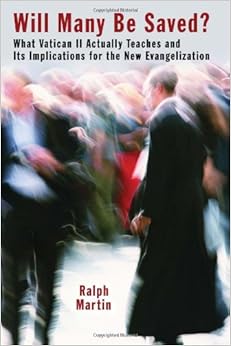
It's getting old. This new universalism has by now been so often suggested and homaged by so many recent popes that one could honestly argue it's part of the postconciliar development of doctrine. I no longer know what to say. Ralph Martin's "Who Will Be Saved?" offered a complete, Catholic, and biblical response to it. Trouble being, though, as Bishop Barron pointed out in his online debate over Martin's corrective, the conservatives' ballyhoooed Benedict XVI himself seems to support some sort of universalism in his encyclical on hope. We can laud tradition all we want, but at some point have to admit that postconciliarism is often an apology for, versus a friend of, Tradition. When the Four Last Things are shined up with new porcelain theological caps after receiving a Balthasarian root canal, Developmentalism is becoming the new orthodoxy, no matter how hard the forced smile from places like First Things. We are all Mormons now.So it goes ...
Friday, October 20, 2017
Bibles
From one of my readers, worth reading:
VERY interesting ...[Hat tip to JM]
A Jew in the court of King James..."...more than any other English translation of Scripture, the KJV is driven by an 'idea of majesty' whose 'qualities are those of grace, stateliness, scale, [and] power.'"Also, Leland Ryken's "What Makes the King James Version Great?" (Reformation 21, January 2011) ...
"Schuyler Canterbury KJV" (Lectio, January 10, 2017).
Meanwhile there is also this ... Alex Blechle, "A Millennial's thoughts on Bible Translation" (Catholic Bibles, September 12, 2017).
The comments are interesting.
Friday, September 22, 2017
Silence of the Shepherds
 Why is it that Catholic bishops seem to be plumping for Muslims? Why do they issue statements about Islam that are dishonest and misleading? Why do they appear to be so intent on protecting the image of Islam? If you’ve asked yourself these questions, you’re not alone. Given current events and the historical record of Islam’s aggressive campaigns against the Christian West, the rational thinker could be forgiven for believing that the leaders of the Christian world might just want to pay a bit more attention to contemporary anti-Christian violence — thousands of terror attacks, beheadings, stabbings, kidnappings, rapes, torching of churches and Christian-owned businesses — committed by Muslims, in the name of Islam.
Instead, most of the world’s Catholic bishops (with some heroic exceptions, such as Ignatius Joseph III Younan, patriarch of the Syriac Catholic Church of Antioch, and Jean-Clément Jeanbart, Melkite Greek Catholic archbishop of Aleppo), when they’re not extolling the virtues of Islam as a “religion of peace,” can be found counseling their flocks against so-called Islamophobia — anti-Islam sentiment, bias, or violence — typically in the immediate aftermath of a Muslim-perpetrated act of terror or instance of anti-Christian persecution.
For example, in May, after Muslim militants in the Philippines burned down the Cathedral of Mary Help of Christians, murdered more than a hundred Catholics, and held a dozen others hostage, Bishop Edwin de la Peña y Angot of the Marawi prelature worried out loud that the ensuing anti-Muslim sentiments might damage interreligious dialogue. “Some of the natural biases that Christians have against Muslims will be stirred up again,” he said in an interview (Zenit, June 9). “Interfaith dialogue is a very fragile process and these incidents can destroy the foundation that we have built.” About anti-Christian sentiments among Muslims, the bishop was silent.
Wednesday, August 30, 2017
"Still a bulwark of sanity in our big and zany Church"?
Those, paraphrased, are the words of Guy Noir - Private Eye in a recent message to me via carrier pigeon, as per usual lately. He was commenting on an article by Thomas Joseph White, "Catholicism in the Modern World" (First Things, August 25, 2017), which is, indeed, reassuringly sane.
After linking to this other article and remarking, "much as I've carped over JPII’s TOB overreach or Jos. Ratzinger’s exegesis of Genesis, more than a little do I miss them," he then turned to White's article, saying about it (his actual words):
After linking to this other article and remarking, "much as I've carped over JPII’s TOB overreach or Jos. Ratzinger’s exegesis of Genesis, more than a little do I miss them," he then turned to White's article, saying about it (his actual words):
There is also this fascinatingly fusionary list, with Newman, Garrigou-Lagrange (!) and Ratzinger too. Somehow reassures me there is still a bulwark of sanity in our big and… being kind, zany… Church.
Friday, August 25, 2017
"Did Amoris Laetitia's ghostwriter just respond to the dubia?"
Steve Skojec, "Did Amoris Laetitia's ghostwriter just respond to the dubia?" (1P5, August 22, 2017). Excerpt:
Remember this? (See below)

There’s no turning back.” Fernández told Mickens. “If and when Francis is no longer pope, his legacy will remain strong. For example, the pope is convinced that the things he’s already written or said cannot be condemned as an error. Therefore, in the future anyone can repeat those things without fear of being sanctioned. And then the majority of the People of God with their special sense will not easily accept turning back on certain things.Guy Noir - Private Eye responded in a crumpled note carried over the mountains by an exhausted carrier pigeon: "I tend to think he's right. If a 'magisterium' can turn like a weathervane, it loses all authority. This is the tragedy of the last several papacies. Rome's voice has been muffled on too many points."
Remember this? (See below)
Thursday, August 24, 2017
Wham! The confusion of morality with manners!!!

Matthew Schmitz, "Fr. Manners" (First Things, August 22, 2017):
Bless me, Father, for I have sinned. I fell asleep at your book talk . . .There's much more to this article, which Guy Noir - Private Eye, had the courtesy of calling my attention to via a message sent again by carrier pigeon. I suppose that was somehow à propos.
Were Fr. James Martin, SJ to appear opposite me in the confessional, I would be tempted to make this frivolous admission—and if his agenda prevails in the Church, I will have reason to make it. Catholics distinguish between violations of manners and of the moral law. Fr. Martin, in ways trivial and grave, does not. In his account of the faith, the sin that Christians once called sodomy is no more serious than my nodding off as he spoke gentle words at the Church of St. Francis Xavier on a warm June afternoon.
Monday, August 14, 2017
Contra Ivereigh: not just 'converts' are worried about the Church
Dan Hitchens, "It’s not just converts who are worried about the Church" (Catholic Herald, August 10, 2017):
In the last few years, many Catholics have become uneasy about statements coming out of Rome, and about the general direction of the Church. But which Catholics? According to a recent article in the Vatican newspaper, the “main obstacle” is “a good part of the clergy”. Then again, an article in Crux last year identified those “going against the Pope” as “almost always lay”.[Hat tip to JM]
Some believe that the issue is geographical: Massimo Faggioli describes an unease about the Church changing its style “from a Western one to a global religion”. Conversely, Cardinal Walter Kasper has said that the recalcitrant tend to be African or from “Asian or Muslim countries”....
This brings me to Austen Ivereigh’s latest piece suggesting that the epicentre of current anxiety is neither priests nor the laity, neither Westerners nor Africans, but converts. Ivereigh diagnoses “convert neurosis” in a range of writers, from “elegant commentators such as Ross Douthat” all the way down to “ex-Anglicans in my own patch such as Daniel Hitchens of the Catholic Herald.” Our neurosis reveals itself in disproportionate anxiety at the state of the Church; a horror of doctrinal development beyond our favourite period of Catholic history; and a failure to trust that “the Holy Spirit guides” Pope Francis. In sum, “their baggage has distorted their hermeneutic”.
I’m wary of this kind of psychologising: it is hard, even with those we know best, to say how their psychological issues affect their opinions. And in this instance the psychoanalysis seems needless, since there are at least as many cradle Catholics who have the same worries as us converts....
... I’m sorry to go over this again, but it seems worthwhile, since there is a determined effort in some quarters to change the subject. The concerns are about the sacraments and about doctrine. Nothing on this earth is more beautiful and precious than the sacraments, and it is natural for Catholics to be alarmed about the abuse of them. Scarcely anything is as necessary for our happiness as sound doctrine, and it is normal for Catholics to worry that doctrine is being contradicted or confused. There have been as many saints who were relaxed about heresy as there have been saints who despised the poor.
So of course converts and cradle Catholics will be dismayed by sacramental abuses and doctrinal confusion. And it is hard not to use such terms when we read Malta’s bishops claiming that avoiding adultery may be impossible; when we hear of priests, bishops and even cardinals abandoning the Church’s practice on Communion; when papal teachings are used – without contradiction from Rome – to justify novel approaches to divorce, euthanasia and extramarital relationships....
Subscribe to:
Posts (Atom)