Saturday, January 31, 2009

The Four Ends of the Mass

A reader writes:
After being taken to task for negativity, I stopped and asked myself, Well, what have been the stronger positive statements of basic Catholicism I have seen? It is not like the book reviews in the NOR offer much in terms of non-technical reading or inspiring. Since Kreeft, in his helpful and encouraging Jesus-Shock, gives a nod to the Baltimore Catechism, the reference there flashed me back to Foley's citing of it here [see below].

Somewhere [Fr.] Louis Bouyer writes that the challenge now is to distill our message to fit onto a business card. What?! Almost sounds like an "I Found It!" campaign -- very, very unCatholic. And while the complexities of the Faith may indeed not be best conveyed when condensed, it does make one wonder if we have an incisive message beyond the essentially generic "Hope!" "Love!" campaigns afoot.

Foley's fourth point especially is thus one I liked in terms of how he tackled it. I think we need to hear a lot more of this sort of thing... and Pope Benedict seems somewhat so inclined.
The article to which the reader makes reference is Michael P. Foley's "The Mass and the Four Most Important Lessons of Childhood" (Scripture and Catholic Tradition, February 1, 2009). The article begins thus:
The four principal ends of the Mass are also the four most important things to teach our children—and ourselves.

One of the questions of the old Baltimore Catechism is, "What are the purposes for which the Mass is offered?" The answer given was fourfold:
  • First, to adore God as our Creator and Lord.
  • Second, to thank God for His many favors.
  • Third, to ask God to bestow His blessings on all men.
  • Fourth, to satisfy the justice of God for the sins committed against Him.
Adoration, thanksgiving, petition, and satisfaction—mention of these four ends found their way into many an old missal and are still a familiar feature of any traditional catechesis on the Mass. What is often overlooked, however, is the relation of these ends to our own concrete lives as human beings. How exactly do these four things relate to our psychological, emotional, and spiritual welfare?

One way to approach this question is to consider the four most important things that we learn to say as children: "I love you," "Thank you," "Please," and "I’m sorry." These four simple sayings are not only capable of directing both young and old onto the path toward human happiness; they also provide a useful analogy for what happens at every Sacrifice of the Mass.
The entire article is well worth reading, as any of you know who may be familiar with Professor Foley's writing.

[Hat tip to J.M.]

SSPX: from the Welborn mosh pit

A reader writes:
"Over at open book [Amy Welborn's blog, now "Charlotte Was Both"], bracing back and forths on the SSPX deal.

http://amywelborn.wordpress.com/2009/01/26/lefebvre-part-ii/#comment-11358

I attended a non-schismatic Latin Mass a while back, and was both intrigued, attracted, and a bit repelled. So I don't mean this as a Trad shout out at all. But i thought these comments in the com box by trp were on point:
The comment in question reads as follows:
The Vatican could have put together lots of neat PR packets for the press, and the headlines would have been the same. I, for one, appreciate the Vatican’s indifference to the MSM. The facts are out there, easily accessible to any journalist; it’s really their fault if they are utterly uninterested in discovering them.

The rejection by the SSPX of V2 is, for me, a non-starter. More than half of my parish rejects the basics of the Catholic faith. “The Trinity? You’ve got to be kidding me! What are you, a traditionalist or something?” Should they be summarily excommunicated? And if you are going to start with the rebellious clerics; well, there’s Father McBrian and plenty others where he comes from. If you were to distribute a doctrinal check list, I suspect that the SSPX–priests, bishops, and laity–would score better than the average Catholic in good standing.

Archbishop Williamson’s statements are foolish, probably sinful, and an embarrassment to all traditionalists. However, they cannot compare in gravity to the sins of prelates who have not been relieved of their duties. If you compare him with Abp Mahony, for example, you will likely find that the latter has done far more real harm. The secular press can continue with their nonsense, but I will not be more upset about Abp Williamson than I am about Abp Mahony. I hope that both will disappear from the scene.

Here’s the really painful point to make: the SSPX may not want full communion, and they may be right not to want it. Thanks to the brilliant and holy Benedict XVI, it is now becoming mainstream to question the idea that the authentic liturgy and doctrine of the Church was born the 1960’s, and that everything that was taught and believed before that decade was a bunch of superstitious, bigoted nonsense. We have also begun to undo some of the brutal iconoclasm that has devastated our churches, art, music, and liturgy. However, we’ve made baby steps. None of it would have been possible without the SSPX’s rebellion. I can understand why even reasonable factions of the SSPX might now be very diffident about submitting themselves to the authority of the current hierarchy of the Church. They have Pope Benedict as their ally; but he has many, many enemies who hate the SSPX, and hate everything that they have managed stubbornly to preserve.
[Hat tip to J.M.]

Cardinal: SSPX leader 'recognizes Vatican II'

Damian Thompson, "The drama continues: head of SSPX 'recognises Vatican II', says Cardinal Castrillon" (Telegraph.co.uk, January 29, 2009):

Now that Bishop Williamson has been punished and silenced, Pope Benedict XVI's grand design for the reunion of orthodox Catholic Christianity is going according to plan. Cardinal Castrillon, head of Ecclesia Dei, has just been quoted as saying that Bishop Fellay, head of the SSPX, recognises the Second Vatican Council. Amazing. (Hat-tip: the great Father Z.)

So, in the course of one day, we learn that a personal prelature is on offer to hundreds of thousands of members of the Traditional Anglican Communion, and that the leader of the SSPX, which in the past has portrayed Vatican II as the work of Satan, now accepts the broad thrust of the Council. (One curious detail: it seems possible that the Vatican didn't know that Richard Williamson was a gibbering Holocaust denier until after the decision to lift the excommunications had been taken. Not very clever, though I personally couldn't care less what "communities minister" Sadiq Khan has to say on the subject.)

Admittedly, there are many obstacles to be overcome, some arising from the instability of the SSPX and the TAC, and others deliberately strewn in the path of the Holy Father by cardinals and . . .

[Hat tip to New Oxford Review News Link]

Report: Pope may welcome Traditional Anglicans

Plans could mean mass exodus from the Church of England: "Healing the Reformation's fault lines" (The Record, January 28, 2009:
History may be in the making. It appears Rome is on the brink of welcoming close to half a million members of the Traditional Anglican Communion into membership of the Roman Catholic Church, writes Anthony Barich. Such a move would be the most historic development in Anglican-Catholic relations in the last 500 years. But it may also be a prelude to a much greater influx of Anglicans waiting on the sidelines, pushed too far by the controversy surrounding the consecration of practising homosexual bishops, women clergy and a host of other issues.

It is understood that the Vatican’s Congregation for the Doctrine of the Faith has decided to recommend the Traditional Anglican Communion be accorded a personal prelature akin to Opus Dei, if talks between the TAC and the Vatican aimed at unity succeed.
[Hat tip to New Oxford Review News Link]

"The Coming Evangelical Collapse"

Michael Spencer, "My Prediction: The Coming Evangelical Collapse (1)" (Internet Monk.com, January 27, 2009):
I’m not a Prophet or a Prophet’s Son. I can’t see the future. I’m usually wrong. I’m known for over-reacting. I have no statistics. You probably shouldn’t read this. The “Gracious God” post depressed me.

Part 1: The Coming Evangelical Collapse, and Why It Is Going to Happen
Part 2: What Will Be Left When Evangelicalism Collapses?
Part 3: Is This A Good Thing?


My Prediction

I believe that we are on the verge- within 10 years- of a major collapse of evangelical Christianity; a collapse that will follow the deterioration of the mainline Protestant world and that will fundamentally alter the religious and cultural environment in the West. I believe this evangelical collapse will happen with astonishing statistical speed; that within two generations of where we are now evangelicalism will be a house deserted of half its current occupants, leaving in its wake nothing that can revitalize evangelicals to their former “glory.”

The party is almost over for evangelicals; a party that’s been going strong since the beginning of the “Protestant” 20th century. We are soon going to be living in a very secular and religiously antagonistic 21st century in a culture that will be between 25-30% non-religious.

This collapse, will, I believe, herald the arrival of an anti-Christian chapter of the post-Christian west and will change the way tens of millions of people see the entire realm of religion. Intolerance of Christianity will rise to levels many of us have not believed possible in our lifetimes, and public policy will become particularly hostile towards evangelical Christianity, increasingly seeing it as the opponent of the good of individuals and society.

The response of evangelicals to this new environment will be a revisiting of the same rhetoric and reactions we’ve seen since the beginnings of the current culture war in the 1980s. The difference will be that millions of evangelicals will quit: quit their churches, quit their adherence to evangelical distinctives and quit resisting the rising tide of the culture.

Many who will leave evangelicalism will leave for no religious affiliation at all. Others will leave for an atheistic or agnostic secularism, with a strong personal rejection of Christian belief and Christian influence. Many of our children and grandchildren are going to abandon ship, and many will do so saying “good riddance.”

This collapse will cause the end of thousands of ministries. The high profile of Christian media will be reduced, if not eliminated. Hundreds of thousands of students, pastors, religious workers, missionaries and persons employed by ministries and churches will be unemployed or employed elsewhere. Christian schools will go into rapid decline. Visible, active evangelical ministries will be reduced to a small percentage of their current size and effort.

Nothing will reanimate evangelicalism to its previous levels of size and influence. The end of evangelicalism as we know it is close; far closer than most of us will admit.

My prediction has nothing to do with a loss of eschatological optimism. Far from it. I’m convinced the grace and mission of God will reach to the ends of the earth. But I am not optimistic about evangelicalism, and I do not believe any of the apparently lively forms of evangelicalism today are going to be the answer. In fact, one dimension of this collapse, as I will deal with in the next post, is the bizarre scenario of what will remain when evangelicals have gone into decline.

I fully expect that my children, before they are 40, will see evangelicalism at far less than half its current size and rapidly declining. They will see a very, very different culture as far as evangelicalism is concerned.

I hope someone is going to start preparing for what is going to be an evangelical dark age.

Why Is This Going To Happen?

1) Evangelicals have identified their movement with the culture war and with political conservatism. This was a mistake that will have brutal consequences. They are not only going to suffer in losing causes, they will be blamed as the primary movers of those causes. Evangelicals will become synonymous with those who oppose the direction of the culture in the next several decades. That opposition will be increasingly viewed as a threat, and there will be increasing pressure to consider evangelicals bad for America, bad for education, bad for children and bad for society.

The investment of evangelicals in the culture war will prove out to be one of the most costly mistakes in our history. The coming evangelical collapse will come about, largely, because our investment in moral, social and political issues has depleted our resources and exposed our weaknesses. We’re going to find out that being against gay marriage and rhetorically pro-life (yes, that’s what I said) will not make up for the fact that massive majorities of evangelicals can’t articulate the Gospel with any coherence and are believing in a cause more than a faith.

2) Evangelicals have failed to pass on to our young people the evangelical Christian faith in an orthodox form that can take root and survive the secular onslaught. In what must be the most ironic of all possible factors, an evangelical culture that has spent billions of youth ministers, Christian music, Christian publishing and Christian media has produced an entire burgeoning culture of young Christians who know next to nothing about their own faith except how they feel about it. Our young people have deep beliefs about the culture war, but do not know why they should obey scripture, the essentials of theology or the experience of spiritual discipline and community. Coming generations of Christians are going to be monumentally ignorant and unprepared for culture-wide pressures that they will endure.

Do not be deceived by conferences or movements that are theological in nature. These are a tiny minority of evangelicalism. A strong core of evangelical beliefs is not present in most of our young people, and will be less present in the future. This loss of “the core” has been at work for some time, and the fruit of this vacancy is about to become obvious.

3) Evangelical churches have now passed into a three part chapter: 1) mega-churches that are consumer driven, 2) churches that are dying and 3) new churches that whose future is dependent on a large number of factors. I believe most of these new churches will fail, and the ones that do survive will not be able to continue evangelicalism at anything resembling its current influence. Denominations will shrink, even vanish, while fewer and fewer evangelical churches will survive and thrive.

Our numbers, our churches and our influence are going to dramatically decrease in the next 10-15 years. And they will be replaced by an evangelical landscape that will be chaotic and largely irrelevant.

4) Despite some very successful developments in the last 25 years, Christian education has not produced a product that can hold the line in the rising tide of secularism. The ingrown, self-evaluated ghetto of evangelicalism has used its educational system primarily to staff its own needs and talk to itself. I believe Christian schools always have a mission in our culture, but I am skeptical that they can produce any sort of effect that will make any difference. Millions of Christian school graduates are going to walk away from the faith and the church.

There are many outstanding schools and outstanding graduates, but as I have said before, these are going to be the exceptions that won’t alter the coming reality. Christian schools are going to suffer greatly in this collapse.

5) The deterioration and collapse of the evangelical core will eventually weaken the missional-compassionate work of the evangelical movement. The inevitable confrontation between cultural secularism and the religious faith at the core of evangelical efforts to “do good” is rapidly approaching. We will soon see that the good evangelicals want to do will be viewed as bad by so many, that much of that work will not be done. Look for evangelical ministries to take on a less and less distinctively Christian face in order to survive.

6) Much of this collapse will come in areas of the country where evangelicals imagine themselves strong. In actual fact, the historic loyalties of the Bible belt will soon be replaced by a de-church culture where religion has meaning as history, not as a vital reality. At the core of this collapse will be the inability to pass on, to our children, a vital evangelical confidence in the Bible and the importance of the faith.

7) A major aspect of this collapse will happen because money will not be flowing towards evangelicalism in the same way as before. The passing of the denominationally loyal, very generous “greatest generation” and the arrival of the Boomers as the backbone of evangelicalism will signal a major shift in evangelical finances, and that shift will continue into a steep drop and the inevitable results for schools, churches, missions, ministries and salaries.

Next: What Will Be Left?
Related[Hat tip to S.F.]

Evening Prayer

O God, give me grace at this time duly to confess my sins before Thee, and truly to repent of them. Blot out of Thy book, gracious Lord, all my manifold acts of sin committed against Thee. Forgive me all my wanderings in prayer, my sins of omission, my deliberate sins against conscience.

Give me eyes to see what is right, and a heart to follow it, and strength to perform it; and grant that I may in all things press forward in the work of sanctification and ever do Thy will, and at length through Thy mercy attain to the glories of Thy everlasting Kingdom through Jesus Christ our Lord.

Oxford 1828

[Acknowledgement: A Newman Prayer Book (Vincent F. Blehl, S.J., 1990), p. v.]

Friday, January 30, 2009

Fr. Paul Berg (1922-2009)

One of our own priests at Sacred Heart Major Seminary, dearly beloved by the whole community, passed from this life on Monday, following a brief illness. At one time, much earlier in his life, he was the philosophy professor of Thomas Losoncy, whom I had as a professor during my M.A. program at Villanova University in Philadelphia in 1979-1980. Dr. Losoncy has long since retired, but Fr. Berg was still teaching philosophy at Sacred Heart and coaching the Seminary basketball team up into the fall semester of 2008. After games he could be seen surrounded by his students, nursing a bottle of beer in the seminarians' pub, which was affectionately named after him: O'Berg's. He was 87.

Fr. Berg was a taciturn, humble, and deeply compassionate priest. He was born and raised in Detroit, and, as far as I know, has been at the Seminary longer than anyone else now living there. He remembered details from the Civil Rights marches in Selma, Alabama in 1965. He was there. He lived through the Detroit riots of 1967, which began just blocks from the Seminary, and he knew all about the history, demographics, and race-relations of the city. He was all about the hospitality of reaching out to those in the surrounding community. He was also involved in the Irish-Catholic fraternal organization, the Ancient Order of Hibernians, was a die-hard fan of the Fighting Irish, and could be seen occasionally with his golf putter, practicing on the Seminary lawns. At the conclusion of each of his Masses at the Seminary, he would always leave us with a parting thought -- usually an apt word or phrase to help the point of his homily stick. At his funeral today at Sacred Heart, the church was packed with an overflow crowd. He will be missed.

See: Oralandar Brand-Williams, "Priest fought for civil rights" (The Detroit News, January 28, 2009): "Catholic cleric marched in Alabama, recruited students to participate; also taught at seminary."

Thursday, January 29, 2009

Philadelphia's Glorious Catholic Music History

By Lucy E. Carroll

Lucy E. Carroll, D.M.A., is organist and music director at the Carmelite Monastery in Philadelphia, where the choir, nuns, and congregation sing Latin chant and traditional music, and the choir sings old and new motets in Latin and English. She is creator of the "Church­mouse Squeaks" cartoons that appear in Adoremus Bulletin, and a frequent contributor of articles on sacred music and the liturgy. She is currently editing the Monastery Hymnal. She is also adjunct associate professor at Westminster Choir College of Rider University in Princeton, New Jersey. The historical data in this article was originally prepared for her doctoral dissertation, "Three Centuries of Song: Pennsylvania's Choral Composers 1681-1981" (Combs College of Music, Philadelphia, 1982). Some material was excerpted from her article "Hymns, Hymnals, Composers, and Choir Schools: Philadelphia's Historic Contribution to Catholic Liturgical Music" (Adoremus Bulletin, June 2004).

The Archdiocese of Philadelphia celebrated its bicentennial this year. The Catholic Standard and Times, the archdiocesan newspaper, published a special issue commemorating the two hundred years of archdiocesan history. This retrospective covered archdiocesan saints John Neumann and Katherine Drexel, and the founding of schools, parishes, and colleges. Pages and pages were given to the pride of the past two hundred years. Not one word was given to music.

Why keep our music history a secret? Philadel­phia's musical history is unique among the thirteen colonies. For decades, Philadelphia was at the forefront of Catholic liturgical music. Home to hymnal publishers, composers, musical societies, and at the center of American reform of liturgical music called for by Pope St. Pius X, the Archdiocese of Philadelphia has much of which to be proud.

Alas, the past glories put the present state of music into shadow. Contemporary, secular-style music is most prominent in this archdiocese. Not surprisingly, music is not given any pride of place in Philadelphia parishes: A survey of the archdiocesan directory, and a look at the parish Sunday bulletins, shows listings of priests, deacons, secretaries, grief counselors, business managers, parish nurses, and all manner of officers; nowhere does one find a music director or organist listed.

Some of the music of the past two centuries will sound outdated. Yet throughout its history -- before the changes following the Second Vatican Council -- Philadelphia's sacred-music leaders were trained in classical music rather than the popular song style of their day. They brought to liturgical music an excellence (in the classical standards of their time) and a sense of the sacred. Can that be said today?

So mired in musical mediocrity are today's parishes that a hope of a renewal of truly sacred Catholic music like the Gregorian renewal begun by Philadelphia's St. Gregory Guild of a century ago seems an impossible dream.

Once upon a time, Philadelphia was the only one of the thirteen colonies in which Catholics were permitted to worship openly. (Maryland was founded as a Catholic colony, but soon came under British rule and law. It became illegal to build a Catholic church in Maryland, so Catholics had to worship in private houses.) Under British rule, Catholicism was forbidden in Philadelphia, subject to imprisonment at the least. But William Penn's charter granting religious freedom in his colony continued to be honored during colonial days. Pennsylvania built the first Catholic churches in the U.S., and its music gained renown even among non-Catholics. John Adams attended a Catholic service in Philadelphia in 1774 and wrote, "Went in the afternoon, to the Romish Chapel in Philadelphia…. The scenery and the music are so calculated to take in mankind that I wonder the Reformation ever succeeded…. The chanting is soft and sweet."

High praise indeed! What would he think of today's mix of salsa, merengue, pop, and gospel? Would he think the Reformation's success bore fruit?

July 4, 1779, saw a remarkable event (remarkable, one thinks, even by today's secular standards): Official celebrations for the anniversary of the Declaration of Independence were held at Old St. Mary's Catholic Church. Among the participants were George Washington, the French ambassador Conrad-Alexandre Gérard, Gérard's chaplain, as well as several heads of state, members of Congress, and representatives of the French navy. The Gregorian chant setting of the Te Deum was sung. Can one even imagine a U.S. president today celebrating a national event in a Catholic Church, listening to Gregorian chant?

Because of its Catholic populace, Philadelphia became home to the first U.S. Catholic hymnal. Published in 1787 by John Aitken (1745-1831), the compilation was titled Litanies and Vesper Hymns and Anthems as They are Sung in the Catholic Church Adapted to the Voice and Organ. The music was scored for treble and bass; a later edition included a third vocal part. A Holy Mass of the Blessed Trinity was included, but, as was sadly customary at the time, some text was omitted and replaced with instrumental sections. Plainchant themes appeared in the Mass and some hymns, but the music -- again in the classical style of the time -- was greatly ornamented. While Aitken was not Catholic, he worked closely with Catholic leaders in preparing the book. The German parishioners of Holy Trinity Catholic Church helped to underwrite the cost of publication.

Soon thereafter, the second American Catholic hymnal appeared, by the first American Catholic publisher, also in Philadelphia. Matthew Carey (1769-1839) organized a Sunday School Society in Philadelphia beginning about 1790. Four years later, he published a Catholic catechism; later editions contained hymns.

The Philadelphia Musical Fund Society, begun in 1820, is the oldest extant music society in America. One of its founders, Benjamin Carr (1768-1831), became music director of St. Augustine's Catholic Church, which opened its doors in 1801. Four years later, Carr published Masses, Vespers, Litanies: Composed, Selected, and Arranged for the Use of the Catholic Churches in the United States of America. It was dedicated to Baltimore Bishop John Carroll (the first American bishop) and included Carr's original setting for the Mass and Te Deum. It was another landmark publication, and it introduced Adeste Fideles and O Sanctissima to American Catholics. Alas, his Mass settings also omitted some text phrases in the Gloria, a common practice at the time on both sides of the Atlantic.

The first American Sodality was begun in Philadelphia in 1841 by the Rev. Felix Barbelin (1808-1869). The Sodality movement had been approved by Pope Gregory XIII in 1684. Fr. Barbelin had been pastor of Old St. Joseph's Church for two decades. He founded St. Joseph's Hospital and was named president of St. Joseph's College in 1852. He prepared the first American Sodality Manual in 1841, which contained prayers and hymns. A plethora of Sodality hymnals appeared in the following years, such as Philadelphia's Sodalist's Manual in 1887. The Manual was prepared by E.F. McGonigle, and contained 120 hymns with music. So popular was this collection that it was reprinted in 1900, 1904, and 1905. Many of the Sodality hymns were of lesser musical quality, but they were intended for use in devotions and prayer meetings rather than the Mass, and for schools and amateur groups rather than church choirs.

Catholic music grew in Philadelphia's Catholic schools. As early as 1804 Philadelphia's Old St. Mary's Church established a singing school and a boy choir. Here is a bright light: today there is an Archdiocesan Boy Choir, directed by Tom Windfelter. Some eighty young men in this choir sing traditional Catholic choral music and chant, much of it in Latin. The choir has sung in such venues as Ávila, Spain, and Lourdes, France.

The Sisters of Notre Dame de Namur prepared The Wreath of Mary hymnal in 1884, and the Sunday School Hymn Book in 1887. While actually published by a Boston firm, the music was the work of Philadelphia nuns. Some of the hymns later found their way into the St. Basil Hymnal. Sisters of the Holy Child Jesus, also in Philadelphia, founded by Sr. Cornelia Connelly, prepared a hymnal in 1877 with over 100 English hymns and a few Latin motets, including the setting of O Salutaris Hostia by Anthony Werner, which is still used today.

Philadelphia poetess Eleanor C. Donnelly (1838-1917) published two volumes of original hymns to the Sacred Heart, in 1882 and 1912. Sentimentally Victorian in flavor, they still contained strong devotional aspects. Two of her hymn texts were "Sacred Heart, in Accents Burning" and "Like a Strong and Raging Fire."

Philadelphia was also home to a German-American immigrant who made a tremendous impact on Catholic sacred music in the 19th century. Albert RoSewig (he capitalized the "S" in his surname to be assured it would be pronounced correctly, with three syllables, not two) came to America at the age of ten in 1856 and served in the city until his death in 1929. He was director of music at St. Charles Borromeo Church for some thirty-five years. His reputation as composer and conductor was so great and widespread that he was selected as the conductor for the Centennial Chorus at the U.S. Centennial Exposition of 1876.

RoSewig wrote Masses, songs, hymns, and motets. In his day, "Little Brown Jug" and "Listen to the Mockingbird" were among Philadelphia's favorite songs. He did not, however, write in that popular song style, but in the classical style of his day, which was florid and sentimental. RoSewig had his own publishing company, and around 1880 he published Concentus Sacri. Popular in its day, it was later criticized by Catholic music reformers. As was popular in his time, RoSewig wrote romanticized rather than modal harmony for Gregorian chants, and even harmonized the priest's altar chants, something Pope St. Pius X later condemned. (Today it is still forbidden to accompany the priest's altar chants in any way.) Despite this, Concentus Sacri was a most popular publication and provided Catholic choirs with the works of such composers as Adam Geibel, Giacomo Rossini, Mozart, Donizetti, Bellini, Verdi, Gounod, and, of course, Albert RoSewig. While some of the music today may seem overly florid, it was in the best classical tradition of its day, and prompted the formation of large, musically capable Catholic choirs.

While he wrote in what he considered appropriate sacred style, RoSewig lived to hear his music condemned by Nicola Montani and the members of the St. Gregory Guild. Pius X banned overly operatic styles, and RoSewig must have been shattered to see his compositions dismissed as inappropriate for the very sphere for which they were written. He completely withdrew from the public the last decade of his life.

And what of that reform? In 1903 Pius X issued Tra le Sollecitudini, his motu proprio that restored pure Gregorian chant, encouraged polyphony, reaffirmed the use of Latin, and restricted musical style and instrumental usage for the next sixty years. In Philadelphia, Nicola Montani led the national reform of Catholic liturgical music.

Montani (1880-1949) was conductor, editor, composer, and publisher. He was founder of the St. Gregory Guild in Rittenhouse Square, spreading the message of Pius X's reform, and furnishing publications for that reform. Born in New York, he spent 42 of his 67 years in Philadelphia. He studied at Rome's St. Cecilia Conservatory in 1903, and in 1904 attended a school organized by the then-exiled monks of Solesmes on the Isle of Wight. From 1906 to 1923 he served at St. John the Evangelist Church in central Philadelphia. He also taught music at Hallahan High School, West Philadelphia Catholic Girls High School, and St. Mary's Academy. He served as editor-in-chief of liturgical music for both G. Schirmer and Boston Music Company publishers. Imagine, a Catholic music composer and editor who studied chant and read the Vatican documents. Mirabile dictu!

In 1914 Montani published the St. Gregory Hymnal and Catholic Choir Book, renewed in 1920 and 1947. He funded the cost of publication himself. In near-fanatic fervor, he also published a "White List" of recommended music, as well as an infamous "Black List" in 1922, naming music that did not meet -- in his estimation, anyway -- the high standards of Tra le Sol­lecitudini. Pius X had written that any modern music in the liturgy had to have "sanctity and goodness of form…. Contain nothing profane, be free from reminiscences of motifs adopted in thea­tres…and not be fashioned after the manner of profane pieces."

A century later, Pope John Paul II wrote his chirograph on sacred music, reminding Catholics that the 1903 work was still valid in essence: that the closer music was to Gregorian chant in form, the more suitable it was for the Mass, and vice versa. Alas, while Montani and his Society championed Pius X's 1903 document, John Paul's 2003 chirograph has been largely ignored.

Montani may have gone a bit over the line in delineating "liturgical style": He banned works by Mozart, Haydn, Schubert, Rossini, von Weber, and his predecessor, RoSewig. He did, however, edit and adapt those works, pruning them of what he considered superfluous aspects (arpeggiated chords, rhythmic accompaniments, ornamentation, etc.). It was rather like the taste of watered-down beer.

Montani's St. Gregory Hymnal received wide acceptance and influenced much of the country. Copies still appear for auction on eBay. A severely abridged version is available from GIA Publications, and the full hymnal itself is available in reprint. It can still be found in the choir lofts of a few Philadelphia churches, for it contained many accessible choral pieces in both Latin and English, arranged for two-part or four-part choirs. Montani's harmonization of chant was heavy-handed, and later criticized, and must take a back seat to the work of Achille Bragers.

Montani lives on, not only in old copies of his hymnal, but in a Guild publication titled The Correct Pronunciation of Latin According to the Roman Usage. This is still available from GIA Publications (buried deep, deep within the catalog). The manual had been recommended to all choir conductors, Catholic and otherwise, by no less a personage than the great Robert Shaw, dean of American choral directors. How ironic that this manual, designed for Catholic churches, is more often found today in the hands of secular concert choir directors.

Montani brought Philadelphia to the forefront in other ways. In 1915 his Palestrina Choir gave concerts of Renaissance polyphony in Philadelphia and New York, bringing this music to the ears of U.S. audiences. His choirs recorded this music for Victor Records, awakening an interest in polyphonic choral music in the rest of the country. He also organized the Choral Festival of Catholic Choirs and directed it for the U.S. Sesqui-Centennial Celebration in 1926. The St. Gregory Hymnal was put into Braille notation, the first hymnal of any kind to be prepared in Braille. For his work in Catholic liturgical music reform, Montani was named a Knight Commander of St. Sylvester by Pope Pius XI in 1926.

Other Philadelphi­ans also excelled in music for the liturgy. Sr. Mary Immaculée (1885-1965) of the Servants of the Immaculate Heart of Mary (in Immacu­lata, Pennsylvania) served as music director at Immacu­lata College for over twenty years. She was affiliated with the Society of St. Gregory and became noted as a composer of sacred works for women's choirs as well as traditional four-part mixed choirs. She was influential in bringing good liturgical music to the area, particularly in schools, and helped further the cause of women composers.

Sr. Regina Dolores of the Sisters of St. Joseph (in Chestnut Hill, Pennsylvania) graduated from the University of Pennsylvania, received a Master of Arts in organ from Notre Dame, and a Ph.D. in music from the Detroit Conservatory. She also studied harp at Philadelphia's still-famed Curtis Institute of Music. An outstanding performer, she was named Chair of the Music Department at Chestnut Hill College from the year the school opened in 1924 until her retirement in 1970. She was renowned as a conductor, composer, harpist, and organist. She was an officer of the St. Cecilia Guild, and wrote for the St. Gregory Society. She was a member of the Cardinal's Commission on Liturgical Music (no longer extant) and was president of the Pennsylvania State Unit of the National Catholic Music Educators Association.

Today, the reforms called for by Pius X, the true intent of the Second Vatican Council (as opposed to the interpretive "spirit of Vatican II"), and the reminders of Pope John Paul II and then-Cardinal Ratzinger are recognized only in sporadic bits and spurts within the archdiocese. No longer a leader in liturgical music, this archdiocese, like so many others, has fallen into the inclusive, multicultural bandwagon of inappropriate, secular-style music. What would John Adams, Nicola Montani, Sister Immaculée, Benjamin Carr, even Albert RoSewig think of the mediocrity and banality of so much liturgical music today? Ah, perhaps that is why the history of Philadelphia's leadership in Catholic sacred music has been kept under wraps.

One hopes that this great archdiocese abandons the pop-and-salsa style and once again leads the people in renewal of music for the sacred liturgy -- music that is sacred in nature, high in musical quality, suitable for the altar of sacrifice, and fitting for God's house.

[The forgoing article by Lucy E. Carroll, "Philadelphia's Glorious Catholic Music History," was original published in New Oxford Review (December 2008), and is reproduced here by kind permission of New Oxford Review, 1069 Kains Ave., Berkeley, CA 94706.]

Oh, come now.

Puh-leeeze!

Niraj Warikoo, writing in "Vigneron installed as new Detroit archbishop" (Detroit Free Press, January 28, 2009), infers from the fact that the new Archbishop, in his homily, repeatedly stressed "the importance of strictly adhering to church principles despite the prevailing culture," that this "clearly showed his traditionalist bent."

Come now. So what's this supposed to mean -- that disobeying church principles is "progressive"? Puh-leeeze. What Warikoo says about Vigneron here tell us more about Warikoo than about Vigneron. I would have thought that conscientious obedience to Mother Church was simply the mark of a good and faithful bishop, rather than something calling for polarizing labels. Then again, we live in times when everything, even the Eucharistic Sacrifice, has been politicized. Domine, miserere nobis.

Then again, maybe this was the proverbial needle in the haystack and nothing more than an honest and innocent journalistic mistake. Yu think?!

Newman Prayer Book

A reader recently wrote asking where one might be able to acquire the Newman prayer book, from which I have been offering excerpts recently. I sent an email in reply, but it was bounced back with "fatal errors," so I post the information here for anyone interested:

Here's the data I find in the prayer book --
Vincent Ferrer Blehl, S.J., editor, A Newman Prayer Book (Birmingham, UK: V.F. Blehl, S.J., 1990).
There is also the following information:
Publisher: V.F. Blehl, S.J., The Newman Secretariat, The Oratory, Hagley Road, Birmingham B16 8UE, England.
My hunch is that I purchased the booklet on a visit in 1999 to the Birmingham Oratory to visit the Newman Library there, where he lived. I would suggest writing to the Oratory directly at the address given and inquiring about the availability of the booklet for purchase.

The Oratory also has a website: http://www.birmingham-oratory.org.uk/ that may be worth exploring. I note that they do have a much larger collection of Newman's prayers available, listed online (though one would still have to write to them by regular mail to make the purchase). I don't see the particular prayer book I've been using listed (which is a very small booklet of only 33 pages); but it may be available if you contact them.

There is a "Contact Us" link with both phone numbers and email addresses.

The only other place I can think that I may have purchased it is the London (Brompton) Oratory, which has a book shop in the church, but no online link.

Regardless, the booklet may not be ideal. For example, the editor changed Newman's second person pronouns ("Thee," Thy" "Thine) when addressing God to "you," "your" and "yours"), which accords with the horizontalizing contemporary chumminess toward the Almighty, but is hardly faithful to Newman's eloquent (and reverent) Victorian form.

There are other books of Cardinal Newman's prayers you may prefer. In the meantime, there are some of his most memorable prayers online, if you google for them, using "prayer" + "Cardinal" + "Newman" etc.

Wish I could be more help.

Sunday, January 25, 2009

Good counsel for the work of God

Are you upset? Look: happen what may in your interior life and in the world around you, never forget that the importance of events or of people is very relative. Take things calmly. Let time pass. And then, as you view persons and events dispassionately and from afar, you'll acquire the perspective that will enable you to see each thing in it's proper place and in it's true proportion. If you do this, you'll be more objective and you'll be spared many a cause of anxiety.

~ St. Josemaria Escriva

[Hat tip to L. Miller]

Living a liturgical life via the calendar

Tridentine Community News (January 25, 2009):
Octaves

By now, you have likely heard the term “Octave” used with regards to a Feast in the Church Calendar. Let’s examine what Octaves are.

Holy Mother Church desires that we commemorate the most solemn Feasts of the year not only on the day of the Feast itself, but also for a total of eight days. The most famous Octave in the calendar is that of Easter. Indeed, officially, Easter is the only Octave preserved in the Ordinary Form. In the Extraordinary Form, the 1955 Calendar reform suppressed all Octaves except Christmas, Easter, and Pentecost. However, because the Calendar itself was mostly untouched, the other Octaves of Epiphany, Ascension, Corpus Christi, and Sacred Heart are still in place, even if not by name. During an Octave, certain things may be kept constant: For example, throughout the Octave of the Nativity, both a special Preface of the Nativity and a special Communicántes in the Canon are used. This liturgical continuity has the effect of reminding us about the Feast for all eight days.
Ember Days

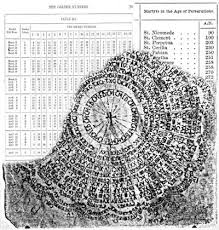
A feature of the Tridentine calendar that is often overlooked nowadays is the four seasonal sets of Ember Days. These are a Wednesday, Friday, and Saturday of one week on which the Church calls for prayer in thanksgiving for the gifts of the earth. The old Canon Law called for fasting on Ember Days. Ember Days are observed on the weeks after December 13 (Feast of St. Lucy), the First Sunday of Lent, Pentecost, and September 14 (Exaltation of the Holy Cross).

When the Calendar was revised in 1969, Ember Days were not officially discarded, but were relegated to be decided upon by national Bishops’ Conferences. Unfortunately, they seem to have been forgotten in Canada and the U.S., perhaps because the concurrent relaxing of the fasting laws made their non-observance no longer a mortal sin. Fasting laws are matters of Canon Law, not Liturgical Law, and thus will be aligned with the Ordinary Form Calendar for the foreseeable future.

Rogation Days

Similar to Ember Days, Rogation Days occur on April 25 (Feast of St. Mark the Evangelist), and the Monday, Tuesday, and Wednesday before the Feast of the Ascension. They are days of prayer of appeasement of God’s anger, for protection against natural calamities, and in petition for a plentiful harvest. A procession is traditionally held on April 25. Fasting was not required in recent times.

Regional and Secondary Feast Days

Some feast days pertain only to a region or to a particular religious congregation. For example, August 11 is the Commemoration of St. Tiburtius and Feast of St. Susanna in the Universal Calendar. In certain dioceses of the United States, the Feast of St. Philomena may also be celebrated that day, using the Common Mass of a Virgin Martyr.

Lesser-known saints may not appear in any official Calendar, but are still assigned Feast Days. For instance, May 15 is the Feast of St. John Baptist de la Salle in the Universal Calendar, but is also the Feast of St. Dymphna. Though we cannot find any specific reference, logic would tell us that like St. Philomena, her Mass would be the Common of a Virgin Martyr.

On July 4, the Archdiocese of Detroit (alone) celebrates the Dedication of the Consecrated Churches using the Mass for the Dedication of a Church. On August 15, the Diocese of London, Ontario celebrates the Anniversary of Episcopal Consecration of Bishop Ronald Fabbro via a Commemorative Collect after the Collect of the Mass of the Feast of the Assumption (a First Class Feast which cannot be displaced).

Living a Liturgical Life Via the Calendar

Taking all of the components as a whole – Feast Days, Octaves, Ember Days, Rogation Days, plus the recalling of our Lord’s life, death, resurrection, and ascension – the Extraordinary Form Calendar is a treasury of flow, form, and function.

With the de-emphasis on constructs in the Ordinary Form Calendar, it is easy not to think too much about the Liturgical Year, aside from perhaps the saint of the day. But with some study, one comes to learn and appreciate that the Extraordinary Form Calendar has structure and a systematicness to it that the Ordinary Form has lost in its attempt to simplify and make room for more saints. We believe that more saints can be added to the Extraordinary Form Calendar without losing this architecture.

The liturgical colors of the chalice veils, altar missal stand veils, and elaborate vestments that are common sights at Tridentine Masses help emphasize the role of the Calendar. Various sacramentals and rituals – Epiphany Water and Chalk in January, the Corpus Christi procession, Brown Scapulars in July, etc. – also make vivid the role of the Calendar, and we therefore make use of those traditional practices here.

In summary, Holy Mother Church wants us to integrate her Calendar into our daily lives and thoughts. Those of use blessed to follow the Extraordinary Form are provided with the tools to do just that, and thus keep our faith at the forefront of our thoughts, every day of the week.
[Comments? Ideas for a future column? Please e-mail tridnews@stjosaphatchurch.org. Previous columns are available at www.stjosaphatchurch.org. This edition of Tridentine Community News, with minor editions, is from the St. Josaphat bulletin insert for January 25, 2009. Hat tip to A.B.]

Pope Benedict's opinion of Facebook, etc.

"Pope welcomes Facebook, but cautions" (San Francisco Chronicle, January 23, 2009: Yeah, the technology is snazzy, but obsessive virtual socializing in that nether pit of hell can turn people into 1misanthropic zombies. Hear-hear.

[Hat tip to E.F.]

Saturday, January 24, 2009

Morning Prayer

Almighty God and Father of our Lord Jesus Christ, who day by day renews Thy mercies to sinful man, accept, I pray Thee, this morning sacrifice of praise and thanksgiving, and give me the grace to offer it reverently, and in humble faith, and with a willing mind.

I praise Thee for my birth from kind and anxious parents; for Thy gifts of health and reason; for Thy continued care of me, for my baptism into Thy Holy Church, and every measure of Thy grace granted to me; for Thy gracious forgiveness of all my sins. Also I praise and magnify Thy name for every affliction and anxiety Thou hast laid, or now laist upon me, and I acknowledge thankfully that hitherto all has worked for good.

The Venerable John Henry Cardinal Newman
Oxford 1828

[Acknowledgement: A Newman Prayer Book (Vincent F. Blehl, S.J., 1990), p. iv.]

SSPX Excommunications Lifted


CONGREGATIO PRO EPISCOPIS
By way of a letter of December 15, 2008 addressed to His Eminence Cardinal Dario Castrillón Hoyos, President of the Pontifical Commission Ecclesia Dei, Mons. Bernard Fellay, also in the name of the other three Bishops consecrated on June 30, 1988, requested anew the removal of the latae sententiae excommunication formally declared with the Decree of the Prefect of this Congregation on July 1, 1988. In the aforementioned letter, Mons. Fellay affirms, among other things: "We are always firmly determined in our will to remain Catholic and to place all our efforts at the service of the Church of Our Lord Jesus Christ, which is the Roman Catholic Church. We accept its teachings with filial disposition. We believe firmly in the Primacy of Peter and in its prerogatives, and for this the current situation makes us suffer so much."

His Holiness Benedict XVI - paternally sensitive to the spiritual unease manifested by the interested party due to the sanction of excommunication and trusting in the effort expressed by them in the aforementioned letter of not sparing any effort to deepen the necessary discussions with the Authority of the Holy See in the still open matters, so as to achieve shortly a full and satisfactory solution of the problem posed in the origin - decided to reconsider the canonical situation of Bishops Bernard Fellay, Bernard Tissier de Mallerais, Richard Williamson, and Alfonso de Galarreta, arisen with their episcopal consecration.

With this act, it is desired to consolidate the reciprocal relations of confidence and to intensify and grant stability to the relationship of the Fraternity of Saint Pius X with this Apostolic See. This gift of peace, at the end of the Christmas celebrations, is also intended to be a sign to promote unity in the charity of the universal Church and to try to vanquish the scandal of division.

It is hoped that this step be followed by the prompt accomplishment of full communion with the Church of the entire Fraternity of Saint Pius X, thus testifying true fidelity and true recognition of the Magisterium and of the authority of the Pope with the proof of visible unity.

Based on the faculty expressly granted to me by the Holy Father Benedict XVI, in virtue of the present Decree, I remit of Bishops Bernard Fellay, Bernard Tissier de Mallerais, Richard Williamson, and Alfonso de Galarreta the censure of latae sententiae excommunication declared by this Congregation on July 1, 1988, while I declare deprived of any juridical effect, from the present date, the Decree emanated at that time.

Rome, from the Congregation for Bishops, January 21, 2009.

Card. Giovanni Battista Re
Prefect of the Congregation for Bishops

Related[Hat tip to Sid Cudiff, Rorate Caeli, and Fr. Z]

Friday, January 23, 2009

Vatican's own YouTube channel

http://www.youtube.com/vatican

Population control, Christophobia, and hatred of life

Frank M. Rega has an interesting little essay, "Why they fear Christmas," which begins thus:
Michael Matt's Christmas editorial in The Remnant, "From Bethlehem to Calvary," notes that a burgeoning Christophobia has launched a concerted attack on the birthday of Jesus. Mr. Matt asks just what are these grinches afraid of?

I believe one clue is to be found in the disturbing memo recently made available on the web by Randy Engel at her U.S. Coalition for Life site, www.uscl.info. In this heinous 1969 memo from Planned Parenthood to the Population Council, numerous strategies for controlling world population growth are outlined. The current implementation of many of these proposed policies from forty years ago illustrates the power and influence of the Population Control machine. For example, one of their nefarious schemes is to "encourage increased homosexuality."
Just as I was thinking about this, I remembered a book that a student of mine had recently called to my attention, with the remark that it's thesis was "depressing," which is an understatement. The title -- I am not kidding! -- is Better Never to Have Been: The Harm of Coming into Existence (Oxford: Oxford University Press, 2008). The book carries chapters with titles like: "Having Children: The Anti-Natal View," and "Abortion: The Pro-Death View." The fact that the head of the University of Cape Town philosophy department named David Benatar should even undertake to write a book championing his thesis of anti-natalism, let alone the fact that a publisher such as Oxford University Press should be willing not only to seriously consider but to publish such a title, is an indication of just how much momentum we've picked up already on the Culture of Death's greased skids to Hell.
Here's what the editor says about the volume:
Most people believe that they were either benefited or at least not harmed by being brought into existence. Thus, if they ever do reflect on whether they should bring others into existence--rather than having children without even thinking about whether they should--they presume that they do them no harm. Better Never to Have Been challenges these assumptions. David Benatar argues that coming into existence is always a serious harm. Although the good things in one's life make one's life go better than it otherwise would have gone, one could not have been deprived by their absence if one had not existed. Those who never exist cannot be deprived. However, by coming into existence one does suffer quite serious harms that could not have befallen one had one not come into existence. Drawing on the relevant psychological literature, the author shows that there are a number of well-documented features of human psychology that explain why people systematically overestimate the quality of their lives and why they are thus resistant to the suggestion that they were seriously harmed by being brought into existence. The author then argues for the "anti-natal" view--that it is always wrong to have children--and he shows that combining the anti-natal view with common pro-choice views about fetal moral status yield a "pro-death" view about abortion (at the earlier stages of gestation). Anti-natalism also implies that it would be better if humanity became extinct. Although counter-intuitive for many, that implication is defended, not least by showing that it solves many conundrums of moral theory about population.
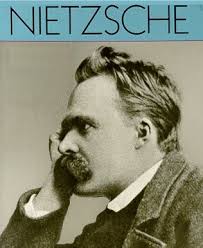
Near the beginning of The Birth of Tragedy, Nietzsche recalls the ancient myth about King Midas hunting in the forest for the wise Silenus, the companion of Dionysus. At last, after many years, the King manages to capture him and asks what is "the best and most desirable thing for man." His answer:
Oh, wretched ephemeral race, children of chance and misery, why do you compel me to tell you what it would be most expedient for you not to hear? What is best of all is utterly beyond your reach: not to be born, not to be, to be nothing. But the second best for you is -- to die soon. (BT:3 [Sophocles, Oedipus at Colonus, 1224ff])
In many of his other works, Nietzsche makes a point of criticizing Christianity as being, not only "otherworldly," but "anti-earth," of being against life -- at least life in this world. It has been said of some Christians that "they are so heavenly-minded that they are no earthly good." Yet if Mother Teresa's life and the lives of many unsung individuals like her are any testimony, those who are the most earthly good may be precisely those Christians who are most heavenly-minded. Millions of faithful Catholics have an indefatigable record of being pro-life, and Christians generally have been Pro-Existence, as Udo Middelman once argued in a book by that title. By contrast, our contemporary culture has embraced the 'Wisdom of Silenus' with a vengeance. With spokesmen such as Benatar, U.S. President Obama, and Planned Parenthood pulling for anti-natalism in the limelight, it's not hard to imagine what mischief may lay in the offing as these ideas go to seed in popular culture.

Scientist: conception not a process, but split-second event; why this is important

Karna Swanson, "The Facts of When Human Life Begins: Interview With Maureen Condic of the Westchester Institute" (ZENIT, November 7, 2008)
SALT LAKE CITY, Utah, NOV. 7, 2008 (Zenit.org).- The conclusion of scientist Maureen Condic that human life begins at a defined moment of conception isn't an opinion based on a belief, but rather a "reflection of the way the world is."

Condic, a senior fellow of the Westchester Institute for Ethics and the Human Person, published her conclusions in a white paper titled "When Does Human Life Begin?" In the report she addresses the topic using current scientific data in human embryology.

An associate professor of neurobiology and anatomy at the University of Utah School of Medicine, Condic received her doctorate in neurobiology from the University of California, Berkely. Her teaching focuses primarily on embryonic development, and she directs the University of Utah School of Medicine's course in human embryology.

In the interview with ZENIT, Condic explains why the question of when human life begins is important to address, and what scientific criteria she used to define a "moment of conception."

Q: This is the first white paper for the Westchester Institute. Why this topic? Why now?

Condic: This is an important question, with significant biological, ethical and philosophical dimensions. As I note in the paper, resolving when human life begins has important implications for a number of controversial political topics, including abortion and human embryonic stem cell research.

As a scientist and as director of a medical school course in human embryology, I have been considering the general question of when human life begins for quite a few years. The argument put forward in the white paper has grown out of discussions with philosophers, scientists and ethicists, as well as out of my own research in this area.

Yet this topic has come to the fore in the lead-up to the presidential election. While the topic of when life begins has generally been avoided by politicians and government officials, recently a number of prominent figures have offered their interpretations, making this a timely subject to consider with scientific rigor and neutrality.

Q: You define the moment of conception as the second it takes for the sperm and egg to fuse and form a zygote. What were the scientific principles you used to arrive at this conclusion?

Condic: The central question of "when does human life begin" can be stated in a somewhat different way: When do sperm and egg cease to be, and what kind of thing takes their place once they cease to be?

To address this question scientifically, we need to rely on sound scientific argument and on the factual evidence. Scientists make distinctions between different cell types (for example, sperm, egg and the cell they produce at fertilization) based on two simple criteria: Cells are known to be different because they are made of different components and because they behave in distinct ways.

These two criteria are used throughout the scientific enterprise to distinguish one cell type from another, and they are the basis of all scientific (as opposed to arbitrary, faith-based or political) distinctions. I have applied these two criteria to the scientific data concerning fertilization, and they are the basis for the conclusion that a new human organism comes into existence at the moment of sperm-egg fusion.

Q: Many in the scientific world would say that fertilization doesn't happen in a moment, but rather that it is a process that comes to an end at the end of the first cell cycle, which is 24 hours later. Why is it important to define a "moment of conception," as opposed to a "process of fertilization"?

Condic: It is not important to somehow define a "moment" or a "process" of fertilization in the abstract. It is important to base conclusions and judgments about human embryos on sound scientific reasoning and on the best available scientific evidence.

Had this analysis led to a different conclusion -- for example, that fertilization is a "process" -- I would have accepted this conclusion as scientifically valid. However, a scientific analysis of the best available data does not support the conclusion that fertilization is a "process"; it supports the conclusion that fertilization is an event that takes less than a second to complete.

The events of the first 24 hours following sperm-egg fusion are clearly unique, but they are also clearly acts of a human organism, not acts of a mere human cell.

Q: Do opinion, belief and politics have a place in defining the beginning of a new life? How is it that the topic has become an issue of debate?

Condic: The topic of when human life begins is an issue of debate because it has strong implications for public policy on matters that concern many people; abortion, in-vitro fertilization and human embryo research. How "opinion, belief and politics" have assumed such a large role in deciding when life begins is a question for a sociologist or a psychologist, not a biologist!

It is important to appreciate that the scientific facts are themselves entirely neutral; they are simply a reflection of the way the world is, as opposed to how we may wish or imagine it to be.

That is not to say that the scientific facts lend equal support to any and all views of when human life begins. While people are free to formulate their opinion on when human life begins in any manner they choose (including belief and politics), not all opinions are equally consistent with factual reality. Those who choose to ignore the facts cannot expect their opinions to garner as much respect or to be given as much credibility as those who base their opinions in sound scientific observation and analysis.

The opinions of members of the flat-Earth society should not carry as much weight as those of astrophysicists in formulating national aerospace policy. The opinions of those who reject the scientific evidence concerning when life begins should not be the basis of public policy on embryo-related topics, either.

Q: Who needs to read this paper and why?

Condic: I think every person who is concerned about the important "life-issues" of health care, abortion, assisted reproduction and stem-cell research should read this article, because understanding when life begins is the basis of a sound political, ethical and moral debate on these complex and difficult topics. Certainly, all those charged with the formation of public policy on these matters should read this argument and think seriously about its implications. If we cannot know what a human embryo is and when it comes into existence, we cannot make sound judgments regarding any of the issues surrounding the human embryo.

Q: What reactions have you received to the conclusions of your paper? What do you hope will result from its publication?

Condic: Thus far, reactions have been thoughtful and considered. I hope this will continue and that a clear understanding of the relevant scientific evidence will help ground future public policy debates over embryo-related issues in sound scientific fact -- rather than in mere "opinion, belief and politics."
[Hat tip to Z.M.]

Here we go: slouching toward Moloch & abortion 'rites'

Brian Montopoli, "Obama: On Roe Anniversary, I Remain Committed To Choice" (CBS, Political Hotsheet, January 22, 2009): The great 'uniter' and 'common ground' President issued a statement for the 36th Anniversary of the Roe v. Wade decision legalizing abortion:
"On the 36th anniversary of Roe v. Wade, we are reminded that this decision not only protects women’s health and reproductive freedom, but stands for a broader principle: that government should not intrude on our most private family matters," said the president. "I remain committed to protecting a woman’s right to choose."

"... On this anniversary, we must also recommit ourselves more broadly to ensuring that our daughters have the same rights and opportunities as our sons: the chance to attain a world-class education; to have fulfilling careers in any industry; to be treated fairly and paid equally for their work; and to have no limits on their dreams," said President Obama. "That is what I want for women everywhere" [that is, except in the womb].
Jim Meyers, "Pope Benedict, Obama Talk" (Newsmax, January 22, 2009):
... The Pope telephoned Obama shortly after Election Day to congratulate him on his electoral success, but the Obama staffer receiving the call didn't believe it was actually the Pontiff on the line and wouldn't put the call through.

Benedict was eventually able to get through, however ... When the Pope brought up the subject of abortion, Obama said simply: "We agree to disagree."
LIZ SIDOTI and MATTHEW LEE, "Officials: Obama to reverse abortion policy" (Associated Press, January 23, 2009, 1 hour ago):
President Barack Obama plans to sign an executive order ending the ban on federal funds for international groups that promote or perform abortions, officials told The Associated Press on Friday.

... Obama has spent his first days in office systematically signing executive orders reversing Bush administration policies on issues ranging from foreign policy to government operations. But, save for ending the ban, Obama has largely refrained from wading into ideological issues, perhaps to avoid being tagged a traditional partisan from the outset after his campaign promises to change "business as usual" in the often partisan-gridlocked capital.

Organizations that had pressed Obama to make the abortion-ban change were jubilant.
William Blazek, "Catholics Abandon the Unborn in the 44th Presidency" (On Faith, January 21, 2009):
A simple web search for the order of presidential succession in the newly-minted Obama administration makes clear what a profound debacle the '08 election was for the pro-life movement in the United States. The country's top leadership now looks like a Who's Who of the National Abortion Rights Action League's "100% pro-choice" club. Largely ignored in the last election, abortion remains a massively important political issue. Catholics who did so should be ashamed of themselves for voting with disregard for a ticket and party that is inimical to a central moral tenet of their Church's teaching. Abortion kills.
Alright all you Catholics who voted for Obama: look the other way.

Thursday, January 22, 2009

Evening Prayer

Lord, I thank Thee that Thou hast safely brought me to the end of this day. Protect me from the perils and dangers of the night. Let me rest in peace. Let me lay myself down gratefully as if in death, knowing my spirit may this night be required of me; give me grace that whenever that time comes I may be prepared for it and that when my soul parts from this body, it may hear the grateful words, "Well done, thou good and faithful servant, enter into the joy of your Lord."

--The Venerable John Henry Cardinal Newman
April 1817

[Acknowledgement: A Newman Prayer Book (Vincent F. Blehl, S.J., 1990), p. v.]

Bork predicts Catholics will lose freedoms

As the frog in the kettle idly approaches boiling point, he absent-mindedly reads: "Jurist predicts ‘terrible conflict’ will endanger U.S. Catholics’ religious freedom" (CNA, January 21, 2009: "Former Supreme Court nominee Judge Robert Bork has predicted that upcoming legal battles will have significant ramifications for religious freedom. He names as issues of major concern the continued freedom of Catholic hospitals to refuse to perform abortions and the likely “terrible conflict” resulting from the advancement of homosexual rights."

[Hat tip to Headline Bistro]

Of 'Dominican Calvinists' & 'Jesuit Pelegians'

Leon Podles has written many provocative articles and books in his day -- from "God Has No Daughters: Masculine Imagery in the Liturgy" (Homiletic & Pastoral Review, 1995), to The Church Impotent: The Feminization of Christianity (Spence Publishing Company, 1999), to Sacrilege: Sexual Abuse in the Catholic Church (Crossland Press, 2007).

Just yesterday, I received an email from a reader with these comments:
"Catholics most certainly are not Calvinists!" I have heard the boast made many times. And the CCC does indeed condemn the idea that God condemns anyone to Hell. In fact, it seems to suggest that damnation is a very real possibilty, but also hopefully very remote for most--or at least many--of us.

That said even with Scott Hahn and Reginald Garrigou-Lagrange notwithstanding. (I'd be curious about your thoughts at some point given your Westminster experience.) Such boasting also fails to reckon with the nuance of history, since Thomism might seem closer to Calvinism than what passes for the proper understanding of the faith in many quarters.
He then referred me to this interesting little piece by Leon Podles, posted just barely over a week ago on the Touchstone Magazine blog, entitled "NYT on Calvinism" (Mere Comments, January 11, 2009):

The NYT article on the Calvinist and ultra-masculine Mark Driscoll at Mars Hill Church in Seattle is not too bad. Driscoll, by rejecting the prissiness of much of evangelical America, has some success in reaching rough young men with the gospel.

The theological analysis in the article uses stereotypes. Calvinists believe in total depravity - but so do Catholics. Calvin did not think that human nature was totally corrupt - because insofar as it is created by God, it is still good. Calvin knew his theology well enough not to be a Manichean. What Calvin thought was that all human powers, including reason, had been corrupted by sin, and Catholics believe that the will was weakened and the intellect was darkened by original sin.

Calvin's doctrine of predestination and the role of the human will is also misunderstood. In Jonathan Edward's explanation, Calvin (along with Thomists) thought that God was the cause of every human action - including sin, insofar as it was an action and had being. Evil is the deprivation of being, and does not exist, and is therefore not caused by God. This analysis is a necessary corollary of the belief that God is the maker of heaven and earth, of everything, including, in a sense, sinful actions, and therefore of salvation and damnation. God is the first mover of everything.

Edwards identified the dissenters from this concept of the will as Arminians and behind them the Jesuits, who both believed in the freedom of indifference. Edwards does not go further back to Occam and Scotus, but I think that their nominalism and voluntarism is the original Western source of the freedom of indifference.

During the controversy De Auxiliis, the Jesuits accused the Dominicans of Calvinism, and the Dominicans accused the Jesuits of Pelegianism. The pope resolved the matter by telling them both to stop accusing each other of heresy.

Of course Podles, writing here on the Touchstone blog, isn't taking the time to make all the nuanced distinctions between varieties of Calvinism (and there is no Calvinist equivalent of a central magisterium from which to derive irreformable official definitions of Calvinist doctrine), or between primary and secondary causes in his analysis of how God might be understood to be the cause of every human action, or between the details of each side in the Molinist controversy. Yet all told, it's not a bad thumb-nail sketch, if you ask me. It also has the virtue of popping some of the stereotype bubbles, even if it is true that most stereotypes also carry a germ of authenticity. I have often felt that for every example I could find that fit the caricatured references of G.K. Chesterton to "Calvinists" (e.g., the dour fanatic, Ian Paisley) I could find two who defied the stereotype (e.g., the ribald Mark Driscoll or the riotous Peter De Vries -- although De Vries has, I suppose, come to be regarded as a sort of black sheep, to say the least). For what it's worth, on the Catholic side, I have a colleague who may soon be publishing a severe critique of Hans Urs von Balthasar's Dare We Hope "That All Men Be Saved"?: With a Short Discourse on Hell (Ignatius Press, 1988).

[Hat tip to J.M.]

Remember: 36th anniversary of Roe v. Wade

Dan Gilgoff, "Catholic Group Uses Obama Bio as Case Against Abortion in Inauguration Day Ad" (God & Country, January 20, 2009):
A conservative Catholic group called CatholicVote.org has a new antiabortion ad to coincide with Barack Obama's inauguration. It attempts to use Obama's own biography to make the antiabortion case. The spot features this script flashing across the screen in between clips of a fetus in the womb:

This child's future is a broken home . . .
he will be abandoned by his father . . .
his single mother will struggle to raise him . . .
despite the hardships he will endure
this child . . .
will become . . .
The 1st African American President.
Life . . .
Imagine the Potential.

You can watch the ad here:

Imagine Spot 1
[Hat tip to Jeff Allen]

Fr. Neuhaus: afterthoughts

A reader writes:
Two good pieces on Neuhaus, from which these lines hit me. This first one was a needed reminder given my pessimistic feelings of late. The second is a challenge:
1. "The Barque of Peter is also the largest of ocean liners with a manifest vaster than any denomination. Big ships are hard to turn around."

2. "... the remarkable, and mathematically counterintuitive, ability to multiply his enthusiasm and energy while dividing it with others."
The first article: Rev. George W. Rutler, "Richard John Neuhaus, 1936 - 2009" (InsideCatholic.com, January 10, 2009).

The second article: George Weigel, "A True Pastor: Remembering Father Richard John Neuhaus" (Newsweek, January 13, 2009).

[Hat tip to J.M.]

Vatican report

Hilary White, "Dissenters from Catholic Teaching Not Being Fired Often Enough from Seminary Posts: Vatican Report" (LifeSiteNews, January 16, 2008). "A Vatican report on the moral and intellectual life of US seminaries, begun in 2005, has said that the main problems lie with professors who overtly or subtly dissent from Catholic moral teaching. Such professors, the report said, are not frequently enough fired from their positions."

"Moral issues top agenda" of new Detroit Archbishop

Gregg Krupa "Obama's abortion stance concerns new archbishop" (Detroit News, January 21, 2009):
As he prepares to lead the Archdiocese of Detroit, Archbishop Allen Vigneron expressed disappointment Tuesday with the Obama administration's position on abortion. The Catholic Church, he said, must seek political alliances to counter proposed policies that may include giving foreign aid to organizations that provide abortions.

Pope to lift Lefebvrite excommunications this Sunday?

Andrea Tornielli reports, "Il Papa ha firmato la revoca della scomunica ai lefebvriani" (Sacri Palazzi, January 21, 2009):
There will be made public in the next few days a decree with which Benedict XVI chose to cancel the excommunications of four new bishops ordained by [Archbishop] Lefebvre in 1988. In addition to the four (Bernard Fellay, Alfonso de Gallareta, Tissier de Mallerais and Richard Williamson) there were also excommunicated the aforementioned Lefebvre, and the Brasilian bishop De Castro Mayer who participated in the ceremony. On that occasion, after having been on the verge of an accord with the Holy See (and after having dealt with then Card. Ratzinger and having signed a protocol of understanding), [Archbishop Lefevbre] suddenly chose rupture and consecrating as four young priests as bishops carried out a schismatic act, justified by him by a necessity to assure the survival of the Fraternity of St. Pius X. Now, with a truly magnanimous gesture, accepting the request formulated by Fellay, Benedict XVI has decided to lift the excommunication. The excommunication which, it must be clarified, always regarded the consecrating bishops (Levebre and De Castro Mayer, both for some time deceased) and the for men consecrated, but not the Lefebvrite priests much less the their faithful. [via Fr. John Zuhlsdorf, "Excommunication of SSPX bishops to be lifted within days?" (WDTPRS, January 21, 2009).]
Zuhlsdorf adds, from Paolo Rodari, "Esclusivo: Benedetto XVI revoca la scomunica ai lefebvriani." (Palazzo Apostolico, January 22, 2009):
Benedict XVI has decided. The decree containing the revocation of the excommunication for the schismatic Lefebvrite bishops is ready. It will come out in the next few days, probably by this Sunday. At the Pope’s will the President of the Pontifical Council for Legislative Texts, Archbishop Francesco Coccopalmerio drafted it and signed it.
"Probably by this Sunday"? -- on the Feast of the Conversion of St. Paul, closing of the Week of Christian Unity? On the 50th anniversary of the convocation of Vatican II by Blessed Pope John XXIII?

[Hat tip to Nathan B.]

Monday, January 19, 2009

A morning prayer

Lord, I thank Thee that Thou hast brought me to the beginning of this day. Defend me in the same by Thy mighty power, and grant as I now rise after sleep, fresh and rejoicing, so my body after the sleep of death may rise spiritualized and blessed to dwell with Thee forever.

Keep me from the perils and dangers of this day; let me fall into no sin, neither run into any kind of danger, but let all my doings be ordered by Thy governance, to do always what is righteous in Thy sight, through Jesus Christ our Savior.

The Venerable John Henry Cardinal Newman,
November 17, 1817

[Acknowledgement: A Newman Prayer Book (Vincent F. Blehl, S.J., 1990), p. iv]

Sunday, January 18, 2009

And they don't even charge admission!

Every Monday evening at 7:00pm, before my wife gets off from work, I take my little, almost-four-year-old daughter with me to Mass at St. Josaphat's. It's an old historic Polish church with an ornate, brightly illuminated altar. The liturgy is the traditional usus antiquior, and ordinarily a Low Mass, although Solemn High Masses may be offered, such as the Requiem Mass on November 3, 2008 (as reported, "All Souls' Day Requiem Mass," Musings, November 3, 2008). Moreover, the St. Josaphat Sunday bulletin today announced that on feasts of significance (such as the upcoming Feast of the Purification of the Blessed Virgin Mary on February 2, also known as Candelmas), a sung Mass (Missa Contata) will be offered.

In any case, I always look forward to these Masses. I like going to them. The church is always quiet, especially if you arrive early, with the slight hiss of a radiator about the only thing audible. If we're early enough, I sometimes take my daughter around to the side altars, such as the one devoted to the Infant of Prague, Whom she especially likes, and we may light a candle and say a prayer together.

The congregation is small on Mondays, although I am always surprised that as many show up as do on these cold winter nights. St. Josaphat is a "commuter church," which means that most of those who attend drive at least a thirty-to-forty minutes to get there, since the church has no sustaining residential parish community residing in the inner city. From the seminary where I teach, however, it is only a ten-minute drive.

At 7 o'clock, a bell is rung, and everyone stands, as the altar servers and priest enter. The servers are each neatly vested is cassock and surplice, and the most visible vestments of the priest include his magnificent chasuble and biretta.

Almost immediately the Mass begins, with the Prayers at the Foot of the Altar. If we sit close enough to the sanctuary, it is sufficiently quiet to hear the Confiteor being recited sotto voce in Latin, and to follow along in the Missal.

One of the things I like about this Mass, as I think about it, is that nothing distracts me from the focus of the liturgy (except, occasionally, my daughter). On the contrary, everything -- each part of the liturgy, every carefully-prescribed gesture of the servers and priest, their ad orientem disposition, their attentiveness and reverence toward the altar and the Tabernacle at its center, and even the silence -- seem to conspire to draw my attention toward the Lord. Not one gesture by priest or servers draws attention to itself, saying "Here, look at me!" but rather draws attention to what is going on at the altar in this great mystery of Redemption. Even the long reverent silences of the Canon, far from reducing me to a passive spectator, conduces to concentrate my attentiveness to what is transpiring, and so to promote -- in the truest sense -- my active participation in the liturgy.

Although it is a Low Mass, and so the Gloria and Credo are not sung, it is nevertheless a Low Mass with Hymns, and so there is some music. It isn't the Organum Chant heard here on Sundays, with the haunting ancient form of plainchant accompanied by a second voice on a single note, a drone, which always carries, for me, Middle Eastern overtones; nor is it the magnificent polyphony of the Sunday choir, with Mass settings by Palestrina or Victoria. But it is beautiful; and the music of the organ and cantor's voice floats above us from the choir at the rear of the nave, audible but out of view.

At some point in the Mass, I always feel like pinching myself to make sure I'm not dreaming. The sublime, austere beauty of this Mass touches the depths of my soul. Sometimes my thoughts avert to the question of how lucky I would feel if I were one of Detroit's homeless people who just happened to stumble upon this extraordinary purlieu. For over an hour, I could come out of the cold and enjoy the warmth of this hospitable environment, this transporting music, this magnificent altar and sanctuary, with the hushed reverence of this beautiful ritual unfolding before me. Even if I were a vagrant who didn't understand a single word or gesture of the Mass, I cannot believe that I would not find myself moved by its beauty. And they don't even charge admission!

But of course, my daughter and I are, by the grace of God, not vagrants, but profoundly privileged participants in the Mass. And just how privileged we are comes home to me at that moment when we file forward and ascend three steps to kneel at the altar rail. As the server holds the polished paten under my chin, I hear the priest say: "Corpus Dómini nostri Jesu Christi custódiat ánimam tuam in vitam ætérnam" ("May the Body of our Lord Jesus Christ preserve thy soul unto life everlasting.") ... "Amen," I think to myself, "and they don't even charge admission!" If religious were a thing that money could buy, the rich would live and the poor would die.

The Last Gospel (John 1:1-14) and conclusion of the Mass is followed by the Exposition of the Blessed Sacrament and a Novena to Our Lady of Perpetual Help. We begin our Adoration of the Blessed Sacrament with the hymn of St. Thomas Aquinas, O Salutaris Hostia, then sing O Mother of Perpetual Help during the Novena, then St. Thomas's other Eucharistic hymn, Tantum Ergo Sacramentum, before Benediction. I've come to love the Devotion to Our Lady of Perpetual Help, as well as the Latin hymns of St. Thomas Aquinas that accompany Benediction. Their melodies often continue to circulate in my memory long afterwards. The Divine Praises, too, a regular component of Eucharistic Adoration, were among the first things I remember memorizing as a Catholic, because I thought the words so mysteriously holy and beautiful.

The closing hymn is invariably No. 100 in The Traditional Roman Hymnal, which I have also come to like for its ready singability: "Adoremus in aeternum, Sanctissimum Sacramentum," sings the congregation. Then the cantor's voice soars from the choir loft to the domed ceiling in a solo chant: "Laudate Dominum Omnes Gentes, Laudate Eum Omnes Populi." Then the congregation responds with the refrain again: "Adoremus in aeternum, Sanctissimum Sacramentum"; and thus it continues through the remaining stanzas.

The priest -- usually Fr. Mark Borkowski, the parish priest and administrator of a small local cluster of inner-city parishes -- stands in the narthex or vestibule waiting to greet all the parishioners as they leave. As my daughter and I step out into the chill night air, often greeted by snow this time of year, my thoughts again return to the unfortunate homeless souls on the streets of the inner city -- and even those unfortunate suburbanites who simply don't know what they are missing. "And they don't even charge admission!" I think to myself, as we walk to the St. Josaphat parking lot, with a skip in our step and a song in our hearts. "So whaddaya say, sweetheart, shall we swing by for a hot fudge sundae at Ol' McDonalds?"

Different categories of liturgical feast days

Tridentine Community News (January 18, 2009):
Classes of Feast Days

The Church Calendar incorporates a broad range of feasts throughout the year. On the one hand are self-evidently major feast days such as Christmas Day, Easter Sunday, and the Immaculate Conception. On the other end of the spectrum are days for which no particular Mass is specified. Let’s examine how this works.

In the Extraordinary Form of Holy Mass, every day of the year is assigned a Feast Class of 1 through 4. First Class feasts are the equivalent of “Solemnities” in the Ordinary Form. Nothing can preempt them. The Gloria and Credo are said at those Masses, even on weekdays.

Second Class feasts commemorate major events, e.g.: the Purification of the Blessed Virgin Mary, or major Saints, e.g.: St. Matthias. These are roughly equivalent to “Feasts” in the Novus Ordo calendar. The Gloria and Credo are said. A few named Ferias, such as the “Greater Ferias of Advent”, are Second Class feasts and may not be preempted.

Most saints’ feast days are Third Class feasts. These are somewhat equivalent to “Obligatory Memorials” in the Ordinary Form. In the Extraordinary Form, the Gloria, but no Credo, is said.

Most Ferial days, as well as feasts of lesser-known saints, are Fourth Class feasts. These are roughly equivalent to “Optional Memorials” in the Novus Ordo. Some days may actually allow several options. For example, January 19 may be celebrated as a Feria (Mass of the preceding Sunday); as the feast of Ss. Marius, Martha, Audifax, & Abachum; or as the feast of St. Canute. The celebrant chooses. The Gloria is omitted.

When a certain feast day does not have its own complete set of Propers and Readings, the Missal specifies that one of a variety of standard Masses be said for that saint. Again taking January 19 as an example, if the Feast of St. Canute is chosen, the Mass is the “Common of Martyrs”, a standard Mass Propers/Readings set used for a variety of Martyrs’ feasts, along with the “Commemorations”, or second Collect, Secret, and Postcommunion, of St. Canute. No matter which Mass is chosen, the other saint(s) are to be commemorated, as you can see in the upper left section of the accompanying missal page image.

Mandatory and Optional Displacement of the Sunday

A limited number of First and Second Class feasts must displace the Sunday Mass. For example, the Dedication of the Archbasilica of Our Savior (St. John Lateran) takes precedence on November 9.

Previous columns have addressed External Solemnities, the optional moving of a major feast to the nearest Sunday. The feast of the patron saint of a parish is an example of one such feast that the Universal Church permits to be transferred to Sunday. Corpus Christi is an example of a feast that U.S. Bishops permit to be moved to Sunday. The Canadian Bishops may permit moving Corpus Christi as well, though we have not yet been able to find documentation proving or disproving this.

If the transferred feast is not a feast of Our Lord, the Collect, Secret, and Postcommunion of the Sunday that has been replaced are recited as Commemorations after the prayers of the Mass are read. This is why you will occasionally notice a second set of these prayers in our Latin/English Propers Handouts.

A Votive Mass is one of a number of elective Masses in the Missal that a celebrant may choose to say on a Fourth Class, or in certain cases on a Third Class, feast day instead of the specified Mass. One example is the “Votive Mass for the Sick”. At St. Josaphat, we have become familiar with the Requiem Mass being celebrated on certain Mondays on which it may preempt the specified feast.

The Fine Print

There are many confusing and subtle rules in the Church Calendar. National and diocesan feasts are part of the possibilities. Even experienced priests need to refer to an Ordo, or official calendar with explanations, to know what Mass(es) may be celebrated on a given day. And even then, it can be rather puzzling.

For example, Monday, January 12 was listed as a “Feria After the Epiphany” in the FSSP Ordo. This nomenclature hints that there may be something different from a regular Feria. The Ordo notes do not give a clue, so we next turn to Fortescue’s Ceremonies of the Roman Rite Described. That book says that the first Sunday After Epiphany is to be the Feast of the Holy Family. It goes on to say that Ferias later that week must use the Mass of the “first Sunday After Epiphany” (note the lower case “f”). Looking in the altar missal, the Feast of the Holy Family is indeed specified for the first Sunday After Epiphany. But right afterwards, there is another Mass for the “First Sunday After Epiphany” [upper case “F” - now exactly when would that Mass be used?]. So which Mass did we use on Monday, January 12? That of the Holy Family, because the Fortescue book used a lower case “f” in “first”, which seems to indicate not to use the more specific “First Sunday After Epiphany” Mass. There is only so much time for research, thus common sense must be relied upon from time to time.
[Comments? Ideas for a future column? Please e-mail tridnews@stjosaphatchurch.org. Previous columns are available at www.stjosaphatchurch.org. This edition of Tridentine Community News, with minor editions, is from the St. Josaphat bulletin insert for January 18, 2009. Hat tip to A.B.]

Saturday, January 17, 2009

Ecclesia Dei versus Ecclesia Hominis

Fr. Dwight Longenecker, "The Battle Within" (Standing on My Head, January 15, 2009):
I know Michael Rose's book has been out for about five years now, but I've only got around to reading it this week. If you're not familiar with it, Goodbye, Good Men: How Liberals Brought Corruption Into the Catholic Church chronicles the corruption, spiritual abuse, heresy and persecution of orthodox seminarians within Catholic seminaries over the last twenty-thirty years.

Much of Rose's research is anecdotal and one sided. He doesn't spend much time telling us anything good at all about American seminaries, but then I guess he would argue that he wasn't writing a balanced report on American seminaries, but an expose of the abuses. Fair enough. If you know what a book is aiming for you know how to judge it best.

I wish I could dismiss Rose as an angry traditionalist with an axe to grind, and that he's biased and it all ain't true. But I'm afraid my own experiences with the Catholic Church in England only echoes what Rose writes about the situation in the USA. I know at least three Dioceses in England where the unspoken policy was not to accept any former Anglican priests (either married or celibate) for ordination. The guys were not even interviewed. They didn't even get their letters answered by the bishop. It was assumed that they were all dangerous conservatives, and therefore unworthy.

Thankfully, many former Anglicans did make it through to Catholic ordination. In fact the majority did. But the ones who were rejected for no good reason are the ones we're talking about, and they were rejected because of a deliberate and conscious liberal bias and 'progressive' agenda [on the part of those evaluating them].

I worked for seven years with a Catholic charity and every Saturday night I was in a different presbytery. I shared meals with parish priests, bishops, vicar generals, area deans, archbishops, cathedral deans....all of them. I heard them say with pride that they planned for their dioceses to have fewer priests, not more. They planned to have a few priests living together to provide the sacraments for a whole deanery while the parishes were run by 'lay administrators'. I heard them speak with admiration of the Church in Peru -- where they have one priest for an area the size of Delaware (or some such) and how wonderful it was that all the parishes were run by the laity as little 'faith communities' led by their lay catechist (who was often a woman).

From the orthodox young men I would meet at places like Youth2000 and Catholic Charismatic Conferences and Faith Conferences and the other new movements I heard how the seminaries were practically empty, and how liberals dominated the faculty with the usual mish mash of New Age spirituality, feminism, sex therapy, psycho babble and modernism of all stripes. They too spoke of the homosexual subculture, the suspicion of those who were orthodox for being 'rigid' and the dismissal of traditional devotions such as the rosary and Eucharistic Adoration.

I think the problem with Rose's book is that, if we're not careful, we'll assume that the bad news is the only news. It's not. There are good people out there and good seminaries and good bishops and good faithful Catholics right through the whole church, but what Rose's book should do, and what my own experience in the Church reminds me, is that within the Catholic Church there are actually two churches.

One follows the Pope and the Magisterium. It seeks to be changed by the Church, not to change the Church. It considers the Church to be divinely established through the once for all sacrifice of Christ for the salvation of the world. The other 'church' dissents from the Pope and the magisterium whenever posible. It seeks to change the Church, not be changed by her. It considers the church to be a human construct and the result of historical accidents. They believe the Church is there to change the world, but not necessarily to save the world.

This is the reality, and it is all well and good pretending that we can all work together and that unity is all that matters and that we mustn't be 'divisive'. However, that is lily livered talk. The fact is, these two 'churches' are diametrically opposed. Their philosophical and theological foundations are so radically different as to be irreconcilable. As one traditional bishop said after an attempt at dialog with a progressive, "It was like trying to play tennis on two adjacent courts."

Let's be honest. Progressives have, for a long time, been absolutely clear that faithful Catholics are the enemy. They've been very transparent in their contempt for us, and have been proactive in their persecution. While still striving to retain charity and the spirit of reconciliation, we must also see clearly who the enemy is, and willingly engage in the conflict.

It's hard to fight. It's especially hard when the enemy is a fifth column within your own community. But when the enemy is within, that's when the battle becomes most important.

If we must fight, then we must never do so with bitterness, dirty tricks, cynicism or hatred. Instead we battle with the prayerful, cheerful, buoyance of the cavalier. We must don our armor, sharpen our sword and, like Cyrano de Bergerac, step into battle with wit, intelligence and confidence. Like the mouse Reepicheep we do so with honor, valour and not a little awareness of our own ridiculousness.

UPDATE: Here is an item on the report on the most recent visitation to American seminaries. There is still much work to be done.
[Hat tip to J.M.]

Friday, January 16, 2009

Marks of the Church

A common reaction found among Catholic converts from evangelical Protestant backgrounds is dismay over the state of the Church. Some cradle Catholics are put off by their dismay and wonder why they cannot be more grateful to be aboard the Ark of Salvation.

Just a few thoughts about this. It's true that the Church Fathers have likened the Church of Christ to Noah's Ark, wherein there were clean and unclean animals together. Again, they have likened the Church to a net in which various creeping things are also drawn in together with the fish. Our Lord Himself, in one of His parables, suggests that the Church is like a field in which both wheat and tares (weeds) are left to grow together until the final harvest (Matthew 13: 24-30). St. Augustine, noting that not even the perfectionist sect, the Donatists, lived up to its own standards, wrote of the parable: "And so the Church until the end of the age will combine within Herself the good and the evil, without harm to the good. If it turns out that there are tares in the Church, this does not hinder our faith and love; upon observing tares in the Church, we should not fall away from Her. We ourselves must only try to be wheat ..." More on this anon.

The experience of many Catholics from evangelical Protestant backgrounds may be illustrated, for the sake of our purposes here, by a denomination such as the Orthodox Presbyterian Church (OPC), a small splinter group founded in 1935 by conservative members of the Presbyterian Church--USA (PCUSA) who objected to the creeping Modernism of the 1930s and endorsed the conservative Presbyterian manifesto of 1910-15 called The Fundamentals -- five essential 'litmus test' doctrines (divine Biblical inspiration, Christ's virgin birth, atoning death, bodily resurrection, and the historical reality of Christ's miracles) -- the 'five fundamentals' from which the original use of the term 'fundamentalism' derives. These 'fundamentalists' aren't the snake-handling yahoos of popular caricatures. The OPC denomination has more PhD's per capita than any other American denomination. Of course it helps that it's a small denomination. With under 28,000 members worldwide, it is a small, lean, well-educated and deadly serious little group. During Sunday morning sermons, which may last upwards of 40 minutes, it's not uncommon to see individuals taking notes and later offering the homilist a grilling, if friendly, critique over coffee and donuts. If you have ever studied Koine (NT) Greek, even in a Catholic seminary, chances are you are acquainted with the little Greek primer by J. Gresham Machen, the Princeton Seminary professor who founded Westminster Theological Seminary in Philadelphia, as well as the OPC denomination.

It goes without saying that such a disciplined little platoon of solemn, like-minded souls as this is a far cry from the vast assembly of the Catholic Church, which James Joyce once reputedly described as "Here comes everybody!" Securus iudicat orbis terrarum ("The secure judgment of the whole world"), declared St. Augustine of the Church's all-embracing Catholicity. Yet the example above may nevertheless help to understand why many Catholic converts from such backgrounds, where not only parentally-enforced moral discipline but the propositional content of Christian Faith is taken seriously by nearly everyone in their denomination, often find their heads spinning when they find themselves among the vast and diverse array of animals amassed together in the often odoriferous quarters of Noah's Ark.

If I may presume to speak for these 'many', I do not think for a moment that their concerns stem from regrets about their conversion or from lack of gratitude in finding themselves at last within the fold of Mother Church. Most of them will attest to having been driven into the fold of the Church by the unshakable conviction that what she officially teaches in her catechisms and magisterial decrees is ineluctably true. Most will readily confess to having found the "fullness of truth" in the Church, which also entails the sobering admission of having been deprived of that fullness in their previous religious affiliations. Most are also personally acquainted with devout Catholics who faithfully practice their faith and lead exemplary lives. I don't think most are altogether surprised when they run into Catholics who aren't practicing their faith or are ignorant of their own tradition, since this phenomenon is found increasingly among the younger generations of nearly all religious communions.

I think, rather, that their chief concerns stems from what may strike them as a startling indifference at the frequent absence of clear and detailed doctrinal instruction and firm moral discipline, starting with the grass-roots level of families and their local parishes and parochial schools, but often extending to the diocesan level. Granted, the 'tares' will grow with the 'wheat' until the harvest. "And so the Church until the end of the age will combine within Herself the good and the evil," said St. Augustine, "without harm to the good." Yet here the convert will be inclined ask: "Really? 'Without harm to the good'? Is there no point at which the wheat, if it has become infested with tares (at least in some places), can ever be jeopardized?"

One of the problems with Catholic converts from such backgrounds is, of course, that they are typically accustomed to thinking of their life of faith as something that reposes primarily in intellectual propositions and in moral habits. The metaphysical centrality of the Church in her sacramental and liturgical life may take some time to sink down into their souls in such a way that they can even begin to see its full importance. Yet, to be fair, is it not also possible that the often confusing contemporary Catholic milieu, for many who are born and raised through the ranks of its parishes and parochial schools today, may effectively leave them sacramentalized pagans?

Thursday, January 15, 2009

The queering of mainline Protestant seminaries

A reader sent me the link to the following two articles (the one in this post, and the one in the post immediately following) along with the comment:
If the Church is indeed protected by divine oversight, it will take just that to withstand the coming gales portended by these items. From Mohler's blog, two entries I thought unintentionally related for the Catholic reader, the first talking [about] things Protestant and current, and the second offering the bridge to how scandal could follow suit in the Catholic universe based on historical scenarios.
Albert Mohler, "Sex and the Seminary?" (www.AlbertMohler.com, January 13, 2009) writes:
The release of a report entitled "Sex and the Seminary" is certain to attract attention -- which is no doubt why the report was produced in the first place. In this case, the report is an attempt to push the sexual revolution through institutions designed for the training of ministers. As "Sex and the Seminary" makes clear, many liberal institutions joined the sexual revolution long ago.

The report was released January 8, 2009 by the "Sexuality Education for the Formation of Religious Professionals and Clergy" project, which is jointly sponsored by Union Theological Seminary in New York City and the Religious Institute on Sexual Morality, Justice, and Healing in Connecticut. As might be expected, the report calls for an overhaul of how issues of sexuality are treated within the seminary curriculum.

"At the time when many denominations and faith communities are embroiled in sexuality issues, there is an urgent need for leaders who understand the connections between religion and sexuality," the report announces.

Then:

Seminaries are not providing future religious leaders with sufficient opportunities for study, self-assessment, and ministry formation in sexuality. They are also not providing seminarians with the skills they need to minister to their congregants and communities, or to become effective advocates where sexuality issues are concerned.

As a reading of the report reveals, the entire project is really about turning seminaries into agencies for a liberal and revisionist sexual agenda. As the analysis in the report demonstrates, some of these schools embraced those agendas long ago -- and in a big way.

The study was conducted by Kate M. Ott, study director for the project, with assistance from many others. Among those most frequently acknowledged is Rev. Debra W. Haffner, director of the Religious Institute on Sexual Morality, Justice, and Healing. Debra Haffner's name will be recognized immediately by anyone involved in issues of sexual controversy in recent decades. She is an ordained Unitarian Universalist minister, but previously she served as chief executive officer of SIECUS, the Sexuality Information and Education Council of the United States, and, among other positions, as an official with Planned Parenthood of Metropolitan Washington. She has been pushing a radical sexual agenda for a long time.

Thirty-six seminaries cooperated with the study -- almost all on the liberal side of the theological divide. These schools were measured in light of the "Criteria for a Sexually Healthy and Responsible Seminary" document that had been "developed by a multifaith group of seminary educators, administrators, and sexuality educators."

The report found virtually all of the seminaries deficient to some degree. The report lamented the fact that half of the schools "do not have policies for full inclusion of gay and lesbian persons" and over 60% "do not have full inclusion policies for transgender persons."

While the report calls for a thorough restructuring of seminary education, it also calls upon the Association of Theological Schools in the United States and Canada [ATS], the main accrediting agency for theological schools to require accredited schools to make sexuality issues (in terms of "sexual justice") standards for accreditation. The Religious Institute also pledged to "work with ATS member schools as they advocate for changes in and contribute to revisions of the ATS Standards for Accreditation scheduled for 2012."

Well, we have been warned.

The report makes for riveting reading. Almost half of the schools queried indicated that worship experiences in chapel at least occasionally focused on gay, lesbian, or bisexual experiences. Seven of the 36 schools also offered worship focused on transgender issues.

Consider this section of the recommendations:

Seminaries also must assure a supportive environment for sexuality-related issues. Seminaries must have anti-discrimination, sexual harassment, and full inclusion policies that reflect sexual and gender diversities. It was a welcome surprise that almost 9 out of the 10 seminaries have anti-discrimination policies that include sexual orientation, and half have such policies for transgender students, staff, and faculty; other seminaries, unless prohibited by their faith traditions, should implement such policies. In addition, seminaries must provide opportunities for worship and advocacy that reflect the diversity of sexuality issues students will encounter in their ministry.

All this adds up to a huge effort to redefine what is normative in theological education, but the larger agenda is to remove the churches as obstacles to the deconstruction of biblical sexual morality.

Obviously, many of these schools have already joined that bandwagon. They long ago abandoned biblical authority and the Gospel and transformed Christianity into a form of sexualized paganism. The "worship" practices revealed in the report suffice to establish that point.

If nothing else, this report underlines the great divide that now exists among America's theological schools. There is good reason to ask whether any shared basis of accreditation is possible, given the depth and significance of this divide. Time will tell, but the aim is clear -- to put seminaries committed to a normative biblical morality on notice that such schools may for a time be tolerated, but the standards will push schools toward "inclusion" of "sexual and gender diversities" among students, staff, and faculty.

The moment regional accrediting agencies or the ATS moves in that direction, the writing on the wall will be clear. Sanity may yet prevail, but "Sex and the Seminary" is a sign of where the liberal schools want to see theological education, the church, and the society go.

No doubt, schools committed to biblical authority and confessional integrity must do a better job of preparing ministers to understand the issues of sexuality. But the goal must be to inculcate knowledge of and commitment to a biblical model of human sexuality centered in the glory of God and obedience to God's Word. We must also train pastors to be compassionate in teaching and applying God's revealed truth. These goals are not, however, the goals or recommendations of "Sex and the Seminary."

"Together," the report concludes, "we can assure that future religious leaders will indeed be pastors for sexual health and prophets for sexual justice." If you understand what those words mean, you will see that statement for the threat that it is.

[Hat tip to J.M.]

Related

The Devil's Fifth Column & the seduction of the religious left

Albert Mohler, "A Chilling Account and a Word of Warning" (www.AlbertMohler.com, January 9, 2009), writes:
Most Americans would probably be surprised to know that Sen. Edward Kennedy, Jesse Jackson, and former Vice President Al Gore all were once solidly anti-abortion. That seems almost incomprehensible now, but the record is clear -- and the pattern is chilling.

By the time Jesse Jackson and Al Gore came onto the national stage, abortion rights represented a major plank in the Democratic Party platform. Jackson had actually written attacks on the abortion culture, pointing to the disproportionate number of aborted African-American babies as evidence of racism. Al Gore ran for both Congress and the U.S. Senate on a pro-life record. When both men launched campaigns for the presidency, they changed positions on the abortion issue.

As for Ted Kennedy; he was pro-life as late as 1971, after New York had already legalized abortion. As Anne Hendershott documents in her article, "How Support for Abortion Became Kennedy Dogma," in 1971 Sen. Kennedy wrote to one of his Massachusetts constituents with these words: "When history looks back to this era it should recognize this generation as one which cared about human beings enough to halt the practice of war, to provide a decent living for every family, and to fulfill its responsibility to its children from the very moment of conception."

From the very moment of conception. Writing in The Wall Street Journal, Hendershott then explains:

But that all changed in the early '70s, when Democratic politicians first figured out that the powerful abortion lobby could fill their campaign coffers (and attract new liberal voters). Politicians also began to realize that, despite the Catholic Church's teachings to the contrary, its bishops and priests had ended their public role of responding negatively to those who promoted a pro-choice agenda.

Anne Hendershott wrote her article in light of the possibility that yet another Kennedy may sit in the U.S. Senate. "Caroline Kennedy knows that any Kennedy desiring higher office in the Democratic Party must now carry the torch of abortion rights throughout any race," she explains. Hendershott documents the assurances that Caroline Kennedy has already paid to the abortion rights movement: "Ms. Kennedy was so concerned to assure pro-abortion leaders in New York, Britain's Guardian newspaper reported on Dec. 18, that on the same day Ms. Kennedy telephoned New York Gov. David Patterson to declare interest in the Senate seat, 'one of her first calls was to an abortion rights group, indicating she will be strongly pro-choice.'"

Indeed, Caroline Kennedy's unusual campaign for the appointive senate term from New York -- the seat now held by Sen. Hillary Clinton -- has prompted her to reveal that she supports same-sex marriage and virtually unrestricted abortion rights. She opposes parental notification laws and seems to advocate the entire body of pro-abortion orthodoxy.

The most important section of Anne Hendershott's article does not concern Caroline Kennedy, however. Instead, she documents a strategic meeting in the 1960s when the Kennedy family met with liberal Catholic theologians to formulate a mechanism for changing their position on abortion -- and thus for taking the position directly opposed by their church.

Look carefully at Hendershott's narrative:

At a meeting at the Kennedy compound in Hyannisport, Mass., on a hot summer day in 1964, the Kennedy family and its advisers and allies were coached by leading theologians and Catholic college professors on how to accept and promote abortion with a "clear conscience."

The former Jesuit priest Albert Jonsen, emeritus professor of ethics at the University of Washington, recalls the meeting in his book "The Birth of Bioethics" (Oxford, 2003). He writes about how he joined with the Rev. Joseph Fuchs, a Catholic moral theologian; the Rev. Robert Drinan, then dean of Boston College Law School; and three academic theologians, the Revs. Giles Milhaven, Richard McCormick and Charles Curran, to enable the Kennedy family to redefine support for abortion.

Some of these names are well known, even to non-Catholics. Robert Drinan served in the U.S. Congress from 1971 to 1981, when Pope John Paul II ordered all ordained priests to refrain from electoral politics. Drinan was so pro-abortion that he opposed the partial-birth abortion ban until ordered by superiors to drop his opposition. Charles Curran, an ethicist and moral theologian, was later removed from the faculty of the Catholic University in America for his views in opposition to the church's teaching and authority. He currently teaches at Southern Methodist University.

Hendershott provides more details of the meeting at Hyannisport:

Mr. Jonsen writes that the Hyannisport colloquium was influenced by the position of another Jesuit, the Rev. John Courtney Murray, a position that "distinguished between the moral aspects of an issue and the feasibility of enacting legislation about that issue." It was the consensus at the Hyannisport conclave that Catholic politicians "might tolerate legislation that would permit abortion under certain circumstances if political efforts to repress this moral error led to greater perils to social peace and order."

Father Milhaven later recalled the Hyannisport meeting during a 1984 breakfast briefing of Catholics for a Free Choice: "The theologians worked for a day and a half among ourselves at a nearby hotel. In the evening we answered questions from the Kennedys and the Shrivers. Though the theologians disagreed on many a point, they all concurred on certain basics . . . and that was that a Catholic politician could in good conscience vote in favor of abortion.

This is a chilling account of a meeting that, without any doubt, contributed to the deaths of countless unborn babies. At this meeting the Kennedy family was handed a theological rationale that served as political cover. It was a rationale that allowed this powerful family to put its influence in service of abortion rights, even as family members continued to claim identity as members of their church.

There are important lessons here, to be sure. One lesson must be this: There will be theologians who seem ever ready to find a way to subvert the teachings of their church, even as they seek to remain in its employ and trust. The second lesson is like unto the first: There will ever be politicians who are looking for political cover, and will gladly receive this cover from those willing to subvert their church's teaching. These lessons are by no means limited to the Roman Catholic Church.

We are all in Anne Hendershott's debt for her documentation of this sad spectacle. The warning represented by this historical account is troubling to see, but impossible to miss. [emphasis added throughout]

[Hat tip to J.M.]

Tuesday, January 13, 2009

A Prayer of Trust in God

God has created me to do Him some definite service; He has committed some work to me which He has not committed to another. I have my mission -- I may never know it in this life, but I shall be told it in the next. I am a link in a chain, a bond of connection between persons. He has not created me for naught. I shall do good, I shall do His work; I shall be a preacher of truth in my own place, while not intending it, if I do but keep His commandments and serve Him in my calling.

Therefore, my God, I will put myself without reserve into Thy hands. What have I in heaven, and apart from Thee what do I want upon earth? My flesh and my heart fail, but God is the God of my heart, and my portion for ever.

--The Venerable John Henry Cardinal Newman

[Acknowledgement: A Newman Prayer Book (Vincent F. Blehl, S.J., 1990), p. 4]

Why this attempt to manufacture new scandals now?

Anyone who knows anything about the late Archbishop Marcel Lefebvre (declared an excommunicant in 1988 for his illicit ordination of four bishops), knows that despite his public opposition to the final drafts of Gaudium et Spes and Dignitatis Humanae, he signed his name, along with all the other bishops present, to the ceremonial lists of the documents of the Second Vatican Council. Now this signature is apparently being revisited as though it were a new and scandalizing discovery -- the "signature that unmasks Lefebvre." The question is "Why?" and "Why now?"

"The most underwhelming 'news' of the year" (Rorate Caeli, January 11, 2009) reports:
Italian religious website Petrus repeats the "amazing" news "reported" by Italian weekly Panorama. In an article dedicated to several "finds" in the "Secret heart of the Vatican" (Nel cuore segreto del Vaticano, Panorama, n. 3/2009, p. 130-134), the newsweekly's reporters found the damning evidence that... Archbishop Marcel Lefebvre signed the documents of the Second Vatican Council.

... The problem is: it is well known that Lefebvre placed his name upon the ceremonial lists of documents (for instance, both the list provided by Panorama and the one in our repository include a very diverse array of conciliar documents and, below them, signatures of bishops - the second list includes not only the above-mentioned documents, but also the only one which the Archbishop publicly praised, Presbyterorum Ordinis).

Careful "not to be especially Christian" at the inauguration

Richard Swier, "Obama Levels the 'Praying' Field" (Red Country, January 13, 2009), writes:
The pulpit is getting even more crowded at the Inauguration festivities next week. After miffing gay and lesbian groups by picking pro-Proposition 8 Rev. Rick Warren to offer the invocation on his big day, President-elect Obama is giving homosexuals a turn in the limelight. In a surprise announcement, it appears the Obama team is trying to soothe the ruffled feathers over Warren's role by asking Bishop Gene Robinson, an open homosexual, to kick off the We Are One event on the steps of the Lincoln Memorial January 19.

"It is also an indication of the new president's commitment to being the President of all the people. "...[I]t will be my great honor to be there representing... all of us in the gay, lesbian, bisexual and transgender community" Robinson said. Robinson will deliver the invocation at Sunday's ceremony, which both Obama and Vice President-elect Joe Biden are scheduled to attend. According to the AP, "Robinson said he doesn't yet know what he'll say, but he knows he won't use a Bible. 'While that is a holy and sacred text to me, it is not for many Americans,' Robinson said. 'I will be careful not to be especially Christian in my prayer.'" [emphasis added]

While the choice of Robinson may be designed to placate angry liberals, the irony of it isn't lost on religious conservatives. The ballyhoo over Pastor Warren's selection was in large part because he was "divisive" in supporting Prop 8. Yet if there was ever a pastor whose actions were divisive it was Gene Robinson who almost single handedly devastated one of America's oldest Christian denominations. Robinson's confirmation in 2003 as the first openly gay Bishop shattered the once-conservative Episcopal Church and created a painful split between the liberal leadership and faithful Anglicans that cost it hundreds of thousands of followers.

Robinson says, "I believe in my heart that the church got it wrong about homosexuality." This view, which he emphasized in at least three private meetings with Obama, may be reflective of the next president's ideology, but it's far from mainstream. While liberals may not appreciate Warren's position on marriage, a majority of voters happen to agree with him. Far more states--including California--have banned counterfeit marriage than have ratified it.
Garrison Keillor: "Why can't Episcopalians play chess? Because they can't tell a bishop from a queen . . . snip"

[Hat tip to E.E.]

Monday, January 12, 2009

More whistling in the graveyard

Posters with such slogans have reportedly appeared on 800 buses in angst-ridden England, Scotland and Wales, as well as on the London Underground: "There's probably no God. Now stop worrying and enjoy your life." Note the word: "probably." Hah! Such confidence. Whistling in the graveyard. If you're into probabilities, I'd suggest Pascal's wager: he knew something about the odds at stake in gambling one's life. And now, apparently, the 'No God' campaign of these desperate wannabe-reassured-but-not-so-confident 'atheists' is drawing criticism from the opposition; and the best they can answer in reply is "peals of laughter." Breathtaking intellectual integrity. Funny how wannabe 'atheists' worry and fret so ... while accusing the impassive Church of being animated by fear.

Sunday, January 11, 2009

'Sign of Peace' to be moved?

According to my friend Jimmy Akin over at Catholic Answers "Sign of Peace Update" (JimmyAkin.org, January 5, 2009), one of the truly notable items in the post-synodal apostolic exhortation document that came out after a long delay following the 2005 Synod of Bishops on the Eucharist was practically relegated to a footnote: "That was the announcement that the question of where the Sign of Peace is located in the Mass had been forwarded to the Congregation for Divine Worship and the Discipline of the Sacraments. (Actually, I think it referred to the appropriate dicasteries, but the CDWDS would be the key one.)

After discussing some of the problems centering on the 'Sign of Peace' in many contemporary Masses of the ordinary form, which have tended to turn it "into a big, distracting celebration of 'us'-ness,", Akin says:
"Anyway, it's been going on four years now and I've heard nothing about the proposal to move the Sign of Peace.

Until now.

I was just reading the newsletter of the U.S. Bishops' Committee for Divine Worship (formerly the Bishops' Committee on Liturgy) and ran across this item:
Survey of the Sign of Peace at Mass

The Committee [for Divine Worship] reviewed the findings of a survey requested of the USCCB by the Congregation for Divine Worship and the Disicpline of the Sacraments regarding the placement of the Sign of Peace at Mass. Of the 89 Bishops who responded, 66% supported moving the Sign of Peace after the Prayer of the Faithful and before the Presentation of the Gifts, 32% recommended retaining the Sign of Peace at its current location before the Agnus Dei, and 2% offered alternative opinions. A report from the USCCB was submitted to the Congregation's then-Prefect, Francis Cardinal Arinze.
Akin's comment: "Cool. Good to hear that there is some motion on this and that the bishops seem to be responding favorably.

Related

Korean Catholic charismatic movement

"Korean Bishops denounce Charismatic excesses" (Rorate Caeli, January 9, 2009) -- specifically practices associated with "family tree healing."

Rumor has it ...

"Pell as new Prefect of the Congregation for Bishops?" (Rorate Caeli, January 10, 2009):
French ultra-"Progressive" religious weekly Golias reports on possible replacements for some important heads of dicasteries who have reached the age limit or will reach it soon.

Cardinal Re, Prefect of Bishops, reaches the age limit next January 30. Other rumors are included in the article, but none so interesting as this one: Golias reports that it "should be known that one of the most mentioned names for the Congregation for Bishops is that of the ultra-Conservative [sic] Cardinal George Pell, of Sydney".

Liturgical endnotes

  • "British journals publicize Traditional Calendar" (Rorate Caeli, January 11, 2009).

  • "The Vigil of the Epiphany" (Tridentine Community News, January 11, 2009):
    A reader had a question as to why the Mass this past Monday, January 5 at St. Josaphat was a Feria and not the Vigil of the Epiphany. The answer is that the Vigil of Epiphany, plus some other vigils, were suppressed in the 1955 Calendar changes. Pre-1955 hand missals that have been reprinted, such as the Fr. Lasance and St. Andrew Missals, contain this feast, however it is no longer celebrated.

    As we have stated before, we highly recommend the use of 1955 or later hand missals, not only because they contain the 1962 Calendar that Rome requires that we use, but also because they tend to have less typographical errors than older missals.

Detroit Archbishop-designate Vigneron on liturgy

I found a couple of interesting discussions of Archbishop-designate Vigneron's liturgical views this week. The first I discovered via "More on Archbishop-elect Vigneron" (Exsultate Iusti in Domino, January 9, 2009) -- namely "(Arch)Bishop Vigneron on Liturgy" (Thrown Back, January 9, 2009), where a certain Fr. Rob Johanesen, a priest of Diocese of Kalamazoo, Michigan, writes:
I know Bishop Vigneron from his days as rector of Sacred Heart Major Seminary in Detroit, where I had the good fortune to complete my studies for the priesthood from 1998-2001. He is an outstanding teacher and pastor. He is loyal to the Church and her Magisterium, and patient and generous as well.

Bishop Vigneron is deeply concerned with the state of the liturgical life in the church in the country, and as rector of the seminary tried to inculcate in us seminarians a sense of reverence and a respect for the liturgy as something given. Toward that end he implemented significant reforms of the seminary's liturgical practice, most notably introducing and establishing as normative the use of the Proper antiphons at seminary Masses, and moving away from the use of hymnody. He brought the late Calvert Shenk to Sacred Heart, and one of his specific charges to Cal was to restore the Propers to their rightful place in the liturgy.

... Back in 2000, while I was still a seminarian, I wrote an article for Adoremus based on an interview I had with Bishop Vigneron. The article, titled "Liturgy as Ecology" discusses the liturgical formation and training offered by the seminary. However, it provides insight not only into Bishop Vigneron's approach to the liturgical life of the seminary, but into his broader liturgical vision as well:
The single greatest problem is the tendency to turn the Liturgy into a focus on the self, rather than on God. Bishop Vigneron believes these tendencies are misguided, because they "obscure the Christological and Trinitarian focus inherent in liturgy."

"Liturgy", he says, "is not entertainment, it is not self-validated. Liturgy is the experience of heaven, not something that happens to me in some sort of emotional-personal state."
The second discussion comes from the weekly online column, "Tridentine Community News" [PDF] (January 11, 2009), which is also printed as part of the Sunday St. Josaphat Church bulletin. Here is the relevant portion of that discussion:
Archbishop-designate Vigneron and the Tridentine Mass

Much has been, and will be, written about newly-announced Archbishop-designate of the Archdiocese of Detroit, Bishop Allen Vigneron. Readers of this column, of course, will be most curious about his stance on the Tridentine Mass. We believe that our Holy Father’s selection of this particular man bodes well for the cause of the Classic Roman Liturgy in our region.

Let’s consider Bishop Vigneron’s record as Bishop of Oakland, California. In the March, 2003 edition of San Francisco Faith, an interviewer asked His Excellency:
“Q: What's your opinion of the Tridentine Mass?

A: The Holy Father has certainly encouraged the indult for Ecclesia Dei, and I certainly want to respond to the leadership of the pope in that matter.
Bishop Vigneron followed up this statement with action: St. Margaret Mary Church near downtown Oakland had always been an impressive parish. With both Novus Ordo Latin and Tridentine Masses on the schedule, traditional architecture, and a competent music program, St. Margaret was already a home for those who prefer classic liturgy. In January, 2005, Bishop Vigneron brought in the Institute of Christ the King to assist at the parish. In addition to being made Assistant Pastor, the Institute priest was given the title “Episcopal Delegate [to the Diocese of Oakland] for the Latin Rite of 1962”. Bishop Vigneron instituted weekday Mass and permitted all of the sacraments to be celebrated according to the Extraordinary Form. A catechetical program conducted according to traditional norms was also begun.

What happened next was instructive: This longstanding home of the Traditional Mass saw their Sunday Tridentine Mass attendance increase from about 130 to over 300, essentially filling this medium-sized church. Virtually nothing about the Mass itself had changed; what was new, and obviously attractive to people, was the evident commitment of the bishop to creating a fuller traditional parish experience than just Sunday Mass.

Bishop Vigneron has participated in at least two events at St. Margaret Mary: On December 10, 2005, he celebrated the Sacrament of Confirmation according to the Extraordinary Form, then celebrated [what appears to have been from the photos] a Pontifical Low Mass. On January 23, 2008, he delivered a homily about St. Francis de Sales at, but did not celebrate, a weekday evening Tridentine Mass. For copyright reasons, we cannot reproduce the photos here, but they are available at www.institute-christ-king.org.

In the kind of cross-diocese cooperation that we see here between the Tridentine Communities of the Diocese of London (Windsor) and the Archdiocese of Detroit, Bishop Vigneron and Diocese of San Jose Bishop Patrick McGrath established an arrangement where St. Margaret’s Institute priest was also given charge of Our Lady of Perpetual Help Chapel in Santa Clara, south of Oakland. This formerly schismatic chapel had been regularized with the San Jose Diocese.

The September 19, 2005 edition of Bishop Vigneron’s column in “The Catholic Voice,” the Oakland diocesan newspaper, was entitled, “10 Rules for Handling Disagreement Like a Christian”. Rule #3 is pertinent to us today:
3. The Rule of Legitimate Freedom: ‘What the Church allows is not to be disallowed.’

This rule means that in situations where the Church says that a variety of views or opinions is legitimate, I should not impose my option as a mandate on others. For example: we can receive Holy Communion in the hand or on the tongue. Either one is acceptable.”
In other words, if the Holy Father supports Latin in the liturgy, so should we. If he supports wider use of the Extraordinary Form, so should we. Liberality is not merely about permitting innovation, it is also about restoring the traditions of the Church. Again, His Excellency walks the talk: Prior to being assigned to Oakland, during his tenure as rector of Detroit’s Sacred Heart Seminary, Gregorian Chant was reintroduced and a schola was formed.

We cannot imagine that Detroit could realistically have been assigned a greater friend to the Tridentine Mass, and to sound liturgical practice in general. But let us be realistic and understand that he will be the archbishop to all Catholics in the Archdiocese, and as such, support for Latin Liturgy will occupy a tiny fraction of his time. The wonderful news is that we have reason to be optimistic that His Excellency’s proven sympathy and support for the Extraordinary Form will translate into additional growth of, and events involving, our beloved Traditional Liturgy.
Discussion?

Saturday, January 10, 2009

The Christmas gift no one should have missed

An excellent article about fakes and impositors as well as the genuine article, by Cal Thomas, "THE ULTIMATE GIFT: FAITH" (Tribune Media Services, December 22, 2008):
Examples of faith abound at this time of year. There is the faith children put in Santa Claus to bring them stuff that magically no one seems to have paid for. Call it a "bailout" for kids.

There is adult faith which believes that a Bernard Madoff can do what no one else can: guarantee a consistent rate of return on money invested with him while others who invest the legal and old-fashioned way experience the normal ebb and flow of the stock market.

Then there is the messianic-like faith many have placed in Barack Obama, the faux messiah of our time, who has been sent by the political gods to deliver us, if not from our sins, than at least from George W. Bush. Those who place their faith in Obama see him as god-like and Bush as the devil. These metaphors serve them well as substitutes for the genuine articles, in whom they either do not believe or have re-created in their own image.

A Broadway play and film called "Doubt" has won fans, many of whom probably do when it comes to God. Bill Maher made a movie about faith, mocking those who believe in God and ignoring the warnings, "The fool has said in his heart 'There is no God'" (Psalm 14:1) and "the cross is foolishness to those who are perishing" (1 Corinthians 1:18). If Maher thinks the Christmas story is foolish, isn't that evidence he is perishing?

Shoplifting increases during the Christmas season and so does its spiritual equivalent: those who want the blessings of Christmas without paying the price. Laura Miller, a staff writer for Salon, engaged in this practice in a New York Times column, "It's a Narnia Christmas." Miller said about the C.S. Lewis classic, "That I'm not a Christian doesn't much hinder my enjoyment of either the holiday or the book."

Lewis' "The Chronicles of Narnia" series was not meant solely to entertain, though entertaining it is. The books are metaphors for great truths. Elsewhere, Lewis writes that those who claim Jesus as just a great teacher have it wrong. Lewis said Jesus is either who He said He is -- the Son of God -- or a liar, a fool, or deranged. Call him anything you like, said Lewis, but don't call Him a great teacher. That is an option He does not allow. Besides, how can anyone be a great teacher if he teaches something that is not true?

The mockers and doubters, like the poor, have always been with us. They have nothing new to say. Their unbelief is as familiar as it is predictable.

Faith is a gift, the ultimate gift. It is of far greater and eternal value than anything to be found under a Christmas tree. While clothes and toys wear out or are forgotten, faith lasts. It has the additional benefit of already having been bought and paid for by Someone else. It is the "substance of things hoped for, the assurance of things not seen" (Hebrews 11:1).

Faith cannot be taught (though teaching plays a role). No one is argued to faith, which is why it is fruitless to debate those who lack it. Better to demonstrate the faith one has than berate and belittle people who do not yet have it.

Christmas offers an opportunity to again consider what matters most. Especially this year with the anemic economy and multiple challenges to our misplaced faith in prosperity and politicians, now would be a good time to consider the song lyric: "Fame, if you win it, comes and goes in a minute. Where's the real stuff in life to cling to?"

The answer to that question is to be found where it has always been: Start in the manger and then move to the cross and the empty tomb and consider the carol, "where meek souls will receive Him still, the dear Christ enters in."

You don't have that kind of faith? You asked someone for a Christmas gift, didn't you? Ask God for the ultimate gift.
[Hat tip to Donegan Smith]

Book notice

In a personal correspondence, Zaccheus Press Editor John O'Leary says: "There are some who think this is Marmion's finest work, including Aidan Nichols (who wrote the Introduction), and Fr. Mark Tierney, the Vice-Postulator (Ret.) for Marmion's Cause for Canonization."

Blessed Columba Marmion, Christ in His Mysteries, translated by Alan Bancroft (Bethesda, MD: Zaccheus Press, 2008) is a sizable book of466 pages. It is not the first book of Marmion's published by Zaccheus Press. Christ, the Life of the Soul was published in December of 2005 (see our post on the book here). In December of the following year, Zaccheus Press published Union with God: Letters of Spiritual Direction by Blessed Columba Marmion (see our post on the book here).

According to Mr. O'Leary, in this book "Marmion is particularly concerned with leading the Catholic faithful toward a deeper understanding and appreciation of the liturgy -- in particular, the many special graces available, if we would but avail ourselves of them, during the course of the liturgical year." In fact, he points out, Marmion's passion for the subject is suggested in a letter he wrote in 1917:
"The good I have been enabled to do to souls -- men, women, children, rich and poor -- by revealing to them the treasures of spiritual life, of light and facility in their relations with God, which are contained in the Liturgy, show me how greatly important it is for every priest, vicar, curate, everyone, to work at making known this well-spring, so sure and so ecclesiastical, of the spiritual life.
Fr. Benedict Groeschel writes in the Foreword:
My advice to the members of this generation is to run to the library for Marmion before you succumb to malnutrition. Read Christ in His Mysteries as soon as possible and you will get some idea of what you have been missing and where to find it.
Again, Aidan Nichols, writing in the Introduction, says:
In Christ in His Mysteries, Marmion’s insight, as simple as it was brilliant, is that practicing Catholics will draw maximum profit from their meditation on the life of Christ if they contemplate its chief happenings through the lens provided by the Church’s liturgical year. In that year those happenings are celebrated in feasts and seasons. The Liturgy is the way the Church as Bride gazes lovingly — and therefore penetratingly — at her Bridegroom, laying out her understanding of His heart: His purposes, the grand design of the Father which He carried out for our sake... Readers of Christ in His Mysteries have opened to them the theological and spiritual treasures of Latin Catholicism at its best.
About the Author
Born in Ireland, Blessed Columba Marmion served for several years as a priest in Dublin before finding a vocation to the monastery. He eventually became the Abbot of Maredsous Abbey, Belgium. One of the foremost spiritual masters of the 20th century, his books were translated into eleven languages and sold some 1.5 million copies.

Firmly rooted in the Bible, the Liturgy, and the writings of the Saints and Doctors of the Church, Marmion explores every aspect of Catholic doctrine, with penetrating insight. His writings are marked both by the remarkable clarity of their exposition, and by their keen psychological insight and sensitivity.

But his greatest contribution to modern spirituality was to restore Jesus Christ to His rightful place at the center of the Christian life — Christ as “the life of the soul” of every Christian: through faith, through the sacraments, and through the liturgy of the Church. Historians note that only a handful of books were universally read by the Fathers of the Second Vatican Council: the Bible, the Catechism of Trent, the 1917 Code, and the writings of Columba Marmion. His doctrine is recognizable in several Vatican II documents.

Many of his admirers believe Marmion will one day not only be canonized, but also declared a Doctor of the Church.
[Hat tip to John O'Leary]

Friday, January 09, 2009

The Magi, the Star, and Benedict on mathematical science

A wonderful discussion in his Epiphany homily by Pope Benedict XVI on the "intelligent structure governing the universe": Sandro Magister, "Faith By Numbers. When Ratzinger Puts on Galileo's Robes" (www.chiesa, January 9, 2009).

A lady named Irena Sendler

On May 12, 2008, Irena Sendler died in Warsaw, Poland, at the age of 98.

During WWII, Irena, got permission to work in the Warsaw Ghetto, as a Plumbing/Sewer specialist.

She had an ulterior motive...

She KNEW, because of her knowledge of German, what the Nazi's plans were for the Jews.

Irena smuggled infants out in the bottom of her tool box she carried, and she also carried in the back of her truck a Burlap sack, (for larger kids).

She also had a dog in the back that she trained to bark when the Nazi soldiers let her in and out of the ghetto.

The soldiers, of course, wanted nothing to do with the dog, and the barking covered the kids/infants noises.

During her time and course of doing this, she managed to smuggle out and save 2500 kids/infants.

She was caught, and the Nazi's broke both her legs and arms and beat her severely.

Irena kept a record of the names of all the kids she smuggled out and kept them in a glass jar, buried under a tree in her back yard.

After the war, she tried to locate any parents that may have survived it, and reunited the family.

Most, of course, had been gassed.

Those kids she helped were placed into foster family homes or adopted.

Last year Irena was nominated for the Nobel Peace Prize....

She LOST.

Al Gore won for doing a slide show on Global Warming.
[Vetted by Snopes.com, which vouches for the authenticity of this account, referring readers to www.irenasendler.org]

Related

Thursday, January 08, 2009

The Elephant in the Ivory Tower


Illustration by Marcellus Hall

The idea that a university education is for everyone is a destructive myth. An instructor at a "college of last resort" explains why.

Professor X, "In the Basement of the Ivory Tower," Atlantic Monthly (June 2008) [alternate link]:

I work part-time in the evenings as an adjunct instructor of English. I teach two courses, Introduction to College Writing (English 101) and Introduction to College Literature (English 102), at a small private college and at a community college. The campuses are physically lovely—quiet havens of ornate stonework and columns, Gothic Revival archways, sweeping quads, and tidy Victorian scalloping. Students chat or examine their cell phones or study languidly under spreading trees. Balls click faintly against bats on the athletic fields. Inside the arts and humanities building, my students and I discuss Shakespeare, Dubliners, poetic rhythms, and Edward Said. We might seem, at first glance, to be enacting some sort of college idyll. We could be at Harvard. But this is not Harvard, and our classes are no idyll. Beneath the surface of this serene and scholarly mise-en-scène roil waters of frustration and bad feeling, for these colleges teem with students who are in over their heads.

I work at colleges of last resort. For many of my students, college was not a goal they spent years preparing for, but a place they landed in. Those I teach don't come up in the debates about adolescent overachievers and cutthroat college admissions. Mine are the students whose applications show indifferent grades and have blank spaces where the extracurricular activities would go. They chose their college based not on the U.S. News & World Report rankings but on MapQuest; in their ideal academic geometry, college is located at a convenient spot between work and home. I can relate, for it was exactly this line of thinking that dictated where I sent my teaching résumé.

Some of their high-school transcripts are newly minted, others decades old. Many of my students have returned to college after some manner of life interregnum: a year or two of post-high-school dissolution, or a large swath of simple middle-class existence, 20 years of the demands of home and family. They work during the day and come to class in the evenings. I teach young men who must amass a certain number of credits before they can become police officers or state troopers, lower-echelon health-care workers who need credits to qualify for raises, and municipal employees who require college-level certification to advance at work.

My students take English 101 and English 102 not because they want to but because they must. Both colleges I teach at require that all students, no matter what their majors or career objectives, pass these two courses. For many of my students, this is difficult. Some of the young guys, the police-officers-to-be, have wonderfully open faces across which play their every passing emotion, and when we start reading "Araby" or "Barn Burning," their boredom quickly becomes apparent. They fidget; they prop their heads on their arms; they yawn and sometimes appear to grimace in pain, as though they had been tasered. Their eyes implore: How could you do this to me?

The goal of English 101 is to instruct students in the sort of expository writing that theoretically will be required across the curriculum. My students must venture the compare-and-contrast paper, the argument paper, the process-analysis paper (which explains how some action is performed—as a lab report might), and the dreaded research paper, complete with parenthetical citations and a listing of works cited, all in Modern Language Association format. In 102, we read short stories, poetry, and Hamlet, and we take several stabs at the only writing more dreaded than the research paper: the absolutely despised Writing About Literature.

Class time passes in a flash—for me, anyway, if not always for my students. I love trying to convey to a class my passion for literature, or the immense satisfaction a writer can feel when he or she nails a point. When I am at my best, and the students are in an attentive mood—generally, early in the semester—the room crackles with positive energy. Even the cops-to-be feel driven to succeed in the class, to read and love the great books, to explore potent themes, to write well.

The bursting of our collective bubble comes quickly. A few weeks into the semester, the students must start actually writing papers, and I must start grading them. Despite my enthusiasm, despite their thoughtful nods of agreement and what I have interpreted as moments of clarity, it turns out that in many cases it has all come to naught.

Remarkably few of my students can do well in these classes. Students routinely fail; some fail multiple times, and some will never pass, because they cannot write a coherent sentence.

In each of my courses, we discuss thesis statements and topic sentences, the need for precision in vocabulary, why economy of language is desirable, what constitutes a compelling subject. I explain, I give examples, I cheerlead, I cajole, but each evening, when the class is over and I come down from my teaching high, I inevitably lose faith in the task, as I'm sure my students do. I envision the lot of us driving home, solitary scholars in our cars, growing sadder by the mile.

Our textbook boils effective writing down to a series of steps. It devotes pages and pages to the composition of a compare-and-contrast essay, with lots of examples and tips and checklists. "Develop a plan of organization and stick to it," the text chirrups not so helpfully. Of course any student who can, does, and does so automatically, without the textbook's directive. For others, this seems an impossible task. Over the course of 15 weeks, some of my best writers improve a little. Sometimes my worst writers improve too, though they rarely, if ever, approach base-level competence.

How I envy professors in other disciplines! How appealing seems the straightforwardness of their task! These are the properties of a cell membrane, kid. Memorize 'em, and be ready to spit 'em back at me. The biology teacher also enjoys the psychic ease of grading multiple-choice tests. Answers are right or wrong. The grades cannot be questioned. Quantifying the value of a piece of writing, however, is intensely subjective, and English teachers are burdened with discretion. (My students seem to believe that my discretion is limitless. Some of them come to me at the conclusion of a course and matter-of-factly ask that I change a failing grade because they need to graduate this semester or because they worked really hard in the class or because they need to pass in order to receive tuition reimbursement from their employer.)

I wonder, sometimes, at the conclusion of a course, when I fail nine out of 15 students, whether the college will send me a note either (1) informing me of a serious bottleneck in the march toward commencement and demanding that I pass more students, or (2) commending me on my fiscal ingenuity—my high failure rate forces students to pay for classes two or three times over.

What actually happens is that nothing happens. I feel no pressure from the colleges in either direction. My department chairpersons, on those rare occasions when I see them, are friendly, even warm. They don't mention all those students who have failed my courses, and I don't bring them up. There seems, as is often the case in colleges, to be a huge gulf between academia and reality. No one is thinking about the larger implications, let alone the morality, of admitting so many students to classes they cannot possibly pass. The colleges and the students and I are bobbing up and down in a great wave of societal forces—social optimism on a large scale, the sense of college as both a universal right and a need, financial necessity on the part of the colleges and the students alike, the desire to maintain high academic standards while admitting marginal students—that have coalesced into a mini-tsunami of difficulty. No one has drawn up the flowchart and seen that, although more-widespread college admission is a bonanza for the colleges and nice for the students and makes the entire United States of America feel rather pleased with itself, there is one point of irreconcilable conflict in the system, and that is the moment when the adjunct instructor, who by the nature of his job teaches the worst students, must ink the F on that first writing assignment.

Recently, I gave a student a failing grade on her research paper. She was a woman in her 40s; I will call her Ms. L. She looked at her paper, and my comments, and the grade. "I can't believe it," she said softly. "I was so proud of myself for having written a college paper."

From the beginning of our association vis-à-vis the research paper, I knew that there would be trouble with Ms. L.

When I give out this assignment, I usually bring the class to the college library for a lesson on Internet-based research. I ask them about their computer skills, and some say they have none, fessing up to being computer illiterate and saying, timorously, how hopeless they are at that sort of thing. It often turns out, though, that many of them have at least sent and received e-mail and Googled their neighbors, and it doesn't take me long to demonstrate how to search for journal articles in such databases as Academic Search Premier and JSTOR.

Ms. L., it was clear to me, had never been on the Internet. She quite possibly had never sat in front of a computer. The concept of a link was news to her. She didn't know that if something was blue and underlined, you could click on it. She was preserved in the amber of 1990, struggling with the basic syntax of the World Wide Web. She peered intently at the screen and chewed a fingernail. She was flummoxed.

I had responsibilities to the rest of my students, so only when the class ended could I sit with her and work on some of the basics. It didn't go well. She wasn't absorbing anything. The wall had gone up, the wall known to every teacher at every level: the wall of defeat and hopelessness and humiliation, the wall that is an impenetrable barrier to learning. She wasn't hearing a word I said.

"You might want to get some extra help," I told her. "You can schedule a private session with the librarian."

"I'll get it," she said. "I just need a little time."

"You have some computer-skills deficits," I told her. "You should address them as soon as you can." I don't have cause to use much educational jargon, but deficits has often come in handy. It conveys the seriousness of the situation, the student's jaw-dropping lack of ability, without being judgmental. I tried to jostle her along. "You should schedule that appointment right now. The librarian is at the desk. "

"I realize I have a lot of work to do," she said.

Our dialogue had turned oblique, as though we now inhabited a Pinter play.

The research-paper assignment is meant to teach the fundamental mechanics of the thing: how to find sources, summarize or quote them, and cite them, all the while not plagiarizing. Students must develop a strong thesis, not just write what is called a "passive report," the sort of thing one knocks out in fifth grade on Thomas Edison. This time around, the students were to elucidate the positions of scholars on two sides of a historical controversy. Why did Truman remove MacArthur? Did the United States covertly support the construction of the Berlin Wall? What really happened in the Gulf of Tonkin? Their job in the paper, as I explained it, was to take my arm and introduce me as a stranger to scholars A, B, and C, who stood on one side of the issue, and to scholars D, E, and F, who were firmly on the other—as though they were hosting a party.

A future state trooper snorted. "That's some dull party," he said.

At our next meeting after class in the library, Ms. L. asked me whether she could do her paper on abortion. What exactly, I asked, was the historical controversy? Well, she replied, whether it should be allowed. She was stuck, I realized, in the well-worn groove of assignments she had done in high school. I told her that I thought the abortion question was more of an ethical dilemma than a historical controversy.

"I'll have to figure it all out," she said.

She switched her topic a half-dozen times; perhaps it would be fairer to say that she never really came up with one. I wondered whether I should just give her one, then decided against it. Devising a topic was part of the assignment.

"What about gun control?" she asked.

I sighed. You could write, I told her, about a particular piece of firearms-related legislation. Historians might disagree, I said, about certain aspects of the bill's drafting. Remember, though, the paper must be grounded in history. It could not be a discussion of the pros and cons of gun control.

"All right," she said softly.

Needless to say, the paper she turned in was a discussion of the pros and cons of gun control. At least, I think that was the subject. There was no real thesis. The paper often lapsed into incoherence. Sentences broke off in the middle of a line and resumed on the next one, with the first word inappropriately capitalized. There was some wavering between single- and double-spacing. She did quote articles, but cited only databases—where were the journals themselves? The paper was also too short: a bad job, and such small portions.

"I can't believe it," she said when she received her F. "I was so proud of myself for having written a college paper."

She most certainly hadn't written a college paper, and she was a long way from doing so. Yet there she was in college, paying lots of tuition for the privilege of pursuing a degree, which she very likely needed to advance at work. Her deficits don't make her a bad person or even unintelligent or unusual. Many people cannot write a research paper, and few have to do so in their workaday life. But let's be frank: she wasn't working at anything resembling a college level.

I gave Ms. L. the F and slept poorly that night. Some of the failing grades I issue gnaw at me more than others. In my ears rang her plaintive words, so emblematic of the tough spot in which we both now found ourselves. Ms. L. had done everything that American culture asked of her. She had gone back to school to better herself, and she expected to be rewarded for it, not slapped down. She had failed not, as some students do, by being absent too often or by blowing off assignments. She simply was not qualified for college. What exactly, I wondered, was I grading? I thought briefly of passing Ms. L., of slipping her the old gentlewoman's C-minus. But I couldn't do it. It wouldn't be fair to the other students. By passing Ms. L., I would be eroding the standards of the school for which I worked. Besides, I nurse a healthy ration of paranoia. What if she were a plant from The New York Times doing a story on the declining standards of the nation's colleges? In my mind's eye, the front page of a newspaper spun madly, as in old movies, coming to rest to reveal a damning headline:

THIS IS A C?

Illiterate Mess Garners 'Average' Grade

Adjunct Says Student 'Needed' to Pass, 'Tried Hard'

No, I would adhere to academic standards, and keep myself off the front page.

We think of college professors as being profoundly indifferent to the grades they hand out. My own professors were fairly haughty and aloof, showing little concern for the petty worries, grades in particular, of their students. There was an enormous distance between students and professors. The full-time, tenured professors at the colleges where I teach may likewise feel comfortably separated from those whom they instruct. Their students, the ones who attend class during daylight hours, tend to be younger than mine. Many of them are in school on their parents' dime. Professors can fail these young people with emotional impunity because many such failures are the students' own fault: too much time spent texting, too little time with the textbooks.

But my students and I are of a piece. I could not be aloof, even if I wanted to be. Our presence together in these evening classes is evidence that we all have screwed up. I'm working a second job; they're trying desperately to get to a place where they don't have to. All any of us wants is a free evening. Many of my students are in the vicinity of my own age. Whatever our chronological ages, we are all adults, by which I mean thoroughly saddled with children and mortgages and sputtering careers. We all show up for class exhausted from working our full-time jobs. We carry knapsacks and briefcases overspilling with the contents of our hectic lives. We smell of the food we have eaten that day, and of the food we carry with us for the evening. We reek of coffee and tuna oil. The rooms in which we study have been used all day, and are filthy. Candy wrappers litter the aisles. We pile our trash daintily atop filled garbage cans.

During breaks, my students scatter to various corners and niches of the building, whip out their cell phones, and try to maintain a home life. Burdened with their own assignments, they gamely try to stay on top of their children's. Which problems do you have to do? … That's not too many. Finish that and then do the spelling … No, you can't watch Grey's Anatomy.

Adult education, nontraditional education, education for returning students—whatever you want to call it—is a substantial profit center for many colleges. Like factory owners, school administrators are delighted with this idea of mounting a second shift of learning in their classrooms, in the evenings, when the full-time students are busy with such regular extracurricular pursuits of higher education as reading Facebook and playing beer pong. If colleges could find a way to mount a third, graveyard shift, as Henry Ford's Willow Run did at the height of the Second World War, I believe that they would.

There is a sense that the American workforce needs to be more professional at every level. Many jobs that never before required college now call for at least some post-secondary course work. School custodians, those who run the boilers and spread synthetic sawdust on vomit, may not need college—but the people who supervise them, who decide which brand of synthetic sawdust to procure, probably do. There is a sense that our bank tellers should be college educated, and so should our medical-billing techs, and our child-welfare officers, and our sheriffs and federal marshals. We want the police officer who stops the car with the broken taillight to have a nodding acquaintance with great literature. And when all is said and done, my personal economic interest in booming college enrollments aside, I don't think that's such a boneheaded idea. Reading literature at the college level is a route to spacious thinking, to an acquaintance with certain profound ideas, that is of value to anyone. Will having read Invisible Man make a police officer less likely to indulge in racial profiling? Will a familiarity with Steinbeck make him more sympathetic to the plight of the poor, so that he might understand the lives of those who simply cannot get their taillights fixed? Will it benefit the correctional officer to have read The Autobiography of Malcolm X? The health-care worker Arrowsmith? Should the child-welfare officer read Plath's "Daddy"? Such one-to-one correspondences probably don't hold. But although I may be biased, being an English instructor and all, I can't shake the sense that reading literature is informative and broadening and ultimately good for you. If I should fall ill, I suppose I would rather the hospital billing staff had read The Pickwick Papers, particularly the parts set in debtors' prison.

America, ever-idealistic, seems wary of the vocational-education track. We are not comfortable limiting anyone's options. Telling someone that college is not for him seems harsh and classist and British, as though we were sentencing him to a life in the coal mines. I sympathize with this stance; I subscribe to the American ideal. Unfortunately, it is with me and my red pen that that ideal crashes and burns.

Sending everyone under the sun to college is a noble initiative. Academia is all for it, naturally. Industry is all for it; some companies even help with tuition costs. Government is all for it; the truly needy have lots of opportunities for financial aid. The media applauds it—try to imagine someone speaking out against the idea. To oppose such a scheme of inclusion would be positively churlish. But one piece of the puzzle hasn't been figured into the equation, to use the sort of phrase I encounter in the papers submitted by my English 101 students. The zeitgeist of academic possibility is a great inverted pyramid, and its rather sharp point is poking, uncomfortably, a spot just about midway between my shoulder blades.

For I, who teach these low-level, must-pass, no-multiple-choice-test classes, am the one who ultimately delivers the news to those unfit for college: that they lack the most-basic skills and have no sense of the volume of work required; that they are in some cases barely literate; that they are so bereft of schemata, so dispossessed of contexts in which to place newly acquired knowledge, that every bit of information simply raises more questions. They are not ready for high school, some of them, much less for college.

I am the man who has to lower the hammer.

We may look mild-mannered, we adjunct instructors, but we are academic button men. I roam the halls of academe like a modern Coriolanus bearing sword and grade book, "a thing of blood, whose every motion / Was timed with dying cries."

I knew that Ms. L.'s paper would fail. I knew it that first night in the library. But I couldn't tell her that she wasn't ready for an introductory English class. I wouldn't be saving her from the humiliation of defeat by a class she simply couldn't handle. I'd be a sexist, ageist, intellectual snob.

In her own mind, Ms. L. had triumphed over adversity. In her own mind, she was a feel-good segment on Oprah. Everyone wants to triumph. But not everyone can—in fact, most can't. If they could, it wouldn't be any kind of a triumph at all. Never would I want to cheapen the accomplishments of those who really have conquered college, who were able to get past their deficits and earn a diploma, maybe even climbing onto the college honor roll. That is truly something.

One of the things I try to do on the first night of English 102 is relate the literary techniques we will study to novels that the students have already read. I try to find books familiar to everyone. This has so far proven impossible. My students don't read much, as a rule, and though I think of them monolithically, they don't really share a culture. To Kill a Mockingbird? Nope. (And I thought everyone had read that!) Animal Farm? No. If they have read it, they don't remember it. The Outsiders? The Chocolate War? No and no. Charlotte's Web? You'd think so, but no. So then I expand the exercise to general works of narrative art, meaning movies, but that doesn't work much better. Oddly, there are no movies that they all have seen—well, except for one. They've all seen The Wizard of Oz. Some have caught it multiple times. So we work with the old warhorse of a quest narrative. The farmhands' early conversation illustrates foreshadowing. The witch melts at the climax. Theme? Hands fly up. Everybody knows that one—perhaps all too well. Dorothy learns that she can do anything she puts her mind to and that all the tools she needs to succeed are already within her. I skip the denouement: the intellectually ambitious scarecrow proudly mangles the Pythagorean theorem and is awarded a questionable diploma in a dreamland far removed from reality. That's art holding up a mirror all too closely to our own poignant scholarly endeavors.

[Professor X teaches at a private college and at a community college in the northeastern United States. Hat tip to Avis Gatchet]

Father Richard John Neuhaus (1939-2009) -- RIP

"Strengthened spiritually by the graces of the Sacrament of the Sick, and surrounded by the love and prayers of family and friends, Father Richard John Neuhaus was called home to the house of the Father at about 0930 EST today. May God grant him the reward of his labors, and give consolation and peace to those who loved him and who will carry on his work."

-- from an email from George Weigel at 10:07 AM this morning
Richard John Neuhaus (May 14, 1936 – January 8, 2009) was a prominent Catholic priest and writer born in Canada and living in the United States, where he had become a naturalized citizen. He was the founder and editor of the monthly journal First Things and the author of several books, including The Naked Public Square: Religion and Democracy in America (1984), The Catholic Moment: The Paradox of the Church in the Postmodern World (1987), and Catholic Matters: Confusion, Controversy, and the Splendor of Truth (2006).

While Neuhaus in his earlier years was a socio-political liberal, he moved increasingly to the right over the years until he became a major national figure in the neo-conservative movement during the George W. Bush administration and the Iraq war. Despite differences of opinion with the Vatican over US foreign policy, he became a good friend of Pope John Paul II with whom he met frequently during the latter's pontificate.

Neuhaus converted from an ELCA Lutheran background to Catholicism on September 8, 1990, and was ordained a priest, a year later, by John Cardinal O'Connor. He was a commentator for the Catholic television network EWTN during the funeral of Pope John Paul II and the election of Pope Benedict XVI.

Neuhaus's 'defection' to Catholicism sent a shock wave through the ELCA Lutheran world, and a number of prominent ELCA Lutherans have since followed his lead across the Tiber, including Reinhard Huetter of Duke University, (2004), Leonard Klein, Editor of the Lutheran Forum, and Philip Max Johnson and Paul Abbe, both members of the conservative Lutheran Society of the Holy Trinity (all in 2006).

I had the pleasure of meeting Fr. Neuhaus some years ago when he was invited to be a presenter at the annual Aquinas-Luther Conference hosted by the Center for Theology at Lenoir-Rhyne University in North Carlolina. He gave an engaging presentation at St. Andrews Lutheran Church, and I remember talking with him as he stood in front of the Cromer Center, cigarette in hand, and regaled us with amusing stories. Neuhaus was good friends with the late Rev. Michael McDaniel, founder of the Lenoir-Rhyne Center for Theology, as well as its present director, Rev. J. Larry Yoder, both Lutheran "evangelical catholics" who saw Lutheranism as a movement "within the church catholic" and were sympathetic to Neuhaus's concerns.

Rev. Richard John Neuhaus, you will be sorely missed.

Requiescat in pace.

Related:

Joseph Bottum, "Richard John Neuhaus, 1936–2009" (First Things, January 8, 2008, 10:15 AM):
Fr. Richard John Neuhaus slipped away today, January 8, shortly before 10 o’clock, at the age of seventy-two. He never recovered from the weakness that sent him to the hospital the day after Christmas, caused by a series of side effects from the cancer he was suffering. He lost consciousness Tuesday evening after a collapse in his heart rate, and the next day, in the company of friends, he died.

My tears are not for him—for he knew, all his life, that his Redeemer lives, and he has now been gathered by the Lord in whom he trusted.

I weep, rather for all the rest of us. As a priest, as a writer, as a public leader in so many struggles, and as a friend, no one can take his place. The fabric of life has been torn by his death, and it will not be repaired, for those of us who knew him, until that time when everything is mended and all our tears are wiped away.

Funeral arrangements are still being planned; information about the funeral will be made public shortly. Please accept our thanks for all your prayers and good wishes.

In Deepest Sorrow,

Joseph Bottum
Editor
First Things
[Acknowledgement: Prof. E.E., Msgr. R.M.; "Richard John Neuhaus" (Wikipedia).]

Amazing


It's mind-boggling that the Arab-financed Al Jazeera television station would allow this blistering critique of Islamic terrorism to air -- even in Dubai. The woman is reportedly Wafa Sulta, a non-religious Arab-American psychologist from LA. What she says about Islamic terrorism and the Jews is bound to be perceived as inflammatory in the Muslim world, and one is inclined to fear for her safety.

At last!

Fr. Lee Acervo reports, "New Archbishop of Detroit" (Father Acervo's Corner, January 5, 2009):
Pope Benedict XVI has accepted the resignation of Cardinal Maida (mandatory when he turned 75 in 2005) and has appointed Bishop Allen Vigneron, formerly of the Diocese of Oakland, as the new Archbishop of Detroit.

Ordained in 1975, Archbishop-elect Vigneron was an Auxiliary Bishop here in Detroit from 1996 to 2003. In that year, he was appointed Bishop of Oakland, California.

He began teaching at Sacred Heart Major Seminary in 1985, becoming its rector in 1994. I had the privilege of being in the seminary during his last year as the rector, and I found him to be someone who is brilliant and humble with a great understanding of what it is to be pastoral. Even though he was simultaneously rector and Auxiliary Bishop, he always found time for his seminarians. He truly was a pastor of the seminary.

Please pray for Cardinal Maida as he moves into his retirement, and for Archbishop-elect Vigneron as he begins his new mission as Archbishop of Detroit.

You can read more about the appointment of the Archbishop-elect on the Web Site of the Archdiocese of Detroit.

Here is the video (.wmv format) of the Archbishop-elect’s acceptance.

Yesterday, His Excellency visited Sacred Heart Major Seminary for meetings with the students, faculty and administration. Te Deum Laudamus.

A Prayer of Desire

My God, Thou art my life; If I leave Thee, I cannot but thirst. Lost spirits thirst in hell, because they have not God. I wish to be clad in that new nature, which so longs for Thee from loving Thee, as to overcome in me the fear of coming to Thee. I come to Thee, Lord, not only because I am unhappy without Thee, not only because I feel I need Thee, but because Thy grace draws me on to seek Thee. I come in great fear, but in greater love. As years pass away, and the heart shuts up, and all things are a burden, let me never lose this youthful, eager love of Thee. The more I refuse to open my heart to Thee, so much the fuller and stronger be Thy supernatural visitings, adn the more urgent and efficacious Thy presence within me.

Venerable John Henry Cardinal Newman

[Acknowledgement: A Newman Prayer Book (Vincent F. Blehl, S.J., 1990), p. 3]

Tuesday, January 06, 2009

20 + C + M + B + 09

A blessed Epiphany.

Monday, January 05, 2009

Disturbing

"In Gaza, the Vatican Raises the White Flag" (www.chiesa, January 4, 2009): "Hamas denies Israel's right to exist. But for pontifical diplomacy, the Jewish state is wrong to defend itself with force. The custodian of the Holy Land reveals the thinking behind the Church's policy in the Middle East." You'll see what I mean by 'disturbing' if you read the post by Sandro Magister.

Feds eye $175 cow tax for climate crimes


Of all the flippin' insanity ... "EPA 'Cow Tax' Could Charge $175 per Dairy Cow to Curb Greenhouse Gases" (Business & Media Institute, January 5, 2009): "Farm Bureau warns just this one rule may increase milk production costs up to 8 cents a gallon." Donchya just luuuuuv liberal government? Donchya just sleep better each night knowin' some blessed Democratic administrator is takin' such good care o' you!

[Hat tip to Matt Drudge]

Ain't she sweet ...


"Pelosi Erases Gingrich's Long-Standing Fairness Rules" (Human Events, January 5, 2009), and shuts Republicans out:
House Speaker Nancy Pelosi plans to re-write House rules today to ensure that the Republican minority is unable to have any influence on legislation. Pelosi's proposals are so draconian, and will so polarize the Capitol, that any thought President-elect Obama has of bipartisan cooperation will be rendered impossible before he even takes office.

... Pelosi's proposed repeal of decades-long House accountability reforms exposes a tyrannical Democrat leadership poised to assemble legislation in secret, then goose-step it through Congress by the elimination of debate and amendment procedures as part of America's governing legislative process.

Sunday, January 04, 2009

Tridentine Community News, January 4, 2008

The Date of the Feast of the Epiphany

In many dioceses, the Feast of the Epiphany in the Novus Ordo calendar is transferred to the Sunday between January 2 and January 8. In the Tridentine calendar, however, Epiphany always occurs on its traditional date of January 6, which this year falls on Tuesday. Epiphany is the last day of the Twelve Days of Christmas, and therefore is the day after which many parishes take down their Christmas decorations.

There have been several questions recently about whether we will celebrate Epiphany on Sunday, January 4. The answer is no, based on the 1960 Rules on External Solemnities, the FSSP Ordo, and the recent statement by the Ecclésia Dei Commission that Tridentine feast days do not have to transfer to the Sunday just because they do in the Novus Ordo calendar. There is also no regional directive from the Bishops’ Conferences of Canada or the U.S. for those who celebrate the Extraordinary Form to do so.

The Church calendar has structure, logic, and beauty. Consider that Epiphany is the start of a new Octave employing its own Preface. What sense would it make to celebrate Epiphany on January 4, then go back to a Feria on January 5 not using the Epiphany Preface, and then restart the Octave on January 6? Moving Epiphany has repercussions that moving a standalone feast such as Sacred Heart does not.

Blessing of Chalk and Epiphany Water

Another tradition for the Feast of the Epiphany is the blessing of chalk, water, and occasionally incense.

The European custom is to take the blessed chalk home and use it to write over the door of the house, 20 + C + M + B + 09, where the numbers are, of course, the year, and the letters stand for the names of the Magi: Caspar, Melchior, and Balthasar. If blessed incense was also distributed, the door of the house is to be incensed at this point.

“Three Kings Water” is blessed, if time allows, with an elaborate ceremony from the Rituále Románum. Time limitations may dictate the use of the regular exorcism and blessing of Holy Water. Epiphany Water is then taken home and sprinkled in the rooms of the house as a protection against evil.

Bishop Boyea Mass Rescheduled Again

Bishop Earl Boyea will celebrate his first Extraordinary Form Mass as Bishop of the Diocese of Lansing, Michigan on Sunday, February 15 at 4:00 PM at All Saints Church in Flint. All Saints is located one block east of I-75, at the Pierson Road exit, north of downtown Flint. The Mass will be a Pontifical Low Mass, as he was accustomed to celebrating at St. Josaphat Church. Music will be supplied by the Assumption Church-Windsor choir.

New St. Josaphat Blog Debuts

Edgar Din and his son Christopher have begun work on a blog site showcasing the Extraordinary Form liturgies at St. Josaphat [Exsultate Iusti in Domino]. You may have noticed Edgar taking photos during Mass over the past several months for this effort. The Dins intend for this blog to be a visual essay of what goes on at St. Josaphat, complementing our web site, www.detroitlatinmass.org, and more pictorial than these columns are meant to be. Particularly noteworthy and appropriate is the header photo of Bishop Boyea delivering the homily at one of our Masses.

New Vestments and Altar Cloths

Those who attended the Christmas Midnight Mass at St. Joseph or the Christmas Day Mass at Assumption saw Fr. Peter Hrytsyk’s brand-new gold vestment set. Custom-made by nuns in Toronto, this set joins the violet, white, and red sets that Fr. Peter acquired for Assumption over the past year. In addition to the usual chasuble, cope, stole, maniple, burse, and chalice veil that comprise complete vestment sets, this new gold set also includes a missal stand veil and that rarest of objects, a matching pall, or flat square cover for the chalice. Fr. Hrytsyk credits, or blames depending on your point of view, Fr. Borkowski for establishing high standards for vestments.

Assumption has also acquired a three-cloth altar cloth set. In the Extraordinary Form, it is traditional to cover the altar with three cloths, one of which extends all the way to the floor on the sides. These days, few churches possess such sets. Now both St. Josaphat and Assumption do, and future altar cloths obtained will be designed for a three-cloth configuration.

We are fortunate that we can focus on such minutia. It can take a while for Tridentine Mass communities to acquire all of the supplies they might need. Let us be reasonable and realize that the above supplies are the cherry on the whipped cream on the chocolate syrup on the ice cream. Start-up communities might take years before they think about such accessories. God may be glorified with even the most basic of supplies.

[Comments? Ideas for a future column? Please e-mail tridnews@stjosaphatchurch.org. Previous columns are available at www.stjosaphatchurch.org. This edition of Tridentine Community News, with minor editions, is from the St. Josaphat bulletin insert for January 4, 2009. Hat tip to A.B.]

Saturday, January 03, 2009

Pick the idiot

Friday, January 02, 2009

Vatican: Happy New Year, Goodbye Italian Law

By David Willey, "Vatican divorces from Italian law" (BBC, January 2, 2009):
The Vatican City State, the world's smallest sovereign state, has decided to divorce itself from Italian law.

Vatican legal experts say there are too many laws in Italian civil and criminal codes, and that they frequently conflict with Church principles.

With effect from New Year's Day, the Pope has decided that the Vatican will no longer automatically adopt laws passed by the Italian parliament.

Thursday, January 01, 2009

A New Year's Resolution from God: "Repent, you fools!"

Just before Gandalf lets go of his grip on the ledge and slips into the abyss, while fighting the Balrog, he cries to his companions: "Fly, you fools!" (Here's a clip of the battle scene on YouTube.)

How many of our fellow Catholics, let alone our unchurched neighbors, realize we have an adversary far more powerful than the Balrog? St. Paul warns: "Put on the whole armor of God, that ye may be able to stand against the wiles of the devil. For we wrestle not against flesh and blood, but against principalities, against powers, against the darkness of this world, against spiritual wickedness in high places" (Eph. 6:11-13). This should not be taken, in the first place, to refer to bizarre phenomena associated with demonic activity, as in the exorcisms dramatized in the movies by Linda Blair's spinning head. This refers, rather, to the spiritual battle -- and it is a spiritual battle -- that pervades the world of ideas, the media, politics, popular culture, movies, TV shows, advertising, and even the banalities of many AmChurch liturgies.

75% to 80% of American Catholics do not go to weekly Mass. Two-thirds of those who do go, according to polls, do not believe in the Real Presence, perhaps inviting upon themselves the curse St. Paul mentions in I Corinthians 11:27-29, where he says that those who receive in an unworthy manner, failing to discern the Body, receive the Sacrament to their own damnation. Further, 85% of American Catholics do not go to confession even once a year, meaning that they bring further condemnation upon themselves when they receive Holy Communion.

98% of American Catholics believe that contraception is not a "grave sin." Nearly as many believe that skipping Mass on Sunday is not a "grave sin" either, any more than the other common things the Church declares to be "grave sins." How could such Catholics ever make a valid confession, genuinely intending to renounce sin, if they deliberately reject, or at best ignore, the clear teaching of the Church, and have no intention of obeying?

What are the chances that a Catholic teenager in an average Catholic parish or Catholic high school will learn to love and live the Catholic Faith, be taught what the Church teaches, and have these teachings reinforced by parents well-formed in the Faith and anxious to pass it on to their child? Will he be acquainted with the powerful resources for spiritual battle and growth in holiness to be found in Catholic Tradition? Will he learn to love the Church, God, and His Son Jesus Christ as His only hope in life and in death? Or will he drift into a life of conformity with the pervasive secularism of the surrounding culture?

Does this state of the Church concern you? Does it concern our priests and bishops, our Holy Father? Are other issues of greater importance? Social justice, perhaps, or the Middle East, or poverty, or race relations? Is the "New Evangelization" more than "business as usual"? Is there a clear call to repentance from specific sins from our priests? Is there a clear account of why the Church teaches what She teaches so that Her doctrines do not seem simply arbitrary?

In Hosea 4:6 we read: "My people perish for lack of knowledge." St. Paul says: "How then shall they call on Him in whom they have not believed? and how shall they believe in Him of whom they have not heard? and how shall they hear without a preacher?" (Romans 10:4) In Ezekiel 34:5, we also read: "And they were scattered, because there is no shepherd: and they became meat to all the beasts of the field, when they were scattered." Yet again, in Ezekiel 33:1-6 we read this warning:
And the word of the LORD came to me, saying, "Son of man, speak to the sons of your people and say to them, 'If I bring a sword upon a land, and the people of the land take one man from among them and make him their watchman, and he sees the sword coming upon the land and blows on the trumpet and warns the people, then he who hears the sound of the trumpet and does not take warning, and a sword comes and takes him away, his blood will be on his own head. He heard the sound of the trumpet but did not take warning; his blood will be on himself. But had he taken warning, he would have delivered his life. But if the watchman sees the sword coming and does not blow the trumpet and the people are not warned, and a sword comes and takes a person from them, he is taken away in his iniquity; but his blood I will require from the watchman's hand.'" (emphasis added)
And so the voice of the prophet crying in the American wilderness came into the ears of suburban Catholics on January 1, 2009. And the voice said: "Happy New Year. Behold, you are now one year closer to Eternity. It's not the economy, stupid. Repent, you fools!"

In Circumcisione Domini et Octav Nativitatis

Today is the Octave Day of Christmas -- the Eighth Day of Christmas -- which now marks the Solemnity of the Blessed Virgin Mary, the Mother of God. It used to commemorate the Feast of the Circumcision of Our Lord and bore the title In Circumcisione Domini et Octav Nativitatis. It represented Jesus, the "Giver of the Law," as consenting to submit to the Law of Moses, and also as spilling His blood for the first time for the sake of mankind. Thus, it demonstrated not only the obedience of Jesus, but forshadowed His Crucifixion.

The eighth day following His birth, Jesus was circumcised according to the Law of Moses. On this occasion, He was given the name Jesus, which the Archangel Gabriel had announced to the Virgin Mary. Circumcision was the Old Covenant proto-type of baptism in the New Covenant. In fulfilling the Old Testament Law, Jesus also replaced it with Baptism in His Church as was proclaimed by the Apostle Paul: "For neither does circumcision mean anything, nor does uncircumcision, but only a new creation" (Galatians 6:15).

Note that the Mother of God is not eclipsed in the traditional commemoration of the Circumcision of Our Lord. As John J. Tierney said in his article on the "Feast of the Circumcision" in the Catholic Encyclopedia exactly a hundred years ago in 1908:
It is to be noted also that the Blessed Virgin Mary was not forgotten in the festivities of the holy season, and the Mass in her honour was sometimes said on this day. Today, also, while in both Missal and Breviary the feast bears the title In Circumcisione Domini et Octav Nativitatis, the prayers have special reference to the Blessed Virgin, and in the Office, the responses and antiphons set forth her privileges and extol her wonderful prerogatives. The psalms for Vespers are those appointed for her feasts, and the antiphons and hymn of Lauds keep her constantly in view.

Happy New Year!

From Detroit ...

  • عيد رأس السنة (Arabic)
  • Честита Нова Година! (Bulgarian)
  • Feliç Any Nou! (Catalan)
  • San nin faailok! (Cantonese)
  • 新年好 (Chinese)
  • Sretna Nova Godina! (Croatian)
  • Stastny Novy Rok (Czech)
  • Godt nytår! (Danish)
  • Gelukkig Nieuwjaar! (Dutch)
  • Sal-e no mubarak! (Farsi)
  • Onnellista uutta vuotta! (Finnish)
  • Zalig Nieuw Jaar! (Flemish)
  • Bonne année! (French)
  • Ein Gleuckliches neues Jahr! (German)
  • Blian nua faoi mhaise duit! (Gaelic)
  • Ευτυχισμένο το Νέο Έτος (Greek)
  • Shana tova! (Hebrew)
  • नया साल मुबारक हो (Hindi)
  • Selamat Tahun Baru (Indonesian)
  • Felice Anno Nuovo! (Italian)
  • 明けましておめでとう! (Japanese)
  • 새해 복 많이 받으세요. (Korean)
  • Bonum annum ingrediaris! (Latin)
  • Linksmu Nauju Metu! (Lithuanian)
  • Selamat Tahun baru! (Malayan)
  • Kong He Xin Xi! (Mandarin)
  • Godt Nytt År! (Norwegian)
  • Szczęśliwego Nowego Roku! (Polish)
  • Feliz Ano Novo! (Portuguese)
  • La Multi Ani! (Romanian)
  • С новым годом! (S Novym Godom! - Russian)
  • Сретна Нова Година! (Serbian)
  • Srechno Novo Leto! (Slovenian)
  • Feliz Ano Nuevo! (Spanish)
  • Masaganang Bagong taon! (Tagalog)
  • Yeni Yiliniz Kutlu Olsun! (Turkish)
  • Вітаю з Новим роком! (Ukrainian)
  • Chúc mừng năm mới! (Vietnamese)
  • Blwyddyn Newydd Dda! (Welsh)