Mrs. Laura Merriott is President of Save Unborn Life, a 501(c)(3) nonprofit corporation in Erie, PA, which offers $3000 to any pregnant woman scheduled for an abortion to instead carry her baby to term and either keep him or give him up for adoption. (814) 835-0249.
Hurry, before Planned Parenthood starts offering $3000 of your tax dollars to any pregnant woman to pay her to go through with her abortion!
[Hat tip to NOR, Dec. 2008, p. 5.]

Wednesday, December 31, 2008
Sage wisdom
- A government big enough to give you everything you want, is strong enough to take everything you have.
--Thomas Jefferson, U.S. President (1743-1826)
- The ultimate result of shielding men from the effects of folly is to fill the world with fools.
--Herbert Spencer, English Philosopher (1820-1903)
- A government which robs Peter to pay Paul can always depend on the support of Paul.
--George Bernard Shaw, Irish playwright (1856-1950)
Israel & Hamas
After being subject to some 3,000 rocket attacks in the space of a year from Gaza, Israel retaliated against Hamas this past weekend. This time around, in an effort to combat the media campaign against them, Israel has its own YouTube channel and is posting videos of its operations, including some movies of its 'geo-targeting' and taking out military targets with pin-point accuracy (permitting them to obliterate terrorists loading rockets in the back of a pickup truck, for example). YouTube has reportedly deleted some of these IDF videos, but they can be viewed here: "IDF Videos -- See them here" (Power Line, December 30, 2008).
American Catholic has an in-depth analysis by Christopher Blosser in a post entitled "Thoughts on Israel's war with Hamas" (American Catholic, December 27, 2008). Somewhat ironically, the article takes issue at certain points with Deal Hudson of InsideCatholic.com, who seems to have distanced himself from some of his erstwhile neocon positions.
Curiously enough, at this point not everybody on the Arab street is backing Hamas; Egypt and even the president of the Palestinians (Abbas) are blaming Hamas for provoking the current action. Even some Palestinian Catholics in the West Bank are hoping Israel 'kills Hamas' -- which is precisely their objective (even while sending humanitarian aid to civilians in Gaza) -- see Judith Sudilovsky's Catholic News Service article (December 30, 2008).
In an email, C. Blosser notes that this past year, Senator Obama visited the Israeli town of Sderot (frequent victim to rocket attacks, almost on a daily basis), and remarked:
[Hat tip to C.B.]
American Catholic has an in-depth analysis by Christopher Blosser in a post entitled "Thoughts on Israel's war with Hamas" (American Catholic, December 27, 2008). Somewhat ironically, the article takes issue at certain points with Deal Hudson of InsideCatholic.com, who seems to have distanced himself from some of his erstwhile neocon positions.
Curiously enough, at this point not everybody on the Arab street is backing Hamas; Egypt and even the president of the Palestinians (Abbas) are blaming Hamas for provoking the current action. Even some Palestinian Catholics in the West Bank are hoping Israel 'kills Hamas' -- which is precisely their objective (even while sending humanitarian aid to civilians in Gaza) -- see Judith Sudilovsky's Catholic News Service article (December 30, 2008).
In an email, C. Blosser notes that this past year, Senator Obama visited the Israeli town of Sderot (frequent victim to rocket attacks, almost on a daily basis), and remarked:
I will work from the moment that I return to America, to tell the story of Sderot and to make sure that the good people who live here are enjoying a future of peace and security and hope…If somebody was sending rockets into my house where my two daughters sleep at night, I'm going to do everything in my power to stop that. And I would expect Israelis to do the same thing.One wonders how such language may translate into foreign policy.
[Hat tip to C.B.]
Caroline Kennedy: sharper than Palin?
During the 2008 presidential campaign, the media layed into Sarah Palin's somewhat mediocre performance during her initial interviews. Palin's got nothing on Caroline Kennedy, however, who, as pointed out in this interview (The Village Voice, December 30, 2008), said "you know" some 142 times during the space of a single interview on New York 1. She is currently being considered -- God save us -- for Senator.
Oh, I get it! Since she's "trendy lefty," that makes everything okay!
[Hat tip to C.B.]
Oh, I get it! Since she's "trendy lefty," that makes everything okay!
[Hat tip to C.B.]
The martyr Church and the comfortable pew
- "Congo groups: 400 massacred on Christmas day" (CNN, December 30, 2008): Rebels blamed for attack at Church-sponsored concert; twenty children abducted.
- "Why Christmas was peaceful in Orissa, India" (Religious Intelligence, December 29, 2008): Christian minority targeted in the last 10 years.
- "Scores of refugees hacked to death at Catholic church in Congo" (International Herald Tribune, December, 29, 2008): 120 homes set ablaze in same area, thousands flee homes.
- "Suicide bombing ouside Sri Lanka Catholic church kills five" (Times of India, December 28, 2008): Army takes control of the area after the blast.
- "Turkish youth convicted of stabbing priest" (International Herald Tribune, December 29, 2008): Anti-Christian crime nets attacker four years in prison.
- "Nine Christians slaughtered in Jihadist killing spree on Christmas Eve in Philippines" (Winds of Jihad, December 27, 2008): Wave of jihadist attacks hits southern Philippines in time for Christmas.
- "Vendée French call for recognition of 'genocide'" (Telegraph.co.uk, December 26, 2008): 1794 massacre slaughtered thousands in cold blood.
- "Christmas bashing begins in annual secularization" (djournal, November 26, 2008): Florida university bans all holiday displays, decorations
[Hat tip to New Oxford Review News Link Archive]
Tuesday, December 30, 2008
Fr. Neuhaus hospitalized
"Fr. Neuhaus Hospitalized" (National Catholic Register, December 30, 2008):
Father Richard John Neuhaus, editor in chief of First Things, is currently undergoing treatment for cancer in [a New York hospital].Update 1/1/09
Father Neuhaus disclosed his cancer at the end of this post on the First Things website in early December.
The Daily Blog spoke today with pro-life advocate Chris Slattery, who visited Father Neuhaus yesterday afternoon at the hospital.
“I got a call yesterday morning from his office, saying that he was [hospitalized] on the weekend and please go visit him,” said Slattery ... “He’s clearly had a serious recurrence of a new cancer. It’s going to require some immediate chemotherapy. He was in a lot of pain.”
"Fr. Neuhaus is in the hospital here in New York. Over Thanksgiving, he was diagnosed with a serious cancer. The long-term prognosis for this particular cancer is not good, but it is not hopeless, either, and there is a possibility that it will respond to the recommended out-patient chemotherapy.
"Unfortunately, over Christmas, he was taken dangerously ill with what seems to be a systemic infection that has left him very weak. Entering the hospital the day after Christmas, he was sedated to lower an elevated heart rate and treatment was begun for the infection. Over the last few days, he has shown some signs of improvement, and there is a reasonable expectation that he will recover from this present illness—sufficiently, we hope, that he will be able to begin the chemotherapy for the cancer.
"Fr. Neuhaus is not able at the moment to receive visitors or speak on the telephone or answer his mail, and he has requested that no flowers, candy, or other get-well presents be sent — just your prayers for his quick recovery. Further bulletins will be sent when there is news to report."Prayerfully,
Joseph Bottum
Editor, First Things
(from this post's combox)
Inagoddada Godself
"For God so loved the world, that God gave God's only Child that whosoever should believe in God should not perish but have Inagoddadavidababy Godspell Godself."This perversion of John 3:16 sometimes comes to mind when I hear the gender-bender utterances that sometimes pass for politically correct theological language these days. The ugliness of it is enough to make one's head explode: "Enough already!" That is precisely what seems to have happened to Gilbert Meilaender in an article last year entitled "Enough of God" (Touchstone, May 2007). The article, which is not available online, carries the subtitle: "Gilbert Meilaender on Losing Him in Translation." Losing HIM indeed. Here are some excerpts:
Recently I had occasion to read again portions of Dietrich Bonhoeffer's Discipleship. It is known to many English readers as The Cost of Discipleship, the title of an earlier English translation published by Macmillan. But as volume four of the English Edition of Bonhoeffer's Works now being published by Fortress Press, it is simply Discipleship (translating Bonhoeffer's German title, Nachfolge).Meilaender goes on to discuss the argument that such language not be extended horizontally to our fellow creatures, but be reserved for God. However, he describes the nearly lost capacity of contemporaries to distinguish between characterizing God as male and speaking of God as masculine -- making a hash of the Lord's relation to Israel as the lover who woos her and the husband who remains faithful to her, not to mention Christ's relationship to the Church as her Bridegroom.
That is all well and good, and the English edition of the Works contains useful introductions, footnotes, and bibliographies -- each of which helps readers more fully to understand the text. In this way the scholarly life makes progress.
The Progressive Limit
For human beings, though, progress seldom moves in a straight line and is seldom divorced from the unfortunate limits of a particular age. And, as I read along in Discipleship, I was struck by a certain kind of limit -- indeed, a limit that appears precisely where the editors and translators no doubt assume themselves to be most progressive. Moreover, this particular defect results in ugliness. Let me illustrate.
Here are just a few sentences from the new translation in the English edition of the Works:God once created Adam in God's own image. In Adam, God sought to observe this image with joy, as the culmination of God's creation, "and indeed, it was very good." In Adam, God recognized the divine self.Here are those sentences in the earlier translation, published by Macmillan in 1963:When the world began, God created Adam in his own image, as the climax of his creation. He wanted to have the joy of beholding in Adam the reflection of himself. "And behold, it was very good." God saw himself in Adam.Now, imagine reading page after page of Discipleship, translated in the style of the first of these translations. After a while one just wants to say, "Enough of God -- nbo more please." To be clear, the issue I raise here is not accuracy of translation. The issue is, first of all, ugliness.
Suppose we talked and wrote this way not just about God but also about others. "Ugly" would be too weak a word to describe the product. Consider the following sentences from a scholar who is a master of English prose. In his biography of St. Augustine, Peter Brown writes:The emotional tone of the Confessions strikes any modern reader. The book owes its lasting appeal to the way in which Augustine, in his middle-=age, had dared to open himself up to the feelings of his youth. Yet, such a tone was not inevitable. Augustine's intense awareness of the vital role of 'feeling' in his past life had come to grown upon him.Suppose we wrote of Augustine the way Bonhoeffer's translators write of God.The emotional tone of the Confessions strikes any modern reader. The book owes its lasting appeal to the way in which Augustine, in Augustine's middle-age, had dared to open up Augstine's self to the feelings of Augustine's youth. Yet, such a tone was not inevitable. Augustine's intense awareness of the vital role of 'feeling' in Augustine's past life had come to grow upon Augustine.And then imagine reading Peter Brown's entire biography written in such a style. Few would want to endure it. Yet, theologians and preachers now routinely subject us to such prose when speaking of God. If they are not read, who shall we blame?
The idiocy of this Gnostic attempt to get behind the revealed language and images for God and get at some deeper reality is that it ends up offering a repulsive, grotesquely etiolated, hideous deformity instead.
Meilander concludes that our best hope may lie where he began -- in aesthetics: "The sheer unnatural ugliness of gender-free language about God means that considerable effort is needed to socialize us into such patterns of speech. Perhaps Beauty may come to the aid of Truth."
Well, I see what he means; but I'm not counting on it. Whether one considers clothing fashions, church architecture, popular music, cinema, or what passes for art these days, the signs seem to point in the other direction: the love affair of post-modernity with ugliness. Still, that doesn't prevent traditional forms from retaining their objective qualities of beauty or prevent us, who can, from enjoying them.
"For God so loved the world, that He gave His only begotten Son that whosoever should believe in Him should not perish but have everlasting life." (John 3:16)[Acknowledgement: Gilbert Meilaender, "Enough of God," is published in the print edition of Touchstone (May 2007), pp. 12-14. Hat tip to E.E.]
Monday, December 29, 2008
Tridentine Community News, December 28, 2008
2008 in Review
The year 2007 was a history-making year for those devoted to the Extraordinary Form of Holy Mass. The most important liturgical legislation to come from Rome since Vatican II, Pope Benedict XVI’s Motu Proprio, Summórum Pontíficum, was published in July 2007, took effect on September 14, 2007, and promised to produce a flowering of additional Masses and celebrations of the other Sacraments according to the Traditional Forms.
2008 was a year of putting that legislation into practice. Let’s consider what has happened during this calendar year:
In the Archdiocese of Detroit, the following additional churches began to hold Tridentine Masses, either on a regular or special-event basis:
On Christmas Day, St. Patrick Church in rural Kinkora outside Stratford, Ontario, became the first parish church in the diocese to commence its own Extraordinary Form Mass at the initiative of the pastor.
Tridentine Weddings and Baptisms have been held at Assumption-Windsor and St. Josaphat. Confessions in the Extraordinary Form are now heard at Assumption. Requiem Memorial Masses with Absolution at the Catafalque are regularly held at St. Josaphat on Monday evenings. Funerals in the Classic Form are available on both sides of the river as needed.
November saw Fr. Josef Bisig, FSSP visit our area and celebrate the annual Anniversary Mass at Assumption. That’s a newsworthy event to readers of this column, but who would have thought that reporters from CBC Radio and the Windsor Star newspaper would be there to conduct interviews?
Newly-ordained Fr. Lee Acervo has become a regular celebrant of the Tridentine Mass both at Ss. Cyril & Methodius and St. Josaphat, with support of the Archdiocese. There was a time in the recent past when this sort of practice was unthinkable for a young priest. Of course, Roma locúta, causa finíta – the Vatican does have the final say on what is permitted and encouraged.
Bishop Earl Boyea, a great friend of the Traditional Mass, was appointed Ordinary of the Diocese of Lansing. Coincidentally, after decades of no public Tridentine Masses in Ann Arbor, on one Saturday in November, two Tridentine Wedding Masses were held simultaneously at two churches in Ann Arbor.
 Nationally, as the accompanying chart from the Coalition in Support of Ecclésia Dei indicates [click on image for details], the number of Tridentine Mass sites continues to grow. And whereas the debut of a new Mass site used to be a newsworthy event, it is getting harder to know of all of the new sites, because parishes can begin them quietly on their own. For instance, we only learned about St. Edward’s Mass indirectly from another parish. On the one hand, it can be frustrating to find out where these “stealth” Tridentine Masses are being held, but on the other hand, it is marvelous to see the mainstreaming of the Extraordinary Form. It used to be news when an Apollo rocket took off; quick – do you remember how many Space Shuttle launches there were in 2008?
Seminaries in Missouri, Pennsylvania, New York, Connecticut, and Maryland are beginning to hold regular Tridentine Masses and are starting to train seminarians to celebrate this form of Holy Mass.
EWTN continues to broadcast occasional Tridentine Masses. Like rocket launches, these, too, has become non-events.
Predictions for 2009
It is expected that the Holy Father will issue the long-awaited “clarification” document to Summórum Pontíficum. This promises to remedy situations where authorities in certain dioceses are overstepping their bounds in restricting celebration of the Extraordinary Form. It will also hopefully answer some questions about ambivalent wording in the Motu Proprio. Some fear that the clarifying language may be too permissive with regard to rubrics. We shall have to wait and see.
This document may also require – or at least strongly urge – seminaries to provide training in the Extraordinary Form. Detroit is the third most active diocese in the U.S. with regards to number of Tridentine Mass sites. Many would be gratified to see our seminaries take a leading role in supporting the restoration of the Classic Liturgy and the music that accompanies it, especially given the local resources at their disposal.
[Comments? Ideas for a future column? Please e-mail tridnews@stjosaphatchurch.org. Previous columns are available at www.stjosaphatchurch.org. This edition of Tridentine Community News, with minor editions, is from the St. Josaphat bulletin insert for December 28, 2008. Hat tip to A.B.]
The year 2007 was a history-making year for those devoted to the Extraordinary Form of Holy Mass. The most important liturgical legislation to come from Rome since Vatican II, Pope Benedict XVI’s Motu Proprio, Summórum Pontíficum, was published in July 2007, took effect on September 14, 2007, and promised to produce a flowering of additional Masses and celebrations of the other Sacraments according to the Traditional Forms.
2008 was a year of putting that legislation into practice. Let’s consider what has happened during this calendar year:
In the Archdiocese of Detroit, the following additional churches began to hold Tridentine Masses, either on a regular or special-event basis:
- St. Albertus, Detroit
- Ss. Cyril & Methodius, Sterling Heights
- Sweetest Heart of Mary, Detroit
- Sacred Heart, Yale
- Our Lady of Mt. Carmel, Wyandotte
- St. Edward on the Lake, Lakeport
On Christmas Day, St. Patrick Church in rural Kinkora outside Stratford, Ontario, became the first parish church in the diocese to commence its own Extraordinary Form Mass at the initiative of the pastor.
Tridentine Weddings and Baptisms have been held at Assumption-Windsor and St. Josaphat. Confessions in the Extraordinary Form are now heard at Assumption. Requiem Memorial Masses with Absolution at the Catafalque are regularly held at St. Josaphat on Monday evenings. Funerals in the Classic Form are available on both sides of the river as needed.
November saw Fr. Josef Bisig, FSSP visit our area and celebrate the annual Anniversary Mass at Assumption. That’s a newsworthy event to readers of this column, but who would have thought that reporters from CBC Radio and the Windsor Star newspaper would be there to conduct interviews?
Newly-ordained Fr. Lee Acervo has become a regular celebrant of the Tridentine Mass both at Ss. Cyril & Methodius and St. Josaphat, with support of the Archdiocese. There was a time in the recent past when this sort of practice was unthinkable for a young priest. Of course, Roma locúta, causa finíta – the Vatican does have the final say on what is permitted and encouraged.
Bishop Earl Boyea, a great friend of the Traditional Mass, was appointed Ordinary of the Diocese of Lansing. Coincidentally, after decades of no public Tridentine Masses in Ann Arbor, on one Saturday in November, two Tridentine Wedding Masses were held simultaneously at two churches in Ann Arbor.
Nationally, as the accompanying chart from the Coalition in Support of Ecclésia Dei indicates [click on image for details], the number of Tridentine Mass sites continues to grow. And whereas the debut of a new Mass site used to be a newsworthy event, it is getting harder to know of all of the new sites, because parishes can begin them quietly on their own. For instance, we only learned about St. Edward’s Mass indirectly from another parish. On the one hand, it can be frustrating to find out where these “stealth” Tridentine Masses are being held, but on the other hand, it is marvelous to see the mainstreaming of the Extraordinary Form. It used to be news when an Apollo rocket took off; quick – do you remember how many Space Shuttle launches there were in 2008?Seminaries in Missouri, Pennsylvania, New York, Connecticut, and Maryland are beginning to hold regular Tridentine Masses and are starting to train seminarians to celebrate this form of Holy Mass.
EWTN continues to broadcast occasional Tridentine Masses. Like rocket launches, these, too, has become non-events.
Predictions for 2009
It is expected that the Holy Father will issue the long-awaited “clarification” document to Summórum Pontíficum. This promises to remedy situations where authorities in certain dioceses are overstepping their bounds in restricting celebration of the Extraordinary Form. It will also hopefully answer some questions about ambivalent wording in the Motu Proprio. Some fear that the clarifying language may be too permissive with regard to rubrics. We shall have to wait and see.
This document may also require – or at least strongly urge – seminaries to provide training in the Extraordinary Form. Detroit is the third most active diocese in the U.S. with regards to number of Tridentine Mass sites. Many would be gratified to see our seminaries take a leading role in supporting the restoration of the Classic Liturgy and the music that accompanies it, especially given the local resources at their disposal.
[Comments? Ideas for a future column? Please e-mail tridnews@stjosaphatchurch.org. Previous columns are available at www.stjosaphatchurch.org. This edition of Tridentine Community News, with minor editions, is from the St. Josaphat bulletin insert for December 28, 2008. Hat tip to A.B.]
Pope Benedict XVI's Christmas Message
VATICAN CITY, DEC. 25, 2008 (Zenit.org).- Here is a Vatican translation of Benedict XVI's Christmas message, which he delivered from the main balcony of St. Peter's Basilica today at noon: "I Once More Joyfully Proclaim Christ's Birth" (Zenit, December 25, 2008):
[Hat tip to Prof. E.E.]
"The grace of God our Saviour has appeared to all" (Tit 2:11, Vulg.)
Dear brothers and sisters, in the words of the Apostle Paul, I once more joyfully proclaim Christ's Birth. Today "the grace of God our Saviour" has truly "appeared to all"!
It appeared! This is what the Church celebrates today. The grace of God, rich in goodness and love, is no longer hidden. It "appeared", it was manifested in the flesh, it showed its face. Where? In Bethlehem. When? Under Caesar Augustus, during the first census, which the Evangelist Luke also mentions. And who is the One who reveals it? A newborn Child, the Son of the Virgin Mary. In him the grace of God our Saviour has appeared. And so that Child is called Jehoshua, Jesus, which means: "God saves".
The grace of God has appeared. That is why Christmas is a feast of light. Not like the full daylight which illumines everything, but a glimmer beginning in the night and spreading out from a precise point in the universe: from the stable of Bethlehem, where the divine Child was born. Indeed, he is the light itself, which begins to radiate, as portrayed in so many paintings of the Nativity. He is the light whose appearance breaks through the gloom, dispels the darkness and enables us to understand the meaning and the value of our own lives and of all history. Every Christmas crib is a simple yet eloquent invitation to open our hearts and minds to the mystery of life. It is an encounter with the immortal Life which became mortal in the mystic scene of the Nativity: a scene which we can admire here too, in this Square, as in countless churches and chapels throughout the world, and in every house where the name of Jesus is adored.
The grace of God has appeared to all. Jesus – the face of the "God who saves", did not show himself only for a certain few, but for everyone. Although it is true that in the simple and lowly dwelling of Bethlehem few persons encountered him, still he came for all: Jews and Gentiles, rich and poor, those near and those far away, believers and non-believers… for everyone. Supernatural grace, by God's will, is meant for every creature. Yet each human person needs to accept that grace, to utter his or her own "yes", like Mary, so that his or her heart can be illumined by a ray of that divine light. It was Mary and Joseph, who that night welcomed the incarnate Word, awaiting it with love, along with the shepherds who kept watch over their flocks (cf. Lk 2:1-20). A small community, in other words, which made haste to adore the Child Jesus; a tiny community which represents the Church and all people of good will. Today too those who await him, who seek him in their lives, encounter the God who out of love became our brother – all those who turn their hearts to him, who yearn to see his face and to contribute to the coming of his Kingdom. Jesus himself would say this in his preaching: these are the poor in spirit; those who mourn, the meek, those who thirst for justice; the merciful, the pure of heart, the peacemakers, and those persecuted for righteousness' sake (cf. Mt 5:3-10). They are the ones who see in Jesus the face of God and then set out again, like the shepherds of Bethlehem, renewed in heart by the joy of his love.
Brothers and sisters, all you who are listening to my words: this proclamation of hope – the heart of the Christmas message – is meant for all men and women. Jesus was born for everyone, and just as Mary, in Bethlehem, offered him to the shepherds, so on this day the Church presents him to all humanity, so that each person and every human situation may come to know the power of God's saving grace, which alone can transform evil into good, which alone can change human hearts, making them oases of peace.
May the many people who continue to dwell in darkness and the shadow of death (cf. Lk 1:79) come to know the power of God's saving grace! May the divine Light of Bethlehem radiate throughout the Holy Land, where the horizon seems once again bleak for Israelis and Palestinians. May it spread throughout Lebanon, Iraq and the whole Middle East. May it bring forth rich fruit from the efforts of all those who, rather than resigning themselves to the twisted logic of conflict and violence, prefer instead the path of dialogue and negotiation as the means of resolving tensions within each country and finding just and lasting solutions to the conflicts troubling the region. This light, which brings transformation and renewal, is besought by the people of Zimbabwe, in Africa, trapped for all too long in a political and social crisis which, sadly, keeps worsening, as well as the men and women of the Democratic Republic of Congo, especially in the war-torn region of Kivu, Darfur, in Sudan, and Somalia, whose interminable sufferings are the tragic consequence of the lack of stability and peace. This light is awaited especially by the children living in those countries, and the children of all countries experiencing troubles, so that their future can once more be filled with hope.
Wherever the dignity and rights of the human person are trampled upon; wherever the selfishness of individuals and groups prevails over the common good; wherever fratricidal hatred and the exploitation of man by man risk being taken for granted; wherever internecine conflicts divide ethnic and social groups and disrupt peaceful coexistence; wherever terrorism continues to strike; wherever the basics needed for survival are lacking; wherever an increasingly uncertain future is regarded with apprehension, even in affluent nations: in each of these places may the Light of Christmas shine forth and encourage all people to do their part in a spirit of authentic solidarity. If people look only to their own interests, our world will certainly fall apart.
Dear brothers and sisters, today, "the grace of God our Saviour has appeared" (cf. Tit 2:11) in this world of ours, with all its potential and its frailty, its advances and crises, its hopes and travails. Today, there shines forth the light of Jesus Christ, the Son of the Most High and the son of the Virgin Mary: "God from God, light from light, true God from true God. For us men, and for our salvation, he came down from heaven". Let us adore him, this very day, in every corner of the world, wrapped in swaddling clothes and laid in a lowly manger. Let us adore him in silence, while he, still a mere infant, seems to comfort us by saying: Do not be afraid, "I am God, and there is no other" (Is 45:22). Come to me, men and women, peoples and nations, come to me. Do not be afraid: I have come to bring you the love of the Father, and to show you the way of peace.
Let us go, then, brothers and sisters! Let us make haste, like the shepherds on that Bethlehem night. God has come to meet us; he has shown us his face, full of grace and mercy! May his coming to us not be in vain! Let us seek Jesus, let us be drawn to his light which dispels sadness and fear from every human heart. Let us draw near to him with confidence, and bow down in humility to adore him. Merry Christmas to all!
© Copyright 2008 -- Libreria Editrice Vaticana
Home again
It's nice to be back in Michigan, sans the snow, slush and ice on the roads here a week ago.
Happy Fifth Day of Christmas!
Happy Fifth Day of Christmas!
Thursday, December 25, 2008
Pope's Christmas message to the Roman Curia
"Reasons to love the Pope #57" (Smasher Lagru, December 23, 2008), commenting on Pope Benedict XVI's Christmas message to the Roman Curia, remarks:
In shock headlines today media organisations across the planet revealed the shameful secret that PopeBenedict has been harbouring for years - he is, in fact, a Catholic.The Pope's Christmas Message to the Roman Curia:
Gay groups and their groupees have reacted with the usual mixture of disbelief, anger, rage and hurtand a skinny laté to go.
Read the full text below - it's a long post but make time for Benedict.
The headline sound bites are "Pope accused of stoking homophobia after he equates homosexuality to climate change" which of course is pure nonsense because I am sure he would equate "with" and not "to". Also "Pope's message a toxic epistle" and many versions of "Pope says he is not a rockstar" all of which are wrong since "rock" does not appear in the original Italian.
Eminent Cardinals,[Hat tip to E.E.]
Venerated brothers in the Episcopate and the Priesthood,
dear brothers and sisters!
The Nativity of the Lord is at hand. Every family feels the desire to get together in order to enjoy the unique and unrepeatable atmosphere that this feast is able to create.
Even the family of the Roman Curia finds itself gathered today, according to a beautiful custom thanks to which we have the joy of meeting together and exchanging best wishes in this special spiritual climate.
To each of you I address my heartfelt greeting, with full acknowledgment of the much appreciated collaboration that you render to the Successor of Peter.
I sincerely thank the Dean of Cardinals Angelo Sodano , who has spoken in behalf of all who are here and those who are at work in the various offices of the Vatican, including the Pontifical Representatives.
I have referred to the special atmosphere of Christmas. I like to think that it is almost a prolongation of that mysterious joy, that intimate exultation, that was felt by the Holy Family, the angels and the shepherds in Bethlehem the night when Jesus was born.
I would call it 'the atmosphere of grace', thinking of the expression St. Paul used in the Letter to Titus: "Apparuit gratia Dei Salvatoris nostri omnibus hominibus" (The grace of God has appeared, saving all men)(cfr Tt 2,11).
The Apostle affirms that the grace of God manifested itself 'to all men'. I would say that this also shows the mission of the Church, and in particular, that of the Successor of Peter and his co-workers, namely, to contribute so that the grace of God, the Redeemer, may be ever more visible to everyone, and may bring salvation to everyone.
The year that is about to end was rich in retrospective looks at significant dates in the recent history of the Church, but also rich in events which brought with them signs of orientation for our path towards the future.
Fifty years ago, Pope Pius XII died. Fifty years ago, John XXIII was elected Pope. Forty years have passed since the publication of the Encyclical Humanae Vitae and thirty years since the death of its author, Pope Paul VI.
The message of these events has been reported and meditated in many ways during the course of the year, so I will not dwell on them again at this time.
But memory looks beyond just those events in the past century, and in this way, also brings us to the future.
On the evening of June 28, in the presence of the Ecumenical Patriarch of Constantinople, Bartholomew I, and the representatives of many other Churches and ecclesiastical communities, we inaugurated the Pauline Year at the Basilica of St. Paul outside the Walls to commemorate the birth of the Apostle of the Gentiles 2000 years ago.
For us, Paul is not a figure of the past. Through his letters, he still speaks to us today. And whoever enters into contact with him is impelled by him towards the crucified and resurrected Christ.
The Pauline Year is a year of pilgrimage not only in the sense of a visit to the Pauline sites, but also and above all, a pilgrimage of the heart, along with St. Paul, towards Jesus Christ.
Paul teaches us definitively that the Church is the Body of Christ, that the Head and the Body are inseparable, and that one cannot love Christ without loving his Church and her living community.
Three specific events of the year drawing to a close stand out particularly.
First of all, World Youth Day in Australia, a great feast of faith, which gathered together more than 200,000 young people from all parts of the world, bringing them together not only externally - in the geographic sense, but, thanks to sharing the joy of being Christian, bringing them together interiorly.
Alongside WYD, there were the two trips to the United States and to France, in which the Church was made visible before the world and for the world as a spiritual force that can show ways of living that through the testimony of faith, brings light to the world. These were, indeed, days that radiated luminosity. They radiated confidence in the value of life and in the commitment for good.
Finally, we must recall the Bishops Synod - pastors coming from around the world met together about the Word of God which they exalted together, around the Word of God, whose great manifestation is found in Sacred Scripture.
That which we often take for granted daily, we grasped freshly in its sublimity:
- The fact that God speaks to us, that he answers our questions.
- The fact that he, using human words, speaks to us in person and we can listen to him, and in listening, learn to know him and to understand him.
- The fact that he enters our lives to shape it, and we can step out of our life in order to enter the vastness of his mercy.
Thus we realised all over that God in his Word addresses each of us, speaks to the heart of every being. If our heart is awake and opens itself to listen, then everyone can learn to hear the Word that is addressed specifically to him.
But only when we hear God speaking to each of us in such a personal way, then we can also understand that his Word is meant to bring us each closer to one another, so that we may find the way out of what is only personal.
This Word has shaped our common history and will continue to do so. And so we realize all over that precisely because the Word is so personal, then we can understand it correctly and totally only within the 'we' of the community instituted by God - always conscious that we can never exhaust it completely, that it always has something new to say to each generation.
We have understood that, of course, the Biblical texts were written in specific times, and therefore constitute in this sense a book from the past. But we also saw that their message does not remain in the past nor can they be kept there. God fundamentally always speaks in the present, and we will have heard the Bible fully only if we discover the 'present' of God, which calls to us now.
Finally, it was important to experience that in the Church, there is a Pentecost even today - that the Church speaks in many tongues, and this, not only in the external sense that all the languages in the world are represented in her, but in an even deeper sense: in her are found the multiple ways of experiencing God and the world, the richness of different cultures, and only thus can we see the vastness of human existence, and because of this, the vastness of the Word of God.
We have also learned that Pentecost continues to be 'under way', it is still incomplete. There are a multitude of languages which still await the Word of God in the Bible translated for them.
And it has been moving to see the multiple testimonials of lay faithful who in every part of the world not only live the Word of God, but suffer for it.
A precious contribution was the address of a rabbi on the Sacred Scriptures of Israel, which are our Sacred Scriptures too.
And an important moment for the Synod was when Patriarch Bartholomew, in the light of Orthodox tradition, and with penetrating analysis, opened for us another way of access to the Word of God.
Let us now hope that the experiences and acquisitions of the Synod may effectively influence the life of the Church: on personal relations with Sacred Scriptures; on their interpretation in the liturgy and in catechesis as well as in scientific study - so that the Bible does not remain a Word of the past, but that its vitality and actual relevance may be read and disclosed in the vast dimensions of its meanings.
The pastoral visits this year also had to do with the presence of the Word of God. Their true meaning can only be in serving that presence.
On such occasions, the Church makes itself publicly perceptible, and in this way, the fact that faith is at least the question of God. This public manifestation of the faith calls out to all who seek to understand the present and the forces which operate in it.
The phenomenon of the World Youth Days, particularly, has become increasingly an object of analysis, by those who seek to understand this particular species, one might say, of youth culture.
Before this, Australia had never seen as many people from all the other continents as during the last World Youth Day in Sydney, not even during the Olympics. And if earlier, there had been apprehensions that the appearance of such great numbers of young people would represent a threat to public order, paralyze traffic, block daily activities, provoke violence and make room for drug use, all such fears were proven to be unfounded.
It was a feast of joy - a joy that ultimately involved even those who were reluctant. Ultimately, no one felt it as an annoyance or a disturbance.
The days of the youth became a feast for everyone. Or rather, it was the first time everyone realized what a feast is, a celebration - an event during which everyone is, so to speak, outside himself, beyond the self, and therefore, truly with oneself and with others.
What then is the nature of what takes place during World Youth Day? What are the forces that act? Fashionable analyses tend to consider WYD as a variant of modern youth culture, as a type of rock festival modified in the ecclesial sense, with the Pope as somewhat of a star; and that with or without faith, these festivals would basically be the same thing. In this way, such analyses would do away with the question of God.
There are even Catholic voices who share this tendency, seeing WYD as a great spectacle, beautiful even, but with little meaning for the question of faith, and on the presence of the Gospel in our time. They would consider them days of festive ecstasy which, in the end, would leave everything just as before, without making any deep influence on life. Thus, they can find no explanation for the specialness of those days and the particular nature of their joy, the creative power of communion.
But first of all, one must note that the World Youth Days do not simply consist of that one week during which the events are publicly visible to the whole world. There is a long exterior and interior path that leads to them.
The Cross, accompanied by the Icon of the Mother of the Lord, goes on pilgrimage through the countries of the world. Faith, in its own way, needs to be seen and touched.
The encounter with the Cross, which is carried and touched by the faithful, becomes an interior encounter with Him who died on the Cross for us. The encounter with the Cross inspires within the hearts of young people the memory of the God who made himself man and suffers with us. And we see the woman whom he has given us to be our Mother.
The solemn WYD days are only the culmination of a long road along which young people proceed to encounter each other and to encounter Christ.
In Australia, it was not by chance that the Via Crucis through the inner city became a climactic event of those days. It synthesized once more all that had happened in preceding years and called attention to him who brings us all together - the God who loved us to the point of death on the Cross.
And so, the Pope is not the star around which these events take place. He is totally and only the Vicar [of Christ]. He points to the Other who is among us.
Finally, the solemn Liturgy is the center of all the celebration, because in it, what we cannot realize takes place, that for which we are always in wait. He is present. He is among us. He has torn open the heavens and this makes the earth bright. It is this that makes life joyous and open, and that unites us with one another in a joy that cannot be compared to the ecstasy of a rock festival.
Friedrich Nietzsche once said: "The problem is not how to organize a feast, but to find the persons who are able to enjoy it". According to Scripture, joy is a fruit of the Holy Spirit (cfr Gal 5,22): this fruit was abundantly perceptible in the days at Sydney.
Just as a long road precedes every World Youth Day, another long road follows. Friendships are formed which inspire a different lifestyle that is interiorly sustained. The great World Youth Days, not least of all, have the purpose of inspiring such friendships capable of making new places of faith emerge in the world, which are also places of hope, and of charity that is practised and lived.
Joy as a fruit of the Holy Spirit - thus we come to the central theme of Sydney which was, in fact, the Holy Spirit. In this retrospective, I wish once more to point out in summary the orientation that was implicit in the theme.
1. First of all, there is the affirmation that comes to us from the start of the story of Creation, which tells of the Creator Spirit that moved over the waters, created the world and continuously renews it.
Faith in the Creator Spirit is an essential element of the Christian Creed. The fact that matter has a mathematical structure, is full of spirit (energy), is the foundation of the modern science of nature.
Only because matter is structured intelligently, our mind is able to interpret it and actively remodel it. The fact that this intelligent structure comes from the same Creator Spirit that also gave us our spirit, implies a task and a responsibility.
The ultimate basis of our responsibility towards the earth is our faith in creation. The earth is not simply a property that we can exploit according to our interests and desires. It is a gift of the Creator who designed its intrinsic order, and through this, has given us the orientative indications to follow as administrators of his Creation.
The fact that the earth, the cosmos, mirror the Creator Spirit also means that their rational structure - which beyond their mathematical structure, become almost palpable through experimentation - carries in itself an ethical orientation.
The Spirit that shaped them is more than mathematics - it is Goodness itself, which, through the language of creation, shows us the road to correct living.
Since faith in the Creator is an essential part of the Christian Creed, the Church cannot and should not limit itself to transmitting to its faithful only the message of salvation. She has a responsibility for Creation, and it should validate this responsibility in public.
In so doing, it should defend not just the earth, water and air as gifts of Creation that belong to everyone. She should also protect man from destroying himself.
It is necessary to have something like an ecology of man, understood in the right sense. It is not outdated metaphysics when the Church speaks of the nature of the human being as man and woman, and asks that this natural order be respected.
This has to do with faith in the Creator and listening to the language of creation, which, if disregarded, would be man's self-destruction and therefore a destruction of God's work itself.
That which has come to be expressed and understood with the term 'gender' effectively results in man's self-emancipation from Creation (nature) and from the Creator. Man wants to do everything by himself and to decide always and exclusively about anything that concerns him personally. But this is to live against truth, to live against the Spirit Creator.
The tropical rain forests deserve our protection, yes, but man does not deserve it less as a Creature of the Spirit himself, in whom is inscribed a message that does not mean a contradiction of human freedom but its condition.
The great theologians of Scholasticism described matrimony - which is the lifelong bond between a man and a woman - as a sacrament of Creation, that the Creator himself instituted, and that Christ, without changing the message of Creation, welcomed in the story of his alliance with men.
Part of the announcement that the Church should bring to men is a testimonial for the Spirit Creator present in all of nature, but specially in the nature of man, who was created in the image of God.
One must reread the encyclical Humanae vitae with this perspective: the intention of Pope Paul VI was to defend love against consumer sex, the future against the exclusive claim of the moment, and human nature against manipulation.
2. I would like to add some more brief observations on other aspects of pneumatology [knowledge of the Holy Spirit]. If the Creator Spirit manifests itself above all in the grand silence of the universe, in its intelligent structure - faith, beyond this, tells us something unexpected: namely, that the Spirit speaks, so to say, in human words; it has entered history, and as the force that shapes history, is also a Spirit that speaks. It is the Word which comes to us in ancient Scriptures and in the New Testament.
What this means for us was expressed wondrously by St. Ambrose in one of his letters: "Even now, as I read the Divine Scriptures, God is taking a walk through Paradise" (Ep 49,3).
Reading Scripture, even today we can ourselves almost roam the garden of Paradise and meet God as he walks there. Between the theme of World Youth Day in Sydney and the general Assembly of the Bishops' Synod, there is a profound internal connection.
The two subjects "Holy Spirit" and "Word of God" go together. Reading Scripture, we also learn that Christ and the Holy Spirit are inseparable.
When St. Paul with surprising synthesis says, "The Lord is the Spirit" ( 2 Cor 3, 17), we see not just the trinitarian unity between the Son and the Holy Spirit, but above all, their union with respect to the story of salvation.
In the passion and resurrection of Christ the veils of purely literal sense are taken down, making visible the presence of the God who speaks.
Reading Scripture together with Christ, we learn to hear in human words the voice of the Holy Spirit, and we discover the unity of the Bible.
3. We come now to the third dimension of pneumatology which consists, precisely, in the inseparability of Christ and the Holy Spirit. It is perhaps most beautifully manifested in St. John's narration of the first apparition of the Resurrected Christ to his disciples: the Lord breathed on his disciples and thus gave them the gift of the Holy Spirit.
Just as the breath of God at the dawn of Creation had transformed the dust of the earth into living man, thus the breath of Christ welcomes us to ontological communion with the Son - it makes us new creatures. And this is why it is the Holy Spirit that makes us say with the Son, "Abba, Father!" (cfr Jn 20,22; Rm 8,15).
4. Thus, as the fourth dimension, there emerges spontaneously the connection between the Spirit and the Church. Paul in 1 Corinthians 12 and Romans 12, showed how the Church as the Body of Christ is thus an organism of the Holy Spirit, in which the gifts of the Holy Spirit merge all individuals together into a single living organism.
The Holy Spirit is the Spirit of the Body of Christ. In the entirety of this Body we find our mission - to live for each other, each dependent on the other, within the depth of him who lived and suffered for all of us, and through his Spirit, draws us to himself into the unity of all the children of God.
"Do you, too, want to live in the Spirit of Christ? Then, be in the Body of Christ", Augustine says in this respect (Tr. in Jo. 26, 13).
Thus with the subject of the Holy Spirit which oriented World Youth Day in Australia, and in a more hidden way, the weeks of the Bishops Synod, the entire breadth of Christian faith is made visible, a breadth which leads, from responsibility for Creation and for man's existence in tune with Creation, through Scriptures and the story of salvation, to Christ, and from there, to the living community of the Church - in its structure and responsibility, as in its vastness and freedom, expressed as much in the multiplicity of charisms as in the Pentecostal image of the multitude of languages and cultures.
An integral part of celebration is joy. The feast iself can be organized, but not joy. This can only be received as a gift. In fact, it is given to us in abundance, and for this, we are grateful.
Just as St. Paul describes joy as the fruit of the Holy Spirit, so too, John in his Gospel, links the Spirit and joy closely. The Holy Spirit gives us joy. He is joy itself. Joy is the gift in which all the other gifts are contained. It is the expression of happiness, of being in harmony with oneself, which can only be achieved by being in harmony with God and his creation.
Part of the nature of joy is to radiate itself, the need to communicate itself. The missionary spirit of the Church is nothing but the impulse to communicate the joy that has been given to us.
That such joy may always be alive in us and thus irradiate the world in its tribulations - that is my wish at the end of this year. Along with a sincere gratitude for all your efforts and work, I wish that this joy which comes from God may be given to us abundantly in the New Year.
I entrust these wishes to the intercession of the Virgin Mary, Mater divinae gratiae, asking her that we may experience the Christmas festivities in the joy and peace of the Lord.
With these sentiments towards all of you and the large family of the Roman Curia, I impart the Apostolic Blessing from my heart.
Wednesday, December 24, 2008
A Christmas Reflection
 And suddenly there was with the angel a multitude of the heavenly host, praising God, and saying,
Glory to God in the highest and on earth peace, good will toward men.And it came to pass, as the angels were gone away from them into heaven, the shepherds said one to another,
Let us now go even unto Bethlehem, and see this thing which is come to pas, which the Lord hath made known unto us.
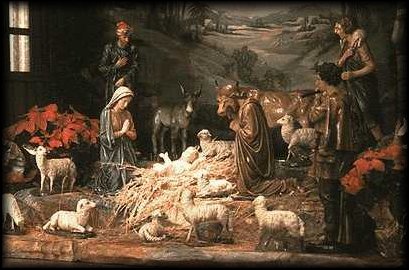 And they came with haste, and found Mary, and Joseph and the babe lying in a manger. And when they had seen it, they made known abroad the saying which was told them concerning this child. And all they that heard it wondered at those things which were told them by the shepherds. But Mary kept all these things, and pondered them in her heart. And the shepherds returned, glorifying and praising God for all the things that they had heard and seen, as it was told unto them. (The Gospel According to Luke, Chapter Two, Verses 13-20)
Here we are again, on the first day of the Christmas season. It has become something of a Christmas tradition for me to engage the following text from C.S. Lewis in connection with the above quoted Scriptures. The reason will be obvious.
Nearly every Christmas, it seems, NEWSWEEK or TIME or some television special will featre the "latest scholarship" concerning the "authenticity" of the Christmas story. The scholarly authorities cited are consistently and incorrigibly one-sided, usually including scholars like John Dominic Crossan who dissent from Church teaching, or more ostensibly mainline scholars like Raymond E. Brown (now deceased) who have been quite thoroughly corrupted by the Humean philosophical presuppositions of the historical-criticism of the biblical narrative. Last year we saw the Archbishop of Canterbury, Rowan Williams, call the Christmas story a 'legend' ("Archbishop says nativity 'a legend,'" London Telegraph, December 12, 2007). The upshot is always the conclusion, or at least the suggestion, that the Gospel writers are unreliable and not to be trusted, and certainly not to be taken at face value. Just how ludicrous this all is can be seen by almost anyone with a bit of intelligence and familiarity with literature, mythology, and history.
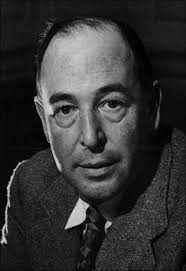 One of the best examples of a powerful antedote to this kind of foolishness is a little essay by C.S. Lewis entitled "Modern Theology and Biblical Criticism," which is available in a collection of essays by Lewis entitled Christian Reflections
 (1967; reprinted by Eerdmans, 1994). The following are some excerpts from Lewis' essay, which begins on p. 152 and contains four objections (or "bleats") about modern New Testament scholarship:
1. [If a scholar] tells me that something in a Gospel is legend or romance, I want to know how many legends and romances he has read, how well his palate is trained in detecting them by the flavour...For further reading:
I have been reading poems, romances, vision-literature, legends, myths all my life. I know what they are like. I know that not one [of the stories in the Gospel of John, for example] is like this... Either this is reportage - though it may no doubt contain errors - pretty close up to the facts; nearly as close as Boswell. Or else, some unknown writer in the second century, without known predecessors or successors, suddenly anticipated the whole technique of modern, novelistic, realistic narrative...
2. All theology of the liberal type involves at some point - and often involves throughout - the claim that the real behaviour and purpose and teaching of Christ came very rapidly to be misunderstood and misrepresented by his followers, and has been recovered or exhumed only by modern scholars... The idea that any... writer should be opaque to those who lived in the same culture, spoke the same language, shared the same habitual imagery and unconscious assumptions, and yet be transparent to those who have none of these advantages, is in my opinion preposterous. There is an a priori improbability in it which almost no argument and no evidence could counterbalance.
3. Thirdly, I find in these theologians a constant use of the principle that the miraculous does not occur... This is a purely philosophical question. Scholars, as scholars, speak on it with no more authority than anyone else. The canon 'if miraculous, unhistorical' is one they bring to their study of the texts, not one they have learned from it. If one is speaking of authority, the united authority of all the Biblical critics in the world counts here for nothing.
4. My fourth bleat is my loudest and longest. Reviewers [of my own books, and of books by friends whose real history I knew] both friendly and hostile... will tell you what public events had directed the author's mind to this or that, what other authors influenced him, what his over-all intention was, what sort of audience he principally addressed, why - and when - he did everything... My impression is that in the whole of my experience not one of these guesses has on any one point been right; the method shows a record of 100 per cent failure.
The 'assured results of modern scholarship', as to the way in which an old book was written, are 'assured', we may conclude, only because those who knew the facts are dead and can't blow the gaff... The Biblical critics, whatever reconstructions they devise, can never be crudely proved wrong. St. Mark is dead. When they meet St. Peter there will be more pressing matters to discuss.
However... we are not fundamentalists... Of course we agree that passages almost verbally identical cannot be independent. It is as we glide away from this into reconstructions of a subtler and more ambitious kind that our faith in the method wavers... The sort of statement that arouses our deepest scepticism is the statement that something in a Gospel cannot be historical because it shows a theology or an ecclesiology too developed for so early a date...
Such are the reactions of one bleating layman... Once the layman was anxious to hide the fact that he believed so much less than the Vicar; he now tends to hide the fact that he believes so much more...
- C.S. Lewis, Christian Reflections
- If you're interested in reading the relevant chapter from Lewis's book online, click on: "Modern Theology and Biblical Criticism"
- "Urbi et Orbi Message of His Holiness Pope Benedict XVI: Christmas 2007"
- Pope Benedict's Christmas Message to the Roman Curia, 2008
- Pope Benedict's Christmas Message: "I Once More Joyfully Proclaim Christ's Birth" (December 25, 2008)
Monday, December 22, 2008
Gone for several days
Gone south for several days for warmer weather and to see family for the Christmas holidays. My the Lord watch between me and thee while we are absent from one another in Blogsville.
Why Marriage is Inherently Heterosexual
Patrick Lee, Professor of Philosophy at Franciscan University, has an article worth reading entitled "The Reasons Why Marriage is Inherently Heterosexual" (Witherspoon Institute, December 19, 2008).[Hat tip to E.E.]
Apostasy by way of unpreparedness for spiritual combat
Fr. George William Rutler, "Unprepared for spiritual battle" (Catholic Education Resources Center, via Weekly Column, November 16, 2008):
In the nineteenth century, Cardinal Newman warned that naïve Catholics would fall into "mass apostasy" through lack of preparedness in spiritual combat: "Do you think (the Prince of Lies) is so unskillful in his craft, as to ask you openly and plainly to join him in his warfare against the Truth? No; he offers you baits to tempt you. He promises you civil liberty; he promises you equality; he promises you trade and wealth; he promises you a remission of taxes; he promises you reform.[Acknowledgements: The full text of Fr. Rutler's column is available at the Catholic Education Resources Center post linked above. The excerpted portions were reprinted by the Christmas, 2008, edition of the newsletter of the Coalition in Support of Ecclesia Dei, with thanks to the November 27, 2008 issue of The Wanderer from Fr. Rutler's Weekly Column, November 16, 2008, in his parish bulletin.]
This is the way in which he conceals from you the kind of work to which he is putting you; he tempts you to rail against your rulers and superiors; he does so himself, and induces you to imitate him; or he promises you illumination, -- he offers you knowledge, science, philosophy, enlargement of mind. He scoffs at times gone by; he scoffs at every institution which reveres them. He prompts you what to say, and then listens to you, and praises you, and encourages you. He bids you mount aloft. He shows you how to become as gods. Then he laughs and jokes with you, and gets intimate with you; he takes your hand, and gets his fingers between yours, and grasps them, and then you are his."
We are about to witness many outrages against the dignity of life by politicians who have taken advantage of nominal Christians. For starters, we may expect removal of the present administration's ban on destructive embryonic research, and rejection of the Mexico City accords which restrained abortion and eugenics....
... [W]e are learning that there is no place for amateur soldiers in the army of the Lord. A short time from now, many will say: "We should have listened to the warnings." The hard response will be: "Why didn't you?"
"... evangelicals will be the new freaks"
... and, indeed, so will any Catholics who have the temerity to stand by the traditional Church teaching that same-sex inclinations are disordered. Carl Trueman, "Goodbye Larry King, Hello Jerry Springer!" (Reformation 21, December 20, 2008) addresses the issue incisively. Several excerpts:
What is becoming increasingly clear is that the day is probably not far off when those who regard homosexual practice as wrong will be consistently presented as the moral, cultural and intellectual equivalents of white supremacists. Al Mohler (who seems to have spent the whole week writing or speaking on the issues of Lisa Miller and Rick Warren) has pointed out that this issue is set to shatter any possibility of traditional, biblical Christians being considered cool. You can have the hippest soul patch in town, and quote Coldplay lyrics till the cows come home; but oppose homosexuality and the only television program interested in having you appear will soon be The Jerry Springer Show when the audience has become bored of baiting the Klan crazies. Indeed, evangelicals will be the new freaks.[Hat tip to Prof. E.E.]
There are two temptations here which must be resisted at all costs. The first is to compromise biblical standards. The mainline denominations and seminaries are already doing this. As usual, as soon as religion's cultured despisers find something else to despise in religion, the mainlines, with their various seminaries and colleges, abandon it and join in the general anti-orthodox chorus, as radical, original, and revolutionary as a trust fund kid with a Che Guevara teeshirt and a Lexus. To apply a quotation from Michael Heseltine, like a pathetic one-legged army they march along, `Left, left, left, left left.'. They are merely part of the problem, not the solution. But there is a problem here for the orthodox too. The pro-gay issue is carried along by a veritable cultural tidal wave, with everybody from high-powered political pundits to soap opera screenwriters helping to create an environment where to be opposed to homosexuality is regarded as irrational, implausible bigotry. This can only be resisted in two ways: mindless anti-gay bigotry built on hatred, which is sinful and unbiblical; or a vigorous commitment to high biblical standards of morality. Such a commitment can only exist where there is a vigorous commitment to a high doctrine of scripture. There's the rub for Christian colleges, seminaries, and denominations: the winds of cultural change on this issue are so strong that they will very quickly expose the strength of the commitment to scripture amongst these various groups. My view? When church leaders, faculty, and the movers and shakers of the evangelical world find themselves excluded from the reputable avenues of power and cultural and professional influence and preferment, then we will see what their doctrine of scripture is really like, whether it really is solid, whether it really shapes their lives, their actions, and their priorities. The question is: will those in positions of authority in the schools, colleges, denomination and seminaries have the backbone to do what is necessary? Will they be willing to consider the reproach of Christ greater than the treasures of Egypt? When the invitations to the Larry King Show dry up, to be replaced by those from Jerry Springer, will they hold the line? I wish I had seen more evidence that that was the case and could be more confident about the future. As Don Carson commented recently, American Christians have yet to wake up to the fact that the gospel really is despised by the world. And I would add: in a culture where everyone seems to need to be liked, affirmed and, above all, agreed with, that realization is going to be very hard and challenging for the evangelical establishment to take on board.
The second temptation is to become what the pro-gay left are saying we are already: hatemongers. It is vital we remember that nobody can be reduced simply to their sexuality. No heterosexual person is simply heterosexual; no gay person is simply gay. We are all complex human beings, defined by the basic category of image bearers of God, not sexual preference. As soon as we start thinking of people as a sexual preference, not as image bearers, we lose sight of them as individuals. They become mere labels or slogans, not persons. It is hard to love a slogan; indeed, it is very easy rather to hate such. Even as we are being labeled and turned into mere sound bites, we must not respond in kind. Let us stand firm on biblical ethics, but let us also reach out to gay, lesbian, and transgender individuals with the love of Christ. As Luther would remind us, our task is not done when we simply preach the law to the lost; we must then also preach the gospel to them and point them to Christ. For such, as Paul once said, were some of you; and, thankfully, somebody treated you as a lost person not an abstract moral category or a sexual preference.
Sunday, December 21, 2008
"Little Ratzinger" comes wrapped for Christmas

Dubbed the "Ratzingerino" -- the "Little Ratzinger" -- Cardinal Canizares Llovero has been appointed by the Pope as the new prefect to the Congregation for Divine Worship, succeeding the Nigerian Cardinal Arinze.
Fr. Dwight Longenecker, "New Prefect" (Standing on My Head, December 9, 2008), comments on the photograph: "I guess we should not expect Kumbayah, liturgical dance and those creepy giant puppets to be authorized any time soon."
Rocco Palmo, "Here Comes the... Prefect" (Whispers in the Loggia, December 9, 2008), writes:
It might still be Advent... but to the joy of traditionalists everywhere, the new Worship Czar's already come all wrapped up for Christmas.[Hat tip to C.B.]
(...and, indeed, taking the place of the longtime Arinze classic 'round these parts, there's your new CDW "Blue Light Special.")
It's worth noting that, unlike his now-predecessor at Culto Divino (a lead Curial opponent of what became Summorum Pontificum), Antonio Cañizares is already a member of Ecclesia Dei -- the Roman body that serves as Divine Worship's equivalent for the communities using the 1962 Missal.
But in a sea-change of greater import, with a non English-speaker now at the helm of the dicastery that oversees the approval of liturgical texts, this morning's appointment ostensibly strengthens the hand of Vox Clara and the rest of the team leading the decade-long re-translation of the Roman Missal; of course, born in Nigeria, Cardinal Francis Arinze brought a native Anglophone's take to the deliberations, along with a vested interest in the result.
Keep in mind that, while CDW has granted recognitio to the first pillar of the new rendering of the Mass, eleven more parts remain to be approved -- all told, the process is slated to wrap sometime around late 2010.
As announced at its latest gathering last week, the A-list advisory body on English translations isn't slated to meet again until August, an unusually long gap seemingly crafted to give the new prefect time to get up to speed.
Tridentine Community News, December 21, 2008
Copyrighting the Text of the Mass
 In recent months, there has been a flurry of controversy over the assertion of copyrights over the new English translation of the Ordinary Form of the Mass.
In the 1960s, the International Commission on English in the Liturgy was formed to translate the original Novus Ordo missal from Latin into English. Whether one subscribes to the theory that the rush to provide an English translation resulted in a sloppy job, or that ideologies were at work behind the scenes to produce watered-down wordings, it is indisputable that the current translation of the Ordinary and Propers of the Ordinary Form of Holy Mass is far from faithful to the original Latin.
Knowing this, and having rejected several proposed re-translations by I.C.E.L., the Vatican in 2002 established the Vox Clara Commission to monitor I.C.E.L.’s preparation of a more accurate translation. Only recently have the English-speaking Bishops approved I.C.E.L.’s new translation of the Ordinary. The Propers are sure to take more years of translation work and negotiation for approval. What took only two years to translate in 1969 has already taken six years and isn’t complete. Fortunately, initial indications are that in spite of politicking on the part of certain bishops, the new translations will be a vast improvement over the old. Et cum spíritu tuo once again becomes "And with your spirit", for instance.
Implications of a Copyright
Consider a copyrighted photograph. If an independent photographer asserts a copyright to his work, then grants permission for someone to use one of his photos in a magazine article, often it is with the understanding that the publisher of the article will acknowledge the photo as the copyrighted property of the artist. The photographer may also require a royalty payment for the use of his work. It is a fundamental rule of order in a free market society that there be a mechanism to recognize the value of intellectual property.
Like the photographer, I.C.E.L. is similarly asserting copyright over its new English translation of the Mass. The current controversy has emerged because in order for the new translation of the Mass to hit the ground running, new musical settings of the Aspérges, Kyrie, Glória, Credo, Sanctus, Agnus Dei, and responses must be composed to fit the wording and meter of the new English texts. But I.C.E.L. will not permit the free distribution of such compositions – on-line or otherwise – until for-profit publishers first release their own offerings. I.C.E.L. (pronounced "I sell" – how appropriate) justifies this policy because it says it needs royalty income to survive.
Of similar concern, the U.S. Conference of Catholic Bishops has voted to use the "Grail Psalter" as the English translation of the Psalms in the missal. The Grail Psalter is a work effectively controlled by G.I.A., one of the largest for-profit music publishers serving Catholic parishes. There is something not quite right about Mass texts being under the legally-enforceable control of publishers. How would you feel about our national anthem being controlled by a for-profit company? Shouldn’t the words of Holy Mass be made as freely available as possible, and shouldn’t composers be encouraged to set them to music, whether or not their works intend to make a profit?
Copyrights and the Original Latin (Novus Ordo)
What about the original Latin text? The answer is found in the inside cover page of the 2002 Missále Románum published by the Vatican: "Copyright, 2002, Libreria Editrice Vaticana".
In our day, a copyright of such an important work is understandable, but at the same time, Holy Mother Church does this to establish the work as something of its own, rather than to extract royalties. To our knowledge, the Vatican has never restricted third parties’ use of the original Latin Novus Ordo texts.
Copyrights and the Original Latin (Tridentine)
Most of the 1962 Extraordinary Form Missal predates modern copyright law. The vast number of existing musical settings of the Ordinary of the Tridentine Mass and even the Propers (e.g.: William Byrd’s polyphonic setting) establish a precedent that these texts may be published without pre-approval.
Copyrights and English Translations of the Tridentine Mass
The Church has asserted no copyrights over vernacular translations of the Extraordinary Form, because Rome has never issued official vernacular versions. Only recently has the Ecclésia Dei Commission even made reference to the fact that translations of the readings in the Tridentine Mass must use "approved" texts. Presumably this means time-honored translations of the Bible such as the Douay-Rheims used in most hand missals, the Confraternity translation used in the transitional 1965 Missal, or Bishops’ Conference versions such as the New American Bible.
Copyrights and the Official Chants
The Benedictine monks of Solesmes are the Vatican’s designated caretakers of the Gregorian Chants of the Church. They publish all of the official chant books for the Ordinary Form. They also edited the 1962 Liber Usuális, the principal book of chants for the Extraordinary Form Mass. While the books themselves carry copyrights, like the Novus Ordo Latin Missal, the chants are the property of the Universal Church. Solesmes and Rome want to spread, not restrict, the use of chant.
In summary, the "copyright problem" is really the creation of I.C.E.L., the USCCB, and related English-speaking entities. Collusion with publishers would not be necessary if more thought had been given towards funding I.C.E.L. by other means.
[Comments? Ideas for a future column? Please e-mail tridnews@stjosaphatchurch.org. Previous columns are available at www.stjosaphatchurch.org. This edition of Tridentine Community News is that of the St. Josaphat bulletin insert for December 21, 2008. Hat tip to A.B.]
In recent months, there has been a flurry of controversy over the assertion of copyrights over the new English translation of the Ordinary Form of the Mass.In the 1960s, the International Commission on English in the Liturgy was formed to translate the original Novus Ordo missal from Latin into English. Whether one subscribes to the theory that the rush to provide an English translation resulted in a sloppy job, or that ideologies were at work behind the scenes to produce watered-down wordings, it is indisputable that the current translation of the Ordinary and Propers of the Ordinary Form of Holy Mass is far from faithful to the original Latin.
Knowing this, and having rejected several proposed re-translations by I.C.E.L., the Vatican in 2002 established the Vox Clara Commission to monitor I.C.E.L.’s preparation of a more accurate translation. Only recently have the English-speaking Bishops approved I.C.E.L.’s new translation of the Ordinary. The Propers are sure to take more years of translation work and negotiation for approval. What took only two years to translate in 1969 has already taken six years and isn’t complete. Fortunately, initial indications are that in spite of politicking on the part of certain bishops, the new translations will be a vast improvement over the old. Et cum spíritu tuo once again becomes "And with your spirit", for instance.
Implications of a Copyright
Consider a copyrighted photograph. If an independent photographer asserts a copyright to his work, then grants permission for someone to use one of his photos in a magazine article, often it is with the understanding that the publisher of the article will acknowledge the photo as the copyrighted property of the artist. The photographer may also require a royalty payment for the use of his work. It is a fundamental rule of order in a free market society that there be a mechanism to recognize the value of intellectual property.
Like the photographer, I.C.E.L. is similarly asserting copyright over its new English translation of the Mass. The current controversy has emerged because in order for the new translation of the Mass to hit the ground running, new musical settings of the Aspérges, Kyrie, Glória, Credo, Sanctus, Agnus Dei, and responses must be composed to fit the wording and meter of the new English texts. But I.C.E.L. will not permit the free distribution of such compositions – on-line or otherwise – until for-profit publishers first release their own offerings. I.C.E.L. (pronounced "I sell" – how appropriate) justifies this policy because it says it needs royalty income to survive.
Of similar concern, the U.S. Conference of Catholic Bishops has voted to use the "Grail Psalter" as the English translation of the Psalms in the missal. The Grail Psalter is a work effectively controlled by G.I.A., one of the largest for-profit music publishers serving Catholic parishes. There is something not quite right about Mass texts being under the legally-enforceable control of publishers. How would you feel about our national anthem being controlled by a for-profit company? Shouldn’t the words of Holy Mass be made as freely available as possible, and shouldn’t composers be encouraged to set them to music, whether or not their works intend to make a profit?
Copyrights and the Original Latin (Novus Ordo)
What about the original Latin text? The answer is found in the inside cover page of the 2002 Missále Románum published by the Vatican: "Copyright, 2002, Libreria Editrice Vaticana".
In our day, a copyright of such an important work is understandable, but at the same time, Holy Mother Church does this to establish the work as something of its own, rather than to extract royalties. To our knowledge, the Vatican has never restricted third parties’ use of the original Latin Novus Ordo texts.
Copyrights and the Original Latin (Tridentine)
Most of the 1962 Extraordinary Form Missal predates modern copyright law. The vast number of existing musical settings of the Ordinary of the Tridentine Mass and even the Propers (e.g.: William Byrd’s polyphonic setting) establish a precedent that these texts may be published without pre-approval.
Copyrights and English Translations of the Tridentine Mass
The Church has asserted no copyrights over vernacular translations of the Extraordinary Form, because Rome has never issued official vernacular versions. Only recently has the Ecclésia Dei Commission even made reference to the fact that translations of the readings in the Tridentine Mass must use "approved" texts. Presumably this means time-honored translations of the Bible such as the Douay-Rheims used in most hand missals, the Confraternity translation used in the transitional 1965 Missal, or Bishops’ Conference versions such as the New American Bible.
Copyrights and the Official Chants
The Benedictine monks of Solesmes are the Vatican’s designated caretakers of the Gregorian Chants of the Church. They publish all of the official chant books for the Ordinary Form. They also edited the 1962 Liber Usuális, the principal book of chants for the Extraordinary Form Mass. While the books themselves carry copyrights, like the Novus Ordo Latin Missal, the chants are the property of the Universal Church. Solesmes and Rome want to spread, not restrict, the use of chant.
In summary, the "copyright problem" is really the creation of I.C.E.L., the USCCB, and related English-speaking entities. Collusion with publishers would not be necessary if more thought had been given towards funding I.C.E.L. by other means.
[Comments? Ideas for a future column? Please e-mail tridnews@stjosaphatchurch.org. Previous columns are available at www.stjosaphatchurch.org. This edition of Tridentine Community News is that of the St. Josaphat bulletin insert for December 21, 2008. Hat tip to A.B.]
Saturday, December 20, 2008
"Behold the future"
The last two paragraphs from Carl Trueman's blog post on "Newsweek on Gay Marriage" (Reformation 21, December 16, 2008):
Behold the future. The piece is prophetic because, in a week where a high-ranking member of the NAE had to resign because he was `shifting' on gay unions, at a time when the full weight of the opinion forming social media is behind the normalisation of homosexuality as acceptable, challenges such as this are clearly going to be coming thick and fast. I grew up in some ways as the hidebound, unthinking traditionalist on sexual morality at which Ms Miller takes aim: everyone knew homosexuality was wrong (even if only from a basic anti-gay bigotry), and so there was no need to mount arguments against it either in the church or the wider society. That is not the world of my children. They need to be given reasons as to why their gay friends are following a lifestyle that is sinful. And those reasons need to be well-thought out, calm, and articulated with a Christian grace and love. At the level of theological education, this means that the issue of biblical authority and interpretation needs to be very carefully addressed. For example, Ms. Miller's implicit contrast of individual passages of the Bible with its overall message raises the very legitimate interpretative question of how these things are related; church and colleges and seminaries need to make sure they can give a thoughtful answer to that one or the Ms. Millers of the world are going to take them to the cleaners.[Hat tip to J.M.]
The article does end on a note with which I wholeheartedly agree, however, at least on the surface. She quotes a pro-gay priest as saying `if Jesus were alive today, he would reach out especially to the gays and lesbians among us.' Amen, So he would. But not with the tawdry bauble of passing social acceptance; rather he would reach out with the love of the Father for those who are unlovely, offering them life in abundance, not through some intense but illicit orgasm; rather through the forgiveness and newness of life that comes from life, death, and resurrection of Jesus Christ. Even as the church must dismantle erroneous hermeneutics and defend the authority of scripture, so she must also reach out with the love of the gospel to the dirty, the immoral, the things that are not, with the light of the gospel. With what does the Christ of Ms Miller reach out? A piece of paper and the promise of a few years of companionship, perhaps some great sex, and then what?
Friday, December 19, 2008

Smart blonde & replacement windows
Last year I replaced all the windows in my house with that expensive double-pane energy efficient kind, and today, I got a call from the contractor who installed them. He was complaining that the work had been completed a whole year ago and I still hadn't paid for them.
Hellloooo,........... just because I'm blonde doesn't mean that I am automatically stupid. So, I told him just what his fast talking sales guy had told me last year, that in ONE YEAR these windows would pay for themselves! Helllooooo? It's been a year! I told him. There was only silence at the other end of the line, so I finally just hung up. He never called back. I bet he felt like an idiot.
Thursday, December 18, 2008
Have yourself a shocking little Christmas
"Let us, in Heaven's name, drag out the Divine Drama from under the dreadful accumulation of slipshod thinking and trashy sentiment heaped upon it, and set it on an open stage to startle the world into some sort of vigorous reaction. If the pious are the first to be shocked, so much the worse for the pious — others will enter the Kingdom of Heaven before them. If all men are offended because of Christ, let them be offended; but where is the sense of their being offended at something that is not Christ and is nothing like Him? We do Him singularly little honor by watering down till it could not offend a fly. Surely it is not the business of the Church to adapt Christ to men, but to adapt men to Christ." (Dorothy Sayers, Creed or Chaos? 24-25).
[Hat tip to E.E.]
[Hat tip to E.E.]
Wednesday, December 17, 2008
Manfred Frings (1925-2008) R.I.P.
See the post "Manfred S. Frings (1925-2008) -- Requiescat in pace" (Philosophia Perennis, December 17, 2008).
Homosexualism, Californication & the bishops
Bishops of Los Angeles recently responded to controversy over Church’s support of Proposition 8, by issuing a letter, "A Pastoral Message to Homosexual Catholics" (The Tidings, December 5, 2008), bending over backwards to reassure homosexuals of their place in the Church.
A reader and correspondent wrote in to observe:
[Hat tip to J.M.]
A reader and correspondent wrote in to observe:
... while I don't think we can possibly appreciate the pressure of the gay culture in L.A. or the frog-in-water effect it has on our clergy, and so should be careful how irked we get at them [they did support Prop 8, after all], still, the second piece [see below] sort of shames them in its straightforwardness, and its last three words really say it all.Our correspondent was referring to the article co-authored by Joseph Bottom, John Mark Reynolds and Bruce D. Porter, entitled "No Case for Homosexuality in Bible" (On Faith, WashingtonPost.com & Newsweek, December 15, 2008), responding to articles by Lisa Miller and Jon Meacham in the latest issue of Newsweek. Note the last three words: "Honest people repent." Better yet, read the whole article:
In the latest issue of Newsweek, editor Jon Meacham explains: "To argue that something is so because it is in the Bible is more than intellectually bankrupt--it is unserious, and unworthy of the great Judeo-Christian tradition." Indeed, he continues, "this conservative resort to biblical authority is the worst kind of fundamentalism." Curiously, he intends this as a defense of Lisa Miller's cover story, which announces that we should approve homosexual marriage because the Bible tells that Jesus would want us to.Which again calls to mind Peter Kreeft's proverbial maxim that there are, in the final analysis, two kinds of people in the world: saints who know they are sinners, and sinners who think they are saints.
On any plane of argument, the contradiction would appear stunning, but, then, neither Jon Meacham nor Lisa Miller are engaged in argument. They're speaking, instead, in familiar tropes and fused-phrases and easy clichés. They're trying to convey a feeling, really, rather than an argument: Jesus loves us, love is good, homosexuals love one another, marriage is love, love is loving--a sort of warm bath of words, their meanings dissolved into a gentle goo. In their eyes, all nice things must be nice together, and Jesus comes to seem (as J.D. Salinger once mocked) something like St. Francis of Assisi and "Heidi's grandfather" all in one.
In truth, of course, Meacham and Miller actually know what everyone else knows: The Bible offers no support for homosexual marriage. Christianity teaches love, mercy, and forgiveness for those who do bad things, true enough. Look, for example, at the story in the Gospel of John where Jesus offers his divine love, mercy, and forgiveness to a woman guilty of adultery. He shamed those who would stone her. He taught us all that we are sinners and often hypocrites. And then he told her, "Go and sin no more." He did not reinterpret the Old Testament to proclaim adultery another life-style choice.
Miller demolishes the distinction between sin and sinner, thus eradicating any real conception of sin and guilt. But without sin and guilt there is no need for forgiveness--and no basis for morality. An amoral world may be a quite suitable environment for gay marriage, but it is hardly the kind of world in which most Americans want to bring up their children.
Those who tried to live by the Christian understanding have come to amazingly similar conclusions about what God wants in marriage. We have had centuries to try out many different ideas and test them against the text of the Bible and experience. Only traditional marriage has stood. The Orthodox of Russia came to the same conclusion as the Roman Catholics of Italy. The Pentecostals of Kenya came to the same conclusion as the Reformed Christians of Scotland. Over time, different accommodations have been made to extreme or difficult situations, but the ideal has been clear: God's will is for marriage to be a covenant between a man and a woman. Nothing else will work.
The case for gay marriage in the Bible depends on the trick of taking a single idea and insisting that anything in the book that disagrees with it must miss the "spirit of the book." Do not underestimate how comforting this method of reading is. It allows us to pick up any text and discover that it agrees with our own insights. Of course, it also traps us in our assumptions and prevents any different voice from being heard. Reject the Bible, if you will--but don't pretend it means just what you want it to mean. The plain fact is that when the Old Testament talks about homosexual behavior, it condemns it. And when, in the New Testament, the followers of Jesus encountered homosexual acts, they quickly and universally condemned them.
Proponents of homosexual marriage suggest that the Bible has been twisted to support many dubious moral positions, which is true enough--and the metaphor most often used in this context is race. Didn't some Bible readers once condone negro slavery? Well, some Bible readers today object to same-sex marriage.
The comparison is facile and self-congratulatory. As the vote in California this November revealed, it is overwhelmingly rejected by African-Americans, who are, after all, the ones who should know. For that matter, the racial epithets hurled at African-Americans in California after the election suggests that gay activists aren't serious about the comparison, anyway. It is, for them, merely a handy stick with which to beat those Newsweek dismisses as fundamentalists.
And yet, there is a comparison to be made between advocacy of African slavery and same-sex marriage--though it works the other way around. Christian slave owners had to read race-based slavery into the Bible, and their arguments resemble in form all the other attempts--ancient and modern--to read into scripture what they wanted to find there.
Suppose we were to take the Bible seriously--where it agrees with us, and where it doesn't. We might do this not merely because the Bible asserts that God inspired it. Rather, over centuries, against critics who have used arguments and torture against Bible believers, we have developed reasons for our knowledge that the Bible is God's word. Through the long years, the Bible has been found to describe the human condition with force and accuracy: We will die, we are sinners, we exist in a world we did not make, we live through both joys and sorrows, we must train our children to carry on the work of this world, and we sense from time to time a higher reality beyond ourselves. Further, the Bible points us to the person of Jesus Christ, whom the practical experience of millions has found the best and highest hope of an answer to the human condition.
One thing the Bible never suggests is that the world must work the way we desire it to. Jesus loves us enough not to let us do whatever we want. Every generation attacks biblical ethics in some new way, but the Bible endures. Hypocrites pretend they have no sin. Hedonists pretend their sins are good. Honest people repent.
Joseph Bottum is editor of First Things: A Journal of Religion, Culture and Public Life. John Mark Reynolds, an evangelical, is associate professor of philosophy at Biola University. Bruce D. Porter is a member of the First Quorum of the Seventy, The Church of Jesus Christ of Latter-day Saints.
[Hat tip to J.M.]
Archbishop of Paris celebrates Traditional Mass
As reported by Rorate Caeli in anticipation of this past Sunday's (December 14, 2008) High Mass celebrated at Saint-Germain l'Auxerrois -- especially notable since the Archbishop of Paris, Cardinal Vingt-Trois, was never a great friend of the Summorum Pontificum.
Tuesday, December 16, 2008
"Strong words on Summorum Pontificum"
 Una Voce America's Nota (No 39, Fall 2008) carries the following brief excerpt from the address of Pope Benedict XVI to the Bishops of France on the Anniversary of his Motu Proprio, Summorum Pontificum:
[Acknowledgement: from "Strong words on Summorum Pontificum," Una Voce America - Nota (No. 39, Fall 2008), p. 2.]Sunday, September 14, 2008 It is never too often said that the priesthood is indispensable to the Church, in the very own interest of the lay faithful. Priests are a gift from God to the Church. Priests must never delegate to the faithful [those] functions which are related to their own mission. Dear Brothers in the episcopacy, I ask you to remain desirous to help your priests live in intimate union with Christ. Their spiritual life is the foundation of their apostolic life. You shall exhort them gently to daily prayer and to a dignified celebration of the Sacraments, particularly of the Eucharist and of Reconciliation, as Saint Francis de Sales did with his priests. Every priest should be able to feel glad to serve the Church. At the school of the Curé d'Ars, son of your land and patron of all preists of the world, do not cease to repeat that a man can do no greater deed than to give the Body and the Blood of Christ to the faithful, and to forgive sins....
Liturgical worship is the supreme expression of priestly and episcopal life, and also of catechetical teaching. Your mission of sanctification of the faithful people, dear Brothers, is indispensable for the growth of the Church. I was prompted to detail, in the motu proprio Summorum Pontificum, the conditions for the accomplishment of this mission, in that which relates to the possibility of using both the missal of Blessed John XXIII (1962) and that of Pope Paul VI (1970). The fruits of these new dispositions have already seen [the light of] day, and I hope that the indispensable pacification of the spirits is being accomplished, thank God.
I comprehend your difficulties, but I do not doubt that you will be able to reach, within reasonable time, solutions which are satisfactory to all, so that the seamless robe of Christ is not torn anymore. No one is excessive within the Church. Everyone, without exception, must be able to feel at home, and never rejected. God, who loves all men and wills that no one be lost, entrusts us with this mission of Pastors, making us Shepherds of His sheep. We can only give Him thanks for the honor and confidence He places upon us. Let us endeavor to always be servants of unity.
Reinventing the liturgical wheel?
I still subscribe to The Adoremus Bulletin, an organ of the Adoremus Society for the Renwal of the Sacred Liturgy. Ever since moving our church membership to St. Josaphat Church in Detroit, just a month after Pope Benedict XVI's Motu Proprio, Summorum Pontificum, however, I must say that my subjective perception of the issues agitating the interest of the readers, writers, and editors of Adoremus has undergone a significant shift. Concerns about liturgical abuses centering on music, Extraordinary Ministers of Holy Communion, whether to receive standing or kneeling, in the hand or on the tongue, etc., have simply ceased to be problems. All of these sorts of problems have simply evaporated, along with the feeling that I was entering a politicized battlefield every time I went to Mass, with this or that faction trying to make a point, say, by substituting "God" for "Him" in the congregational responses ("Let us give God thanks and praise").
Accordingly, I feel a certain incumbancy to keep myself interested in the liturgical wellbeing of Catholics in rank-and-file Novus Ordo parishes still laboring under the Ordinary (and yet unsettled) Form of the Latin Rite. My present concerns are more likely to center on what is often lacking in Usus Antiquior parishes, because they still tend not to be community parishes but to have congregations comprised of long-distance Sunday commuters. What they often still lack is a developed program of catechesis for all ages and a parish environment in which families can easily put down roots. This is changing slowly, but the effects of years of isolation and effective liturgical prohibition are still noticeably visible.
Would it be unkind to suggest that our friends over at Adoremus seem, at times, to be laboring at the herculean task of reinventing the liturgical wheel?
Accordingly, I feel a certain incumbancy to keep myself interested in the liturgical wellbeing of Catholics in rank-and-file Novus Ordo parishes still laboring under the Ordinary (and yet unsettled) Form of the Latin Rite. My present concerns are more likely to center on what is often lacking in Usus Antiquior parishes, because they still tend not to be community parishes but to have congregations comprised of long-distance Sunday commuters. What they often still lack is a developed program of catechesis for all ages and a parish environment in which families can easily put down roots. This is changing slowly, but the effects of years of isolation and effective liturgical prohibition are still noticeably visible.
Would it be unkind to suggest that our friends over at Adoremus seem, at times, to be laboring at the herculean task of reinventing the liturgical wheel?
"Bah! Humbug!"
R.C. Sproul writes, in "Marley's Message to Scrooge" (Ligonier Ministries, December 8, 2008):
"Bah! Humbug!" These two words are instantly associated with Charles Dickens' immortal fictional anti-hero, Ebenezer Scrooge. Scrooge was the prototype of the Grinch who stole Christmas, the paradigm of all men cynical.If the erstwhile dour Calvinists can come round to such positive affirmations of cheer on this historic Catholic season of Christmas, I would be loath to believe Catholics should ever forget the hale disposition of Hilaire Belloc, who wrote:
We all recognize that Ebenezer Scrooge was a mean person - stingy, insensitive, selfish, and unkind. What we often miss in our understanding of his character is that he was preeminently profane. "Bah! Humbug!" was his Victorian use of profanity.
Not that any modern editor would feel the need to delete Scrooge's expletives. His language is not the standard currency of cursing. But it was profane in that Scrooge demeaned what was holy. He trampled on the sanctity of Christmas. He despised the sacred. He was cynical toward the sublime.
Christmas is a holiday, indeed the world's most joyous holiday. It is called a "holiday" because the day is holy. It is a day when businesses close, when families gather, when churches are filled, and when soldiers put down their guns for a 24-hour truce. It is a day that differs from every other day.Every generation has its abundance of Scrooges. The church is full of them. We hear endless complaints of commercialism. We are constantly told to put Christ back into Christmas. We hear that the tradition of Santa Claus is a sacrilege. We listen to those acquainted with history murmur that Christmas isn't biblical. The Church invented Christmas to compete with the ancient Roman festival honoring the bull-god Mithras, the nay-sayers complain. Christmas? A mere capitulation to paganism.
And so we rain on Jesus' parade and assume an Olympian detachment from the joyous holiday. All this carping is but a modern dose of Scroogeism, our own sanctimonious profanation of the holy.
Sure, Christmas is a time of commerce. The department stores are decorated to the hilt, the ad pages of the newspapers swell in size, and we tick off the number of shopping days left until Christmas. But why all the commerce? The high degree of commerce at Christmas is driven by one thing: the buying of gifts for others. To present our friends and families with gifts is not an ugly, ignoble vice. It incarnates the amorphous "spirit of Christmas." The tradition rests ultimately on the supreme gift God has given the world. God so loved the world, the Bible says, that He gave His only begotten Son. The giving of gifts is a marvelous response to the receiving of such a gift. For one day a year at least, we taste the sweetness inherent in the truth that it is more blessed to give than to receive.
What about putting Christ back into Christmas? It is simply not necessary. Christ has never left Christmas. "Jingle Bells" will never replace "Silent Night." Our holiday once known as Thanksgiving is rapidly becoming known simply as "Turkey Day." But Christmas is still called Christmas. It is not called "Gift Day." Christ is still in Christmas, and for one brief season the secular world broadcasts the message of Christ over every radio station and television channel in the land. Never does the church get as much free air time as during the Christmas season.
Not only music but the visual arts are present in abundance, bearing testimony to the historic significance of the birth of Jesus. Christmas displays all remind the world of the sacred Incarnation.
Doesn't Santa Claus paganize or at least trivialize Christmas? He's a myth, and his very mythology casts a shadow over the sober historical reality of Jesus. Not at all. Myths are not necessarily bad or harmful. Every society creates myths. They are a peculiar art form invented usually to convey a message that is deemed important by the people. When a myth is passed off as real history, that is fraud. But when it serves a different purpose it can be healthy and virtuous. Kris Kringle is a mythical hero, not a villain. He is pure fiction -- but a fiction used to illustrate a glorious truth.
What about the historical origins of Christmas as a substitute for a pagan festival? I can only say, good for the early Christians who had the wisdom to flee from Mithras and direct their zeal to the celebration of the birth of Christ. Who associates Christmas today with Mithras? No one calls it "Mithrasmas."
We celebrate Christmas because we cannot eradicate from our consciousness our profound awareness of the difference between the sacred and the profane. Man, in the generic sense, has an incurable propensity for marking sacred space and sacred time. When God appeared to Moses in the burning bush, the ground that was previously common suddenly became uncommon. It was now holy ground - sacred space. When Jacob awoke from his midnight vision of the presence of God, he anointed with oil the rock upon which he had rested his head. It was sacred space.
When God touches earth, the place is holy. When God appears in history, the time is holy. There was never a more holy place than the city of Bethlehem, where the Word became flesh. There was never a more holy time than Christmas morning when Emmanuel was born. Christmas is a holiday. It is the holiest of holy days. We must heed the warning of Jacob Marley: "Don't be a Scrooge" at Christmas.
[Hat tip to J.M.]Wherever the Catholic sun doth shine
There's always laughter and good red wine.
At least I've always found it so.
Benedicamus Domino!
Subscribe to:
Posts (Atom)